
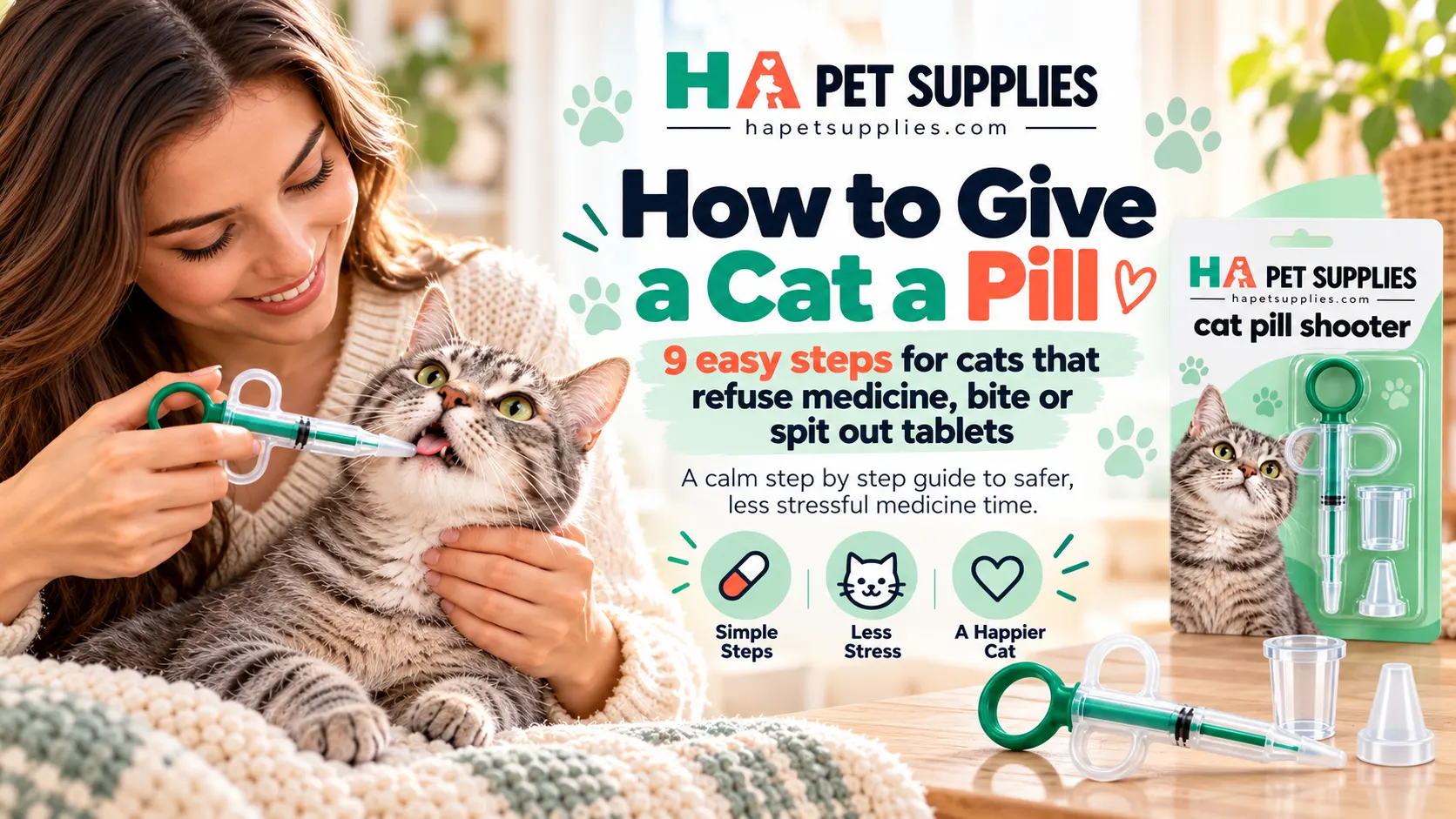
How to give a cat a pill becomes a very stressful question when your cat refuses its medicine, spits tablets onto the floor, hides beneath the sofa, or tries to bite your fingers.
Maybe your veterinarian has prescribed medication for an infection, thyroid condition, or another health problem. You bring the medicine home, read the instructions, and confidently approach your cat. But the moment your cat sees the tablet, everything changes.
If this sounds familiar, you are not alone. Many cat owners struggle with oral medication administration. The good news is that learning how to give a cat a pill does not have to begin with force. A cat pill shooter may help certain owners deliver tablets without placing fingers deep inside the cat’s mouth.
If your cat has been prescribed a tablet, first confirm with your veterinarian whether the medicine can be given with food. If permitted, try hiding the whole tablet in a small amount of suitable wet food or a pill treat. If that fails, ask your veterinarian to demonstrate direct pilling or a cat pill shooter. Check swallowing, follow the medication-specific instructions for food or water afterward, and never repeat an uncertain dose without professional guidance.
1. Quick Solutions: How to Give a Cat a Pill When It Refuses Medicine
If you are reading this while holding a tablet and worrying about your cat’s next dose, start by identifying your immediate situation. The VCA guide to giving pills to cats explains why food-based techniques are often a sensible first option when permitted.
My cat refuses medicine hidden in food
First, confirm whether the medication may be given with food. If your veterinarian approves, place the pill in a small amount of suitable food. If your cat detects and rejects the medicine repeatedly, do not continue disguising it in every meal. Ask your veterinarian about another administration method.
My cat spits out the tablet immediately
Do not automatically give another tablet. Check whether the original tablet is clearly visible and intact. If you cannot establish whether any medication was swallowed, contact your veterinarian or pharmacist for dosing instructions.
My cat bites when I approach its mouth
Stop the attempt rather than continuing to struggle. A bite can injure you, and rough restraint can injure or frighten your cat. Ask your veterinarian to demonstrate a safer technique. A cat pill shooter may help keep fingers away from teeth, but it does not eliminate bite risk.
2. Why Is Giving a Cat a Pill So Difficult?
Understanding your cat’s behavior can make medication administration easier. Cats may refuse tablets because of taste, mouth handling, or previous negative experiences. The VCA guidance on caring for sick cats emphasizes following veterinary treatment instructions and adapting supportive care.
Cats are sensitive to unfamiliar tastes
Some medications have bitter or unpleasant flavors. A cat may immediately detect the taste and reject the tablet. This can happen even when you hide medicine in food.
Mouth handling can feel threatening
Cats often prefer control over physical interactions. Being restrained or having their mouth opened may be frightening. This does not mean the animal is behaving badly—it may be responding to discomfort or fear.
3. What You Need Before Giving a Cat a Pill
Preparation is one of the most useful ways to make medication time less stressful. Check the medication name, dose, frequency, and administration instructions. The FDA guide to questions about pet medications explains why owners should understand how, when, and with what food their pet’s medication should be given.
Gather supplies: the prescribed tablet, a small approved treat, a clean towel, a cat pill shooter if appropriate, and a medication log.
4. How to Give a Cat a Pill: 9 Easy Steps for Safer Medication Time
The following nine-step method combines preparation, an approved food-based option, and a veterinarian-demonstrated direct-pilling technique when needed. It is not necessary to put a resistant cat through every possible method in one session.
Step 1: Read the Medication Instructions Carefully
Before handling your cat, read the prescription label. Confirm the correct dose and time. Check whether the tablet must remain whole. The FDA recommendations for preventing veterinary medication errors specifically warn against breaking or crushing tablets without professional instructions.
Step 2: Try an Approved Food-Based Method First
When the medication permits food administration, prepare a small amount of wet cat food or a soft treat. Place the whole prescribed tablet inside. The PetMD step-by-step guide to giving a cat a pill discusses food-based approaches as well as pet-piller devices.
Step 3: Choose a Safe Position and Calm Handling Method
Ask for a demonstration before attempting the technique at home. Choose a stable, nonslip surface. A gentle towel wrap may help certain cats remain secure, but never forcibly immobilize a struggling animal.
Step 4: Prepare the Pill or Cat Pill Shooter
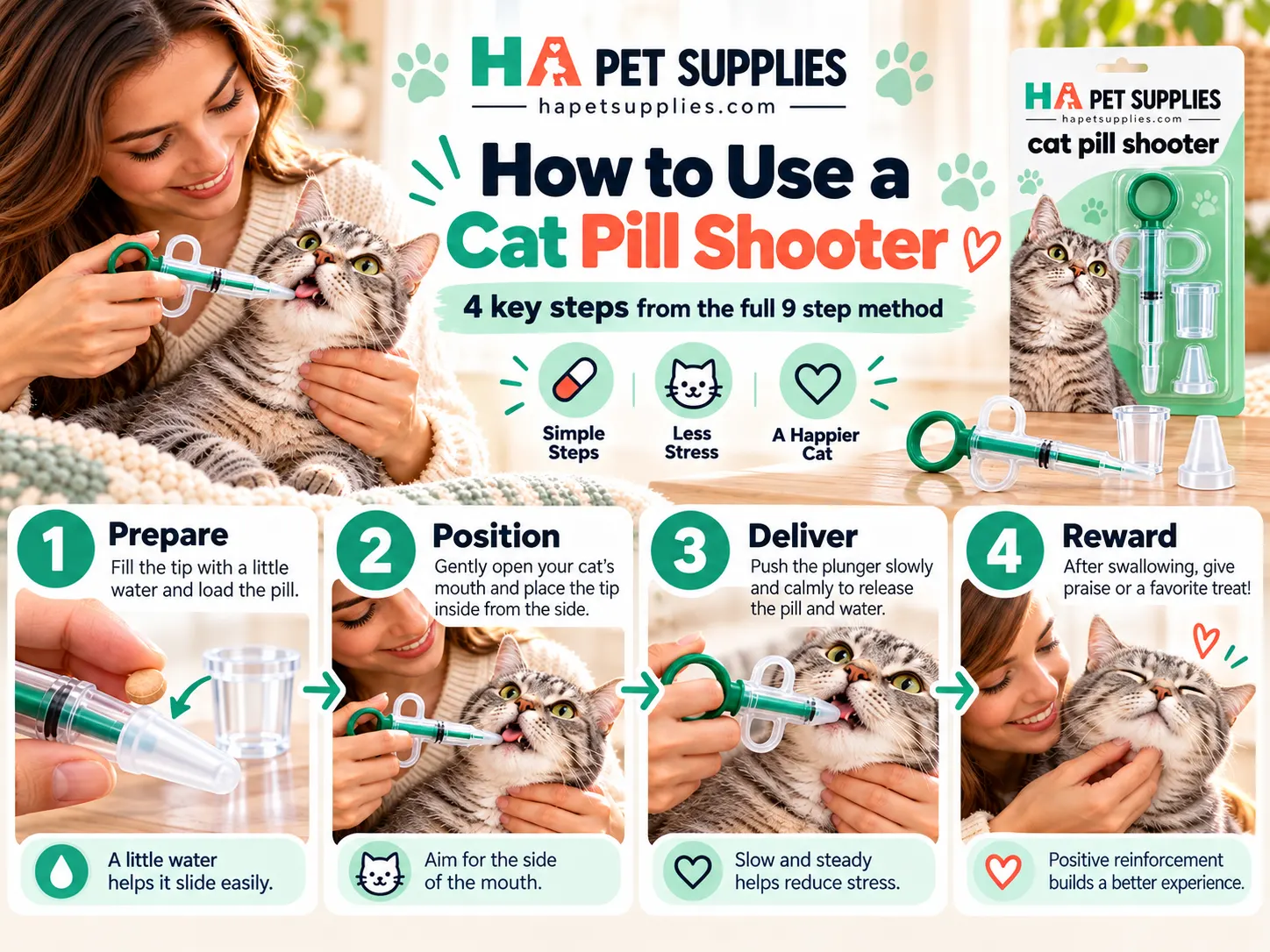
If your veterinarian has recommended a pill shooter, inspect the device. A cat pill shooter is generally a non-needle tool designed to hold and release a tablet using a plunger. Check for cracks, loose parts, or a damaged tip.
Step 5: Position Your Cat’s Head Gently
Follow the handling method demonstrated by your veterinarian. Do not pull the head backward forcefully. The VCA veterinary instructions for giving pills explain the direct technique and the importance of keeping administration controlled and gentle.
Step 6: Deliver the Tablet Using the Veterinarian-Demonstrated Technique
If a pill shooter has been recommended, use it according to the demonstrated technique. The tablet is generally released toward the back portion of the tongue rather than left at the front of the mouth. Never mistake a pill shooter for an automatic guarantee of safe delivery.
Step 7: Encourage Swallowing and Follow the Appropriate Aftercare Instructions
Cornell University’s guide to giving oral medications to cats recommends following pills with suitable fluid to help them reach the stomach. Never force fluid into the throat of a struggling cat.
Step 8: Check Whether Your Cat Swallowed the Medication
Do not immediately assume success. Watch your cat for signs that the tablet has been expelled. The FDA guidance on what to do when pets spit out or vomit medication emphasizes that the answer depends on the particular drug.
Step 9: Reward Your Cat and Record the Dose
Once the medication attempt is complete, give your cat space to recover. Offer an appropriate reward if permitted. Record the medication time and whether the dose was confirmed, refused, or uncertain.
5. How Does a Cat Pill Shooter Work?
A cat pill shooter is a medication-delivery tool. It may also be described as a pill popper, pet piller, or pill gun. Despite the name, it does not involve a needle. The device may help owners deliver a tablet while reducing the need to put fingers close to a cat’s teeth.
However, correct use still requires appropriate positioning, gentle handling, and veterinary guidance. For liquid medication, the VCA guidance on liquid administration to cats describes a separate technique. Do not substitute one technique for the other.
6. Cat Pill Shooter vs Hand-Pilling vs Pill Pockets: Which Method Is Better?
| Method | Main Advantage | Main Limitation | Appropriate Situation |
|---|---|---|---|
| Pill hidden in food | May avoid direct mouth handling | Cat may detect or reject the tablet | Medication is approved for administration with food |
| Pill pocket treat | Convenient food-based concealment | May not suit restricted diets | Food-compatible tablets and treat-motivated cats |
| Direct hand-pilling | Does not require a separate device | Risk of bites and stressful restraint | Veterinarian-demonstrated technique for a cooperative cat |
| Cat pill shooter | Can keep fingers farther from teeth | Requires training, compatibility and swallowing checks | Veterinarian-approved direct pill administration |
| Veterinarian-prescribed liquid | May avoid giving a solid tablet | Taste, measurement and aspiration precautions | Suitable liquid formulation is available |
7. How to Give a Cat a Pill When It Bites or Scratches
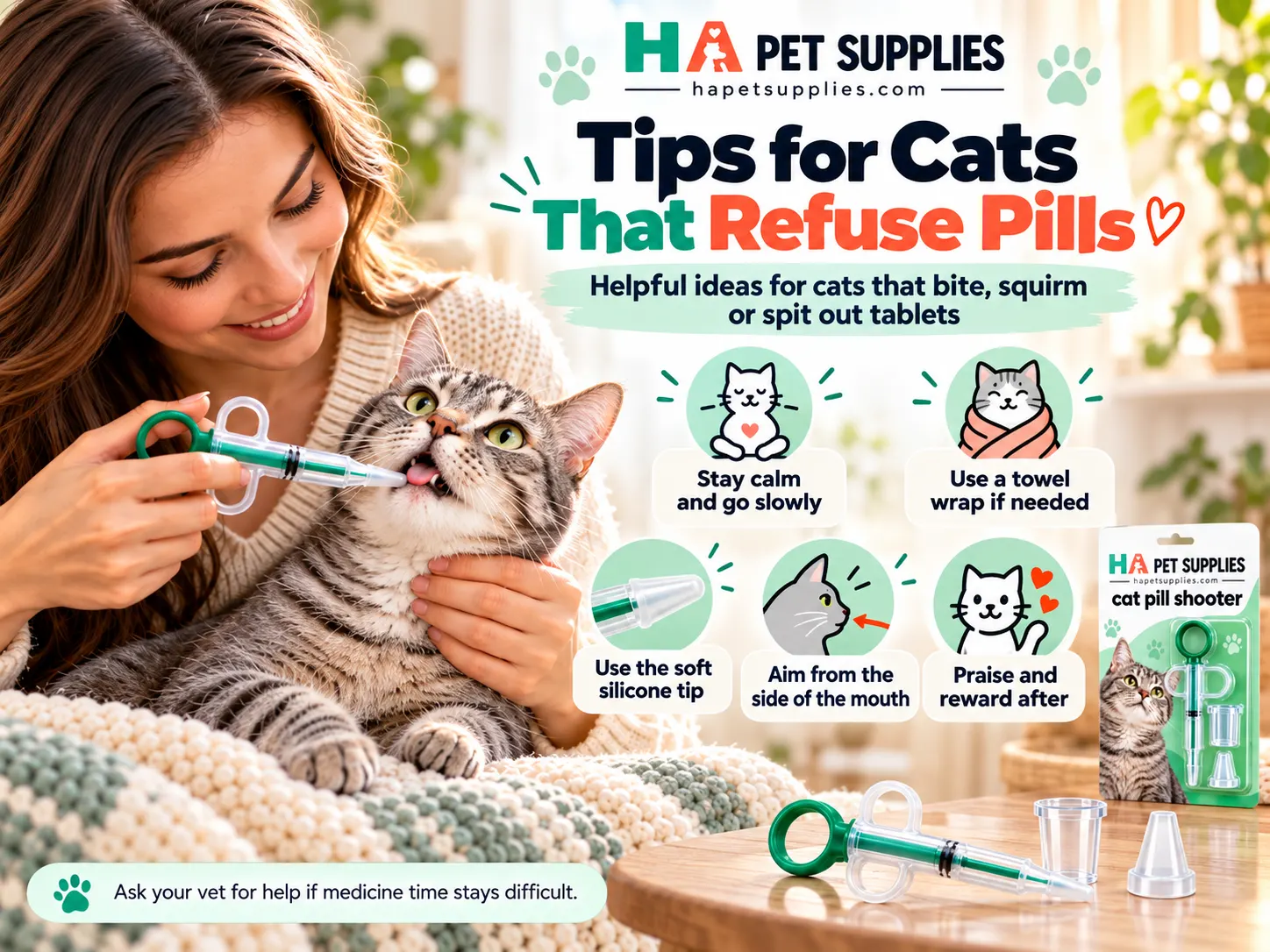
A cat that bites or scratches during medication may be frightened, painful, or trying to escape. The PetMD veterinary article on administering pills recommends abandoning an attempt when fear or aggression creates unsafe conditions. If a cat bites you and breaks the skin, wash the wound promptly and seek medical advice.
8. What If Your Cat Spits Out the Pill?
Check what happened. Look for the tablet on the floor or blanket. Never guess at a replacement dose. The FDA medication questions guide recommends consulting a veterinarian about spit-out or vomited doses.
9. How Do You Know if Your Cat Swallowed a Pill?
Watch for visible expulsion, check the surrounding area, and keep a dosing record. The FDA’s medication-error prevention guidance emphasizes accurate dosing and asking a veterinarian about missed doses.
10. Why Giving Water or Food After a Cat Pill Can Matter
Some pills may become lodged in the esophagus. The VCA veterinary medication guide for doxycycline specifically warns against giving doxycycline tablets or capsules dry to cats.
11. Common Mistakes Cat Owners Make When Giving Pills
Mistakes include crushing tablets without permission, hiding medication in a full meal, repeating an uncertain dose, using excessive force, and giving human medicine without veterinary approval. The FDA animal drug safety FAQ highlights severe risks associated with certain human medicines.
12. Special Considerations for Kittens and Senior Cats
Kittens may be small, delicate, and less experienced with handling. Senior cats may have dental disease, arthritis, or reduced mobility. The FDA resource on avoiding pet medication errors recommends reviewing all prescriptions with the veterinarian.
13. How to Make Repeated Medication Less Stressful
Establish a consistent preparation routine and avoid creating fear around food. If every medication session becomes a struggle, ask about alternative formulations. The FDA explanation of veterinary medication compounding describes situations in which an appropriate prescribed liquid may be considered.
14. How to Choose the Right Cat Medication Dispenser
Check device compatibility. The HA Pet Supplies Cat Pill Shooter is an option for owners comparing pet pill-delivery tools. You can also explore other options through the HA Pet Supplies cat supplies category. For a device-specific explanation, our related article on how to use a cat pill shooter safely examines preparation and precautions.
15. When Should You Stop and Call Your Veterinarian?
Contact the clinic if your cat repeatedly refuses medication, you are uncertain whether a dose was swallowed, or your cat shows signs of choking. The FDA guidance on pet medication side effects explains the importance of recognizing adverse reactions.
16. Frequently Asked Questions About How to Give a Cat a Pill
17. Final Thoughts: How to Give a Cat a Pill Safely and With Less Stress
Learning how to give a cat a pill is an important skill. Successful medication administration is not about forcing your cat to cooperate. If you are comparing tools, review the HA Pet Supplies Cat Pill Shooter. For cats especially resistant, our article on giving medicine to a difficult cat provides additional ideas. Explore more through the HA Pet Supplies blog and online shop. For product questions, contact HA Pet Supplies. Retailers can request a product quote.
At HA Pet Supplies, our goal is to support informed pet-care decisions.