
Your cat has just returned home from surgery… these are the answers you need right now.
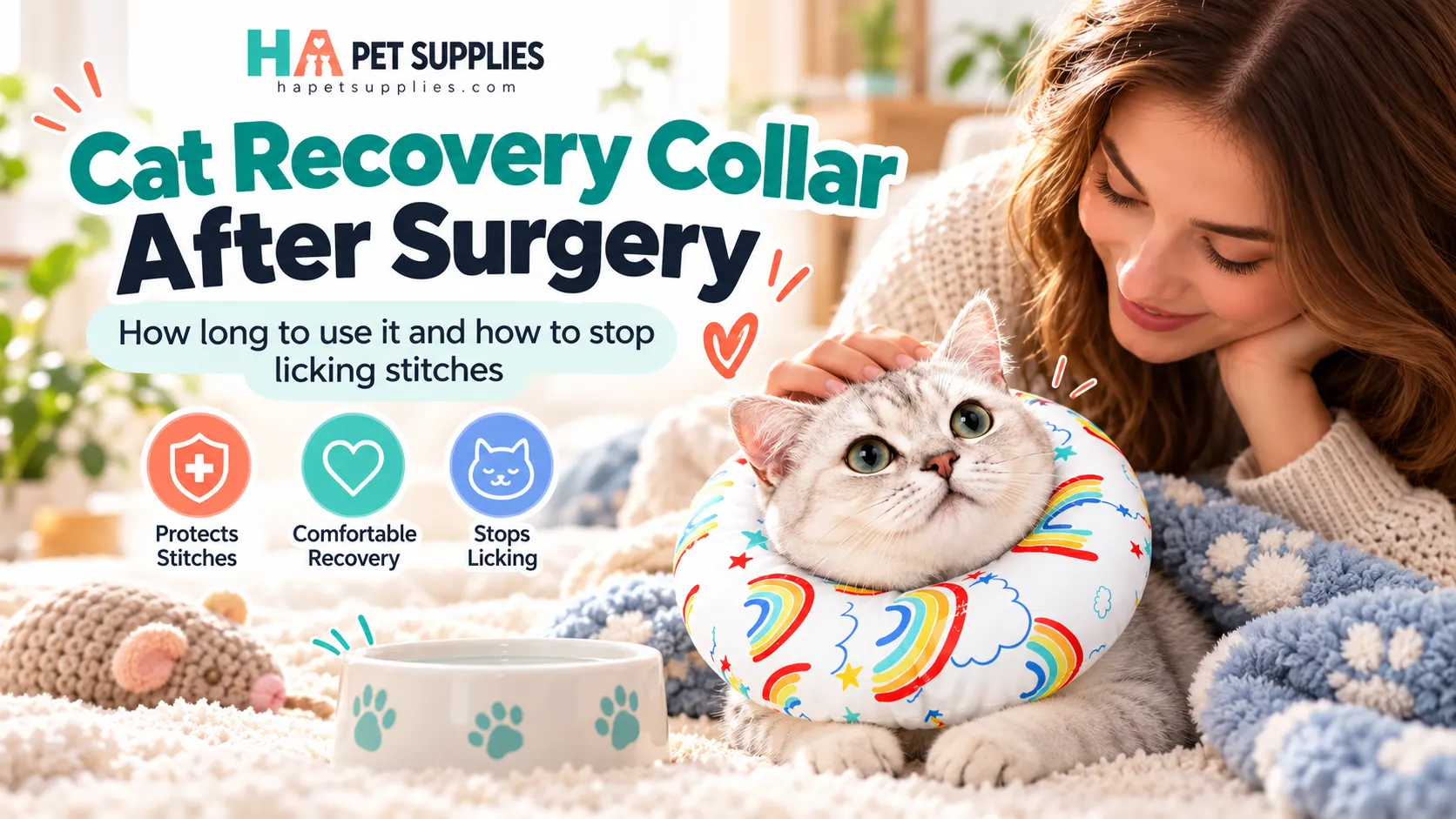
Quick answer: How long should a cat wear a recovery collar after surgery?
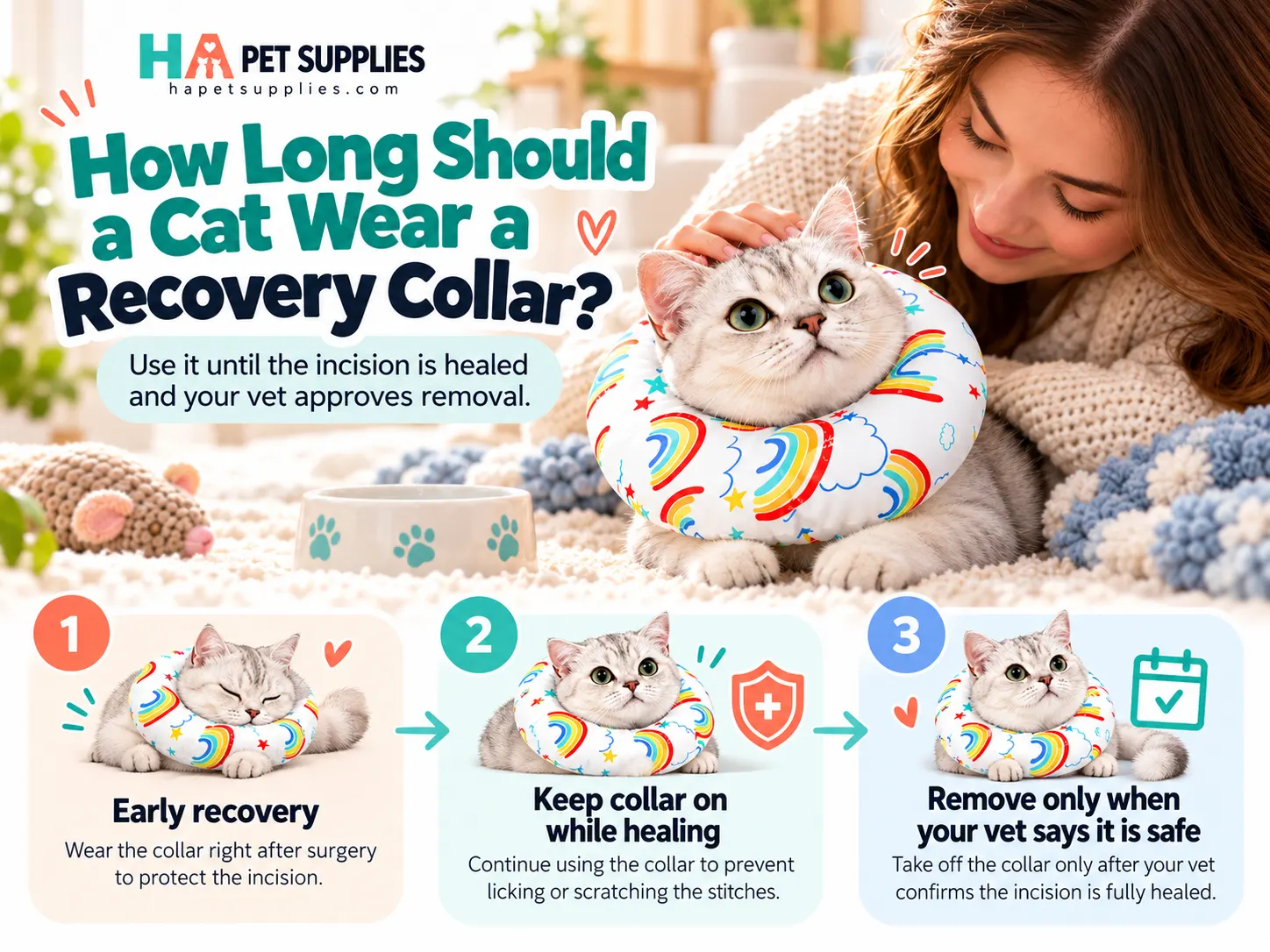
Many cats need protective collars for approximately 7–14 days after routine surgery, but the correct duration depends on the procedure and your veterinarian’s instructions. Keep effective wound protection until your vet confirms it’s safe to remove.
If your cat can still reach its stitches while wearing a soft donut collar, it is not providing adequate protection.
📋 Table of Contents
- 1. Why a cat recovery collar after surgery is important
- 2. How long should a cat wear a cone after surgery?
- 3. Cat recovery collar timeline: day 1 to day 14
- 4. When can you safely remove a cat recovery collar?
- 5. How to prevent your cat from licking stitches
- 6. Soft donut collar vs plastic cone vs recovery suit
- 7. How to choose the right cat recovery collar size
- 8. Helping your cat eat, drink, and sleep comfortably
- 9. Signs that your cat’s surgical wound is healing
- 10. Warning signs that require veterinary attention
- 11. Common recovery collar mistakes
- 12. Frequently asked questions
1. Why a cat recovery collar after surgery is important
Cats are naturally clean animals. They groom themselves frequently, using their tongues to clean their fur. However, after surgery, that normal behaviour can become dangerous. A cat recovery collar after surgery creates a physical barrier that stops your cat from reaching vulnerable incisions. Licking can irritate tissue, introduce bacteria, loosen stitches, or reopen a wound. The ASPCA’s after-surgery instructions emphasise preventing incision licking and limiting activity.
Not every cat needs a recovery collar, but when prescribed, it is essential. Your vet may recommend a traditional plastic Elizabethan collar, a soft donut, or a recovery suit — the choice depends on wound location. A padded donut may be comfortable, but if your cat can still reach its abdomen, it is not effective. Always confirm with your veterinarian that the chosen device blocks access to the specific surgical site.
2. How long should a cat wear a cone after surgery?
The answer varies. After a routine male neuter, some cats need 5–7 days of protection. After a female spay (abdominal incision), typically 10–14 days. Dental, eye, or orthopaedic surgeries may require different timelines. The PetMD guide to cat neutering aftercare explains that recovery duration depends on the procedure. The American College of Veterinary Surgeons stresses that postoperative protection must be tailored to the individual.
Dissolvable stitches do not mean the wound is instantly safe — underlying tissue still needs time. External sutures are often removed at 10–14 days, but the collar should stay until your vet gives the green light.
3. Cat recovery collar after surgery timeline: day 1 to day 14
Day 1–2
Sleepiness, reduced activity. Provide quiet space. Keep protection in place.
Day 3–5
More movement, interest in grooming. Prevent incision access. Follow activity restrictions.
Day 6–10
Improving energy. Healing continues. Maintain protection, monitor incision.
Day 11–14 or later
Possible follow-up. Remove protection only after veterinary approval.
The cat recovery collar timeline varies by surgery and individual healing progress.
During days 1–2, your cat may be drowsy. By day 3–5, they may seem more active — but the incision is still fragile. Even if they look normal by day 6–10, internal healing continues. The Cats Protection after-operation guide reminds owners that limiting activity remains crucial. Never remove the collar just because a specific day has passed.
4. When can you safely remove a cat recovery collar?
Only your veterinarian can decide. A healthy-looking incision does not guarantee complete internal healing. Removing the collar too early risks licking, infection, or re-opening. The PetMD cat surgery aftercare FAQs highlight that even brief licking can cause damage. If your cat needs to eat, try a shallow bowl first. Do not remove the collar at night — cats groom when you’re asleep. If the collar causes distress, contact your vet for adjustments or a different device.
For owners looking for a comfortable alternative, the HA Pet Supplies Cat Recovery Collar offers a soft padded donut design — always confirm with your vet that it provides adequate protection for your cat’s specific wound.
5. How to prevent your cat from licking stitches after surgery
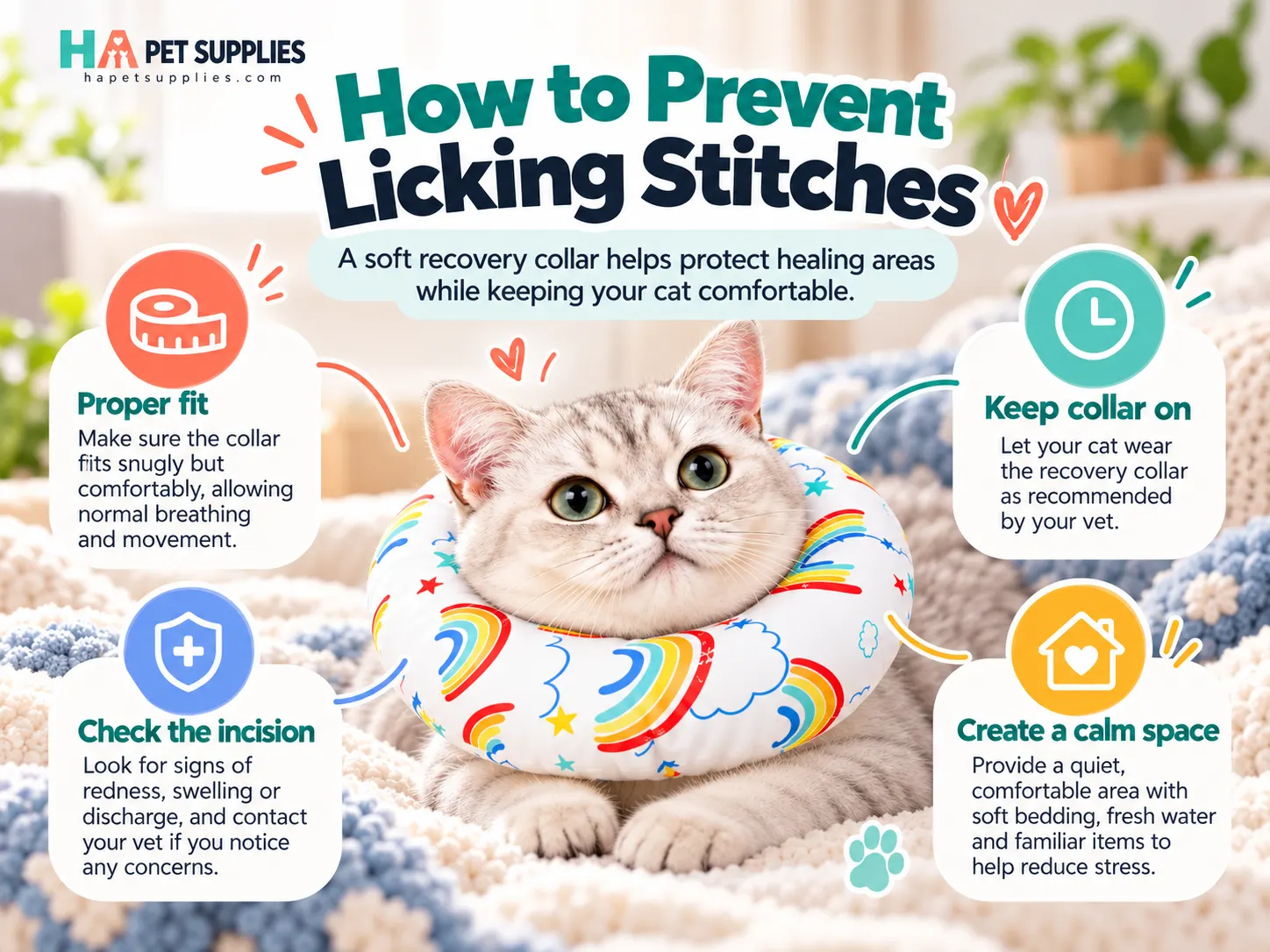
Step 1: Use the protection recommended by your vet. Step 2: Perform a supervised reach check — watch if your cat can bend to the incision. Step 3: Check collar fit — not too tight, not too loose. Step 4: Keep the area clean and dry — no hydrogen peroxide or alcohol unless instructed. The ASPCA handout on preventing harmful licking offers practical tips. Step 5: Separate other pets. Step 6: Reduce stress and activity. Step 7: If protection fails, call your vet — never ignore repeated licking.
6. Soft donut collar vs plastic cone vs recovery suit
| Feature | Soft Donut Collar | Plastic Cone | Recovery Suit |
|---|---|---|---|
| Neck comfort | Often softer | More rigid | No large neck barrier |
| Visibility | Usually less obstructed | May be restricted | Generally unobstructed |
| Eating | May be easier | May need bowl adjustments | Usually unobstructed |
| Abdominal wound protection | May be insufficient | Often effective if fitted correctly | Can protect covered areas |
| Face & head protection | Limited | Often more effective | Limited |
| Best use | Vet-approved comfort alternative | Strong reach restriction | Suitable covered wounds |
For a deeper comparison, see Best Cat Recovery Collar: Soft Donut vs Plastic Cone vs Recovery Suit. The PetMD guide to cone alternatives also explains why comfort must never compromise protection.
7. How to choose the right cat recovery collar size
Measure according to the manufacturer’s instructions. HA Pet Supplies publishes these ranges: XS (10–18 cm), S (12–22 cm), M (16–30 cm), L (19–36 cm). Always confirm whether the measurement refers to head or neck. A correct fit allows breathing and swallowing, stays in place, and blocks wound access. You can browse the cat supplies collection for sizing references.
8. Helping your cat eat, drink, and sleep with a recovery collar
Use a shallow dish, keep water close, and provide a low, stable bed. The PDSA postoperative care guide recommends monitoring food intake. If your cat refuses to eat, contact your vet. For sleep struggles, see Cat Hates Recovery Collar? 9 Easy Ways to Help.
9. How to tell whether your cat’s surgical wound is healing properly
Mild redness or bruising may be normal early on. The incision edges should stay together, and irritation should decrease. The ACVS postoperative guide describes common healing signs. Check the incision at least twice daily. Contact your vet if you see increasing redness, swelling, discharge, or separation.
10. Warning signs: when to call the veterinarian immediately
Seek urgent care if the incision opens, stitches are missing, bleeding continues, or there is foul discharge. Refusal to eat or drink, difficulty urinating, severe pain, or breathing problems are emergencies. The PDSA wound guide provides additional warning signs. Never apply home remedies without veterinary direction.
11. Seven common mistakes cat owners make during recovery
- Removing the collar because the cat looks sad — instead, check fit and ask about alternatives.
- Assuming soft donut collars protect every wound — they may not block lower-body access.
- Allowing too much activity — even playful cats can damage incisions.
- Ignoring food and water difficulties — contact your vet if bowl changes don’t help.
- Applying home remedies — avoid peroxide, alcohol, or unprescribed creams.
- Skipping follow-up appointments — vets need to assess healing.
- Removing protection on a predetermined day — day 7 or 14 is not automatic.
The ASPCA post-surgery care resources offer further guidance.
12. Frequently asked questions about a cat recovery collar after surgery
13. Choosing comfort without compromising your cat’s safety
Recovering from surgery is stressful for cats and owners. The goal is a safe, comfortable recovery. A properly fitted protective collar is essential. Some cats do well with a padded donut-style collar, like the HA Pet Supplies Cat Recovery Collar, which features a cushioned ring and adjustable opening. But comfort must never replace adequate wound protection.
Browse recovery accessories through the HA Pet Supplies shop or read more guides on the HA Pet Supplies blog. If you need help with sizes or orders, use the contact page or request a quote.
Final takeaway: A cat recovery collar after surgery should remain in use as long as effective wound protection is necessary. For many routine procedures, that’s 7–14 days, but your vet’s instructions always take priority. Prevent licking, monitor the incision, provide a calm environment, and seek veterinary advice whenever recovery doesn’t go as expected.
Medical disclaimer: This article is educational and does not replace individualized veterinary advice. Follow your cat’s discharge instructions and contact the treating clinic about wound concerns, collar selection, or removal decisions.
For more pet care resources, visit HA Pet Supplies homepage.