
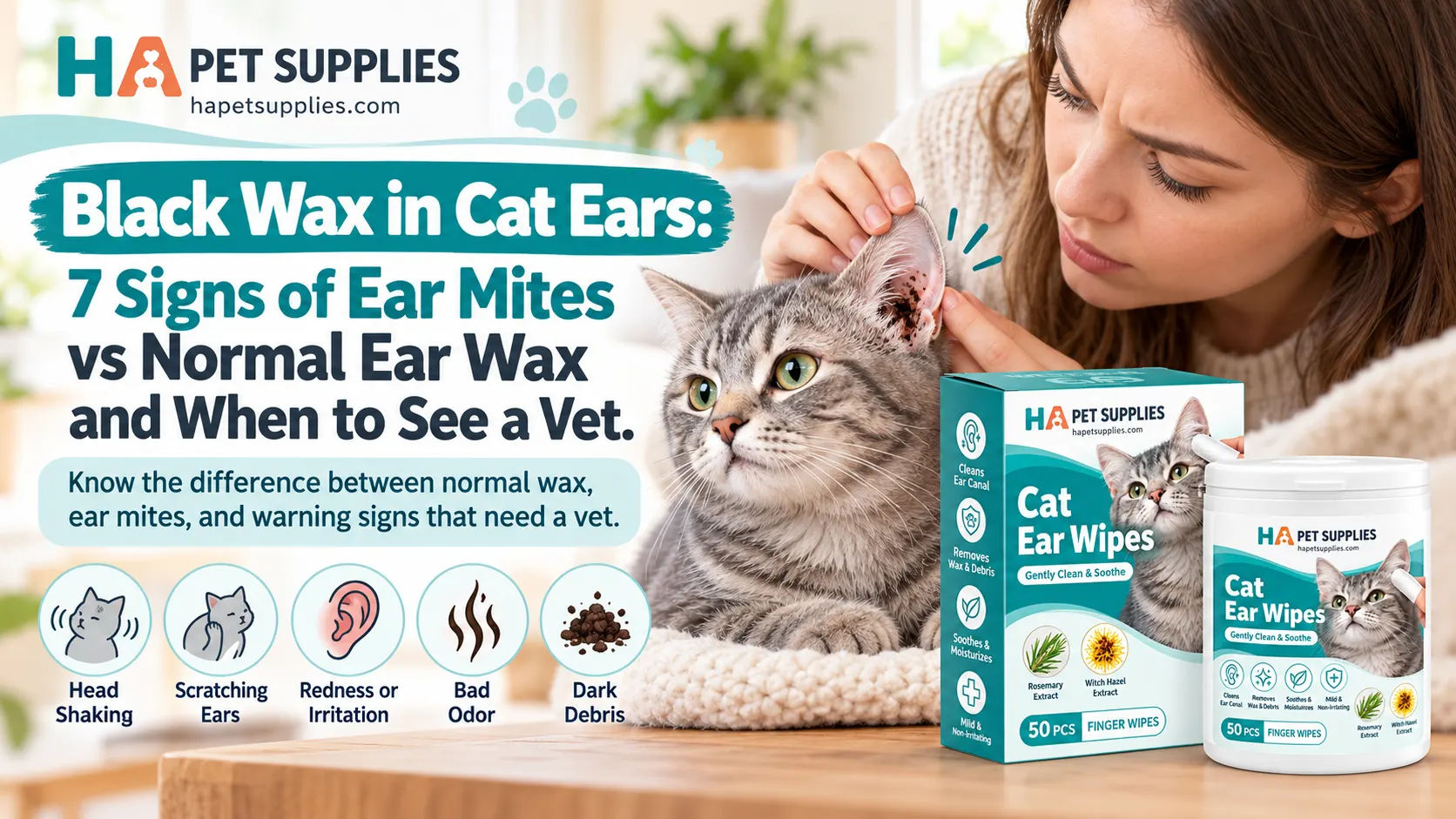
Dark ear debris in cats may require veterinary examination
Black wax in cat ears can be alarming, especially when you notice dark, coffee-ground-like material inside your cat’s ears for the first time.
Perhaps you were petting your tabby cat when you spotted a dark buildup near the ear opening. Maybe your kitten has started scratching its ears repeatedly, shaking its head, or rubbing its face against furniture.
You want to clean the ear and help your cat feel better, but several questions immediately come to mind.
Is black ear wax normal in cats? Does it mean your cat has ear mites? Could it be an infection? Should you use cat ear wipes to remove the buildup? And how do you know when your cat needs a veterinarian?
These questions are important because black ear wax is a symptom, not a diagnosis.
Ear mites are one possible cause of dark debris, particularly in kittens and cats exposed to infected animals. However, bacterial or yeast-associated infections, inflammation, and other ear disorders may produce similar-looking discharge.
According to Cornell University’s Feline Health Center, ear mites are an important cause of external ear inflammation in cats and may cause dark accumulations of wax and debris.
However, veterinarians must distinguish mites from other conditions before recommending treatment.
This guide explains seven warning signs associated with ear mites, how normal wax differs from abnormal discharge, when cat ear wipes may be appropriate, what not to put inside your cat’s ears, and when veterinary care is necessary.
📋 What You’ll Learn
- Quick Answer: Is Black Wax Normal?
- 1. What Is Ear Wax & Why Cats Produce It
- 2. What Causes Black Wax in Cat Ears?
- 3. Seven Signs of Ear Mites vs Normal Wax
- 4. 3D Infographic: 7 Warning Signs
- 5. Ear Mites vs Normal Ear Wax
- 6. Black Wax: What to Do in First 10 Minutes
- 7. How Vets Diagnose Ear Mites
- 8. How Are Ear Mites Treated?
- 9. Why Black Wax Returns After Cleaning
- 10. Should You Use Cat Ear Wipes?
- 11. When to See a Vet
- 12. Reduce Risk of Recurring Ear Problems
- 13. FAQ
- 14. Final Thoughts
⚡ Quick Answer: Is Black Wax in Cat Ears Normal?
A small amount of ear wax can be normal, and its color may vary. However, heavy black, dark brown, crusty, or coffee-ground-like debris is not something to ignore, particularly when your cat also scratches its ears, shakes its head, or shows discomfort.
Possible causes include ear mites, external ear infections, inflammation, or excessive wax accumulation related to another ear condition. You cannot reliably identify the cause from wax color alone.
What should you do immediately?
- Keep your cat calm and avoid forceful handling.
- Look only at the visible outer ear without inserting objects.
- Check for excessive scratching, head shaking, redness, pain, swelling, or unusual odor.
- Avoid pouring homemade cleaners or medication into the ear.
- Contact your veterinarian if the debris is heavy, unusual, persistent, or accompanied by symptoms.
- Keep your cat away from unnecessary close contact with other household pets if ear mites are suspected, until veterinary advice is available.
- Seek urgent veterinary care if your cat develops sudden balance problems, severe pain, or a pronounced head tilt.
Do not attempt to diagnose or treat mites by repeatedly wiping away the black material.
The VCA Animal Hospitals guide to feline ear infections explains that mites and infections may produce overlapping symptoms, including dark discharge, scratching, and head shaking.
Learn When Cat Ears Can Be Cleaned Safely →1. What Is Ear Wax and Why Do Cats Produce It?
Before discussing black wax in cat ears, it helps to understand why ear wax exists. Ear wax, also called cerumen, is a natural substance produced within the ear.
It contributes to the ear’s protective environment and helps trap particles that enter the outer ear. Cats naturally maintain many parts of their bodies through grooming.
Their ears also have mechanisms that help maintain a normal environment without constant human intervention. This is why healthy cats do not automatically need routine ear cleaning.
What does healthy cat ear wax look like?
Normal wax may range from yellowish to shades of brown. A small amount on the accessible outer ear may not be concerning when the cat is comfortable and there is no redness, abnormal discharge, odor, or persistent scratching.
However, appearance alone is not a reliable measure of health. Some cats with ear disease may have relatively little visible discharge, while others develop significant dark material.
Instead of asking only whether the wax is brown or black, ask:
- Is the amount unusual for this cat?
- Has the material appeared suddenly?
- Is the cat scratching or shaking its head?
- Is the ear painful or swollen?
- Is there a noticeable unpleasant smell?
- Does one ear look significantly different from the other?
The combination of symptoms is more useful than color alone.
Why is some ear wax darker than others?
Ear wax can become darker as it mixes with skin cells, environmental debris, and other material. However, dark discharge may also accompany inflammation or parasites.
That means you should not assume that black wax is either harmless or definitely caused by mites. A veterinary examination may be necessary.
According to the Merck Veterinary Manual’s overview of external ear infections in cats, abnormal ear discharge and inflammation can have several underlying causes.
2. What Causes Black Wax in Cat Ears?
Black wax in cat ears can develop for more than one reason. Understanding the possibilities helps owners avoid choosing the wrong treatment.
Ear mites
Ear mites are tiny parasites that can live in a cat’s ear canal. They feed on material in the ear environment and trigger irritation.
Some affected cats develop dark, crusty discharge, intense scratching, and repeated head shaking. Ear mites are especially important to consider in kittens and cats that have been exposed to infected animals.
External ear infections
Otitis externa is inflammation of the external ear canal. This condition may involve bacteria, yeast, parasites, allergic inflammation, or other contributing factors.
Infected or inflamed ears may produce black, brown, or yellow discharge. The ear may also become painful, red, or unusually smelly.
The VCA guide to ear infections in cats notes that mite-related disease and other infections can appear similar.
Yeast overgrowth
Yeast organisms may be present in the normal ear environment. However, changes associated with inflammation can contribute to overgrowth.
A yeast-associated ear problem may produce waxy discharge, irritation, and an unusual smell. It cannot be reliably diagnosed simply by inspecting the wax.
Inflammatory skin conditions
Some cats develop inflammation related to skin disease, allergies, or other medical conditions. Inflamed ear tissue can become uncomfortable and may produce increased debris.
Foreign material
Occasionally, grass seeds or other foreign material can enter the ear canal and cause irritation. Sudden one-sided scratching or head shaking should raise concern.
Do not attempt to remove an object from deep inside the ear with tweezers, cotton swabs, or finger wipes.
Chronic ear disease or abnormal growths
Persistent one-sided discharge or recurring inflammation may sometimes be associated with polyps, structural changes, or other problems. These conditions require professional examination.
The Merck Veterinary Manual’s veterinary overview of otitis externa explains how identifying the underlying cause is essential for successful treatment.
3. Seven Signs of Ear Mites vs Normal Ear Wax in Cats
The following seven signs can help you recognize when dark wax deserves veterinary attention. None of these signs confirms mites on its own.
Sign 1: Thick, Black, Coffee-Ground-Like Debris
One commonly described sign of ear mites is dark, crumbly material resembling coffee grounds. This material may collect around the ear canal and visible inner ear flap. However, other conditions can produce similar discharge.
When it may be ordinary wax: A small amount of loose wax without discomfort may be normal. Your cat should otherwise appear comfortable, with no persistent scratching, significant inflammation, or unusual odor.
When it becomes concerning: Heavy, recurring, crusty dark material should be evaluated by a veterinarian.
The VCA explanation of ear mites in cats and dogs identifies dark waxy or crusty discharge as a possible sign of mite infestation.
What to do: Avoid aggressively cleaning the material away before veterinary assessment.
Sign 2: Frequent Ear Scratching
Cats occasionally scratch their ears as part of normal behavior. However, repeated or forceful scratching may indicate itching or pain.
Cats with ear mites may scratch because the parasites irritate the ear canal. Other causes, including infection or skin inflammation, can produce similar behavior.
Watch whether your cat repeatedly interrupts sleep or normal activity to scratch. Also look for hair loss or small wounds around the ear.
Why scratching matters: Intense scratching can damage the skin. Damaged tissue may become inflamed, and scratching may contribute to swelling or bleeding.
What to do: Arrange veterinary assessment rather than trying to stop the behavior using repeated cleaning.
Sign 3: Repeated Head Shaking
Head shaking can occasionally occur after normal grooming or an unfamiliar sensation. However, repeated or violent shaking often indicates discomfort.
Cats may shake their heads when their ears are itchy, inflamed, painful, or affected by foreign material. Ear mites are one possibility, but not the only one.
What if your cat suddenly starts shaking one side? A sudden one-sided problem may indicate localized irritation, a foreign object, or another issue requiring evaluation.
Do not insert objects into the canal to investigate. The Merck Veterinary Manual’s discussion of feline otitis externa includes head shaking among the symptoms of ear inflammation.
What to do: Contact your veterinarian, especially if shaking persists.
Sign 4: Red or Inflamed Ear Tissue
Healthy visible ear tissue generally appears comfortable and free from significant swelling. When the canal becomes inflamed, the skin may appear unusually red or irritated.
Cats may resist being touched because the area feels uncomfortable. Ear mites can cause inflammation, but infections and other ear disorders can do the same.
Why redness should change your cleaning plan: Cleaning inflamed skin may worsen pain or irritation. Even a soft wipe can become uncomfortable when the skin is already damaged.
What to do: Do not perform ordinary grooming on a clearly inflamed ear without veterinary advice.
Sign 5: Unusual or Strong Ear Odor
A strong unpleasant ear smell is another sign worth investigating. Odor may accompany microbial overgrowth, inflammation, or abnormal discharge.
It does not prove the presence of ear mites. In fact, an odor may suggest additional infection or another ear disorder.
Can cleaning remove the problem? A wipe may remove some surface residue or temporarily reduce visible debris. However, it cannot reliably resolve the underlying cause of an abnormal odor.
The VCA guide to cat ear infections describes unpleasant odor as a possible sign of infection.
What to do: Arrange veterinary examination rather than covering the smell with grooming products.
Sign 6: Crusting, Scabs, or Hair Loss Around the Ears
Persistent scratching can damage the skin around the ear flap. Some cats develop scabs, irritation, or areas of hair loss from excessive scratching or grooming.
Ear mites can contribute to this pattern, but other skin conditions may also be responsible.
What to look for: Examine the outside of the ear without forcing handling. Look for small crusted areas, visible scratches, swelling, or hair thinning.
Do not pull off scabs or apply household disinfectants.
What to do: Ask your veterinarian about the possible underlying causes.
Sign 7: Recent Contact With Other Pets or a New Kitten
Ear mites are contagious between susceptible animals. They commonly spread through close contact.
A newly adopted kitten, contact with infected cats, or exposure to animals carrying mites may increase suspicion. However, exposure does not guarantee infestation.
Similarly, a cat can have black discharge without having mites. The VCA ear mite resource explains the importance of contact between animals and how mites can affect multiple household pets.
Should you check other pets? Yes, observe other cats and dogs for scratching, head shaking, or unusual ear debris.
If mites are confirmed, your veterinarian can advise whether other animals in the household also need treatment.
What to do: Share your pet’s contact history with your veterinarian.
4. 3D Infographic: Seven Ear Mite Warning Signs in Cats
Infographic heading: 7 Warning Signs Behind Black Wax in Cat Ears
A visually attractive 3D infographic featuring a realistic gray tabby cat in the center. Around the cat, seven floating cards with soft shadows, rounded corners, teal borders, and carefully chosen icons.
Thick Dark Wax
Magnified dark ear debris resembling coffee grounds
Sign 1Frequent Scratching
Cat scratching its ear repeatedly or forcefully
Sign 2Repeated Head Shaking
Motion lines around a cat’s head indicating shaking
Sign 3Ear Redness
Red highlighted ear flap showing inflammation
Sign 4Unusual Smell
Odor indicator beside an ear showing bad smell
Sign 5Scabs & Irritation
Skin and hair-loss illustration around the ear
Sign 6Exposure to Infected Pets
Two cats sitting close together showing contact
Sign 7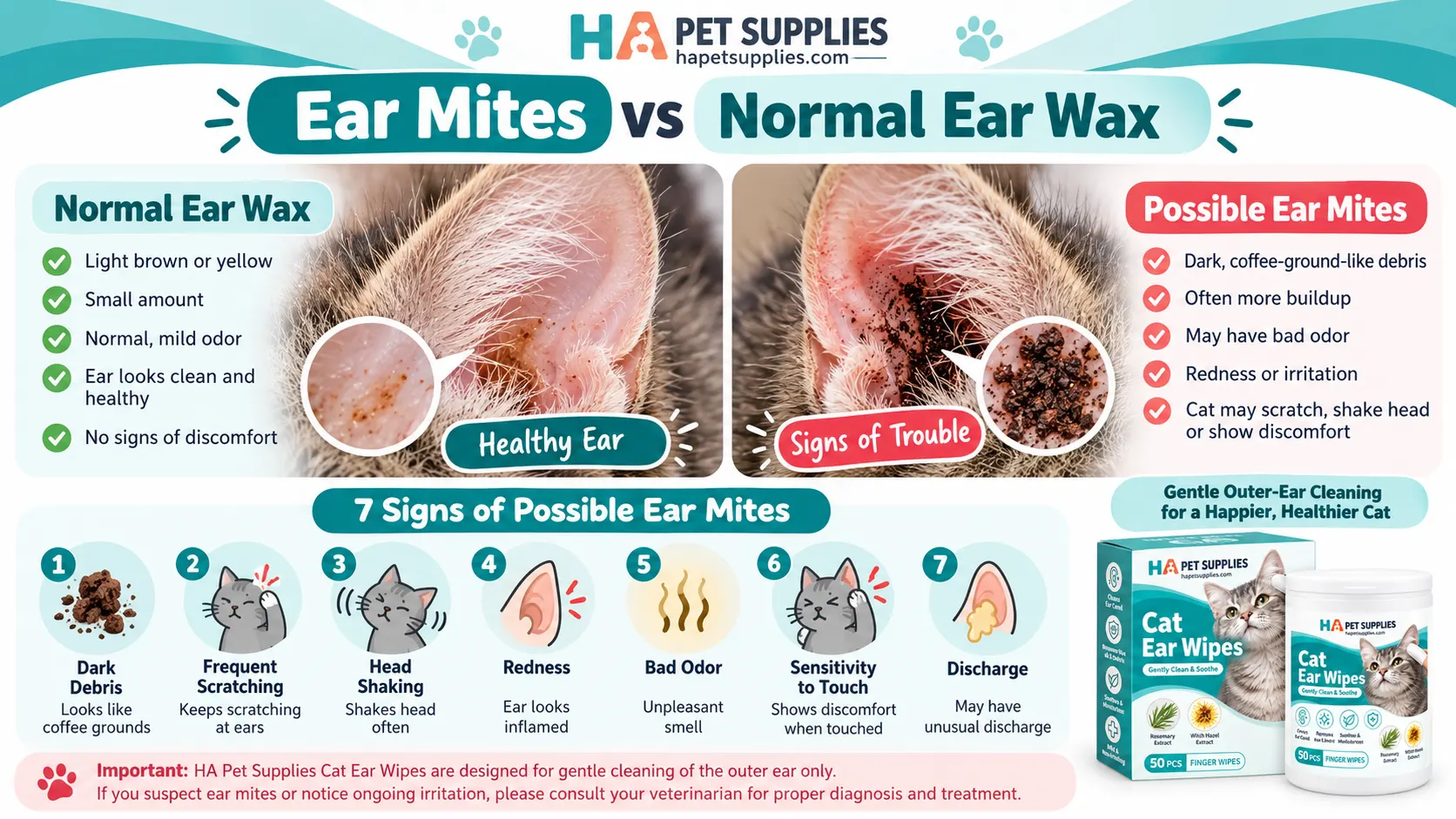

5. Ear Mites vs Normal Ear Wax: What Is the Difference?
Distinguishing ordinary wax from mite-related discharge can be difficult without examination. The following comparison helps owners identify patterns that deserve medical attention.
| Feature | Ordinary ear wax | Possible ear mite infestation |
|---|---|---|
| Amount | Often small | May become excessive |
| Appearance | Can be yellowish or brown | Often dark, waxy, or crusty |
| Scratching | Usually not persistent | May be frequent or intense |
| Head shaking | Usually absent | May occur repeatedly |
| Ear redness | Not expected | May accompany inflammation |
| Scabs or hair loss | Not expected | May occur from scratching |
| Recent animal contact | Not a diagnostic factor | Can increase suspicion |
| Veterinary treatment | Usually unnecessary | Antiparasitic treatment needed if confirmed |
This table describes patterns, not definitive diagnostic criteria. Some cats with mites have less obvious discharge, while some cats with heavy dark material have another ear disorder entirely. The only reliable approach is proper veterinary evaluation.
Can you see ear mites moving?
Ear mites are extremely small. Occasionally they may appear as tiny moving specks, but owners should not rely on visual inspection to confirm their presence. Veterinarians may use an otoscope or microscope to identify mites.
Are ear mites more common in kittens?
Ear mite infestations are an important consideration in kittens, especially those with close contact with infected animals. However, adult cats can also become infested.
The Cornell Feline Health Center’s overview of feline otitis identifies ear mites as a major cause of feline external ear inflammation.
Can indoor cats get ear mites?
Yes. Indoor cats may be exposed through an infected animal brought into the household or other forms of direct contact. Living indoors reduces some exposure opportunities but does not make infestation impossible.
6. Black Wax in Cat Ears: What to Do in the First 10 Minutes
When you discover unusual black ear wax, your first response should focus on safety. Do not rush to remove every visible particle.
First: Observe your cat
Check whether your cat is scratching repeatedly or shaking its head. Notice whether your cat behaves normally or appears distressed. Avoid forcing the cat into your lap if it is frightened.
Second: Look at the outer ear
If your cat permits gentle handling, lift the ear flap slightly. Inspect the visible surface only. Look for dark discharge, redness, swelling, scabs, blood, or unusual odor.
Do not use a cotton swab or finger wipe to explore the canal.
Third: Avoid home medications
Do not apply peroxide, vinegar, rubbing alcohol, essential oils, or leftover ear drops. Different conditions require different medications. An inappropriate product may irritate the ear or interfere with examination.
Fourth: Contact your veterinarian
Explain the amount and appearance of the debris and whether your cat is scratching, shaking its head, or showing pain. Mention recent adoption, exposure to other animals, and any previous ear problems. Ask how quickly the cat should be examined.
Fifth: Protect other pets if mites are suspected
Because ear mites can spread through close contact, avoid unnecessary close interaction between a potentially affected cat and other pets while waiting for veterinary advice.
Do not begin treating all pets with random products. Your veterinarian can determine whether other household animals require evaluation or treatment.
Sixth: Watch for emergency symptoms
Sudden balance loss, severe pain, abnormal eye movements, or a pronounced head tilt can indicate a more serious problem. Seek urgent veterinary attention if these signs appear.
The Merck Veterinary Manual’s guide to middle and inner ear infections in cats explains why balance changes should be taken seriously.
Read the Safe Cat Ear Cleaning Tutorial →7. How Veterinarians Diagnose Ear Mites and Other Ear Conditions
A veterinary examination helps distinguish ear mites from infections and other causes of abnormal discharge. The process usually begins with the cat’s history.
Reviewing symptoms
Your veterinarian may ask when the black wax appeared and whether the cat has been scratching or shaking its head. They may ask whether symptoms affect one or both ears. Recent adoption, exposure to other animals, and previous ear treatment can also be relevant.
Examining the ear
The veterinarian will examine the visible ear and may use an otoscope to inspect the canal. This allows the veterinarian to assess inflammation, accumulated debris, foreign material, and the condition of visible structures.
A painful or frightened cat may require special handling or sedation for a thorough examination.
Microscopic examination
A sample of ear discharge may be examined under a microscope. This can help identify ear mites, bacteria, yeast, or inflammatory changes.
The VCA explanation of ear mite diagnosis describes how mites can be identified by otoscopic inspection or microscopic examination of ear material.
Investigating recurring ear disease
If symptoms keep returning, additional testing may be necessary. Your veterinarian may evaluate underlying skin disease, growths, persistent infection, or possible middle-ear involvement.
The Merck Veterinary Manual’s clinical discussion of otitis externa emphasizes addressing the underlying cause rather than only the visible discharge.
8. How Are Ear Mites in Cats Treated?
If your veterinarian confirms ear mites, treatment generally involves an appropriate antiparasitic medication. The exact product depends on the cat’s age, health, and the veterinarian’s assessment.
Do not use an ear mite product intended for another animal without confirming its safety for cats. Some parasite treatments used in dogs can be dangerous to cats.
Why cleaning alone is not enough
Ear wipes can remove some visible surface material. However, they cannot reliably eliminate living mites or prevent the infestation from continuing. That is why simply wiping black wax away is not an effective treatment plan.
Does every infected cat need ear cleaning?
Not necessarily in the same way. A veterinarian may recommend cleaning when substantial debris is present, but this should be performed with an appropriate product and technique. Very painful ears may require professional cleaning.
How long does treatment take?
Treatment duration depends on the selected medication and the clinical situation. Some products are given as single applications, while others require multiple doses or follow-up treatment. Follow the prescribed instructions rather than stopping when the visible wax appears to improve.
Do other household pets need treatment?
They may. Because ear mites can spread between animals, the veterinarian may recommend treating or examining pets that have been exposed.
The VCA ear mite treatment resource explains the importance of appropriate antiparasitic treatment.
9. Why Black Wax Can Return After Cleaning
Some owners remove dark material only to notice that it returns a few days later. This can be frustrating. However, recurring debris often indicates that the underlying cause has not been addressed.
The underlying condition may still be active
If mites, inflammation, or infection remain present, wax and discharge may continue to accumulate. Cleaning the surface cannot correct every cause.
The ear canal may contain deeper debris
Finger wipes are designed for visible outer-ear cleaning. They cannot adequately remove wax or discharge from deep within the canal.
Another medical problem may be contributing
Persistent ear problems may involve allergies, chronic inflammation, polyps, or other disorders. This is particularly important when one ear repeatedly develops abnormal material.
Cleaning may be irritating the tissue
Frequent wiping or unsuitable products can aggravate sensitive skin. If your cat develops redness or discomfort after using a wipe, stop and seek veterinary advice.
10. Should You Use Cat Ear Wipes When You See Black Wax?
This depends on why the wax is present and whether the ear is healthy. Cat ear wipes can be useful for ordinary loose dirt and wax on accessible outer-ear surfaces. They are not suitable substitutes for veterinary treatment when mites or infections are suspected.
When wiping may be appropriate
Imagine your adult cat has a small amount of ordinary loose debris on the visible ear flap. The cat is comfortable, there is no unusual odor, and the skin appears healthy. If a suitable cat-safe wipe is available, gentle external wiping may be appropriate.
When wiping is not appropriate
Imagine your kitten has thick black debris, scratches intensely, and repeatedly shakes its head. This combination suggests that veterinary assessment is needed. Do not attempt to solve the problem by repeatedly using wipes.
Can cat ear wipes kill ear mites?
Ordinary grooming wipes should not be considered an effective ear mite treatment. Even when a wipe removes visible debris, mites may remain in the ear canal.
Are antibacterial cat ear wipes useful for infections?
Antibacterial is a specific functional claim that requires supporting evidence. Ordinary grooming wipes should not be marketed as treating established infections. A veterinarian can determine whether antimicrobial medication is needed.
HA Pet Supplies Cat Ear Wipes
HA Pet Supplies offers disposable finger-style Cat Ear Wipes intended for convenient routine cleaning of accessible outer-ear surfaces. The product is presented in a 50-piece container.
Its finger-cover format may make gentle external cleaning easier when the ears appear healthy. However, it should not be promoted as a cure for mites, ear infections, or inflammation.
Before using any feline ear wipe, check the complete ingredient information and age suitability.
For more product-selection guidance, see our Best Cat Ear Wipes guide with nine essential safety tips.
Explore HA Cat Ear Wipes →11. When to See a Vet for Black Wax in Cat Ears
Knowing when to seek help is one of the most important parts of feline ear care.
Schedule veterinary assessment when:
- Your cat has heavy or persistent black discharge.
- Scratching or head shaking occurs repeatedly.
- The ear develops an unusual odor.
- The skin looks red or inflamed.
- Your cat resists having the ear touched.
- Ear debris returns quickly after cleaning.
- You suspect exposure to ear mites.
- One ear looks significantly different from the other.
Seek prompt veterinary care when:
Your cat has bleeding, significant swelling, severe discomfort, or an apparently painful ear. Sudden changes in walking, head position, or balance are more urgent.
Seek emergency assessment when:
Your cat suddenly loses balance, cannot walk normally, develops marked abnormal eye movements, or shows severe neurological signs.
The Merck Veterinary Manual’s discussion of otitis media and interna explains how disease affecting deeper ear structures may cause balance disturbances and other complications.
Can repeated scratching cause an ear hematoma?
Yes. Forceful scratching or head shaking may damage small blood vessels within the ear flap. Blood may collect beneath the skin, creating a puffy, swollen ear. This is called an aural hematoma.
It needs veterinary evaluation. Do not attempt to puncture or drain it at home.
12. How to Reduce the Risk of Recurring Ear Problems
Not all feline ear problems can be prevented, but good observation and suitable care can reduce unnecessary risks.
Inspect ears during regular grooming
Look at the visible outer ear while brushing or petting your cat. Check for changes in debris, skin appearance, smell, and comfort.
Avoid unnecessary cleaning
Most healthy cats do not need a fixed cleaning schedule. Over-cleaning may irritate the ear.
The VCA feline ear-cleaning instructions explain why cleaning frequency should be appropriate to the individual cat.
Introduce new pets thoughtfully
When introducing a new kitten or cat, monitor all pets for signs of parasites or illness. Arrange veterinary examinations as appropriate.
Follow parasite treatment instructions
If mites have been diagnosed, follow the prescribed treatment plan carefully. Do not use leftover medications or products intended for other species.
Avoid household ear remedies
Hydrogen peroxide, vinegar, rubbing alcohol, and essential-oil mixtures may irritate delicate feline ear tissue. Use only products and methods recommended for your cat.
Treat underlying conditions
If a cat develops recurrent infections or unusual discharge, ask your veterinarian about potential underlying causes. Repeated cleaning is not a substitute for diagnosis.
For other grooming essentials, explore the HA Pet Supplies cat supplies collection.
13. Frequently Asked Questions About Black Wax in Cat Ears
No. Ear mites are one possible cause, but infections, inflammation, and other conditions may produce similar dark debris.
Small amounts of yellowish or brown wax may be normal. The amount, associated symptoms, and overall ear condition matter more than color alone.
Ear mites are an important consideration in kittens, but other ear conditions are possible. Arrange veterinary assessment, especially if your kitten is scratching or shaking its head.
Yes. Indoor cats can be exposed through direct contact with an infected animal, including a newly adopted pet.
If black debris is heavy, unusual, or associated with symptoms, seek veterinary advice before cleaning. Ordinary wipes cannot treat the underlying cause.
No ordinary grooming wipe should be relied upon to eliminate ear mites. Appropriate antiparasitic medication is required when infestation is confirmed.
A strong unpleasant odor may accompany infection or inflammation. Veterinary evaluation is appropriate.
Yes. Ear mites are contagious and commonly spread through close contact between animals.
Dogs can also be affected by the same type of ear mite. Ask your veterinarian whether other household pets require examination or treatment.
Not necessarily. Yeast-associated disease is one possibility, but wax color alone cannot confirm it.
Severe untreated ear disease can cause complications affecting hearing. Early diagnosis and treatment are important.
Yes. Ear irritation associated with mites can cause scratching and head shaking, although these symptoms also occur with other conditions.
One-sided discharge may occur with localized disease, foreign material, or other conditions. Persistent differences between ears deserve veterinary examination.
Crusting may indicate irritation, inflammation, parasites, or scratching injuries. Do not pick at the crusts. Seek veterinary advice.
Not automatically. Most healthy cats do not need daily cleaning, and over-cleaning can cause irritation.
No. Hydrogen peroxide can irritate ear tissue, especially when inflammation is present.
Do not rely on vinegar or homemade mixtures to treat ear mites. Veterinary antiparasitic medication is needed.
A veterinarian may use an otoscope or microscopic examination of ear material to identify mites.
Contact your veterinarian for reassessment. The original condition may not have fully resolved, or another underlying problem may be present.
Yes. Although infestations are especially important in kittens, cats of any age can be affected.
Yes. Repeated scratching can lead to skin damage, scabs, and hair loss.
Yes. Ear disorders affecting deeper structures can contribute to head tilting or balance problems. Sudden or significant changes require urgent attention.
Your veterinarian may recommend evaluating or treating exposed household pets. Do not begin unapproved medications without guidance.
Do not force handling, especially if pain is suspected. Contact your veterinarian for a safe examination.
Black wax is a clue, not a diagnosis. Persistent or heavy debris, especially with scratching or odor, requires veterinary assessment.
14. Final Thoughts: Black Wax in Cat Ears Should Never Be Ignored When Symptoms Are Present
Discovering black wax inside your cat’s ears can be worrying, particularly when the debris resembles coffee grounds. Ear mites are one possible explanation, but they are not the only cause.
Infections, inflammation, foreign material, and other ear disorders may create similar appearances. The most important lesson is to look beyond color.
Pay attention to scratching, head shaking, redness, swelling, odor, discomfort, and changes in behavior. Do not attempt to diagnose ear mites through appearance alone.
Avoid deep cleaning, homemade chemical mixtures, and leftover medication. Seek veterinary guidance when the debris is unusual, persistent, or accompanied by symptoms.
Once your cat’s ears are healthy, gentle external hygiene may be appropriate when ordinary visible dirt or loose wax needs removal.
HA Pet Supplies Cat Ear Wipes offer a finger-style format intended for routine outer-ear cleaning, not treatment of ear disease.
The best approach combines observation, appropriate veterinary care, and gentle grooming only when needed.
Support Gentle Ear Hygiene for Your Cat
For healthy ears that need occasional external cleaning, discover HA Pet Supplies Cat Ear Wipes and explore suitable feline grooming products.
Shop HA Cat Ear Wipes Online →For questions about product availability, ordering, or bulk purchasing:
Request a Quote →To continue learning about cat grooming and pet-care safety, explore the HA Pet Supplies blog, browse the online pet supplies shop, or contact the team through the HA Pet Supplies contact page.
HA Pet Supplies — Happy Pets. Healthy Pets. Happy Life.