
Cold laser therapy for dogs at home is becoming a popular topic among pet owners looking for practical ways to support dogs experiencing arthritis, joint stiffness, mobility problems, and ongoing discomfort.
Perhaps your older dog has started struggling to stand after a nap. Maybe your dog walks more slowly, avoids the stairs, or becomes reluctant to jump into the car. You may have already tried comfortable bedding, shorter walks, or changes to your dog’s routine — yet you still worry about their mobility.
When you begin researching solutions, red light therapy wraps and cold laser devices often appear in search results. But how do you know whether they are safe? How long should treatment last? How often should you use a device? Does the red light need to touch your dog’s skin? Could it cause injury? And how can you tell whether it is actually helping?
These are important questions, especially when you are purchasing your first device.
Quick answer: At-home photobiomodulation may be considered for some dogs as a complementary therapy, but safe use requires veterinary assessment, accurate device specifications, appropriate placement, and a device-specific treatment schedule. There is no single safe number of minutes or sessions per week that applies to every laser or LED product.
This guide explains what you need to understand before starting, how to prepare your dog for a supervised session, which mistakes to avoid, and how to evaluate the results.
For owners who want to explore a wearable option, the HA Pet Supplies dog cold laser therapy wrap is one product to investigate after confirming its technical specifications and suitability with your veterinarian.
Our objective is simple: help you make an informed decision without relying on exaggerated advertising claims.
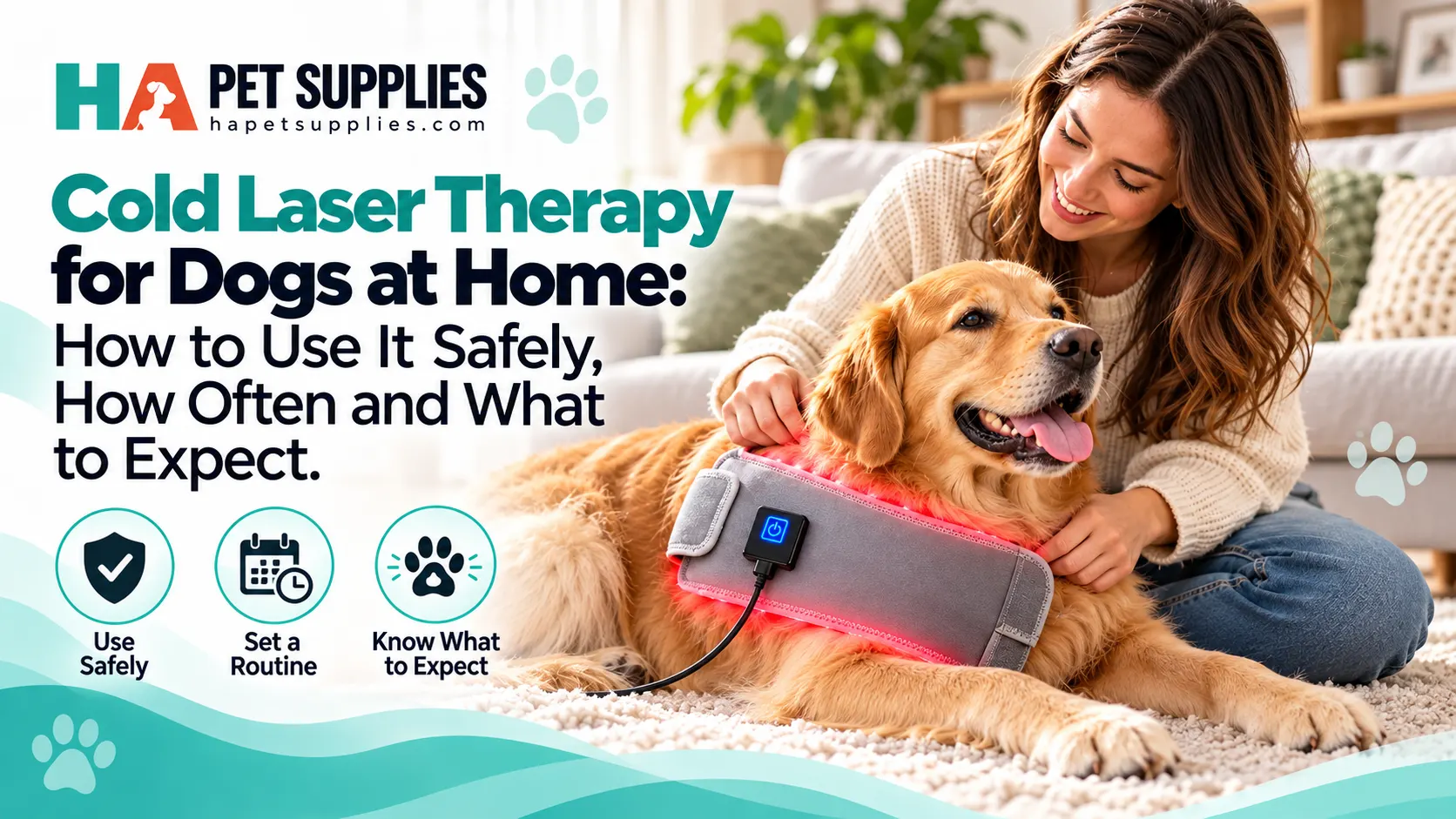
Dog receiving supervised red light therapy support at home
1. Quick Safety Checklist Before Starting Cold Laser Therapy for Dogs at Home
If you have recently purchased a cold laser therapy device, you may be eager to use it immediately. However, preparing properly is far more important than rushing through the first session. Before switching on any therapy wrap, work through these safety questions.
Has your veterinarian identified the cause of your dog’s discomfort?
A dog struggling to stand may have arthritis, but other conditions can cause similar symptoms. The Cornell University College of Veterinary Medicine’s guide to osteoarthritis explains how veterinarians investigate joint disease and manage discomfort through multiple treatments.
Do you know the specifications of your device?
Check whether the product uses laser emitters, LEDs, or another light source. Confirm the wavelengths, power output, operating modes, treatment guidance, and safety warnings. A red glow alone does not establish that the device provides the same therapy as a professional veterinary laser.
Do you have reliable instructions?
You should understand how to operate the controller, how to stop treatment, and what indications require discontinuing use. If the manual does not clearly explain the controls or operating limits, contact the supplier before proceeding.
Is your dog comfortable with the wrap?
A dog should be able to remain relaxed while wearing the device. The straps should not restrict breathing, compress sensitive tissues, or cause discomfort.
Can you supervise the entire session?
Home laser treatment should not be treated as an unattended activity. You need to observe your dog’s behavior and respond if discomfort develops.
Immediate safety warning: If your dog has suddenly become unable to walk, develops paralysis, experiences severe pain, or has suffered a major injury, seek urgent veterinary care rather than attempting home treatment.
3D Infographic — Your Five-Point Safety Check
🩺 Veterinary Diagnosis
Identify the underlying cause before treating any painful area.
🔧 Confirm Device Specs
Verify light source, wavelengths, power, and safety warnings.
📖 Review Instructions
Understand controls, limits, and when to discontinue use.
🐕 Check Comfortable Fit
Ensure straps do not restrict breathing or compress tissues.
👀 Supervise Every Session
Never leave the device running unattended.
This checklist provides educational reminders. It does not declare a device medically safe based solely on completing all five steps.
2. What Is Cold Laser Therapy for Dogs at Home?
Cold laser therapy for dogs at home refers to using a light-based device outside a veterinary clinic with the intention of supporting comfort, rehabilitation, or other therapeutic goals. The treatment belongs to a broader field called photobiomodulation.
Photobiomodulation uses selected wavelengths of light to influence biological processes in tissues. Depending on the equipment, the light source may be a laser or an LED. These technologies are related but not interchangeable in every application.
Why is the therapy called “cold”?
The term cold laser therapy distinguishes low-level therapeutic light applications from high-powered surgical lasers that use heat to cut or remove tissue. It does not mean that the device contains ice or refrigerates the skin. Some equipment produces minimal warmth, while other devices may generate heat during operation.
How does photobiomodulation work?
Photobiomodulation is being investigated for its ability to influence cellular signaling, inflammation-related processes, and tissue responses. Certain molecules can absorb light at particular wavelengths, potentially triggering biological changes.
However, laboratory mechanisms do not guarantee that a specific commercial device improves arthritis or mobility in an individual dog. Clinical effectiveness also depends on the amount of energy delivered, the treatment location, the tissue depth, and the underlying condition.
The American Animal Hospital Association’s discussion of nonpharmacological pain management includes photobiomodulation within the wider context of rehabilitation approaches.
At-home therapy is not the same as professional laser treatment
Veterinary clinics may use therapeutic laser equipment with different output levels, controls, and treatment protocols. A wearable home device may use another light-delivery method. Even when both products are marketed as cold laser therapy, they may not deliver equivalent exposure.
If you want a more detailed explanation of the technology and its possible benefits, read our companion pillar article, Does Cold Laser Therapy Really Work for Dogs? Benefits for Arthritis, Joint Pain and Mobility.
3. Does Cold Laser Therapy for Dogs at Home Actually Work?
This is often the first question buyers ask after discovering light therapy. Some clinical studies have reported improvements in certain pain and mobility outcomes in dogs treated with photobiomodulation. However, the overall evidence is mixed or limited, and the effectiveness of one device cannot automatically be inferred from research involving another.
What does the available evidence suggest?
The 2022 AAHA Pain Management Guidelines recommend individualized, multimodal pain management. These guidelines discuss physical modalities, including laser therapy, as potential adjuncts, while recognizing limitations in the strength of evidence for some treatments.
The American College of Veterinary Surgeons’ osteoarthritis guidance similarly emphasizes combining appropriate treatments rather than depending on one device.
What does this mean for your dog?
Imagine your senior dog has diagnosed arthritis and already receives veterinary treatment. Your veterinarian might consider photobiomodulation as an additional option to evaluate. The realistic goal could be improved comfort during normal walking or reduced difficulty rising after rest. It would not be reasonable to promise that a therapy wrap could permanently repair damaged cartilage or eliminate the need for medication.
Why results vary
Different dogs have different diagnoses, pain levels, body conditions, and treatment histories. Their responses can also be influenced by activity, medication, rehabilitation, and other lifestyle changes. Some dogs may improve. Others may experience no meaningful benefit. That is why monitoring the outcome matters as much as selecting the treatment.
4. Which Dogs Might Benefit From Cold Laser Therapy at Home?
Owners often assume that a device advertised for arthritis is suitable for every older dog. That is not the case.
Senior dogs with diagnosed arthritis
Older dogs commonly experience reduced mobility from joint disease. Some may be candidates for complementary photobiomodulation after veterinary evaluation. The main goal is maintaining comfort and function, not promising dramatic rejuvenation.
Dogs undergoing rehabilitation
A dog recovering from an orthopedic injury or surgery may participate in a veterinary rehabilitation program. Light therapy might be considered as part of that program, depending on the specific condition and equipment. Do not begin treatment over a recent surgical site without approval from the treating veterinarian.
Dogs experiencing chronic stiffness
Chronic stiffness can indicate arthritis, but it may also be associated with neurological or muscular problems. Diagnosis should come before device selection.
Dogs that struggle with repeated clinic visits
Some pets become stressed during car journeys or unfamiliar appointments. A veterinarian-approved home device may offer convenience when ongoing light therapy is appropriate. However, owner convenience should never replace necessary examinations or professional treatment.
Which dogs require extra caution?
Seek veterinary advice before considering treatment for dogs with unexplained lumps, suspected tumors, pregnancy, active skin problems, unusual sensitivity to light, or other complex medical conditions. Never direct therapeutic light into the eyes.
5. How to Use Cold Laser Therapy for Dogs at Home Safely
Using cold laser therapy for dogs at home should begin with preparation rather than pressing the power button. The following steps describe a general safety-oriented workflow for a wearable therapy wrap. They are not a substitute for the manufacturer’s instructions or a veterinary treatment protocol.
Step 1 — Choose a quiet, comfortable location
Select a familiar part of the home where your dog normally relaxes. A living room with a comfortable, non-slip rug may work well. Avoid noisy environments where the dog may become anxious or move suddenly.
Step 2 — Inspect the therapy device
Before connecting the device to power, check the fabric, controller, cable, fastening sections, and any visible light-emitting components. Look for damaged wiring, loose connectors, torn material, or moisture. Do not use equipment that appears damaged.
Step 3 — Confirm the correct treatment area
Treatment location should reflect your dog’s diagnosis and the device’s intended use. Do not position the wrap over an area simply because your dog appears uncomfortable there. Pain can originate from deeper or nearby structures.
Step 4 — Introduce the wrap gradually
Allow your dog to sniff the wrap while it is switched off. Offer calm praise when your dog approaches it voluntarily. Do not force the device onto a frightened animal.
Step 5 — Position the wrap correctly
Once your dog is relaxed, position the wrap according to the manufacturer’s instructions and veterinary guidance. The device should sit comfortably without excessive pressure. Avoid positioning the device near the eyes.
Step 6 — Check the fastening system
Secure the wrap only as instructed. A comfortable fit should prevent unnecessary slipping without compressing the body. If the wrap shifts or interferes with movement, switch the device off and reassess the fit.
Step 7 — Begin the prescribed session
Use the approved operating settings and session duration for your particular equipment. Do not assume that a short session is automatically safe or that longer sessions produce better results. If the device’s output or usage instructions are unclear, do not improvise a treatment dose.
Step 8 — Supervise your dog
Remain nearby throughout the session. Observe whether the dog appears calm, restless, uncomfortable, or unusually sensitive to the treatment area. Watch for skin irritation, excessive warmth, attempts to escape, or changes in breathing.
Step 9 — End the session properly
Switch the device off using the recommended procedure. Disconnect it from power if the manual requires that step. Gently remove the wrap without pulling the dog’s fur. Inspect the area for unexpected redness, irritation, or tenderness.
Step 10 — Record the outcome
Make a short note of the treatment date, device setting, prescribed session duration, treatment location, and any observations. This record can help your veterinarian evaluate whether treatment appears useful.
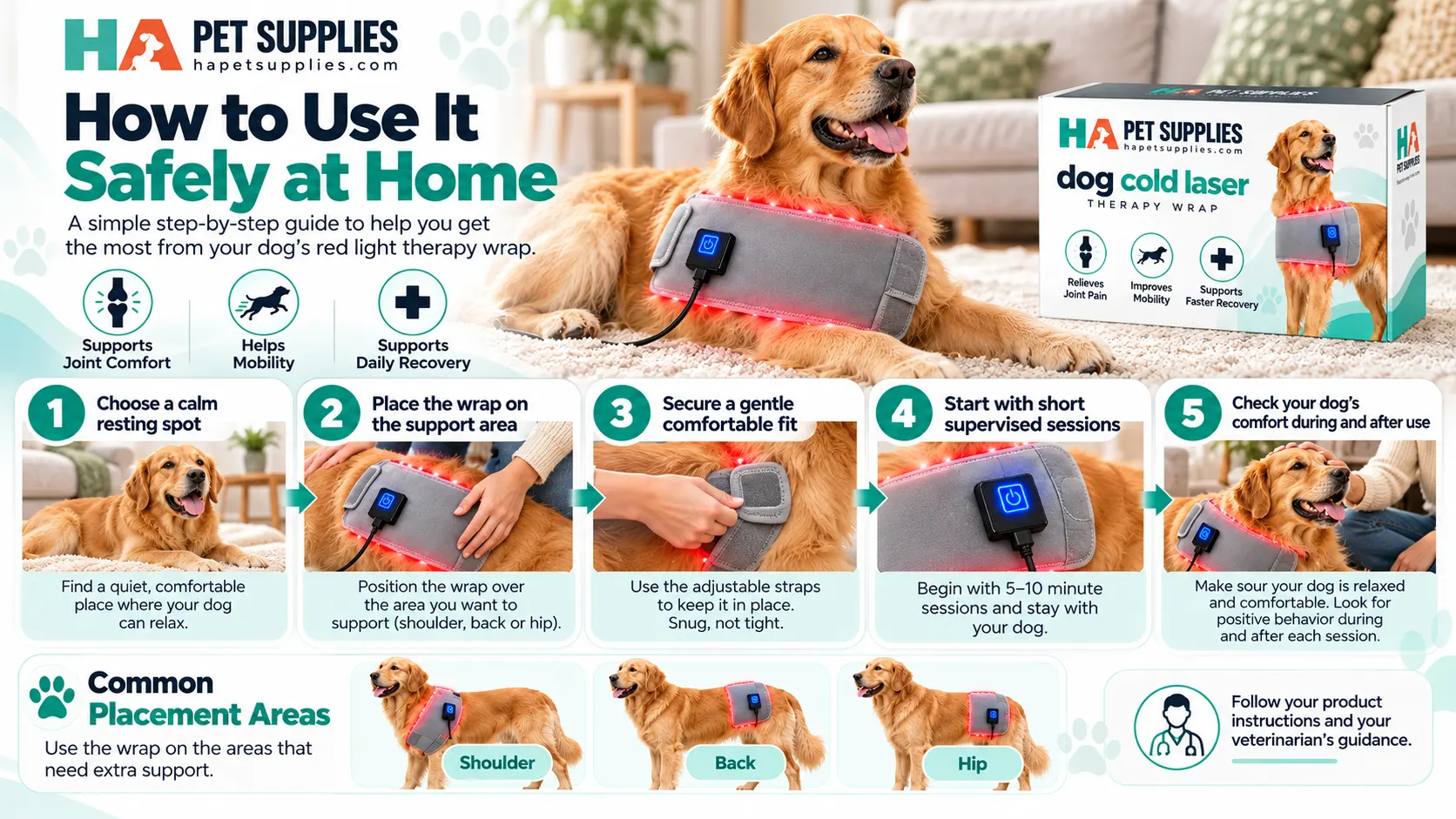
Safe home therapy preparation and supervised use routine
Important: If the infographic displays an example duration such as 5 to 10 minutes, label it as illustrative rather than a recommended dose. The actual treatment time must be based on the specific device and the veterinarian’s guidance.
Interactive 3D Infographic — Ten Steps to Safer Home Use
🏠 Quiet Location
Choose a familiar, calm space where your dog relaxes.
🔍 Inspect Device
Check fabric, controller, cable, and connectors for damage.
📍 Confirm Treatment Area
Follow diagnosis-based placement — not guesswork.
🐾 Introduce Gradually
Let your dog sniff the unpowered wrap first.
🎯 Position Correctly
Comfortable fit without excessive pressure.
🔗 Check Fastenings
Secure without restricting breathing or movement.
▶️ Begin Session
Use approved settings — never improvise a dose.
👀 Supervise
Stay nearby and watch for discomfort or irritation.
⏹️ End Properly
Switch off, disconnect, and inspect the area.
📝 Record Outcome
Note date, settings, duration, and observations.
Always follow the device manual and your veterinarian’s guidance.
6. Where Should You Position a Cold Laser Therapy Wrap?
Many wearable devices are marketed as suitable for the shoulder, back, hip, or other body areas. However, these areas are not interchangeable. Their anatomy, tissue depth, and treatment needs differ.
Shoulder area
A dog with shoulder discomfort may show shortened strides, reduced willingness to run, or pain when the front limb moves. Potential causes include arthritis, tendon problems, muscular injuries, or other orthopedic conditions. Your veterinarian must identify the problem before recommending treatment placement.
Back area
Back discomfort may originate from muscle strain, spinal disease, nerve problems, or other conditions. Some spinal problems require urgent care. If your dog experiences sudden back pain, weakness, dragging of the paws, or difficulty standing, seek veterinary assessment promptly.
Hip area
Hip arthritis and hip dysplasia can affect mobility and comfort. Dogs may hesitate before rising, struggle with stairs, or move with an altered gait. A veterinarian may recommend weight management, medication, rehabilitation, or other treatment measures.
Why placement accuracy matters
The location of visible red light does not necessarily indicate that a therapeutic dose reaches the affected tissue. Light penetration depends on wavelength, output, tissue characteristics, coat thickness, and other factors.
What about thick fur?
Fur can affect light delivery, particularly when it blocks or scatters light between the emitter and skin. That does not mean owners should automatically shave the dog. Ask your veterinarian or the device supplier before making changes to the dog’s coat.
Product fit and comfort
For comparison, the HA Pet Supplies wearable dog therapy wrap shows an adjustable fabric design intended for selected positioning applications. Confirm that the wrap fits your dog’s anatomy and that the proposed treatment location is appropriate before purchase.
7. How Often Should You Use Cold Laser Therapy for Dogs at Home?
This is one of the most searched questions about cold laser therapy for dogs at home. Unfortunately, it is also one of the easiest questions to answer incorrectly. A universal daily schedule does not exist.
Why professional treatment schedules cannot simply be copied
Professional veterinary lasers may deliver energy at rates that differ substantially from home-use devices. Some veterinary practices schedule treatments several times a week during an initial phase, then adjust frequency based on clinical response. Those schedules are established for particular equipment and clinical circumstances.
What determines the number of sessions?
- The underlying diagnosis — chronic arthritis has different needs from a recent injury.
- Device wavelength and output — different equipment delivers different doses.
- Area being treated — small localized areas vs. large joint regions.
- Response to treatment — plans may be adjusted based on progress.
- Other treatments — medication, rehabilitation, and weight management all influence the plan.
Should you use cold laser therapy every day?
Daily use should not be assumed necessary or safe for every device. If the manufacturer or veterinarian recommends a particular frequency, verify that it applies to your dog’s condition and the exact equipment being used. Do not increase frequency to compensate for a lack of visible improvement.
Is there a recommended session duration?
There is no single number of minutes that can be recommended responsibly without knowing the device specifications. Treatment is influenced by factors such as power and energy delivered, not just time.
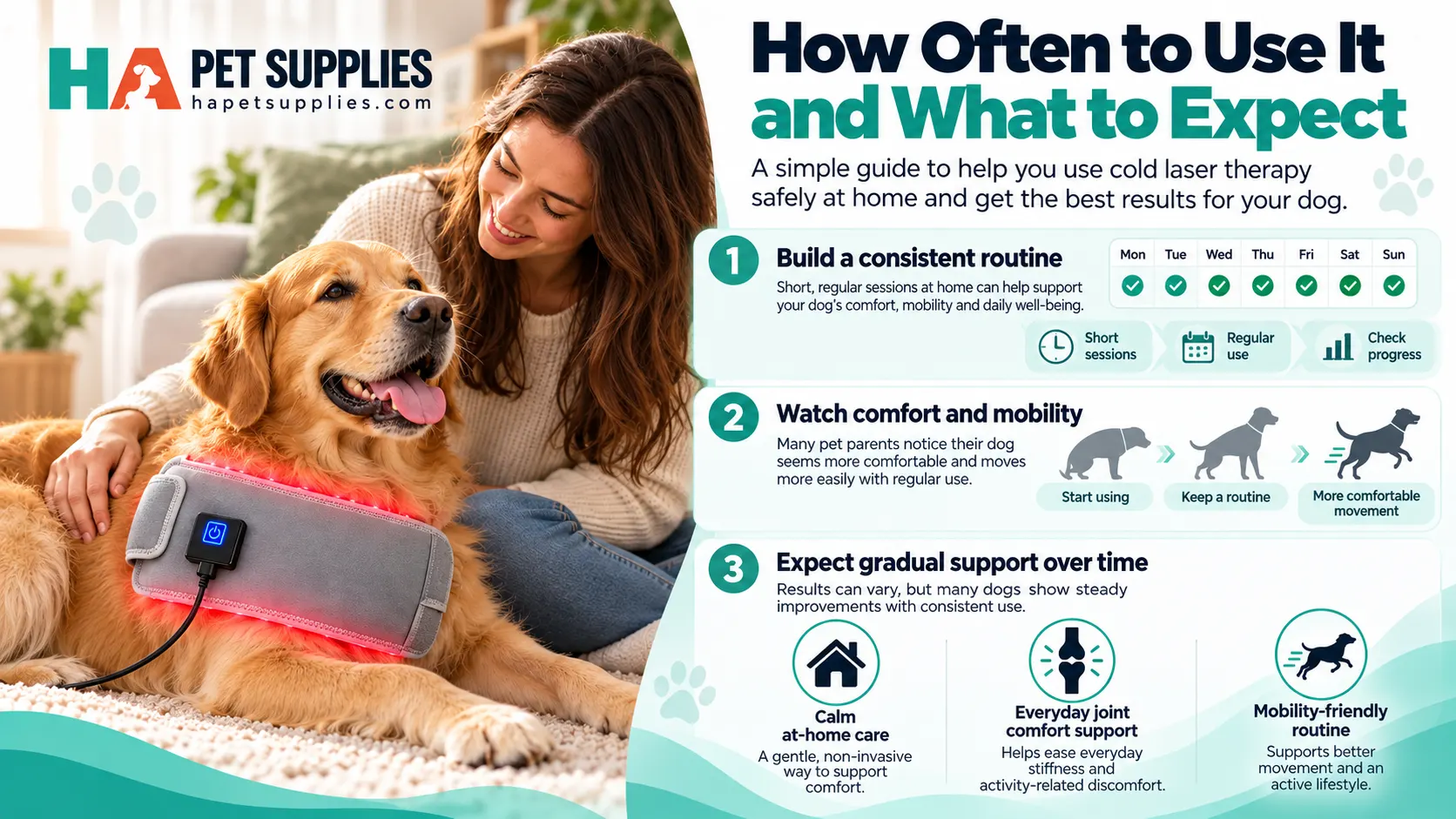
Monitoring your dog’s comfort during a veterinarian-guided therapy routine
If the image includes a seven-day calendar with every day checked, this is a visual tracking example — not a recommendation to treat daily.
3D Infographic — Your Home Therapy Schedule
📅 Session 1
Follow prescribed device settings and duration.
📅 Session 2
Record comfort and mobility observations.
📅 Session 3
Check fit and skin condition before use.
📋 Vet Follow-Up
Discuss progress and adjust the plan as needed.
Do not preselect daily treatment as the default. Follow only the schedule approved by your veterinarian.
8. What Should You Expect After Cold Laser Therapy?
Owners naturally want to know what improvement might look like. A common concern is that treatment may seem to do nothing at first. Another is that the dog may appear happier immediately, making the owner assume the therapy is already working.
What might happen during the first session?
Your dog may simply remain relaxed. Some dogs may be curious about the wrap or uncomfortable with wearing something unfamiliar. An immediate dramatic change in mobility should not be expected.
What might happen after several sessions?
If the treatment is beneficial, you may notice changes in ordinary activities. These could include less hesitation when rising, smoother walking, or greater willingness to move. However, these changes are not proof that laser therapy alone caused improvement.
What if you see no improvement?
Lack of improvement does not automatically mean you need to increase the treatment dose. It may mean that the therapy is not suitable, the diagnosis needs review, the treatment is not being delivered effectively, or another medical problem is contributing to discomfort.
What should not be expected?
Do not expect cold laser therapy to rebuild cartilage, permanently cure arthritis, reverse neurological disease, or replace prescribed medical treatment.
The World Small Animal Veterinary Association’s pain guidelines emphasize recognizing, assessing, and treating pain through individualized veterinary care.
9. How to Track Your Dog’s Progress at Home
If you want to understand whether cold laser therapy for dogs at home is helping, keeping consistent records is one of the most practical steps you can take.
Record movement before starting
Before beginning treatment, observe how your dog behaves during familiar activities. Note how easily your dog rises from a resting position, whether the dog hesitates before walking, and any changes in normal play.
Monitor the same activities
Compare similar activities under reasonably consistent conditions. Try to evaluate normal movements at approximately the same time of day.
Track both positive and negative changes
Your records should include improvement, no change, and worsening. Avoid recording only successful sessions.
Use established pain assessment tools
The University of Pennsylvania’s Canine Brief Pain Inventory is an owner-completed questionnaire designed to measure chronic pain severity. The AAHA chronic pain assessment guidance also discusses structured owner assessments.
Example home monitoring table
| Observation | Before Treatment | During Follow-Up | Notes |
|---|---|---|---|
| Rising after rest | Significant hesitation | Record current behavior | Compare under similar conditions |
| Short walks | Slower than usual | Record current behavior | Note distance and fatigue |
| Stairs | Avoids familiar steps | Record current behavior | Do not force participation |
| Sleeping comfort | Frequent position changes | Record current behavior | Watch for restlessness |
| General mood | Less playful | Record current behavior | Consider other causes |
Interactive Progress Tracker
This is an informal owner checklist, not a validated diagnosis or a substitute for veterinary assessment.
10. Seven Common Cold Laser Therapy Mistakes Dog Owners Should Avoid
Even well-intentioned pet owners can make mistakes when trying a new treatment. Understanding those mistakes beforehand helps reduce avoidable risks.
Treating without knowing the diagnosis
A dog limping or walking slowly does not necessarily have arthritis.
Assuming every red light device is equivalent
A flexible LED wrap and a professional veterinary laser operate differently.
Using longer sessions for faster results
More light exposure is not automatically more effective.
Positioning the wrap too tightly
A tight wrap may cause discomfort or restrict movement.
Leaving the dog unattended
Electrical components and cables can create hazards when unsupervised.
Ignoring warning signs
Unusual tiredness or skin irritation should not be dismissed.
Replacing medication without advice
The FDA’s explanation of pain relievers for pets explains why medication requires careful monitoring.
Click or tap each card to reveal the safer alternative reminder.
11. Professional Veterinary Laser vs At-Home Red Light Therapy Wrap
Before buying a device, understand the distinction between professional veterinary treatment and consumer home equipment. The differences are not limited to price.
| Feature | Professional Veterinary Laser | Home Therapy Wrap |
|---|---|---|
| Operator | Veterinarian or trained professional | Pet owner under appropriate guidance |
| Treatment planning | Clinical protocol | Must follow device-specific veterinary advice |
| Light source | Depends on equipment | May use lasers or LEDs |
| Output | Device-specific, sometimes higher-powered | Device-specific |
| Convenience | Requires appointment | May be more convenient at home |
| Monitoring | Clinical assessment available | Owner observation and scheduled reassessment |
| Main limitation | Cost and clinic access | Variable specifications and limited supervision |
Is one automatically better?
Not necessarily for every purpose. A professional device may provide treatment capabilities that an at-home wrap cannot reproduce. Conversely, a home device may be convenient when the veterinarian considers it suitable. However, convenience should not be confused with equivalent clinical performance.
12. How to Choose a Cold Laser Therapy Device for Dogs at Home
Selecting a suitable device requires more than reading a product headline. Start by deciding what problem you are trying to address. Is your dog receiving treatment for diagnosed arthritis? Are you following a rehabilitation plan? Or are you still investigating the cause of reduced mobility?
Check the technology
Ask whether the device uses laser light, LEDs, or both. The seller should clearly explain what type of light it emits.
Confirm wavelengths
Wavelength information is a basic technical specification. Without it, it becomes difficult to compare devices or understand their intended applications.
Confirm power output and energy delivery
Power and dose are important because treatment response depends partly on the energy delivered to the tissue. Ask for these details rather than relying only on descriptions such as powerful, professional, or advanced.
Review the size
A flexible wrap must suit the dog’s body. Check its length, width, fastening range, and intended placement areas.
Check the controller
Make sure the operating controls are understandable. Review the available settings, timer functions, power requirements, and shutdown procedure.
Review maintenance and cleaning
Check how the manufacturer recommends cleaning the fabric and protecting electrical components. Do not immerse electrical parts unless explicitly permitted by the manual.
Check safety warnings
Look for clear guidance about eye exposure, damaged cables, treatment locations, supervision, and contraindications.
Understand veterinary device regulation
The FDA’s guide to animal-device regulation explains that veterinary devices are generally not subject to the same premarket approval requirements as human medical devices.
What should you ask before purchasing?
Ask whether the supplier can provide the technical specifications, official operating instructions, sizing details, warranty information, and evidence for advertised therapeutic claims. If these details cannot be verified, postpone purchasing until you have enough information.
13. Combining At-Home Laser Therapy With a Complete Veterinary Treatment Plan
Cold laser therapy for dogs at home should not exist separately from the rest of your dog’s healthcare. Dogs with arthritis often benefit from several coordinated interventions.
The American College of Veterinary Surgeons’ guidance on canine osteoarthritis describes a multimodal approach that may involve weight control, controlled exercise, rehabilitation, and appropriate medical treatment.
Veterinary examination and diagnosis
The starting point is determining what is actually causing pain. A veterinarian may recommend physical examination, imaging, or additional tests.
Medication when appropriate
Some dogs need prescription medication to control pain or inflammation. These medications should be selected and monitored by a veterinarian. Do not attempt to replace them with a home device without professional guidance.
Weight management
Excess body weight can increase strain on painful joints. Maintaining a healthy body condition may significantly improve mobility and comfort.
Controlled exercise
Appropriate low-impact activity helps maintain muscle strength. Avoid sudden increases in activity simply because the dog appears more comfortable after treatment.
Rehabilitation
Professional rehabilitation may include therapeutic exercise, strength training, or other modalities chosen for the dog’s condition.
Home modifications
Non-slip rugs can provide better traction. Ramps may reduce jumping. Supportive bedding can improve resting comfort.
Complementary light therapy
If the veterinarian approves it, photobiomodulation can be considered as an additional element. The treatment should have a clear objective.
Reassessment
Every treatment plan should include regular review. If your dog is getting worse, has stopped improving, or develops new symptoms, the veterinarian may need to adjust the plan.
For a detailed discussion of treatment planning, read Dog Arthritis and Joint Pain — When to Consider Cold Laser Therapy and How It Fits Into a Treatment Plan.
14. When Should You Stop Treatment and Contact Your Veterinarian?
Knowing when not to continue a treatment is just as important as knowing how to begin.
🚨 Stop Immediately
Your dog appears distressed, vocalizes, trembles, or repeatedly tries to escape.
⚠️ Stop and Reassess
Skin irritation develops, or the device becomes unexpectedly hot.
📞 Contact Your Vet
Mobility suddenly worsens, or your dog develops new symptoms.
What if your dog cannot walk?
Seek urgent veterinary care if your dog suddenly loses the ability to stand or walk. Light therapy should never delay diagnosis of a potentially serious orthopedic or neurological problem.
The AAHA guidance on distinguishing acute and chronic pain reinforces the importance of appropriate assessment.
15. Why Consider HA Pet Supplies for a Dog Therapy Wrap?
When researching cold laser therapy for dogs at home, owners may prefer products that are practical to handle and straightforward to investigate. The HA Pet Supplies therapy wrap is marketed as a wearable red light therapy support product for dogs.
Soft fabric construction
The pictured device uses gray fabric with stitched edges. A fabric-based design may be convenient when positioning a wrap on selected areas of the body.
Adjustable fastening sections
The visible fastening system is intended to help hold the wrap in position. Before purchase, confirm that its adjustment range suits your dog’s size and intended treatment area.
Compact wired controller
The product imagery shows a small black controller with a blue illuminated power symbol. Review the product manual to confirm its exact operating functions.
Product comparison matters
If you are considering this product, review the HA Pet Supplies dog cold laser therapy wrap product listing and request any missing technical details before purchasing.
For owners comparing other everyday pet-care products, the HA Pet Supplies dog supplies category provides additional items to explore.
Ask questions before you purchase
If you need details about product dimensions, operation, compatibility, or availability, you can contact HA Pet Supplies. For product quotations or specific purchase enquiries, use the HA Pet Supplies request a quote page.
16. Frequently Asked Questions About Cold Laser Therapy for Dogs at Home
At-home light therapy may be appropriate for some dogs when the device is suitable and used correctly. However, safety depends on the equipment, treatment location, operating settings, and the dog’s health. Veterinary approval, reliable instructions, and supervision are important.
There is no universal session duration. The appropriate time depends on the device’s output, intended dose, treatment area, and prescribed protocol. Do not copy a time recommendation from another product or a professional veterinary laser.
Daily use should not be assumed appropriate for all equipment. Follow a veterinarian-approved plan that is specific to the device and the dog’s condition. Increasing the number of sessions does not guarantee better results.
Appropriately administered low-level photobiomodulation is generally intended to be comfortable. However, a dog may dislike wearing a wrap, and unsuitable devices or incorrect use may create risks. Stop treatment if your dog shows discomfort.
Some studies suggest possible improvements in pain or function for selected dogs with osteoarthritis. However, evidence is limited, and no home-use device should be assumed to cure arthritis. It may be discussed as a complementary option within a wider care plan.
Only if the device is intended for that placement and your veterinarian considers it appropriate. Back pain may have several causes, including conditions that require urgent treatment. Do not use a wrap to self-treat unexplained spinal discomfort.
A veterinarian may consider photobiomodulation for selected hip-related conditions. However, placement, energy delivery, and treatment goals must be appropriate for the equipment. A wearable wrap does not guarantee that a therapeutic dose reaches a deep hip joint.
Do not automatically shave your dog. Coat thickness can affect light delivery, but appropriate preparation depends on the device and treatment protocol. Ask the veterinarian or manufacturer for guidance.
A calm dog may rest during a supervised session if the device is suitable for that use. However, do not leave the equipment running unattended or use it overnight unless a qualified veterinarian and verified device instructions specifically support the intended arrangement.
An immediate noticeable improvement is not guaranteed. Some dogs may respond to treatment, while others may show little or no measurable benefit. Changes should be evaluated over an appropriate period using consistent observations and veterinary follow-up.
No. Do not replace or discontinue prescribed medication independently. Veterinary arthritis management may require medicines, exercise changes, rehabilitation, weight control, and other measures. Light therapy may be considered an adjunct in selected cases.
Some professional rehabilitation programs incorporate photobiomodulation. However, a recent surgical site requires special consideration. Do not apply a home device over a surgical area without approval from the veterinarian managing the recovery.
Not necessarily. They can differ in light source, wavelength, power, treatment coverage, and energy delivery. A flexible consumer wrap should not automatically be considered equivalent to a professional veterinary therapeutic laser.
Potential positive changes may include easier rising, smoother walking, and greater comfort during familiar activities. However, these changes can also be influenced by other treatments. Use consistent records and discuss observations with your veterinarian.
Stop if your dog becomes distressed, develops skin irritation, experiences worsening symptoms, or if the equipment appears damaged or excessively warm. Contact your veterinarian for guidance when concerning signs occur.
Do not apply therapy over an unexplained mass without veterinary approval. A lump may require examination or diagnostic testing. The cause must be understood before treating the surrounding area.
Ask for the light source, wavelengths, output power, operating instructions, treatment limitations, sizing information, safety warnings, and product-specific evidence. These details are more meaningful than marketing descriptions alone.
It may be worth considering if your veterinarian believes the therapy is appropriate, the device is suitable, and its technical information can be verified. It is less likely to be a good purchase if the underlying condition is unknown or the seller cannot provide important specifications.
17. Final Verdict — Using Cold Laser Therapy for Dogs at Home Responsibly
Cold laser therapy for dogs at home may offer a practical complementary option for selected pets, particularly when owners are following an established veterinary treatment plan. However, it is important to separate potential benefits from guaranteed outcomes.
The current scientific evidence does not support the assumption that every red light therapy device provides the same results. Nor does it support treating every painful dog without first identifying the underlying cause.
The best approach begins with diagnosis, continues with suitable treatment, and relies on careful monitoring.
Before using any cold laser therapy wrap, confirm the device specifications, understand the instructions, discuss treatment goals with your veterinarian, and establish an appropriate schedule.
For dogs with arthritis, light therapy should be considered within a broader plan that may include prescribed pain relief, weight management, controlled exercise, rehabilitation, and supportive home modifications.
If you are exploring a wearable product, review the HA Pet Supplies dog cold laser therapy wrap to understand its visible features and request its full technical specifications before purchasing.
You can also browse the HA Pet Supplies shop for everyday pet-care products and read other practical guides in the HA Pet Supplies blog.
If you have product-related questions, contact the HA Pet Supplies team or request a quote for further information.
A successful home-care routine is not about using a device as frequently as possible. It is about choosing appropriate care, following professional guidance, and helping your dog remain comfortable.
HA Pet Supplies — Happy Pets. Healthy Pets. Happy Life.