
A gravity cat feeder and water dispenser can make everyday feeding and drinking routines simpler, but the system still needs correct setup, regular checking and proper cleaning.
If you have just bought one, you may be wondering: How much food should I add? Where should I put the feeder? Should the food and water dispensers sit next to each other? How often should they be cleaned? Can I simply add new food on top of old food? Should the reservoir be completely dry before refilling?
These are practical questions, and getting them right matters more than simply filling the containers and walking away. The basic routine is easy: Set it up correctly → add suitable food and fresh water → check it daily → empty it when needed → wash it → rinse it → dry it completely → refill it.
The U.S. Food and Drug Administration recommends keeping pet food equipment clean and dry, washing food bowls and utensils regularly, and washing water bowls daily. It also recommends storing dry pet food in a cool, dry environment.
This guide explains the whole process step by step so that a new owner can confidently use a gravity feeding setup without treating “automatic” as “maintenance-free.”
WASH
Wash suitable food-contact parts. Reach corners, openings and bowl edges.
RINSE
Remove food debris and soap thoroughly. Inspect before moving to drying.
DRY
Allow cleaned parts to dry before refilling. Especially before adding dry food.
REFILL
Reassemble, refill and check the flow.
How Does a Gravity Cat Feeder and Water Dispenser Work?
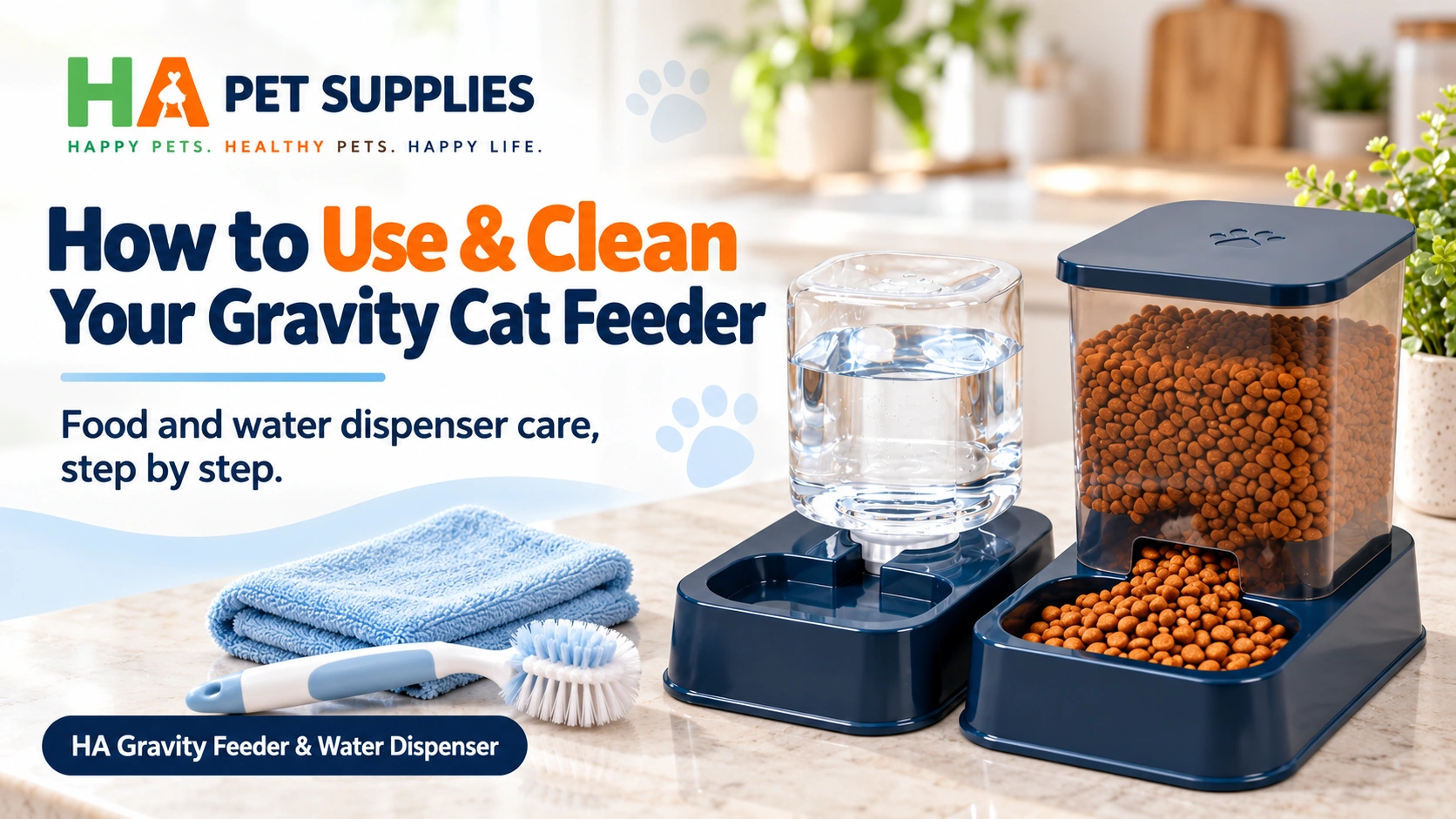
Understanding the mechanism makes maintenance much easier. A gravity food feeder generally has a food reservoir, an opening or dispensing area, a feeding bowl or tray, and a base. As your cat eats food from the bowl, more dry food can move downward from the reservoir into the available space.
A gravity water dispenser follows a related principle. The reservoir supplies more water to the drinking area as the available water level drops. The exact construction varies between products, so always follow the instructions supplied with your particular unit.
Unlike a timed electronic feeder, a basic gravity system may not need programming. That simplicity can be useful for owners who want fewer controls and an easy-to-understand feeding setup. If you are considering this type of product rather than already owning one, you can review the automatic cat feeder available from HA Pet Supplies and compare its listed information with your needs before purchasing.
But simplicity does not mean you can ignore the feeder. You still need to check the food, check the water, watch what your cat is eating, clean food-contact areas, and refill the system appropriately.
Before Using a Gravity Cat Feeder and Water Dispenser for the First Time
Do not take a new feeder out of its packaging, fill it immediately and assume it is ready. Begin with a short setup check.
Step 1: Inspect all components
Look for visible packaging material, removable inserts, protective film, damage, cracks, loose parts, and anything obstructing the dispensing opening. If anything appears damaged or unclear, check the instructions or contact the seller before use. For questions about an HA Pet Supplies product that are not answered on the listing, use the HA Pet Supplies contact page rather than guessing about an unlisted feature.
Step 2: Check the manufacturer’s washing instructions
Find out which components are intended to be washed and whether there are any restrictions. Do not assume every material or component can be cleaned in exactly the same way. The CDC specifically advises following the cleaning instructions on pet items where instructions are available.
Step 3: Wash appropriate food-contact parts
Before the first fill, clean washable food and water-contact areas according to the product instructions. This removes dust and residue that may have accumulated during packaging, transport or storage.
Step 4: Rinse carefully
Soap should not remain inside the bowl or reservoir. Rinse thoroughly.
Step 5: Dry the parts
This step is particularly important before adding dry food. Do not refill a dry-food reservoir while water remains inside unless the manufacturer’s instructions specifically describe another method.
Where Should You Put a Gravity Cat Feeder and Water Dispenser?
Placement is more important than many first-time owners realize. A feeder sitting in the wrong place can be inconvenient for you and less comfortable for your cat. Choose a location that is accessible to your cat, reasonably quiet, easy for you to inspect, away from the litter tray, on a stable surface, easy to clean around, and protected from excessive heat or moisture.
Avoid placing the feeding station somewhere that people constantly step over the cat. Cats Protection recommends placing feeding resources in quieter locations where a cat does not feel unnecessarily disturbed while eating. A practical feeding station should make daily care easier rather than creating an obstacle in the room.
Should a Gravity Cat Feeder and Water Dispenser Sit Side by Side?
This is one of the most useful improvements you can make. Although gravity food-and-water sets are often photographed together, you do not necessarily need to position the food bowl directly beside the water.
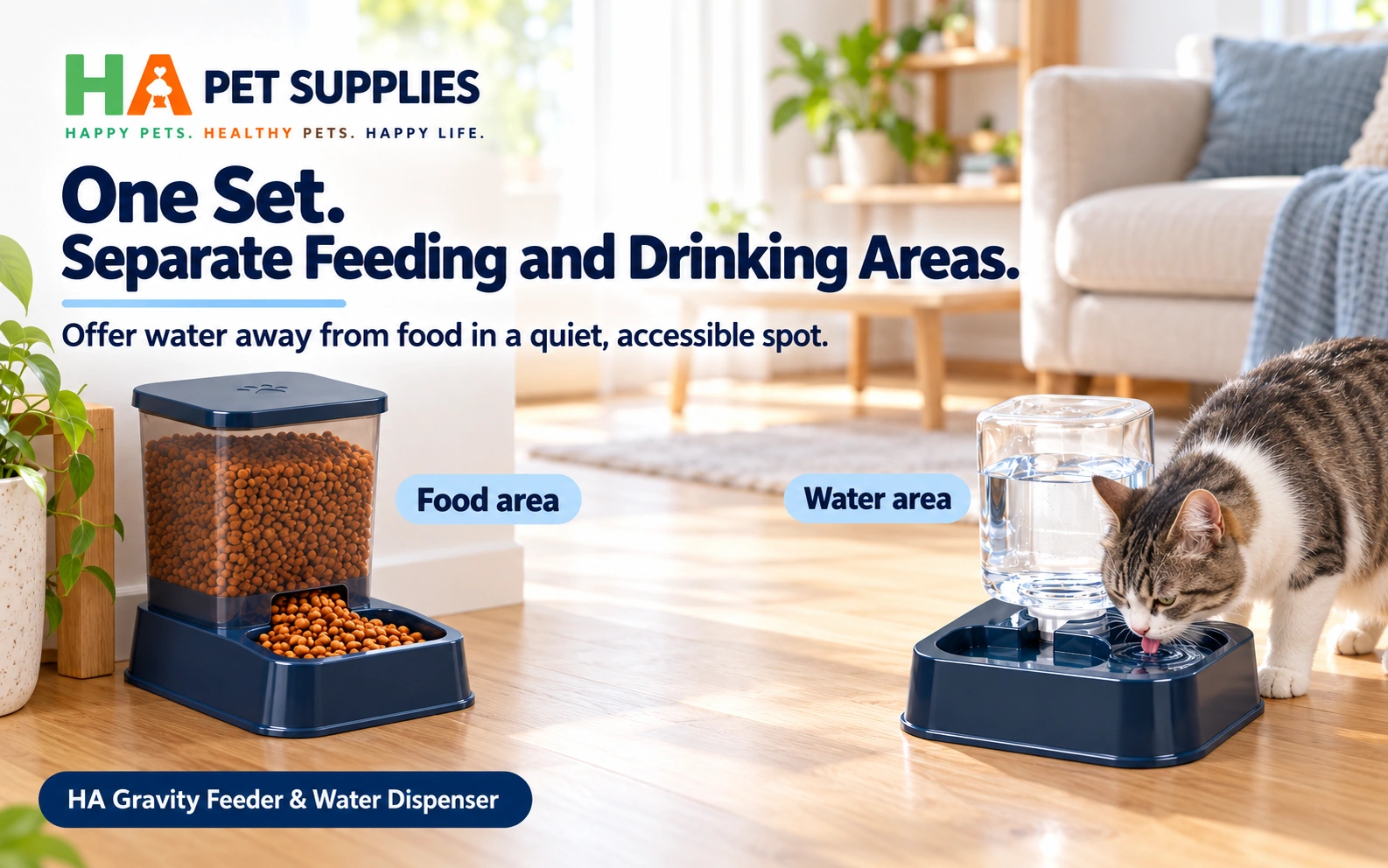
Cats Protection advises keeping food and water bowls separate and notes that many cats prefer drinking away from their eating area. International Cat Care similarly advises providing fresh, clean water away from the eating area and recommends avoiding very close food-and-water “double feeder” arrangements.
Instead of having food and water directly touching each other, consider separating them with some distance. The exact distance does not need to become complicated. The goal is simply to give the cat distinct feeding and drinking resources. If space allows, you might even place water in another suitable part of the room or home.
Cornell’s hydration guidance recommends providing fresh water in places cats can easily access and making sure competition with other pets does not prevent access.
How to Fill a Gravity Cat Feeder Correctly
Once the feeder is clean and dry, filling it is straightforward.
Step 1: Use suitable food
Check the feeder’s instructions to confirm the type of food it is intended to dispense. A simple gravity feeder normally relies on dry food moving through the reservoir. Do not assume that wet food, semi-moist food or unusually shaped pieces are compatible unless the manufacturer states that they are.
Step 2: Check the food itself
Before filling, inspect the food. Do not use food that smells unusual, appears wet when it should be dry, contains obvious contamination, has been stored improperly, or is beyond the manufacturer’s recommended use period. The FDA recommends checking packaging condition and safely discarding old or spoiled pet food.
Step 3: Add the food
Fill according to the feeder’s instructions and capacity. Do not force additional food into the reservoir beyond its intended level.
Step 4: Make sure food reaches the bowl
Do not walk away immediately. Check the feeding tray. If food is not available where the cat eats, the fact that the reservoir is full does not help.
Step 5: Observe your cat
Watch the first few uses. Make sure your cat can reach the bowl comfortably and that food continues to move appropriately.
How Much Food Should You Put in a Gravity Cat Feeder?
This is where the feeder and the feeding plan must be separated. The feeder’s capacity tells you how much food can fit inside. It does not tell you how much food your cat should eat.
Cornell explains that appropriate feeding depends on factors such as a cat’s age, health and individual needs, and warns that free access to dry food may contribute to overeating in some cats. So do not think: “Large reservoir = fill it completely every time.” Instead ask: “What amount fits my cat’s established feeding plan?”
If your cat eats too much whenever food remains available, a gravity feeding setup may require closer monitoring or may not match that cat’s needs. For a deeper comparison of feeding styles, read our guide to gravity vs timed automatic cat feeders. The WSAVA also recommends individualized nutritional assessment rather than using one feeding approach for every animal.
How to Fill and Use the Gravity Water Dispenser
The water side needs equal attention.
Step 1: Start with a clean dispenser
Do not refill dirty water indefinitely. Empty it and clean appropriate parts regularly.
Step 2: Add fresh drinking water
Use water that is appropriate for your cat to drink.
Step 3: Reassemble carefully
Make sure the reservoir and base are connected according to the product’s design.
Step 4: Check the flow
Confirm water reaches the drinking area.
Step 5: Check stability
Place the dispenser on a stable surface where it is less likely to be tipped.
Step 6: Observe the level daily
A large reservoir does not eliminate the need to check drinking water. Cornell states that cats should have access to clean, fresh water and notes that accessible fresh water is an important part of preventing dehydration.
Daily Gravity Cat Feeder and Water Dispenser Checklist
You do not need a complicated inspection. A 30-second check can be enough to notice common problems.
30-Second Daily Check
- FOOD: Is food reaching the feeding bowl? Does it look and smell normal? Is there old food sitting underneath new food?
- WATER: Is fresh water available? Is the drinking area visibly clean? Has food, hair or other debris entered the water?
- FEEDER: Is it stable? Is anything blocking the dispensing area?
- CAT: Is your cat actually eating and drinking normally? A full gravity reservoir does not prove your cat has eaten.
How to Clean a Gravity Cat Feeder Step by Step
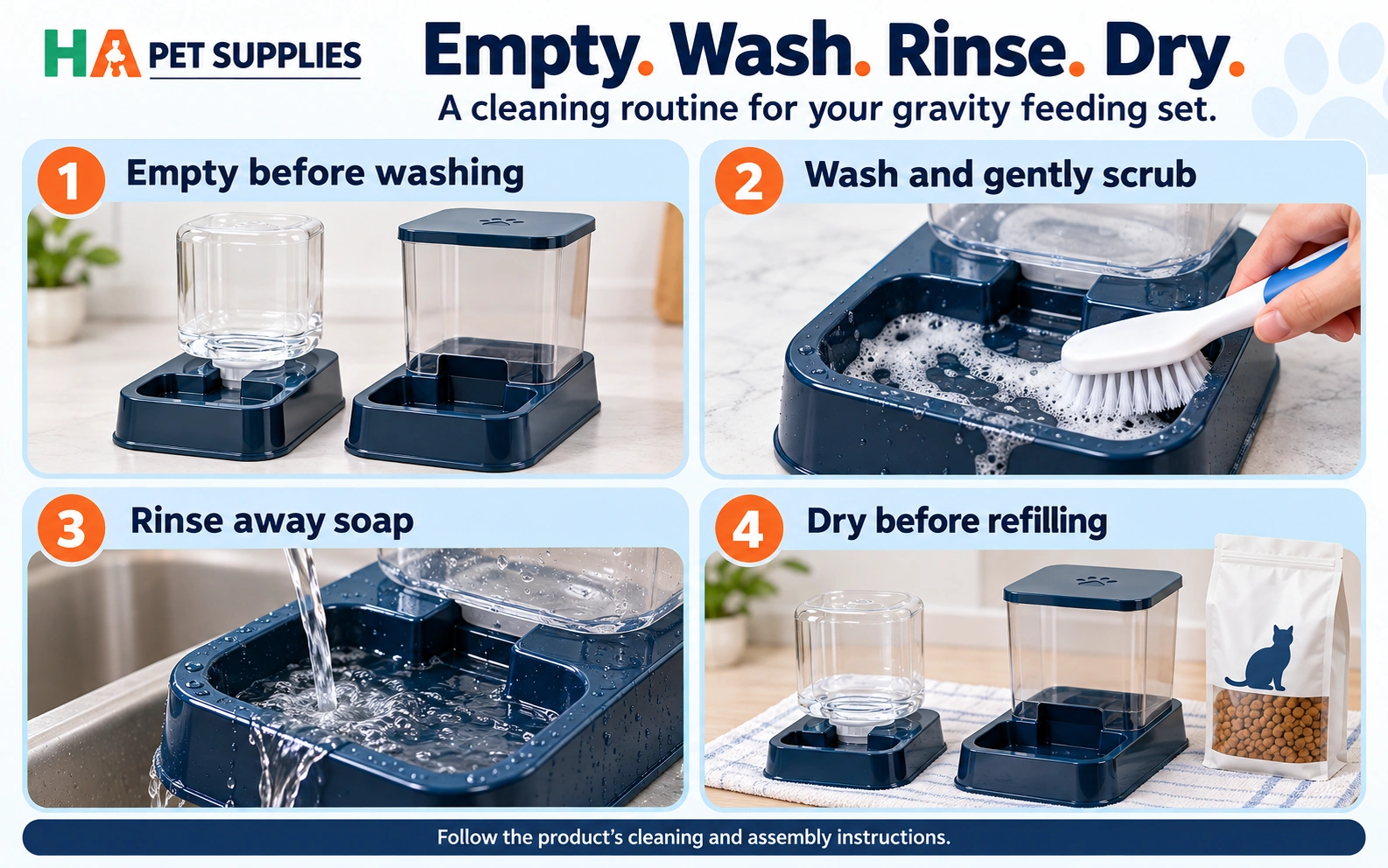
Now we reach the core of this guide. The basic process for a washable gravity cat feeder and water dispenser is: EMPTY → DISASSEMBLE → WASH → RINSE → DRY → REASSEMBLE → REFILL. Always adapt the process to the manufacturer’s instructions.
Step 1: Empty the Gravity Cat Feeder
Do not try to wash a reservoir while it still contains food. Remove remaining food appropriately. Avoid automatically pouring old crumbs back into fresh food. Inspect the food and container before deciding what can appropriately be reused according to storage instructions. The FDA recommends keeping dry pet food in a cool, dry environment and keeping storage containers clean and dry.
Step 2: Separate Removable Components
Remove the reservoir, bowl or other washable components according to the feeder design. Do not force pieces apart. If you do not know whether a part is removable, check the instructions rather than pulling harder. Arrange components somewhere clean so small pieces are not lost.
Step 3: Remove Loose Crumbs
Before washing, clear out leftover kibble dust and crumbs. Pay attention to corners, dispensing openings, bowl edges, seams, and reservoir bottom. This makes the actual washing stage easier.
Step 4: Wash the Food-Contact Parts
For components that can be hand-washed according to their instructions, use warm water and an appropriate soap or detergent. The CDC recommends washing hard pet items with soapy water and scrubbing with a sponge or brush where required. Use a clean brush or sponge that can reach difficult areas. Do not focus only on the visible bowl. Food residue can remain inside the reservoir too.
Step 5: Pay Attention to Corners and Openings
A gravity feeder has areas where food travels from storage to bowl. Those areas deserve attention. Clean around the reservoir opening, edges where crumbs collect, feeding tray corners, and joints between removable pieces. Do not use a sharp object that could damage the feeder. A cleaning brush that fits the area is usually more appropriate.
Step 6: Rinse Thoroughly
Use clean water to remove loosened debris and soap. Continue until there is no obvious soap residue. Cleaning is not complete if detergent remains where your cat’s food will sit.
Step 7: Dry Everything Completely
For a dry-food reservoir, drying is an essential part of the routine. Allow components to air-dry or dry them as permitted by the product instructions. The FDA specifically recommends that pet-food storage containers be clean and dry before they are refilled.
If a small amount of moisture remains inside the reservoir and you immediately add dry kibble, you are introducing moisture into an area intended to hold dry food. So do not rush from rinse directly to refill. CLEAN is not the final step. CLEAN + DRY is the goal.
Step 8: Reassemble the Feeder
When all necessary parts are dry, put the feeder back together according to the manufacturer’s instructions. Check that parts sit securely, the reservoir is stable, the food opening is unobstructed, and the bowl is positioned correctly.
Step 9: Add Fresh Food
Add an appropriate amount of suitable dry food. Then confirm food can reach the bowl.
Step 10: Wash Your Hands
Pet-food hygiene also includes the owner. The CDC recommends washing hands with soap and water after handling pet food or treats. The FDA similarly recommends clean hands before and after handling pet food. This is a small step that is easy to overlook.
How to Clean a Gravity Water Dispenser Step by Step
The water dispenser has its own cleaning needs because it remains wet during normal use.
Step 1: Empty the old water
Discard remaining water. Do not simply add fresh water on top of water that has been sitting in a dirty drinking area.
Step 2: Separate washable components
Follow the product instructions.
Step 3: Wash the reservoir and drinking area
Pay attention to inside surfaces, the water outlet, corners, edges, and any area where residue has formed.
Step 4: Scrub where necessary
Use a suitable clean brush or sponge.
Step 5: Rinse
Remove soap and debris thoroughly.
Step 6: Dry appropriate components
Dry according to instructions before reassembly.
Step 7: Add fresh water
Once clean and correctly assembled, refill with fresh drinking water. The FDA recommends washing water bowls daily. AAHA also recommends regular cleaning of food and water bowls as part of feline hydration and nutritional care.
How Often Should You Clean a Gravity Cat Feeder and Water Dispenser?
There is no single cleaning frequency that replaces the manufacturer’s instructions and daily inspection. However, there are useful hygiene principles. The FDA recommends washing and drying pet food bowls after each use and washing water bowls daily. The CDC recommends cleaning food and water bowls and related feeding equipment frequently.
For a gravity system, think in layers:
DAILY
- Inspect food
- Check food flow
- Refresh and inspect water
- Remove visible debris
- Inspect the drinking area
- Watch your cat’s normal eating and drinking
REGULARLY
- Empty the system
- Wash suitable food-contact parts
- Clean the water dispenser thoroughly
- Rinse
- Dry
- Inspect for wear or damage
BEFORE ADDING A COMPLETELY NEW SUPPLY OF FOOD
Inspect the reservoir instead of endlessly pouring fresh kibble over old crumbs. If it needs cleaning, clean and dry it first.
CLEAN SOONER IF
- Food becomes wet
- Water becomes dirty
- There is visible residue
- There is an unusual smell
- The feeder has been contaminated
- Another animal has interfered with it
A cleaning calendar should never override what you can see. If it is dirty today, clean it today.
The 3D Infographic: Gravity Feeder Cleaning Cycle
This would be the strongest infographic for the eventual HTML/CSS version. The central 3D object is a raised illustration of the gravity cat feeder and water dispenser. Around it, place five large floating cards: EMPTY, WASH, RINSE, DRY, and REFILL. For a laptop, show these as cards circling the product. For mobile screens, convert the same cards into a vertical step-by-step timeline: 1 Empty ↓ 2 Wash ↓ 3 Rinse ↓ 4 Dry ↓ 5 Refill. This preserves readability instead of shrinking a desktop infographic to phone size.
Why Drying a Gravity Cat Feeder Matters
Drying is easy to underestimate. You may think: “It looks clean, so I can add kibble now.” But if water remains in a reservoir intended for dry food, the inside environment is no longer dry. FDA storage guidance specifically says dry pet-food storage containers should be clean and dry and recommends washing and drying storage equipment between bags of food.
A better routine is: Wash tonight → let it dry properly → refill when ready. If needed, temporarily use another clean feeding bowl while the feeder dries rather than rushing the process.
Should You Keep Adding Fresh Food on Top of Old Food?
This is a common gravity-feeder habit. The owner sees the food level getting low and pours more kibble into the top. Then does the same thing again. And again. Eventually, crumbs and older food can remain at the bottom. Instead, build regular empty-and-clean periods into the routine. FDA guidance recommends washing and drying pet-food storage containers between supplies so residual fats and crumbs are removed. Think of the reservoir as food-contact equipment. It deserves cleaning just like the visible bowl.
How Should You Store the Cat Food Before It Goes Into the Feeder?
A clean feeder cannot correct poor food storage. The FDA recommends keeping dry pet food in a cool, dry place below 80°F and retaining the original packaging information such as lot number, product name and best-by date. The agency also recommends keeping dry food in its original bag and folding the top down securely, or, if another storage container is used, ensuring it is clean, dry and appropriately closed.
This matters because the feeding system starts before the food reaches the bowl. Better sequence: Store correctly → inspect → add to clean feeder → monitor → clean feeder → refill.
Do Not Use the Feeder as a Measuring Tool Unless Designed for It
Filling the reservoir does not automatically mean you know how much your cat consumes. If monitoring intake matters, measure food separately according to your feeding plan. Cornell notes that feeding requirements vary according to factors including age, health and individual circumstances.
If you are concerned that your cat is overweight, underweight or suddenly eating differently, do not solve the problem simply by changing how full you keep the gravity feeder. Talk with your veterinarian. The WSAVA provides nutritional-assessment and body-condition tools designed to help veterinary teams make individualized recommendations.
What If Your Cat Empties the Gravity Feeder Too Quickly?
A gravity feeder may not suit every eating style. Some cats graze gradually. Others may eat a large amount when food is continuously available. Cornell notes that free feeding may contribute to overeating and inappropriate weight gain in some cats. If the bowl is constantly being emptied, do not simply buy a larger reservoir. First identify the actual problem.
Ask: Is my cat eating too much? Are several cats sharing the feeder? Is another pet accessing the food? Has appetite suddenly changed? Am I misjudging how much food is being added? If appetite changes unexpectedly, discuss it with your veterinarian. And if you are deciding whether a gravity or scheduled approach better matches the cat’s eating style, read our gravity vs timed automatic cat feeder comparison.
Gravity Cat Feeder and Water Dispenser Care in Multi-Cat Homes
Multiple cats make monitoring harder. One full feeder does not tell you how food was divided between the cats. One cat may eat more. Another may hang back. The same applies to water if competition affects access.
Cornell’s hydration guidance notes that conflicts among pets can sometimes interfere with a cat’s access to drinking water. Cats Protection also recommends spreading important resources around the home, particularly in multi-cat households. If you have several cats, consider more than one suitable feeding location, more than one water source, watching each cat’s eating behaviour, avoiding overcrowding around one bowl, and separate feeding where diets differ. Do not assume a bigger gravity feeder solves resource competition.
Common Gravity Cat Feeder and Water Dispenser Mistakes
- Mistake 1: Treating “Automatic” as “No Maintenance.” Gravity may move the food or water automatically. Cleaning is still your job.
- Mistake 2: Refilling Without Inspecting. Look inside before adding more. Check for old crumbs, moisture and residue.
- Mistake 3: Refilling While the Reservoir Is Damp. Dry-food storage areas should be dry before you add food.
- Mistake 4: Putting Food and Water Directly Together by Default. Many cats prefer drinking away from their food. Cats Protection and International Cat Care both recommend separating these resources.
- Mistake 5: Putting the Feeder Near the Litter Tray. Food and water should be kept away from toileting areas. Cats Protection recommends separating these resources for hygiene and comfort.
- Mistake 6: Assuming More Food Is Better. Reservoir capacity is not a daily feeding recommendation.
- Mistake 7: Ignoring the Water Side. Owners may pay attention to kibble while allowing debris to build up in the drinking tray. Fresh drinking water deserves daily attention.
- Mistake 8: Using Harsh Cleaning Products Without Checking Safety. Follow product instructions. The CDC also cautions that disinfectants must be used according to their labels and specifically warns against phenol-containing disinfectants around cats. Do not experiment with strong chemicals in your cat’s feeding equipment.
- Mistake 9: Assuming a Full Feeder Means the Cat Has Eaten. Look at the cat, not only the reservoir. A change in appetite can matter. Cornell advises that a cat refusing food and losing weight should be examined by a veterinarian.
- Mistake 10: Leaving the Feeder Untested Before Going Away. If you intend to use the system during an absence, first make sure your cat uses it normally while you are at home. For more on this topic, read Can You Leave a Cat Alone With an Automatic Feeder?
Troubleshooting a Gravity Cat Feeder and Water Dispenser
Problem: Food Is Not Moving Into the Bowl
First check: Is the reservoir empty? Is something blocking the opening? Is the food type compatible? Has moisture entered the feeder? Is the unit assembled correctly? Do not poke sharp objects into the feeder. Empty and inspect the system according to the instructions.
Problem: Food Is Becoming Soft or Damp
Check for water nearby, moisture inside the reservoir, incomplete drying after cleaning, a spill, or humid storage conditions. Discard food that is unsuitable or spoiled rather than trying to dry and reuse it.
Problem: Water Looks Dirty Quickly
Inspect the dispenser and surrounding area. Food crumbs, fur and other debris may enter the drinking area. Clean the bowl and provide fresh water. The FDA recommends washing water bowls daily.
Problem: My Cat Will Not Drink From It
Cats have individual preferences. Cornell notes that factors such as water freshness, taste, movement and container shape can affect feline drinking preferences. Try keeping fresh water available in another safe location while your cat adjusts. Do not remove all familiar water sources and force a cat to use a new dispenser.
Problem: My Cat Pushes the Feeder Around
Move it to a stable, appropriate surface. Make sure the location is not creating an obstacle or causing the feeder to slide. Do not improvise potentially unsafe modifications.
A Simple Weekly Gravity Cat Feeder Maintenance Routine
Here is an easy routine for busy owners.
Every Day
Morning: Check food availability. Check water. Look for contamination. Observe your cat.
Evening: Check the bowl again. Refresh water as needed. Remove visible debris.
During Regular Cleaning
- Empty food and water.
- Separate appropriate parts.
- Remove crumbs.
- Wash.
- Scrub difficult areas.
- Rinse.
- Dry.
- Inspect.
- Reassemble.
- Refill.
The exact frequency of full disassembly should follow the product’s instructions and how quickly the unit becomes dirty.
Clean Feeder, Better Routine
Cleaning is not only about appearance. It makes the whole feeding routine easier to monitor. When the reservoir and bowl are clean, you can more easily notice fresh crumbs, unexpected moisture, changes in food consumption, damage, debris, and water contamination. That is why cleaning should be part of using the feeder rather than something you do only when it looks very dirty. CDC pet-food safety guidance recommends frequent cleaning of pet food and water equipment and following storage instructions on the food label.
Is a Gravity Feeder Right for Every Cat?
No feeding system is ideal for every cat. A gravity feeder may be convenient for cats that appropriately manage dry-food access. But continuous availability may not suit cats prone to overeating. Cornell specifically notes that free-choice dry feeding may be acceptable for some cats but can lead to overeating and weight gain in others. The feeder should fit the cat. Do not force the cat to fit the feeder.
If you are still deciding whether a gravity setup suits your household, browse the wider HA Pet Supplies shop or review the automatic cat feeder product listing before choosing. For larger purchasing requirements or business inquiries, the request a quote page provides the appropriate next step.
Frequently Asked Questions About a Gravity Cat Feeder and Water Dispenser
Empty the system, separate washable components according to the manufacturer’s instructions, wash them with appropriate soap or detergent and water, scrub where necessary, rinse thoroughly and allow them to dry before reassembly. Then refill with appropriate food and fresh water. The CDC recommends this basic wash-scrub-rinse-dry approach for hard pet items without more specific instructions.
Follow the manufacturer’s cleaning instructions and inspect the feeder every day. Do not wait for a strong smell or obvious dirt. The FDA recommends washing and drying pet-food bowls regularly and keeping pet-food storage equipment clean and dry.
The drinking area needs frequent attention. The FDA recommends washing pet water bowls daily. If you see fur, food, residue or other contamination sooner, clean it sooner.
Wash appropriate food-contact parts according to the manufacturer’s instructions before first use. This gives you a clean starting point and lets you learn how the system comes apart before it is full of food and water.
For a dry-food reservoir, it is better to let cleaned components dry before adding kibble. FDA guidance recommends clean, dry storage containers for dry pet food.
Avoid making continuous topping-up your only routine. Periodically empty and inspect the feeder so old crumbs and residue can be removed.
They do not have to be. Cats Protection recommends placing water away from food, and International Cat Care similarly advises offering water separately from the eating area.
Choose a stable, accessible and relatively quiet area. Keep it away from the litter tray and avoid locations where the cat is constantly disturbed.
It is better to keep food and water away from toileting areas. Cats Protection recommends separating the litter tray from feeding and drinking resources.
Only use food types supported by the specific feeder instructions. Do not assume a dry-food gravity feeder is designed for wet food. Wet food also requires different storage and food-safety considerations.
First check that the food type is compatible and that the dispensing opening is clean, dry and unobstructed. If problems continue, follow the manufacturer’s troubleshooting instructions. Do not alter the feeder in ways that could damage it.
Food particles, fur, dust and normal drinking can introduce debris. This is one reason the drinking area needs regular inspection and cleaning. Keeping water separate from the food area may also reduce food contamination.
Only use products and methods compatible with the feeder and safe according to their labels and product instructions. The CDC warns that cats should not be exposed to phenol-containing disinfectants. For ordinary routine cleaning, follow the manufacturer’s instructions rather than automatically using harsh chemicals.
Only if the specific component is labelled or documented as dishwasher-safe. Do not assume plastic components can withstand a dishwasher. The CDC notes that dishwasher cleaning can be appropriate for pet bowls specifically labelled dishwasher-safe.
Yes. The CDC recommends washing hands with soap and water after handling pet food or treats. The FDA similarly recommends clean hands before and after handling pet food.
Individual intake varies, particularly because wet food contributes substantial water. Cornell provides detailed information about feline hydration and notes that cats eating dry food generally obtain more of their water intake by drinking than cats eating moisture-rich food. If you are concerned that your cat is drinking far more or far less than usual, contact your veterinarian.
First check whether the feeder is functioning and whether the food appears normal. If the equipment is working but your cat stops eating—particularly if this continues or is accompanied by other symptoms—contact a veterinarian. Cornell warns that cats refusing food can develop serious health problems.
Do not use the feeder itself as a weight-management treatment. Cornell notes that continuous free feeding can contribute to excess intake for some cats and recommends veterinary supervision when weight reduction is needed. A controlled feeding approach may be more appropriate depending on the individual cat.
A full feeder does not replace human care. Food is only one part of the cat’s needs. For a detailed explanation, read Can You Leave a Cat Alone With an Automatic Feeder?.
A basic gravity feeder may have fewer electronic components, but ease of maintenance depends on the individual product. Both types still need cleaning and regular inspection. Read our full gravity vs timed automatic cat feeder guide if you are deciding between the two systems.
Final Gravity Cat Feeder and Water Dispenser Care Checklist
Before finishing, remember the entire guide in ten simple points.
- 1. CLEAN BEFORE FIRST USE. Wash suitable food-contact parts according to the product instructions.
- 2. POSITION IT CAREFULLY. Choose an accessible, stable and relatively quiet feeding area.
- 3. SEPARATE FOOD AND WATER. Give your cat distinct eating and drinking spaces where practical.
- 4. USE SUITABLE FOOD. Follow the feeder instructions rather than assuming every food type is compatible.
- 5. CHECK IT DAILY. Look at the food, water, feeder and your cat.
- 6. DON’T ENDLESSLY TOP UP. Empty and inspect the reservoir as part of regular care.
- 7. WASH THOROUGHLY. Clean the bowl, reservoir and appropriate food-contact surfaces.
- 8. RINSE. Remove soap and loosened residue.
- 9. DRY BEFORE REFILLING. Especially before placing dry food back into the reservoir.
- 10. REMEMBER THAT AUTOMATIC DOES NOT MEAN MAINTENANCE-FREE. Gravity handles food or water movement. You handle hygiene and monitoring.
Final Thoughts: How to Use and Clean a Gravity Cat Feeder and Water Dispenser
A gravity cat feeder and water dispenser works best when it becomes part of a simple routine rather than a device you fill and forget. Use it correctly. Keep the feeding and drinking areas appropriate. Check the system daily. Empty it regularly. Wash suitable parts. Rinse thoroughly. Let components dry. Then add fresh food and water.
Remember the five-word routine: EMPTY → WASH → RINSE → DRY → REFILL. That single process can make gravity-feeder maintenance much easier to remember.
Also pay attention to your cat. If food remains untouched, water consumption changes noticeably, appetite suddenly increases, or your cat’s weight changes, the answer may not be “clean the feeder again.” It may be time to speak with a veterinarian.
For more feeding and cat-care information, visit the HA Pet Supplies blog, where this cleaning guide can naturally connect with your broader automatic-feeder content. If you are still choosing equipment, browse the HA Pet Supplies shop or review the automatic cat feeder listing for the product information currently provided.
If an important specification is not shown on the product page, contact HA Pet Supplies before ordering rather than assuming it. And for buyers who need a broader overview of the store before choosing pet supplies, the HA Pet Supplies homepage provides the main starting point.