
Dog scratching ears Is your dog scratching its ears and shaking its head repeatedly? Maybe your Golden Retriever keeps rubbing one ear against the sofa. Perhaps your dog woke up scratching, has suddenly developed dark ear wax, or seems uncomfortable whenever you touch its head.
These symptoms can be confusing because an occasional head shake is normal, but repeated dog ear scratching and head shaking can indicate irritation, inflammation, infection, parasites, or another ear problem.
The important question is not simply how to stop your dog scratching. It is why the behavior started. Some dogs have allergies that affect their ears. Others develop bacterial or yeast infections, accumulate excessive wax, or pick up a grass seed during an outdoor walk. And in certain situations, persistent shaking can cause additional damage to the ear flap.
According to Cornell University’s Riney Canine Health Center, allergies are an important underlying cause of recurring ear inflammation in dogs. The reassuring part is that many ear conditions can be managed successfully when the underlying problem is identified and treated appropriately.
However, removing wax with dog ear wipes is not automatically the correct solution. If the ear is infected, painful, swollen, or has abnormal discharge, cleaning without veterinary advice may worsen the problem. In this complete guide, you will discover nine possible causes of ear scratching and head shaking, what different types of ear wax may indicate, how to recognize warning signs, what to do immediately, and when veterinary care is necessary.
⚡ Quick Answer: Why Is My Dog Scratching Its Ears and Shaking Its Head?
If your dog is frequently scratching its ears, shaking its head, rubbing its face against furniture, or reacting painfully when an ear is touched, an ear or skin condition may be responsible.
Common possibilities include:
- Bacterial ear infections
- Yeast overgrowth and ear infections
- Environmental or food-related allergies
- Ear mites and other parasites
- Excessive ear wax and debris
- Moisture-related ear irritation
- Grass seeds or other foreign objects
- Skin irritation, injuries, or reactions to grooming products
- Chronic inflammation, underlying disease, or ear growths
These are possible explanations, not diagnoses.
What should you do immediately? Keep your dog calm and examine only the visible outer ear without inserting a finger, cotton swab, or cleaning tool into the canal. Look for swelling, redness, discharge, odor, or a visible injury. If your dog is repeatedly shaking its head or scratching, contact your veterinarian promptly.
If your dog has sudden balance problems, a pronounced head tilt, severe pain, or unusual eye movements, seek urgent veterinary attention. The PDSA veterinary guide to itchy ears and head shaking recommends veterinary assessment when these behaviors become more frequent than normal.
Read Our Safe Dog Ear Cleaning Guide1. Why Do Dogs Scratch Their Ears and Shake Their Heads?
Before understanding the nine causes, it helps to know why dogs respond to ear discomfort through scratching and head shaking. A dog’s ear contains sensitive skin, nerves, glands, and structures involved in hearing and balance. When something irritates the skin or ear canal, the dog may try to relieve that discomfort by moving its head, scratching with a hind paw, or rubbing its ears against nearby surfaces.
An occasional shake after waking up, getting wet, or playing is not necessarily abnormal. However, repeated or unusually forceful shaking is different. Persistent shaking can indicate that something inside or around the ear is uncomfortable.
Why a dog’s ear canal makes problems difficult to see
Unlike the relatively straight ear canals people are familiar with, canine ear canals have vertical and horizontal portions. This means that owners cannot see everything happening inside the ear simply by lifting the outer ear flap. A dog may have inflammation deeper in the canal even when the visible outer ear does not look especially dirty.
Similarly, wiping surface wax may make the ear flap appear cleaner without addressing the source of pain or itching. This is why responsible ear care starts with observation rather than immediately applying a cleaning product. Veterinarians use an otoscope to inspect the canal and eardrum when necessary. The Merck Veterinary Manual’s overview of otitis externa explains how ear canal inflammation can involve multiple contributing factors.
Is occasional ear scratching normal?
Yes, occasional scratching can be part of normal dog behavior. A dog might briefly scratch an ear after sleeping or shake off water following a bath. The pattern becomes more concerning when scratching is repetitive, intense, focused on one ear, or accompanied by other changes.
Pay attention if your dog starts waking repeatedly to scratch, avoids having its head touched, cries when the ear is handled, or begins rubbing against furniture more often. These behaviors deserve attention even if you cannot see unusual wax.
2. Nine Common Causes of Dog Scratching Ears and Shaking Head
Ear scratching is a symptom, not a diagnosis. Two dogs showing nearly identical behavior may have completely different underlying conditions. Understanding these nine possibilities helps owners recognize what needs investigation instead of randomly trying cleaning products or home remedies.
Cause 1: Bacterial Ear Infections
One common reason for persistent ear discomfort is bacterial overgrowth in an inflamed ear canal. Bacteria can multiply when the normal environment of the ear changes, particularly when moisture, inflammation, allergies, or other underlying conditions are involved. Dogs with bacterial otitis may experience redness, swelling, painful ears, discharge, odor, and frequent head shaking. Some become reluctant to let their owners touch the affected area.
What owners may notice: Unusual smell, red skin, sticky discharge, increased scratching, and discomfort. However, these signs alone do not confirm a bacterial infection. A veterinarian may examine ear discharge under a microscope to determine whether bacteria, yeast, or inflammatory cells are present. The VCA Animal Hospitals guide to ear infections in dogs explains why identifying the condition matters before selecting medication.
What to do: Contact your veterinarian. Avoid using ordinary dog ear wipes as an infection treatment.
Cause 2: Yeast Overgrowth in the Ear
Yeast is another common contributor to canine ear inflammation. Small numbers of microorganisms can normally be present on the skin, but changes in the ear environment may encourage overgrowth. Allergies and chronic inflammation frequently play a role.
Dogs affected by yeast-associated ear disease may scratch, shake their heads, develop redness, or have a noticeable odor. Some produce brown or waxy discharge. However, the appearance of brown wax does not automatically mean yeast is responsible.
What owners may notice: Repeated scratching, an unpleasant smell, ear redness, and waxy discharge. A veterinarian can perform ear cytology to help distinguish yeast overgrowth from bacterial infection or other conditions. This distinction matters because different causes may need different medications. The Merck Veterinary Manual’s clinical explanation of otitis externa discusses yeast and bacterial involvement in ear disease.
What to do: Avoid relying on home cleaning alone. Arrange a veterinary assessment and use prescribed treatment when needed.
Cause 3: Environmental or Food-Related Allergies
Allergies are a particularly important cause of recurring ear problems. Dogs with allergic skin disease may develop inflammation around their ears even before obvious infection appears. Environmental triggers can include pollen, dust mites, molds, and other allergens. Some dogs may have adverse reactions to certain foods.
Allergic dogs may also lick their paws, scratch their skin, rub their faces, or develop repeated skin irritation. When the skin inside the ears becomes inflamed, its normal defenses can be affected, making secondary infections more likely.
What owners may notice: Both ears becoming itchy, repeated episodes of redness, paw licking, skin irritation, or symptoms that keep returning after treatment. According to Cornell University’s overview of atopic dermatitis, allergic skin disease is associated with excessive itching and recurrent skin or ear infections.
What to do: Ask your veterinarian about investigating underlying allergies, especially if ear problems recur. Repeated wiping will not remove an environmental or dietary allergy.
Cause 4: Ear Mites and Other Parasites
Ear mites are tiny parasites that live in the ear canal and can cause significant itching. They may spread between animals, particularly in environments where pets have close contact. Although ear mites are especially well known in cats and young animals, dogs can also become affected.
Affected dogs may scratch intensely, shake their heads, or develop crusty, dark discharge. Some owners describe the material as resembling coffee grounds. But dark debris is not proof of ear mites. Other ear conditions can produce similar discharge.
What owners may notice: Intense itching, dark crumbly debris, redness, and repeated head shaking. The American Kennel Club’s veterinary-reviewed guide to ear mites in dogs explains that mites can cause severe irritation and may contribute to secondary problems.
What to do: Seek a diagnosis rather than using ordinary ear wipes or unverified anti-mite remedies. If mites are confirmed, your veterinarian can recommend appropriate parasite treatment.
Cause 5: Excessive Ear Wax and Debris
Ear wax is not automatically harmful. Normal wax helps maintain the ear’s protective environment and traps small particles. Some dogs naturally produce more visible wax than others. However, unusually heavy wax accumulation may become uncomfortable or occur alongside inflammation, infection, or another underlying condition.
Dogs with substantial buildup may shake their heads, scratch, or develop an unpleasant smell.
What owners may notice: More visible wax than usual, debris around the ear opening, repeated scratching, or one ear becoming significantly dirtier. The important question is whether the wax is ordinary and accessible or whether it reflects a deeper problem.
If your dog’s ears are healthy and there is only a little loose dirt on the visible outer ear, gentle wiping may be appropriate. But if wax is heavy, persistent, painful, strongly odorous, or located deep in the canal, ask your veterinarian before cleaning. What to do: Inspect first. Do not scrape, dig, or attempt to remove impacted wax. For a detailed explanation, visit our How to Clean Dog Ears at Home guide.
Cause 6: Moisture After Swimming or Bathing
Dogs that swim frequently or enjoy baths may develop moisture-related ear irritation. Some dogs are particularly susceptible to ear infections when moisture becomes trapped within the ear canal. This is especially relevant when underlying skin inflammation or anatomical factors also contribute. However, bathing itself does not automatically cause an infection. The concern is that retained moisture may help create conditions favorable to microbial overgrowth in susceptible dogs.
What owners may notice: Head shaking after swimming, repeated ear discomfort following baths, or recurring ear problems associated with wet activities. The American Kennel Club discussion of grooming and ear infections explains how moisture exposure may contribute to problems in dogs already prone to ear disease.
What to do: Gently dry the visible outer ear and follow your veterinarian’s advice about appropriate drying products. Do not assume that a finger wipe can remove moisture trapped deep in the canal.
Cause 7: Grass Seeds, Foxtails, and Other Foreign Objects
A sudden episode of intense head shaking after a walk can be particularly concerning. Grass seeds, foxtails, burrs, or other small objects may enter the ear canal and become trapped. This can cause significant irritation and pain. Some dogs suddenly shake their heads vigorously, hold one ear differently, or paw repeatedly at a single side. The problem may begin within minutes of running through tall grass or outdoor vegetation.
What owners may notice: Sudden one-sided shaking, painful reactions, persistent pawing at one ear, or symptoms immediately after outdoor activity. According to PetMD’s veterinarian-reviewed guidance on foreign objects in dog ears, deeply lodged grass seeds and similar objects can cause serious problems and require professional removal.
What to do: Do not insert cotton swabs, tweezers, or finger wipes into the canal to search for the object. Seek veterinary care promptly, particularly when head shaking begins suddenly and continues.
Cause 8: Skin Irritation, Injuries, or Reactions to Grooming Products
Sometimes the main problem is irritation affecting the ear flap or skin around the opening. Potential causes include scratching injuries, insect bites, allergic skin reactions, or irritation from an unsuitable grooming product. Strongly fragranced wipes, harsh cleansers, and excessive cleaning may aggravate sensitive skin. A dog may respond by scratching, rubbing its head, or resisting normal handling.
What owners may notice: Surface redness, small scratches, irritated skin, or discomfort that started after a new cleaning product was used. The Merck Veterinary Manual’s discussion of allergic skin disease affecting the ear flap describes how inflammatory skin conditions can involve visible ear tissues.
What to do: Stop using any recently introduced grooming product if a reaction is suspected. Avoid applying random creams or disinfectants. Seek veterinary advice if irritation persists, worsens, or is accompanied by discharge or pain.
Cause 9: Chronic Inflammation, Underlying Disease, or Ear Growths
Some dogs continue scratching their ears despite repeated cleaning or treatment. This may happen when an underlying medical condition has not been identified. Possible contributors include chronic allergic inflammation, endocrine disorders, changes within the ear canal, or abnormal tissue growths. Certain growths may narrow the canal and interfere with normal drainage. Chronic inflammation may also cause the ear canal to thicken, making future infections more difficult to manage.
What owners may notice: Repeated infections, long-standing discharge, persistent odor, recurring one-sided symptoms, or ear problems that return soon after treatment. The VCA Animal Hospitals guide to ear canal tumors explains that abnormal growths can cause discharge, inflammation, pain, and repeated head shaking.
What to do: Ask your veterinarian about a thorough examination and further testing if ear problems keep returning.
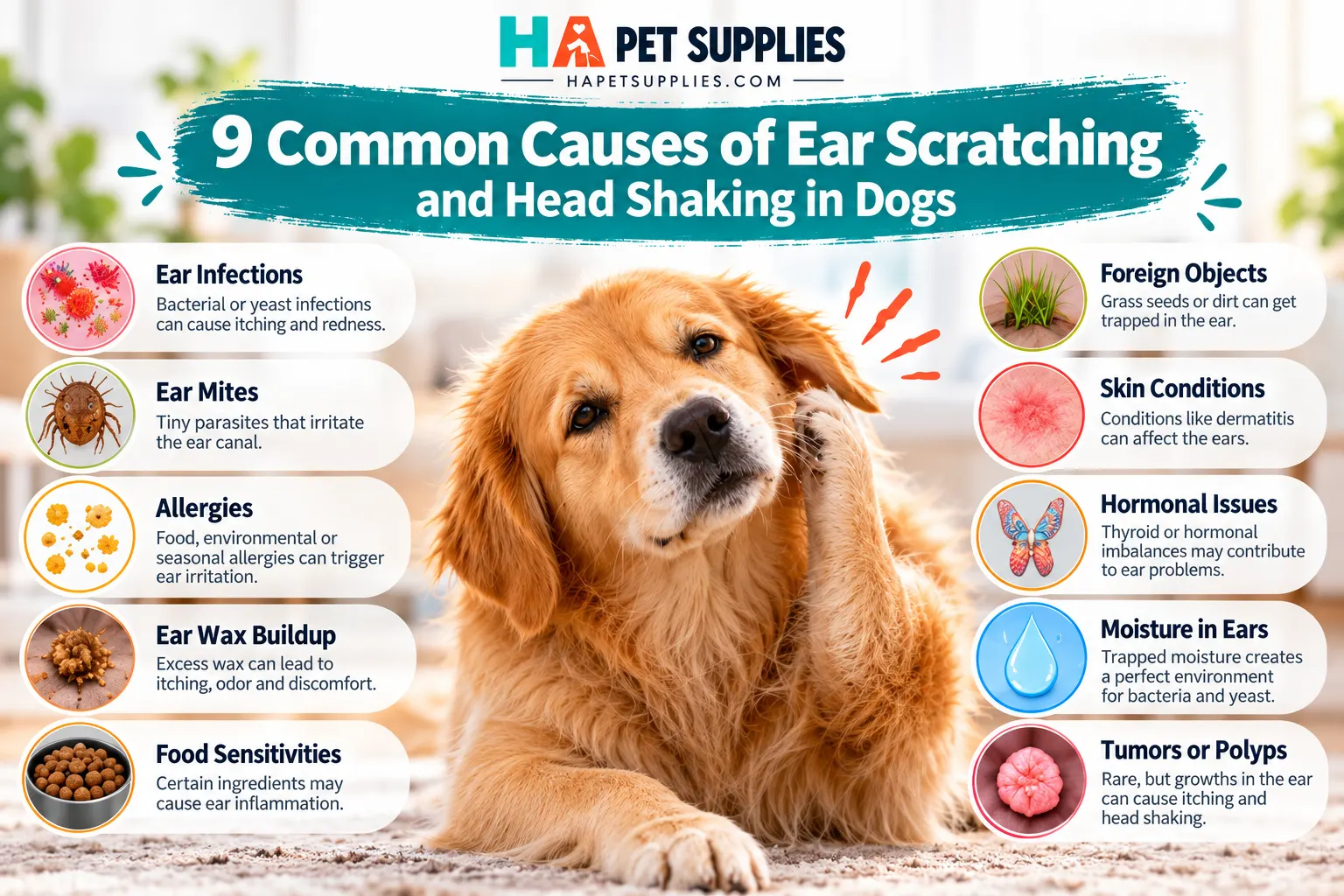
3. 3D Infographic: Nine Reasons Dogs Scratch Their Ears
9 Common Causes of Dog Ear Scratching and Head Shaking — hover or tap each card for a subtle 3D lift.
Bacterial Infection
Redness, swelling, discharge, odor and pain
Yeast Overgrowth
Waxy brown discharge, odor, and itching
Environmental Allergies
Pollen, dust, food triggers, recurrent itch
Ear Mites
Intense itching, dark crumbly debris
Excessive Wax
Heavy buildup, debris, one-sided dirt
Trapped Moisture
After swimming, bathing, or wet play
Foreign Object
Grass seeds, foxtails, sudden shaking
Skin Irritation
Scratches, bites, product reactions
Chronic Ear Disease
Recurring infections, growths, deeper cause
4. What Different Dog Ear Wax Colors May Indicate
One of the most common mistakes owners make is attempting to diagnose an ear problem based only on the color of the wax. While wax appearance can provide useful clues, it cannot reliably identify the cause. Different infections, parasites, and inflammatory conditions may produce similar-looking debris. A veterinarian may need microscopic testing to distinguish them.
Light yellow or light brown ear wax
A small amount can be normal. If your dog is comfortable, the skin looks healthy, and there is no unusual odor, ordinary ear wax may not require removal.
Dark brown ear wax
Dark brown wax may represent accumulated ordinary material, but it can also appear with infections and other ear problems. If the material is excessive or accompanied by itching, odor, redness, or pain, veterinary assessment is appropriate.
Black crumbly discharge
Black, crumbly material is sometimes associated with ear mites. However, similar discharge can occur with other ear diseases, including yeast-related inflammation. Do not assume the problem is mites based on appearance alone.
Yellow or pus-like discharge
Abnormal yellow discharge may indicate inflammation or infection. Do not treat this as ordinary wax. Contact your veterinarian.
Bloody or reddish discharge
Blood may result from scratching injuries, trauma, or more significant disease. This requires prompt attention, especially when the dog is painful or repeatedly shaking its head.
Strong-smelling ear wax
A strong unpleasant smell is not a reliable diagnosis by itself. However, odor accompanied by discharge, swelling, or scratching raises concern for ear disease. The VCA guide to canine ear infections describes abnormal discharge, pain, odor, and inflammation as important warning signs.
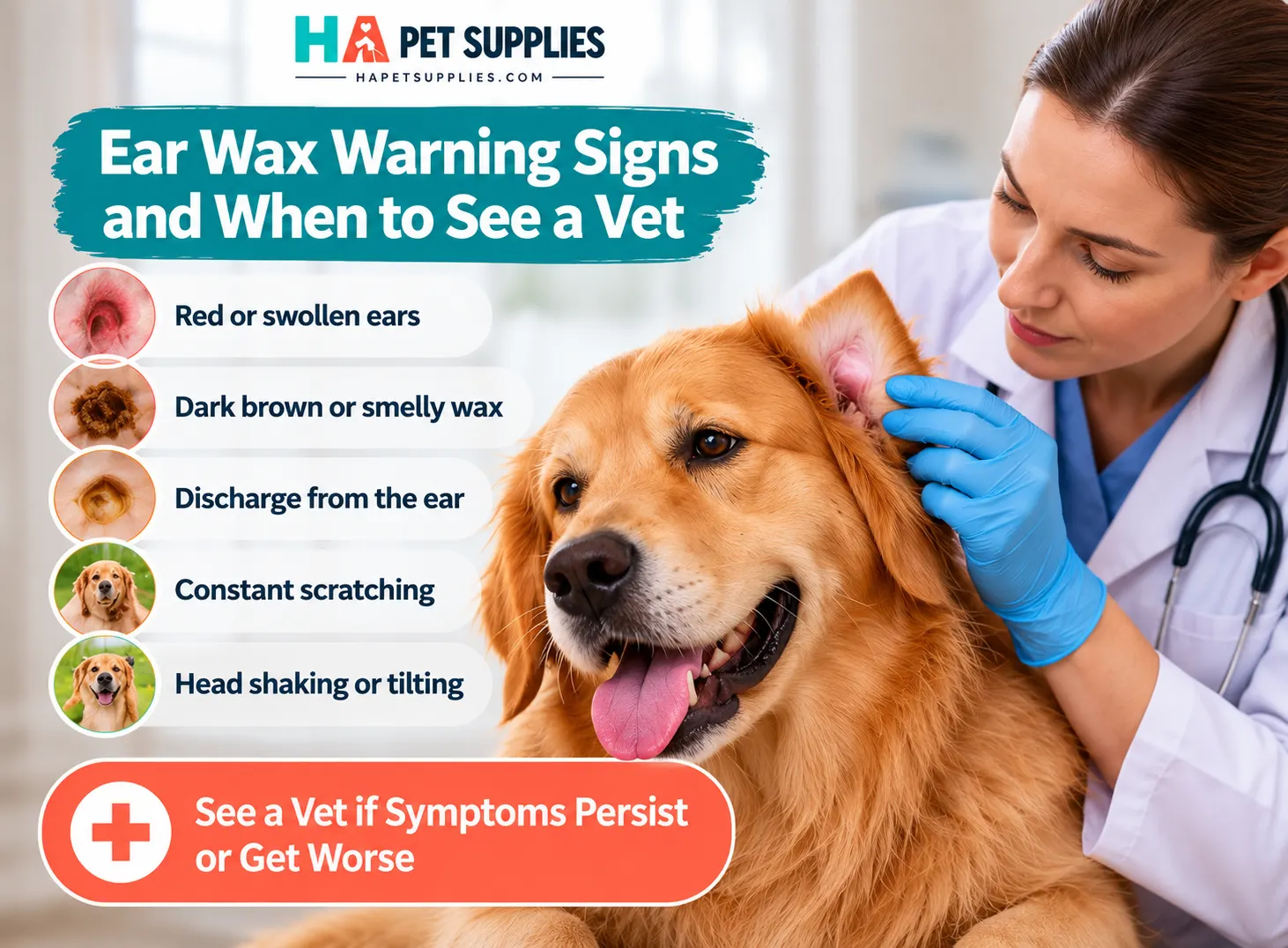
Dog Ear Wax Warning Signs Comparison Table
| Observation | Possible meaning | Recommended response |
|---|---|---|
| Small amount of light wax | Often normal | Monitor |
| Minor accessible surface dirt | Ordinary debris possible | Gentle external cleaning if healthy |
| Heavy dark brown material | Possible disease or excessive buildup | Veterinary assessment |
| Black crumbly discharge | Mites or other ear conditions possible | Veterinary diagnosis |
| Yellow abnormal discharge | Possible inflammation or infection | Contact vet promptly |
| Blood or painful ear | Injury or significant inflammation | Prompt veterinary care |
| Strong odor with head shaking | Possible ear disease | Veterinary examination |
| Head tilt or balance loss | Possible deeper ear or neurological problem | Urgent veterinary evaluation |
Remember, the combination of symptoms matters more than wax color alone.
5. When Is Dog Scratching Ears and Shaking Head an Emergency?
Not every ear problem requires an emergency hospital visit. However, certain signs indicate that waiting for a routine grooming appointment is inappropriate.
Signs that warrant prompt veterinary contact
Contact your veterinarian when you notice persistent scratching, repeated head shaking, ear redness, unusual discharge, foul odor, swelling, or obvious pain. Even when the dog is eating and behaving relatively normally, these symptoms can indicate an uncomfortable condition requiring diagnosis.
Signs that warrant urgent veterinary care
Seek urgent veterinary assessment if your dog develops sudden loss of balance, a marked head tilt, rapid abnormal eye movements, collapse, significant neurological changes, or severe uncontrolled pain. These signs can sometimes occur when disease affects the middle or inner ear or other parts of the nervous system. The Merck Veterinary Manual’s explanation of middle and inner ear infections describes balance and facial-nerve complications associated with deeper ear disease.
What about a swollen ear flap?
If your dog’s ear flap suddenly becomes thick, puffy, or balloon-like, an aural hematoma is possible. This condition involves blood collecting within the ear flap and may result from repeated shaking or scratching. It requires veterinary treatment. The VCA Animal Hospitals explanation of ear hematomas describes how forceful head shaking can damage blood vessels. Never attempt to drain a swollen ear flap at home.
6. What to Do Immediately When Your Dog Keeps Scratching Its Ears
When your dog seems uncomfortable, it is natural to want to clean the ear right away. But cleaning may not be the safest first action. Use this practical five-step response.
- Keep your dog calm. Move your dog into a quiet area away from loud noises, energetic play, and other distractions. Avoid pulling at the affected ear. If your dog is already distressed, give it space rather than forcing an examination.
- Look at the visible outer ear. If your dog allows gentle handling, lift the ear flap slightly and inspect only the visible area. Look for redness, swelling, unusual discharge, injury, or a visible foreign object. Do not insert anything into the canal. Stop if the dog reacts painfully.
- Think about when the symptoms started. Did the problem begin after swimming? After a grooming appointment? Following a walk through tall grass? After a new cleaning product was introduced? Or has the dog been scratching intermittently for several weeks? These details can help your veterinarian investigate possible causes.
- Avoid cleaning or medicating an abnormal ear. Do not use dog ear wipes on an obviously inflamed or painful ear unless your veterinarian specifically directs you to do so. Do not apply old medication from a previous infection. Do not use hydrogen peroxide, vinegar, rubbing alcohol, essential oils, or unverified remedies. Different ear diseases require different treatments, and certain products may be unsafe when the eardrum is damaged.
- Contact your veterinarian. Explain the symptoms, when they began, whether one or both ears are affected, and any recent water exposure or grooming. Ask whether the dog should be seen urgently. If symptoms are severe, suddenly neurological, or associated with extreme pain, seek emergency veterinary care.
7. Why You Should Not Automatically Use Dog Ear Wipes for an Itchy Ear
Dog ear wipes can be useful grooming products, but they do not solve every ear problem. Their appropriate role is removing ordinary surface debris from healthy, accessible parts of the outer ear. If your dog’s ears are red, painful, infected, or producing abnormal discharge, ordinary wiping may irritate the tissue or delay needed treatment.
When dog ear wipes may be appropriate
Suppose your dog has returned from a dusty walk. The visible inner ear flap contains a small amount of loose dirt, but your dog is comfortable. There is no redness, swelling, pain, abnormal discharge, or unusual smell. In that situation, a suitable dog-specific finger wipe may help gently remove the surface debris.
When dog ear wipes are not appropriate
Suppose your dog wakes repeatedly during the night to scratch one ear. The ear smells unpleasant, looks red, and contains sticky brown discharge. This situation requires veterinary assessment, not repeated grooming. The problem may be an infection, allergy-related inflammation, or something else. Cleaning without a diagnosis is unlikely to address the underlying cause.
Can antibacterial dog ear wipes treat an infection?
Do not assume that a grooming product can treat an ear infection simply because its packaging uses terms such as antibacterial or deep cleaning. Medical claims require appropriate evidence, and treating an established ear infection usually requires a veterinarian-selected approach.
Can ear wipes kill mites?
Ordinary dog ear wipes are not a reliable treatment for ear mites. A veterinarian may recommend a specific parasite-control medication after confirming the diagnosis. For owners choosing products for routine hygiene rather than treating active symptoms, our Best Dog Ear Cleaning Wipes comparison guide explains product formats and when cleaning is appropriate.
8. How Veterinarians Diagnose Dog Ear Problems
When a dog repeatedly scratches its ears or shakes its head, the veterinarian’s objective is to identify the actual cause. This is important because ear symptoms overlap. A dog with ear mites may look similar to one with a yeast infection. A dog with allergic inflammation may also have a secondary bacterial infection. Treating only the surface symptoms can allow the underlying problem to return.
Reviewing the dog’s history
Your veterinarian may ask when the symptoms began, whether the problem affects one ear or both, and whether your dog has a history of allergies or previous ear infections. Recent activities such as swimming, bathing, grooming, or running through tall grass may also matter.
Examining the ear canal
The veterinarian may examine the visible ear flap and use an otoscope to inspect deeper structures. This examination helps identify inflammation, foreign material, excessive debris, and certain eardrum abnormalities. If the ear is extremely painful, special handling or sedation may be necessary.
Examining discharge under a microscope
Ear cytology involves examining a sample of material from the ear. It can help identify yeast, bacteria, and inflammatory changes. This allows treatment to be selected more precisely than guessing from wax color.
Investigating recurring ear infections
If problems repeatedly return, additional investigation may be needed. Possible contributing factors include allergies, anatomical changes, endocrine disease, or chronic inflammation. The American Kennel Club’s veterinary-reviewed ear infection guide explains the importance of medical history, otoscopic examination, and cytology when diagnosing ear problems.
9. Can Repeated Head Shaking Damage a Dog’s Ears?
Yes. Head shaking is often a response to discomfort, but frequent vigorous shaking can create additional problems. One important complication is an aural hematoma. The ear flap contains cartilage surrounded by skin and small blood vessels. Repeated forceful movement or scratching can damage these vessels, allowing blood to collect between the tissues. The result may be a thick, swollen ear flap.
What does an ear hematoma look like?
Owners often describe the ear flap as puffy, enlarged, or unusually heavy. The swelling may affect part or most of the flap. Some dogs become reluctant to have the area touched.
Will an ear hematoma disappear on its own?
Do not rely on waiting or home remedies. A veterinarian should assess the swelling and recommend treatment. Without appropriate care, ear-flap damage, scarring, and persistent deformity may occur. The underlying cause of the shaking must also be addressed. Otherwise, the dog may continue injuring the ear even after the immediate swelling is treated.
10. Why Some Dog Breeds Experience More Ear Problems
All dogs can develop ear disease, but certain characteristics can increase susceptibility. These include ear conformation, hair within the ear canal, moisture exposure, and underlying allergic skin disease.
Dogs with floppy ears
Breeds such as Cocker Spaniels, Basset Hounds, and some retrievers may experience ear problems associated with their anatomy and individual health. Their ears should be inspected regularly, particularly when they have a history of inflammation. However, floppy ears do not automatically mean an infection is present.
Dogs that swim frequently
Retrievers and other dogs that enjoy water may experience repeated moisture exposure. Dogs prone to ear infections may require a veterinarian-recommended drying routine. Ordinary finger wipes cannot reliably remove retained moisture from deeper ear structures.
Dogs with allergies
Dogs with atopic dermatitis may experience recurring ear inflammation even when owners maintain excellent grooming practices. In those cases, managing the underlying allergic condition is essential.
Dogs with chronic skin disease
Ear inflammation may be part of a wider skin problem. Look for symptoms such as paw licking, itching around the face, recurrent skin redness, or repeated infections. An individualized veterinary treatment plan is more useful than frequently changing cleaning products.
11. How to Reduce the Risk of Recurring Dog Ear Problems
Not every ear problem can be prevented, but responsible care can help owners detect changes earlier and avoid unnecessary irritation.
Inspect your dog’s ears regularly
A brief inspection during normal grooming can reveal changes in wax, odor, skin condition, or sensitivity. The aim is to notice problems early, not automatically clean every time you inspect.
Keep grooming gentle
Avoid forceful handling, aggressive wax removal, or repeated rubbing. Dogs that resist ear touching may be experiencing discomfort. Do not assume they are simply being stubborn.
Use appropriate products
Choose products specifically suitable for dogs and the intended part of the ear. Avoid using ordinary household wipes or harsh cleansers. When your veterinarian recommends a liquid cleaner, follow their instructions rather than substituting another product.
Dry external ear surfaces after bathing
Gently remove visible moisture from the outer ear flap. If your dog develops repeated problems after swimming, ask the veterinarian about an appropriate drying product or routine.
Manage underlying allergies
If your dog has recurring ear irritation alongside itchy paws or skin, discuss allergy evaluation with your veterinarian. Cleaning alone will not eliminate allergic inflammation.
Avoid unnecessary ear cleaning
Over-cleaning can irritate the canal and potentially contribute to inflammation. The VCA ear-cleaning instructions for dogs provide practical guidance and emphasize using an appropriate technique.
Create a positive grooming routine
Dogs that associate ear handling with pain may become defensive or fearful. Introduce calm inspection gradually when the ears are healthy. The VCA veterinary behavior guide to ear cleaning recommends positive training and staying within the dog’s comfort zone.
For owners building a complete home-care kit, explore the HA Pet Supplies dog supplies collection for grooming and everyday pet-care essentials.
12. Choosing Dog Ear Wipes for Routine Hygiene
After a veterinary problem has been ruled out or successfully treated, some owners may want a suitable product for ordinary outer-ear hygiene. That is where finger-style dog ear wipes may be convenient.
Unlike loose cotton pads, finger wipes fit over the fingertip and allow careful movements around accessible ear folds. The format may be useful when removing a little ordinary dirt after outdoor play.
What to look for when buying ear wipes
Choose a product clearly intended for canine ear hygiene. Review the ingredient list, wipe texture, instructions, storage requirements, and any age restrictions. Avoid assuming that terms such as natural or veterinarian formulated automatically establish safety or medical effectiveness.
HA Pet Supplies Dog Ear Wipes
HA Pet Supplies offers disposable finger-style Dog Ear Wipes presented in a 50-piece container. The finger-cover format is intended for convenient visible outer-ear cleaning when the ears are healthy and cleaning is appropriate. The wipes should not be treated as medication for infections, mites, allergies, or painful inflammation.
Owners who want to learn more about the product can review its design and intended use before purchasing.
Explore HA Pet Supplies Dog Ear WipesIf you are comparing different grooming tools, the HA Pet Supplies online shop provides additional pet-care options.
13. What to Do If Your Dog’s Ears Keep Getting Dirty
Some owners repeatedly wipe their dog’s ears only to discover that the same dark wax or smell returns. This can be frustrating, especially when the dog seems uncomfortable. However, recurring buildup may be a sign that cleaning is not addressing the underlying problem.
First, avoid increasing cleaning frequency automatically
Cleaning more often is not necessarily the solution. If your dog’s ear canal is inflamed, repeated wiping may cause additional irritation.
Next, observe the pattern
Does the material return within a short period? Does one ear consistently develop more discharge than the other? Does the problem occur after swimming? Are there other symptoms, such as paw licking or skin itching? These details help a veterinarian investigate the cause.
Check whether your dog has completed previous treatment
When an ear infection has been diagnosed, it is important to follow the treatment plan and any recommended recheck appointments. Stopping prescribed treatment early or switching to ordinary grooming wipes can allow problems to persist.
Ask about underlying disease
Recurring ear infections may be related to allergies, chronic inflammation, or another medical condition. The Cornell canine ear problems resource explains that treating underlying allergic disease can be an important part of managing repeated infections.
14. Frequently Asked Questions About Dog Scratching Ears and Shaking Head
15. Final Thoughts: Why Early Attention Matters When Dogs Scratch Their Ears
If your dog keeps scratching its ears and shaking its head, do not assume the problem is simply dirt or excess wax. While some ear irritation may be mild, persistent symptoms can indicate allergies, infection, parasites, trapped objects, or another underlying condition.
The most useful first step is to observe your dog carefully and recognize warning signs. Check for redness, discharge, swelling, pain, odor, and sudden changes in behavior. Avoid placing cotton swabs or cleaning tools deep inside the canal. Do not use household remedies or ordinary grooming wipes as substitutes for medical treatment.
If symptoms are recurring or persistent, contact your veterinarian so the underlying cause can be identified and addressed. Remember that proper ear hygiene is still valuable when a dog’s ears are healthy. Gentle cleaning of accessible dirt and loose wax, when actually needed, can form part of a thoughtful grooming routine.
The key is understanding when to clean, when to stop, and when to seek professional help.
Support Your Dog’s Everyday Ear Hygiene
Once your dog’s ears are healthy and routine cleaning is appropriate, explore convenient finger-style wipes for gentle visible outer-ear grooming.
Shop HA Dog Ear Wipes OnlineIf you have questions about product selection, ordering, or bulk availability, the HA Pet Supplies team can assist with product information.
Request a QuoteFor more practical grooming education, discover additional articles through the HA Pet Supplies blog or visit the HA Pet Supplies contact page for product-related inquiries.
HA Pet Supplies — Happy Pets. Healthy Pets. Happy Life.
This guide is for informational purposes only and does not replace professional veterinary advice. Always consult your veterinarian for diagnosis and treatment.