
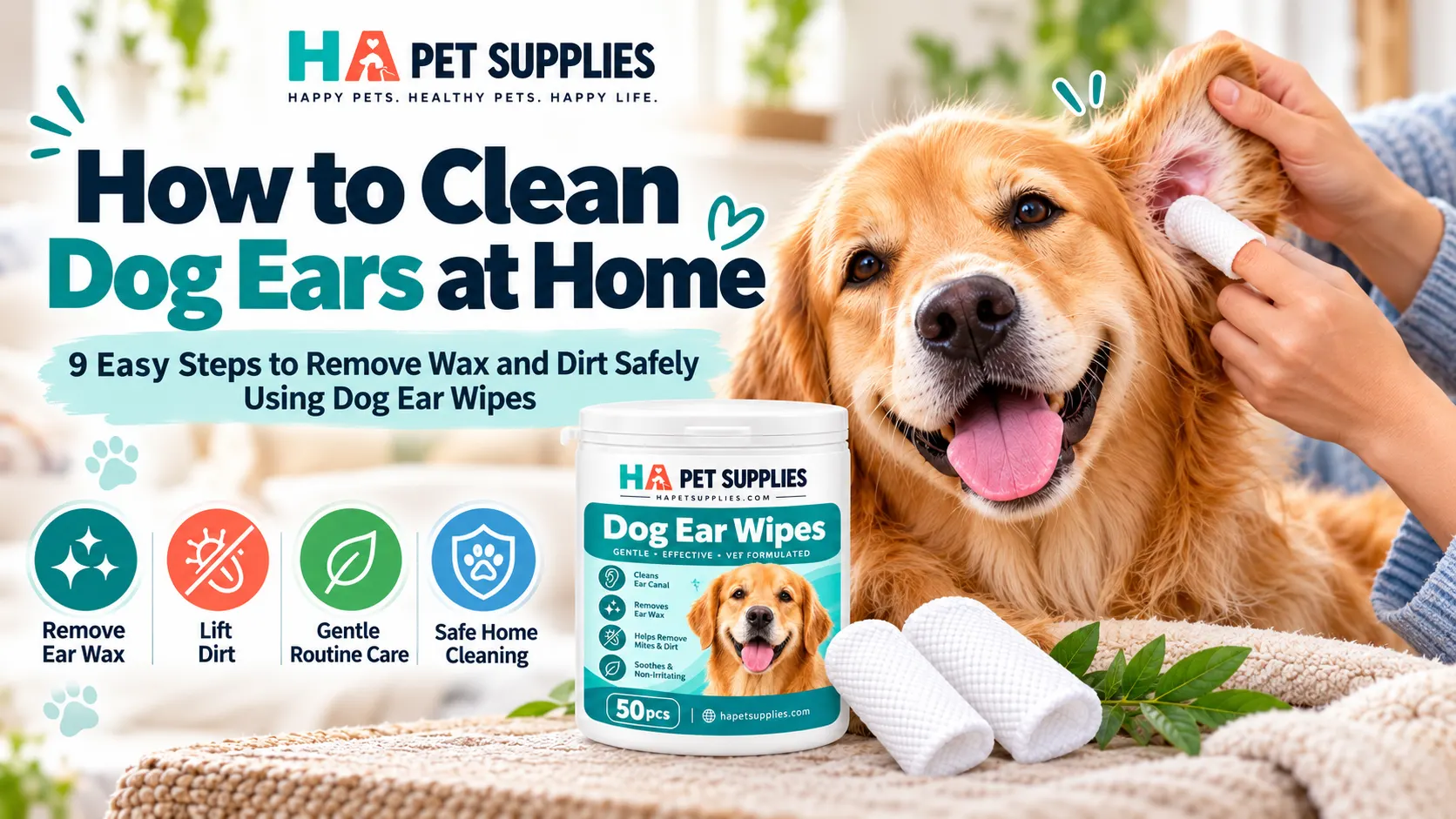
How to clean dog ears at home is a question many pet owners ask when they notice visible ear wax, trapped dirt, or an unpleasant smell around their dog’s ears. Perhaps your Golden Retriever has returned from an outdoor adventure with dusty ears. Maybe your dog has just finished swimming, or you have noticed a small amount of brown wax around the entrance to an ear.
You want to help, but several questions immediately come to mind. Is the wax normal? Could cleaning make the problem worse? Should you use dog ear wipes, cotton pads, or a liquid ear cleaner? And how far inside the ear can you safely clean?
These questions matter because a dog’s ears are sensitive, and incorrect cleaning can cause discomfort, push debris deeper into the canal, or aggravate an existing problem. The good news is that ordinary visible dirt and loose wax on a healthy outer ear can often be cleaned gently at home. However, an infected, painful, or inflamed ear requires a different approach.
This guide explains nine practical steps for cleaning your dog’s accessible outer ear using dog ear wipes, what mistakes to avoid, how to recognize abnormal wax, and when to contact a veterinarian. For additional context, the American Kennel Club’s veterinary-informed ear-cleaning guidance emphasizes inspecting the ears before cleaning and avoiding over-cleaning.
⚡ Quick Answer: How to Clean Dog Ears at Home Safely
If your dog has healthy-looking ears with a small amount of visible surface dirt or loose wax, follow this simple approach:
- Examine both ears for redness, swelling, discharge, strong odor, or pain.
- Choose a quiet location and collect dog-safe cleaning supplies.
- Wash your hands and prepare a fresh dog ear finger wipe.
- Reward your dog for staying calm and gently lift the ear flap.
- Inspect the visible inner ear flap without inserting anything into the canal.
- Wipe loose wax and dirt from accessible outer-ear surfaces.
- Use a fresh wipe for the other ear and avoid excessive rubbing.
- Let your dog move naturally and check that the ears remain comfortable.
- Finish with praise, dispose of the wipes, and record any unusual changes.
Important: This is a method for cleaning visible outer-ear surfaces, not a procedure for deep ear-canal cleaning. If your dog has persistent head shaking, significant scratching, redness, swelling, discharge, pain, or a strong unpleasant smell, stop and arrange a veterinary examination.
Explore HA Dog Ear Wipes1. Why Is Cleaning Your Dog’s Ears Important?
A dog’s ears are designed to protect delicate hearing structures from environmental exposure. Ear wax plays a natural protective role by trapping small particles and helping maintain the ear’s normal environment. However, excess debris, moisture, or inflammation can sometimes make the ears uncomfortable.
A dog that enjoys swimming, spends time outdoors, or has a history of ear problems may need more frequent inspection than a dog whose ears remain naturally clean. Understanding how to clean dog ears at home begins with recognizing that ear inspection is important, but frequent cleaning is not automatically necessary.
According to VCA Animal Hospitals’ dog ear cleaning instructions, some healthy dogs rarely need cleaning, while dogs prone to ear problems may benefit from an individualized cleaning routine.
What makes dog ears different from human ears?
Dogs have an ear canal with vertical and horizontal portions. This shape can allow moisture and debris to remain in areas that are not accessible through simple surface wiping. The visible ear flap, called the pinna, is different from the canal itself.
You can usually see and carefully wipe the inner surface of the pinna. But you cannot assume that dirt deeper in the canal can be reached safely with a fingertip. This distinction is essential when choosing between ear cleaning wipes for dogs and liquid ear-cleaning products.
Are dirty ears always a sign of infection?
No. Some dogs naturally produce small quantities of ear wax. Dust, pollen, and ordinary environmental debris may also accumulate on accessible surfaces. An ear with a little light brown wax is not necessarily unhealthy.
However, unusually heavy or dark discharge, a foul smell, swelling, redness, or persistent scratching may indicate inflammation, parasites, a foreign object, or another condition that needs diagnosis. The Merck Veterinary Manual’s guide to canine ear infections explains that inflammation of the ear canal can have several underlying causes.
A useful rule: Never assume that removing visible wax will also remove the cause of your dog’s discomfort.
2. How to Tell Whether Your Dog’s Ears Need Cleaning
Before opening a container of dog ear wipes, take a moment to inspect your dog’s ears. Many people begin cleaning because they see wax. But the amount, appearance, smell, and associated symptoms are more important than the presence of wax alone.
What do healthy dog ears look like?
A healthy ear typically has comfortable-looking skin, no significant swelling, no unusual discharge, and no strong unpleasant smell. The visible inner ear flap is often pink, although normal pigmentation varies between dogs. A small amount of ordinary wax may be present. Your dog should generally tolerate gentle ear handling without pulling away in pain.
What does ordinary ear wax look like?
Normal ear wax can vary in color and consistency. Small amounts of yellowish or light brown material are not necessarily concerning. However, appearance alone cannot reliably distinguish ordinary wax from infection-related discharge.
Notice whether the material is associated with redness, odor, repeated scratching, or other changes. For example, a dog with a small amount of loose brown wax and no discomfort may simply need gentle external grooming. A dog with sticky dark discharge, swelling, and repeated head shaking needs veterinary attention rather than more aggressive wiping.
What if one ear is dirtier than the other?
A difference between the ears is worth observing. Occasional small variations can occur, but a sudden, significant one-sided change may suggest a foreign object, localized inflammation, infection, or another problem. Grass seeds and similar objects can become trapped in the ear, particularly after outdoor activity.
Do not attempt to reach deep inside the ear to remove an object you cannot safely see and access. The PDSA guide to common ear problems in pets describes warning signs that should prompt veterinary assessment.
Understand Why Dogs Scratch Their Ears3. What You Need Before Cleaning Dog Ears at Home
Preparing everything in advance makes the process safer and less stressful. When owners have to stop repeatedly to find supplies, the dog may become impatient, anxious, or difficult to handle. Choose a quiet, comfortable location and gather everything you need.
Dog ear wipes
Choose finger-style wipes specifically labeled as suitable for dog ear care. HA Pet Supplies Dog Ear Wipes feature a disposable finger-cover design intended for gentle cleaning of accessible external ear surfaces. Their format allows the wipe to follow the movement of your fingertip.
However, a wipe should never be pushed into the ear canal or used to scrape firmly against delicate skin.
A soft towel
Keep a clean, dry towel nearby. A towel can help protect the surrounding area, support a calm grooming environment, and dry moisture on the external ear flap after bathing. Avoid using a rough fabric or rubbing sensitive skin vigorously.
Dog treats or rewards
Your dog’s favorite small treat can help create a positive experience. Giving a reward after a few seconds of calm handling teaches your dog that ear inspections can be predictable and pleasant.
Good lighting
Choose a well-lit room. You should be able to see the visible ear flap clearly without stretching the ear or forcing your dog’s head into an uncomfortable position.
Veterinary-approved cleaner when needed
A dog ear cleaning solution is not interchangeable with a simple grooming wipe. If your veterinarian recommends canal cleaning, use the specified solution and follow the demonstrated technique. Do not improvise by pouring liquid from a wipe container into the ear.
For a detailed comparison, read our guide to choosing safe dog ear cleaning wipes versus liquid ear cleaner.
4. How to Clean Dog Ears at Home: 9 Easy Steps Using Dog Ear Wipes
The following method is intended for dogs with healthy, comfortable ears that have ordinary loose dirt or wax on accessible surfaces. It is not an alternative to professional cleaning or treatment when ear disease is suspected.
- Inspect your dog’s ears before touching the wax. Begin by observing your dog’s behavior. Is your dog repeatedly shaking its head? Scratching one ear? Rubbing its face against furniture? Pulling away when the ear is touched? Next, gently lift the ear flap and look at the visible skin. Check for unusual redness, swelling, sores, discharge, or a strong smell. If you see any concerning changes, avoid cleaning and contact your veterinarian. The American Kennel Club’s overview of canine ear infections explains common symptoms.
- Create a calm and comfortable cleaning environment. Choose a moment when your dog is relaxed. Avoid attempting a cleaning session immediately after vigorous exercise, during a stressful encounter, or while your dog is resisting handling. Allow your dog to sniff the closed wipes container and become familiar with your movements.
- Wash your hands and prepare a fresh dog ear wipe. Wash and dry your hands before opening the wipes container. Remove one clean finger wipe according to the manufacturer’s instructions. Slide the wipe securely over your fingertip. A properly positioned finger cover allows you to control the surface used for cleaning.
- Position your dog safely and gently lift the ear flap. Sit or stand beside your dog where you can comfortably reach the ear. Use one hand to support the head without holding too tightly. With your other hand, carefully lift the ear flap to expose its visible inner surface. Do not twist the ear or pull it forcefully upward.
- Identify the areas that are safe to wipe. Now examine the visible portion of the ear. You may notice small amounts of dirt around the folds of the inner ear flap or at the outer edge of the ear opening. These are the areas appropriate for gentle wiping. Do not treat the ear canal as an open passage that should be explored with your finger.
- Gently wipe away visible dirt and loose ear wax. Using the finger covered by the wipe, make a slow, light movement across the visible dirty area. Lift surface residue rather than rubbing repeatedly over the same spot. Do not scrape at stubborn wax or use fingernails beneath the wipe. If the material does not come away easily, stop instead of applying more pressure.
- Use a fresh wipe for the other ear. Once the visible outer surface is clean, remove the used wipe. Place it in a waste bin. Take a fresh wipe if your dog’s other ear also requires cleaning. Using separate wipes helps prevent transferring visible dirt and residue between ears.
- Allow your dog to relax and inspect the result. After cleaning, release the ear flap and allow your dog to return to a comfortable posture. Look at the cleaned surface to make sure there is no unexpected redness or irritation. If you notice unusual sensitivity, discontinue cleaning.
- Reward your dog and establish an appropriate routine. Finish with praise, a small treat, or another reward your dog enjoys. Wash your hands afterward and close the wipes container securely. If you noticed wax, dirt, or unusual changes, consider making a brief note. Most importantly, do not immediately schedule another cleaning unless there is a genuine need.
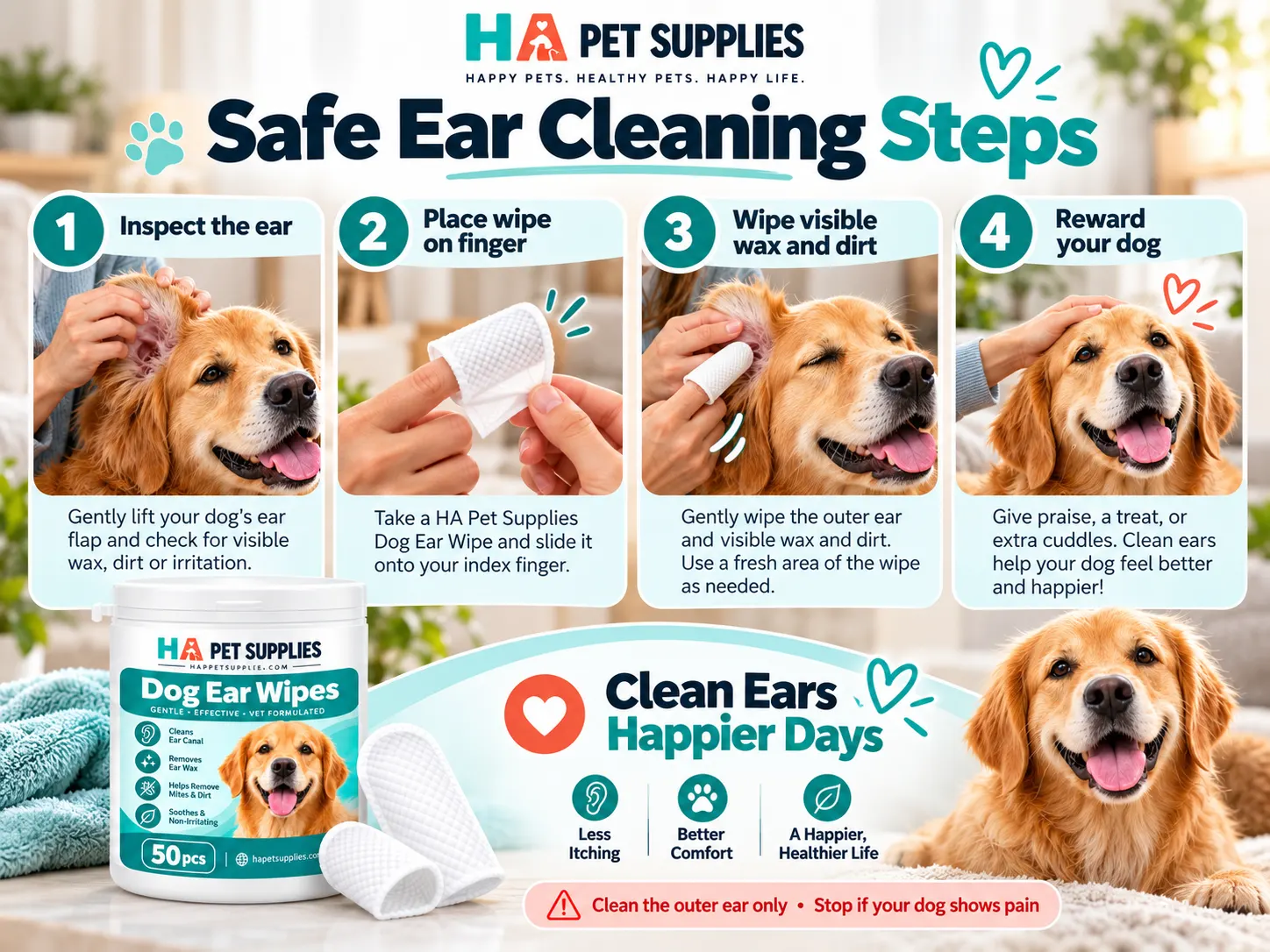
5. 3D Infographic: The Four-Part Safe Dog Ear Cleaning System
Clean Dog Ears Safely in Four Simple Actions — hover or tap each card for a subtle 3D lift.
Inspect First
Check for redness, swelling, discharge, odor, and pain before cleaning.
👆 hover mePrepare a Fresh Wipe
Use a fresh dog-safe finger wipe and keep your hands clean.
👆 hover meWipe Only What You See
Remove accessible dirt and loose wax without inserting the wipe deep into the ear.
👆 hover meReward and Recheck
Finish with praise, observe comfort, and clean again only when needed.
👆 hover meUse the supplied second blog image here because it already illustrates the four practical stages. The infographic should be displayed as a full-width image on laptop screens and scale to the mobile container width without cutting off its labels.
6. Dog Ear Wipes vs Liquid Ear Cleaner: Which Should You Use?
Many owners become confused because wipes and liquid ear cleaners are both marketed for ear hygiene. However, the two products are intended for different cleaning situations.
When dog ear wipes make sense
Dog ear wipes can be a convenient option when your dog has small amounts of ordinary dirt or loose wax on the visible inner ear flap. Their main practical advantage is direct control. You can feel how much pressure you are applying, adjust your movements, and stop easily if your dog becomes uncomfortable.
When a liquid ear cleaner may be necessary
A dog with deeper wax buildup or a veterinary ear-care plan may need a suitable liquid cleaner. Liquid cleaners are designed to reach parts of the canal that surface wipes cannot. But they must be chosen carefully. Dogs with inflamed ears, a suspected ruptured eardrum, or an existing infection should not receive an arbitrary cleaning solution.
The PDSA’s practical guide to dog ear cleaning explains the importance of checking for inflammation and discomfort before proceeding.
| Situation | Dog ear wipes | Liquid ear cleaner |
|---|---|---|
| Loose dirt on visible ear flap | Suitable for gentle cleaning | Usually unnecessary |
| Small amount of accessible wax | May be appropriate | Depends on need |
| Significant wax inside canal | Cannot clean deeply | May be recommended by vet |
| Routine external grooming | Convenient | Sometimes unnecessary |
| Painful or inflamed ear | Avoid until evaluated | Avoid unless directed |
| Suspected ear mites | Not a treatment | Only prescribed treatment addresses the cause |
| Known chronic ear disease | Follow veterinary plan | Follow veterinary plan |
For readers comparing grooming options before buying, our Best Dog Ear Cleaning Wipes buying guide explains ingredient selection, finger-fit design, cleaning frequency, and the differences between wipes and solutions.
7. How Often Should You Clean Your Dog’s Ears?
There is no single cleaning schedule that is correct for every dog. One dog may have naturally clean ears and require little more than occasional inspections. Another may develop visible wax more frequently because of its individual anatomy, grooming needs, or a veterinary-diagnosed condition.
Healthy indoor dogs
Dogs with clean, comfortable ears usually do not require frequent cleaning. Regular inspection is often sufficient. If the ears remain clean, avoid unnecessary wiping.
Dogs with floppy ears
Dogs with long or floppy ears may be more susceptible to certain ear problems because of their anatomy and other contributing factors. However, floppy ears alone do not mean daily cleaning is required.
Dogs that swim frequently
Swimming creates additional moisture exposure. For some dogs, retained moisture contributes to recurring ear problems. Gently drying the visible outer ear after swimming can be useful, but dogs with repeated infections may need a veterinarian-recommended drying product or preventive plan. The AKC’s discussion of ear infections and swimming explains why moisture control may matter.
Dogs with allergies
Allergies can contribute to repeated ear inflammation. If your dog frequently experiences itchy skin, paw licking, or recurrent ear problems, cleaning alone may not resolve the underlying cause.
Dogs with chronic ear problems
Dogs with previously diagnosed ear disease may need a personalized routine involving prescribed medications and specific cleaners. Follow that treatment plan rather than replacing it with ordinary grooming wipes. The Merck Veterinary Manual’s clinical review of otitis externa explains how underlying causes influence treatment.
Simple rule: Inspect regularly. Clean when appropriate. Follow veterinary instructions for recurring problems.
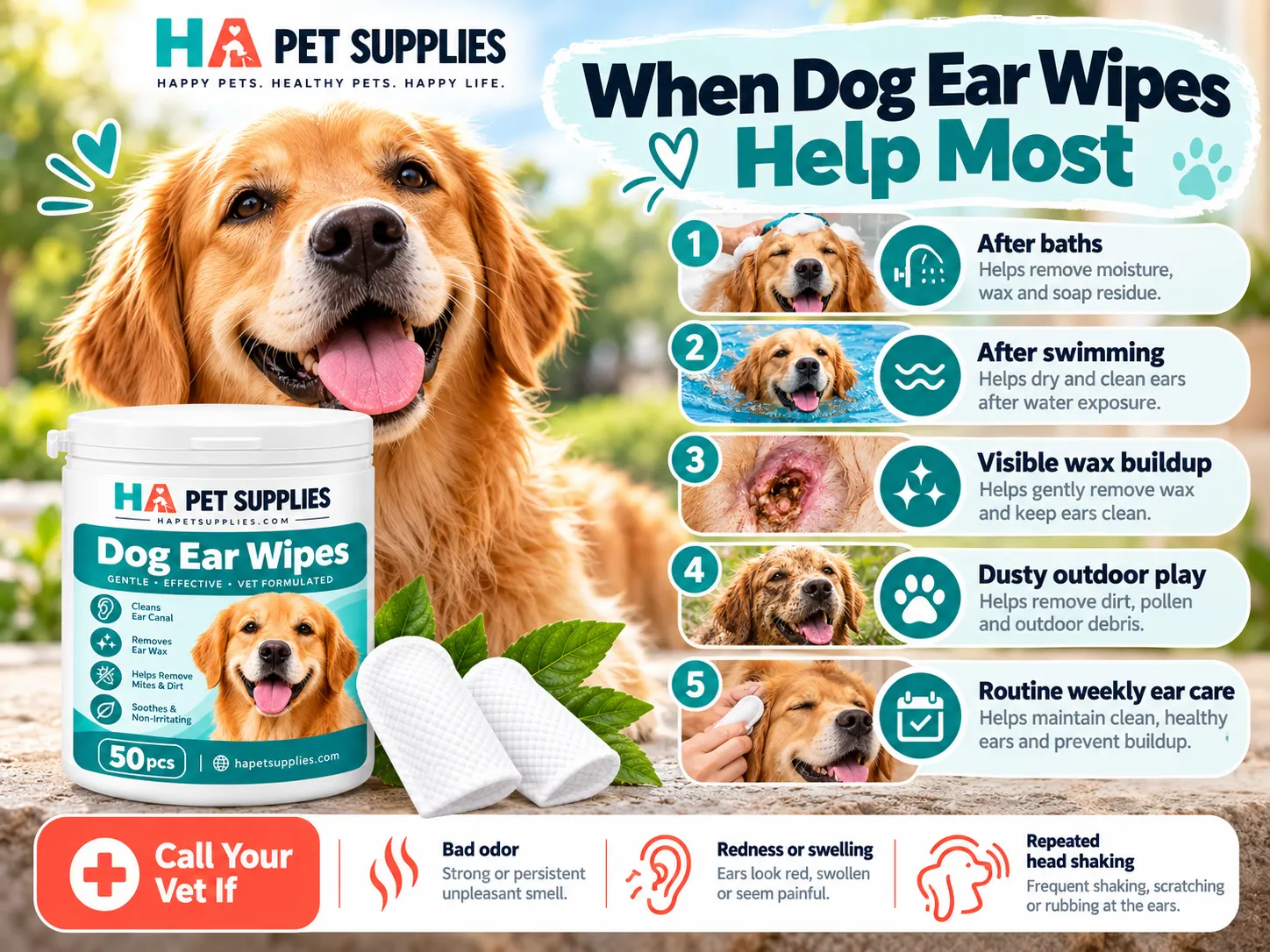
8. When Should You Use Dog Ear Wipes After Bathing, Swimming, or Outdoor Play?
Baths, swimming, and outdoor adventures are common situations that make owners think about ear hygiene. However, not every activity should automatically be followed by an ear-cleaning session.
After bathing
Water or shampoo may reach the outer ear flap during bathing. Use a soft towel to dry accessible external areas. If you notice a small amount of surface residue and the ear appears healthy, a dog-safe wipe may help remove it. Do not insert a wipe deeply into the canal.
After swimming
Swimming dogs may experience moisture exposure around the ears. Inspect the visible ear flap and dry the external surface gently. If your dog has a history of recurring post-swimming infections, ask your veterinarian about preventive care rather than relying on wipes alone.
After dusty walks
Dogs exploring dry trails, gardens, or outdoor spaces may collect dust around their ears. For visible external dirt, gentle surface wiping may be appropriate. But be alert for grass seeds or other objects, especially if your dog suddenly begins shaking its head or pawing at one ear after a walk.
After playing in muddy areas
Mud on the outside of the ear flap can often be removed with appropriate grooming materials. Avoid rubbing mud into the canal opening. If the dirt is close to sensitive areas, work slowly and stop when the ear cannot be cleaned safely.
For more grooming ideas, explore the HA Pet Supplies dog supplies collection, which helps owners organize everyday care essentials alongside ear hygiene products.
9. Common Dog Ear Cleaning Mistakes That Can Make Problems Worse
Even careful owners sometimes make mistakes because ear cleaning appears simpler than it is. Understanding what not to do is just as important as learning the correct technique.
Mistake 1: Using cotton swabs deep inside the ear
Cotton-tipped applicators can push wax and debris deeper or injure sensitive tissues. Avoid inserting them into the canal.
Mistake 2: Using hydrogen peroxide
Hydrogen peroxide can irritate delicate ear tissues and is not recommended as a general home ear-cleaning solution. The American Kennel Club’s ear cleaning guide specifically advises against it.
Mistake 3: Making homemade vinegar or alcohol solutions
A mixture found online is not automatically appropriate for your dog’s ears. Alcohol and other irritating substances may worsen inflammation. Never apply homemade chemicals to a painful or possibly infected ear.
Mistake 4: Cleaning an already painful ear
A dog that cries, growls, pulls away sharply, or shows pain during ear contact may need veterinary attention. Do not force the cleaning process.
Mistake 5: Scrubbing until all wax disappears
Natural ear wax serves a protective purpose. Removing every trace is not necessary and can cause irritation.
Mistake 6: Reusing dirty wipes
Disposable wipes should be discarded after use. Use a fresh wipe for the other ear.
Mistake 7: Ignoring persistent head shaking
Frequent head shaking may indicate more than surface dirt. Possible causes include inflammation, infection, allergies, or foreign material.
Mistake 8: Cleaning too frequently
Over-cleaning can irritate normal ears and disrupt their natural condition.
Mistake 9: Treating ear wipes as medication
Dog ear wipes are intended for grooming unless a specific product is medically approved for another purpose. They should not be marketed as curing ear infections or eliminating mites without appropriate evidence and authorization. The Merck Veterinary Manual’s owner guide emphasizes that successful ear treatment requires identifying and addressing underlying causes.
10. What Dog Ear Wax Colors Can Tell You
Ear wax color can provide clues, but it cannot reliably diagnose the cause of an ear problem. A veterinarian may need to examine the ear and test samples to determine whether bacteria, yeast, parasites, or other factors are involved.
| Ear observation | What it might mean | Recommended action |
|---|---|---|
| Small amount of yellowish wax | May be normal | Monitor |
| Small amount of light brown wax | May be ordinary buildup | Gently wipe if necessary |
| Heavy dark brown discharge | Could indicate disease | Arrange veterinary examination |
| Black crumbly material | May occur with parasites or other problems | Seek diagnosis |
| Yellow or pus-like discharge | Possible inflammation or infection | Veterinary care |
| Bloody discharge | Possible injury or serious inflammation | Prompt veterinary care |
| Strong odor with any wax color | Possible underlying disease | Veterinary examination |
Do not attempt to identify ear mites or a yeast infection based on color alone. For a deeper explanation of symptoms and possible causes, visit our article Why Does My Dog Keep Scratching Its Ears and Shaking Its Head?.
11. When to Stop Cleaning and See a Veterinarian
Home grooming is appropriate only when the condition of the ears makes it safe. Seek veterinary advice when your dog has persistent scratching, repeated head shaking, significant redness, swelling, discharge, unusual odor, or pain.
Seek prompt veterinary attention if your dog develops sudden balance problems, a pronounced head tilt, marked distress, or neurological signs. Middle and inner ear disease can affect balance and other important functions. The Merck Veterinary Manual’s discussion of middle and inner ear infections describes these potentially serious complications.
What will the veterinarian do?
A veterinarian may begin by examining the outer ear and asking about symptoms. They may use an otoscope to inspect the canal and eardrum. A sample of ear material may be examined under a microscope to identify organisms or abnormalities. Treatment depends on the diagnosis. It may involve prescribed drops, cleaning products, anti-inflammatory medication, treatment for parasites, or management of underlying allergies.
Should you clean the ear before a veterinary appointment?
If you suspect an infection or another ear disorder, ask your veterinary practice before cleaning. Removing discharge immediately before the appointment may make certain observations or tests more difficult. A photograph of visible changes can be useful, but do not delay care while trying to document symptoms.
12. How to Make Ear Cleaning Less Stressful for Nervous Dogs
Some dogs dislike ear handling because they have never been accustomed to it. Others may associate ear touching with past discomfort. A worried dog may pull away, shake its head, or resist before the cleaning begins.
Instead of restraining the dog forcefully, build tolerance gradually. Begin with calm handling sessions that do not involve wipes. Touch the outer ear briefly and provide a reward. When your dog remains relaxed, gradually extend the duration. Later, introduce the wipes container and allow your dog to inspect it.
Keep the first actual cleaning session short. You do not need to complete a perfect cleaning in one attempt. If your dog becomes distressed, stop and try again later only if cleaning remains appropriate. If resistance is associated with pain or ongoing ear symptoms, seek veterinary advice.
Positive handling is especially valuable for puppies, although young dogs should only receive cleaning products confirmed suitable for their age. For readers building a wider home grooming routine, the American Kennel Club’s home dog grooming resource offers additional context about safe hygiene practices.
13. Choosing Safe Dog Ear Wipes: What Should Buyers Look For?
Once owners understand how to clean dog ears at home, the next question is often which cleaning product to choose. Not every wipe is designed for ears. Ordinary household wipes, human personal-care wipes, and heavily fragranced products may contain ingredients inappropriate for sensitive ear tissue.
Choose a dog-specific product
Look for a product clearly labeled for canine ear care. Read the manufacturer’s complete directions and ingredient information.
Consider the wipe material
A soft, textured surface can help lift ordinary loose dirt from visible folds. However, the texture should not be rough enough to encourage scrubbing or cause discomfort.
Look at the cleaning format
Finger wipes may provide convenient control for the outer ear. Traditional flat wipes may work differently depending on their size and material. Choose whichever allows safe, gentle handling for your dog.
Check the ingredient information
Avoid assuming that natural extracts are automatically safe. Any botanical, preservative, or fragrance ingredient should be assessed as part of the actual formulation. If your dog has sensitive skin or a history of allergic reactions, ask your veterinarian which products are appropriate.
Include the PetMD veterinary panel’s guide to choosing dog ear cleaners in the product-selection discussion. It explains why formulation, ear condition, application method, and your dog’s individual needs should guide the choice between wipes and liquid cleaners.
Do not rely on unsupported medical claims
Words such as antibacterial, anti-mite, infection prevention, or veterinary formulated should be supported by credible product documentation. A routine grooming wipe should not be presented as a substitute for veterinary treatment.
Consider convenience and packaging
A lidded container can make storage easier. For example, the HA Pet Supplies Dog Ear Wipes product is presented in a 50-piece finger-wipe format designed for everyday grooming convenience when external cleaning is appropriate.
View HA Pet Supplies Dog Ear Wipes14. Why HA Pet Supplies Dog Ear Wipes May Be Useful for Routine Grooming
HA Pet Supplies Dog Ear Wipes are designed around a simple idea: make visible outer-ear grooming easier to handle. Rather than using a loose cloth that can bunch up or slip, the finger-cover format places the cleaning material directly over a finger. This allows careful movement around accessible ear folds.
Finger-fit design for controlled cleaning
The finger sleeve allows the user to guide the wipe with their hand rather than holding a separate cloth at its edge. This may be particularly useful for dogs that tolerate gentle outer-ear handling but become uncomfortable during longer grooming routines.
Disposable format for straightforward cleanup
After cleaning one ear, discard the used wipe. If the second ear needs attention, take a fresh wipe. Avoid transferring dirty materials between ears.
Intended for visible wax and dirt
The appropriate role of a grooming wipe is to lift ordinary surface residue. If a dog has substantial discharge, persistent itching, pain, or a suspected infection, the owner should seek veterinary advice rather than relying on more frequent wiping.
Useful alongside other grooming products
Ear hygiene is one part of complete dog care. Brushing, bathing, paw cleaning, dental hygiene, and nail care also contribute to a comfortable grooming routine. The HA Pet Supplies shop offers a place to explore additional pet-care products, while the HA Pet Supplies blog provides practical educational content.
The most important factor in deciding whether to purchase dog ear wipes is whether they match your dog’s needs. A product used appropriately can support grooming. A product used excessively or in place of medical care can create unnecessary risks.
15. Creating a Simple Weekly Dog Ear Inspection Routine
A weekly inspection can be a useful starting point for many owners, even when cleaning is not required. This is not a recommendation to clean every week. Instead, choose a consistent moment to look at both ears, notice changes, and determine whether any action is needed.
During the inspection
Observe whether your dog is scratching or shaking its head more than usual. Gently examine the visible ear flap. Look for surface dirt, excessive wax, redness, swelling, or discharge. Notice whether there is an unusual smell. If everything appears healthy, leave the ears alone. If there is minor ordinary surface dirt and no discomfort, gentle wiping may be appropriate. If there are warning signs, contact a veterinarian.
Adjust the routine to your dog
A dog that swims regularly may benefit from inspections after swimming. An older dog with mobility limitations may need a more comfortable position during grooming. A puppy may benefit from short, positive handling sessions. A dog with chronic ear inflammation needs a veterinary-directed plan. The best schedule is one that responds to your dog’s actual condition rather than automatically applying the same cleaning routine to every animal.
16. Frequently Asked Questions About How to Clean Dog Ears at Home
17. Final Thoughts: Clean Dog Ears Safely, Not Excessively
Learning how to clean dog ears at home can make ordinary grooming easier and help you become more familiar with your dog’s normal ear condition. The most important lesson is that healthy ears do not need aggressive cleaning.
Small amounts of visible wax and dirt can sometimes be removed with gentle, dog-specific finger wipes. But discomfort, unusual discharge, swelling, strong odor, or persistent head shaking should never be dismissed as simple dirt buildup.
Always begin with an inspection. Use a fresh wipe, work only on accessible external surfaces, avoid pushing material into the canal, and reward your dog for remaining calm. For dogs with recurring ear problems, work with a veterinarian to identify the underlying cause and establish an appropriate cleaning routine.
With the right knowledge, a suitable product, and careful handling, you can make ear inspections less stressful while protecting your dog’s comfort.
Give Your Dog a Gentler Grooming Experience
Explore HA Pet Supplies Dog Ear Wipes for convenient fingertip cleaning of ordinary visible outer-ear dirt and loose wax.
Shop Dog Ear Wipes OnlineFor product questions, ordering information, or bulk purchasing inquiries, contact our team.
Request a Quote from HA Pet SuppliesHA Pet Supplies — Happy Pets. Healthy Pets. Happy Life.
This guide is for informational purposes only and does not replace professional veterinary advice. Always consult your veterinarian for diagnosis and treatment.