
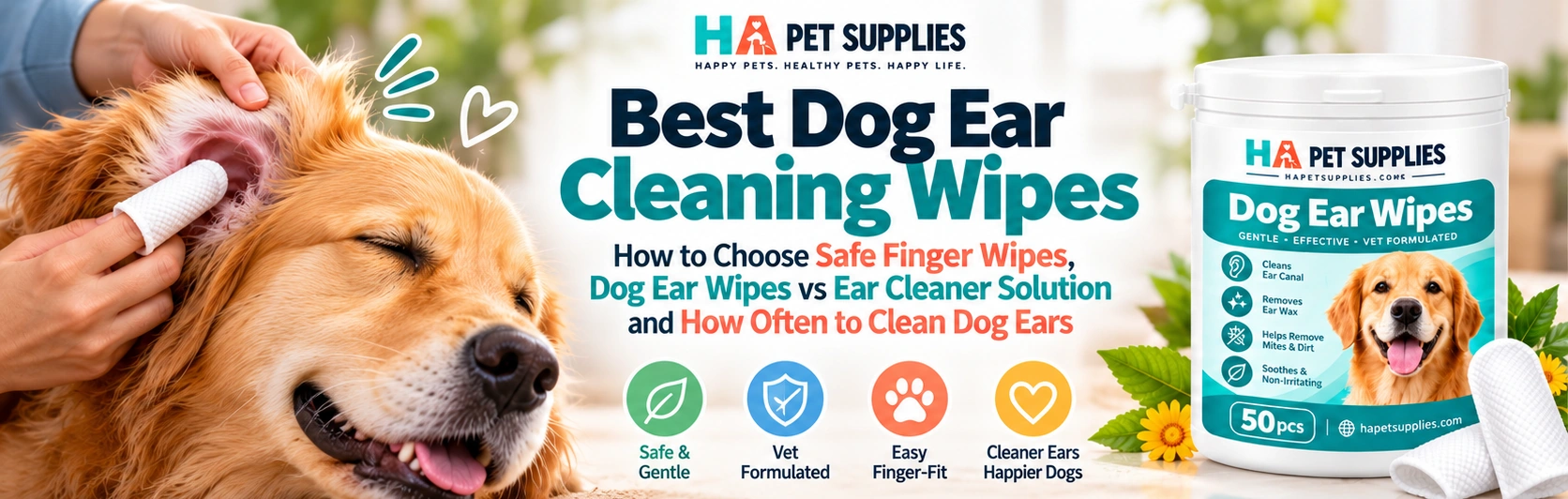
Finding the best dog ear cleaning wipes can be confusing, especially when every product seems to promise cleaner ears, easier grooming, and improved comfort. Perhaps you have noticed a little brown wax inside your dog’s ears. Maybe your Golden Retriever has just finished swimming, your Cocker Spaniel often develops visible ear debris, or your puppy dislikes traditional grooming products. You want something that is gentle, simple, and safe.
But when you start shopping, you discover several options: disposable finger wipes, flat ear-cleaning pads, liquid ear cleaners, drying solutions, and products advertised with special ingredients. Which one should you choose? Are dog ear wipes better than liquid solutions? Can finger wipes remove ear wax? How often should dogs have their ears cleaned? And what should you do if your dog already has itching, redness, or an unpleasant ear smell?
These questions matter because cleaning a healthy dog’s outer ear is very different from treating a painful or infected ear canal. The best dog ear cleaning wipes are not necessarily the most expensive or heavily advertised. They are the ones with a suitable formulation, a comfortable application method, clear instructions, and an appropriate purpose for your dog’s needs.
Finger-style dog ear wipes can be convenient for removing ordinary loose dirt and visible wax from the external ear flap. However, they cannot replace veterinarian-recommended ear solutions when cleaning deeper within the canal is necessary. According to Cornell University’s veterinary guide to dog ear cleaning, cleaning needs depend on a dog’s ear condition, medical history, and whether the cleaning is for maintenance or treatment.
In this complete guide, you will learn how to select safe finger wipes, compare wipes with liquid ear cleaners, check ingredients, choose a suitable cleaning frequency, and recognize symptoms that require veterinary care. You will also discover when HA Pet Supplies Dog Ear Wipes may be a practical choice for routine outer-ear hygiene.
⚡ Quick Answer: What Are the Best Dog Ear Cleaning Wipes?
The best dog ear cleaning wipes for routine grooming should meet several essential requirements. They should be specifically suitable for dogs, use an appropriate cleaning formulation, feel comfortable against the skin, and come with clear directions explaining where and how to apply them.
For visible external dirt, disposable finger-style wipes can be particularly convenient because they provide direct control over the cleaning surface.
However, do not use ordinary grooming wipes to treat ear infections, eliminate mites, remove deeply impacted wax, or clean a painful ear.
Before choosing a product, check the following:
- Confirm it is intended for dog ear care.
- Review the complete ingredient list.
- Choose a soft, comfortable wipe material.
- Decide whether finger wipes or flat pads suit your dog.
- Understand the difference between external wiping and canal cleaning.
- Avoid unsupported antibacterial or medicinal claims.
- Confirm suitability for puppies or sensitive dogs.
- Check packaging, quantity, storage, and hygiene instructions.
- Match the product to your dog’s actual cleaning needs.
For ordinary dirt on a healthy outer ear, a suitable dog ear wipe may be sufficient. For significant wax buildup, abnormal discharge, repeated scratching, strong odor, or pain, contact a veterinarian instead of choosing a product based on marketing claims.
Explore HA Pet Supplies Dog Ear Wipes1. What Are Dog Ear Cleaning Wipes and How Do They Work?
Dog ear cleaning wipes are disposable grooming materials designed to remove accessible surface dirt, loose wax, and everyday debris from the external ear. Some resemble ordinary flat cleaning pads. Others have a finger-cover design that fits over the fingertip. Their purpose is to help owners gently clean areas they can see and reach safely.
Why do dog ears collect wax and dirt?
Ear wax is part of the body’s natural protective system. It helps trap particles and maintain the normal condition of the ear canal. A small amount of wax does not automatically indicate poor hygiene. Dogs also encounter dust, pollen, outdoor debris, water, and other environmental materials during everyday activities. Some of this material can collect around the inner surface of the ear flap.
However, excessive wax or recurrent discharge may indicate a medical problem rather than a need for more frequent cleaning. The American Kennel Club’s guide to cleaning dog ears emphasizes understanding whether cleaning is necessary before beginning.
How do finger-style ear wipes work?
Finger wipes are shaped to fit over a person’s fingertip. The wipe moves with the finger, allowing gentle contact with the accessible folds of the outer ear. This design may be more convenient than holding a loose cloth, particularly when the owner wants to remove a small amount of visible dirt. The main advantage is controlled application.
However, the finger-cover design does not make deep ear-canal cleaning safe. A dog owner should not insert a finger wipe far into the canal or attempt to scrape out debris that cannot be reached comfortably.
Can wipes clean the entire ear canal?
No. The external ear flap and the ear canal are different structures. A wipe can clean the outer ear flap and some accessible surfaces near its opening, but cannot adequately clean material deep within the canal. Veterinarians may recommend liquid cleaners for deeper cleaning because those products can reach areas that ordinary wipes cannot. The PetMD veterinary panel’s ear-cleaner buying guide specifically distinguishes the applications of liquid cleaners and ear wipes.
Understanding this difference is the foundation of selecting the right product.
2. Nine Essential Tips for Choosing the Best Dog Ear Cleaning Wipes
Choosing the best dog ear cleaning wipes requires more than looking at packaging colors or reading promotional claims. The following nine considerations help owners make a more informed purchase.
Tip 1: Choose Wipes Specifically Intended for Dog Ears
Not all wipes are interchangeable. A household cleaning wipe is formulated for surfaces, not delicate animal skin. A human cosmetic wipe may contain fragrances, preservatives, or other substances unsuitable for canine ear tissue. Even general pet wipes may be intended only for paws or fur. Look for products explicitly described as suitable for dog ear hygiene.
Read the instructions carefully to understand where the product may be used. If a wipe is intended only for the ear flap, do not assume it is approved for application deep inside the canal. The VCA Animal Hospitals ear-cleaning resource explains why selecting an appropriate cleaner is important, especially when ear tissue is inflamed.
Buying tip: The intended application matters more than the number of benefits printed on the package.
Tip 2: Review the Complete Ingredient List
Ingredients are among the most important factors when evaluating dog ear cleaning wipes. A suitable product should have a formulation appropriate for the intended use and the individual dog’s health. Dogs with sensitive skin or a history of allergic reactions may need additional care when choosing grooming products.
Avoid assuming that ingredients described as natural are automatically safe. Botanical extracts, essential oils, and fragrance ingredients can still irritate sensitive animals. Similarly, terms such as hypoallergenic or gentle should be evaluated against actual product information rather than accepted without question. The American Kennel Club’s guidance on dog-specific ear cleaners advises against improvised home solutions and identifies hydrogen peroxide as a potential irritant.
Buying tip: Favor transparent ingredient information and ask your veterinarian about unfamiliar substances if your dog has a history of ear problems.
Tip 3: Select a Soft, Comfortable Wipe Material
The texture of the wipe influences the grooming experience. A textured surface may help lift loose dirt and ordinary wax from visible folds. However, the material should not encourage hard rubbing or scraping. A dog’s ear flap contains delicate skin that can become irritated if subjected to excessive friction.
A suitable wipe should allow the owner to make gentle movements without applying significant pressure. When reviewing product images, look at the shape and texture of the material rather than relying only on claims such as deep cleaning. For ordinary outer-ear hygiene, gentleness is more valuable than aggressive cleaning action.
Buying tip: Choose a wipe intended for light surface cleaning, not one marketed as a tool for scraping stubborn wax.
Tip 4: Compare Finger Wipes With Flat Cleaning Pads
Finger-style wipes fit over a fingertip, while traditional pads are held between the fingers. Both formats may be useful when chosen appropriately. Finger wipes offer direct fingertip control and may remain easier to position around accessible folds. Flat wipes can be convenient when cleaning larger areas of the outer ear flap.
However, neither format should be inserted deeply into the canal. Consider how your dog reacts to ear handling. Some dogs tolerate short, gentle movements better than prolonged cleaning. A compact finger wipe may suit that preference, provided the product itself is appropriate.
Buying tip: Choose based on handling comfort, safe application, and your dog’s response rather than assuming one format is universally superior.
Tip 5: Understand What Ear Wipes Can and Cannot Remove
This is one of the most important considerations in choosing the best dog ear cleaning wipes. Ordinary visible surface dirt and loose wax are different from impacted material inside the canal. A wipe may help remove the first category. It should not be used to dig out the second.
If your dog has repeated heavy buildup, unusual discharge, odor, or pain, cleaning alone may not solve the problem. The Merck Veterinary Manual’s guide to canine ear infections explains that abnormal discharge may occur with several underlying conditions.
Buying tip: If your goal is to treat symptoms rather than perform ordinary grooming, consult your veterinarian before purchasing an ear product.
Tip 6: Be Careful With Antibacterial and Anti-Mite Claims
Some products advertise antibacterial, antifungal, or anti-mite benefits. These terms describe specific functions that require suitable evidence. Ordinary grooming wipes should not automatically be assumed to kill bacteria, eliminate yeast, or treat ear mites. A product may remove some surface debris without treating the underlying cause of the problem.
This distinction matters because untreated ear infections can become painful and persistent. If your dog has signs of an infection, a veterinarian may recommend a specific medicated product. The Merck Veterinary Manual’s clinical discussion of otitis externa explains why treatment varies according to the diagnosed cause.
Buying tip: Distinguish routine grooming claims from medically verified treatment claims.
Tip 7: Check Suitability for Puppies and Sensitive Dogs
Puppies can benefit from gradual positive grooming experiences. However, a product intended for adult dogs is not automatically appropriate for very young puppies. Review age guidance and ingredient information before purchasing puppy ear cleaning wipes.
For dogs with previously irritated ears, allergies, or known skin sensitivities, seek advice about suitable products. It is also important to recognize that reluctance during cleaning may indicate pain rather than behavioral resistance. The VCA veterinary behavior guide to ear cleaning recommends gradually introducing ear handling and avoiding force when dogs become stressed.
Buying tip: Choose products based on your dog’s age, ear condition, and individual tolerance.
Tip 8: Examine Packaging, Quantity, and Storage Instructions
The container affects convenience and product hygiene. A lidded jar can help organize wipes and protect them between grooming sessions. However, the lid should be closed after each use according to the product instructions. Check how many wipes are included.
A 50-piece container may be convenient for occasional grooming, but quantity alone does not determine value. Consider product quality, suitability, expiry information, storage requirements, and how frequently cleaning is genuinely necessary. A large package is not necessarily useful if your dog rarely requires ear cleaning.
Buying tip: Compare pack quantity with your actual usage rather than assuming more frequent cleaning is desirable.
Tip 9: Match the Product to Your Dog’s Actual Needs
The best product is the one appropriate for the specific situation. A healthy dog with a little surface dirt may benefit from a simple external wipe. A dog with recurrent ear infections may need a veterinarian-directed cleaning routine and medical treatment. A dog with no visible debris and comfortable ears may need no cleaning at all.
For example, a swimming dog prone to ear infections may require a different care plan from an indoor dog with naturally clean ears. This is why buying decisions should begin with the condition of the ears rather than the product advertisement. The PDSA’s ear-cleaning advice for dogs emphasizes that many dogs do not require regular cleaning.
Buying tip: A trustworthy product should support appropriate grooming, not encourage cleaning that your dog does not need.
3. 3D Infographic: Nine Things to Check Before Buying Dog Ear Wipes
How to Choose the Best Dog Ear Cleaning Wipes — hover or tap each card for a subtle 3D lift.
Dog-Safe Formula
Choose products intended for dogs
Ingredient Transparency
Review the full ingredient list
Soft Material
Prioritize gentle contact
Finger-Fit Control
Select a comfortable format
Intended Cleaning Area
Clean visible surfaces only
Verified Claims
Avoid unsupported medical promises
Puppy Suitability
Check age and sensitivity
Packaging Quality
Store wipes correctly
Individual Needs
Match product to the dog
4. Dog Ear Wipes vs Ear Cleaner Solution: Which Is Better?
Dog owners often assume that wipes and liquid cleaners perform the same task. In reality, they have different strengths. Finger wipes are primarily intended for accessible external surfaces. Liquid ear cleaners can be used for ear-canal cleaning when appropriate and when the correct product has been selected. The difference is particularly important for dogs with recurrent ear disease.
When dog ear wipes are a practical choice
Imagine your Golden Retriever has returned from a dusty walk. You inspect the ears and notice a small amount of loose dirt around the visible ear flap. Your dog is comfortable, the skin appears healthy, and there is no unusual smell. A dog-specific finger wipe may be a practical choice for gentle external cleaning. You can control the pressure, remove visible residue, and finish without introducing liquid into the canal.
When a liquid ear cleaner may be more appropriate
Now imagine your veterinarian has diagnosed a condition that requires canal cleaning. The veterinarian may recommend a specific liquid cleaner to loosen and remove accumulated debris. Unlike a finger wipe, an appropriate liquid solution can reach areas beyond the visible ear flap. However, it must be used correctly, and certain products may be unsuitable if the eardrum is damaged or the canal is severely inflamed. Cornell University’s step-by-step veterinary ear-cleaning instructions explain how liquid cleaning differs from simple surface wiping.
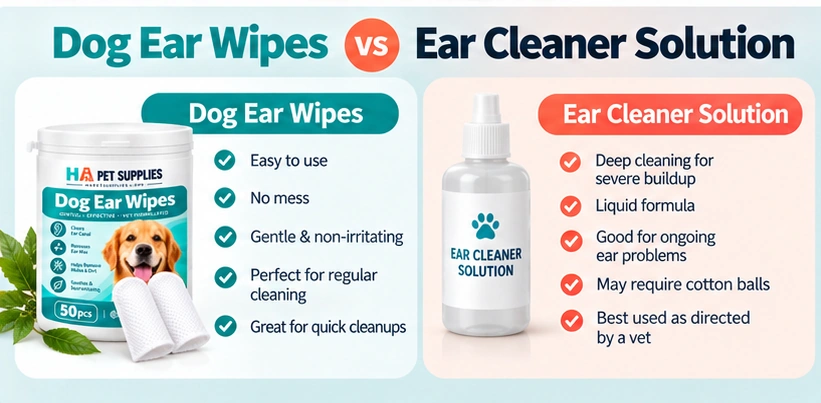
Dog Ear Wipes vs Ear Cleaner Solution Comparison Table
| Feature | Finger-style dog ear wipes | Liquid ear cleaner |
|---|---|---|
| Primary purpose | External ear hygiene | Canal and outer-ear cleaning |
| Loose visible dirt | Convenient | Can also be suitable |
| Small amount of surface wax | May be suitable | May be unnecessary |
| Deep canal debris | Cannot adequately clean | May be appropriate when vet-directed |
| Preparation | Usually minimal | Requires correct technique |
| Application control | Finger-guided | Liquid application and wiping |
| Potential mess | Usually limited | May involve liquid and head shaking |
| Medical treatment | Not with ordinary grooming wipes | Depends on specific formulation |
| Painful or inflamed ears | Avoid until assessed | Use only with veterinary direction |
| Suitable for every dog | No | No |
| Typical advantage | Quick external touch-ups | Reaches areas wipes cannot |
| Main limitation | External surfaces only | Product selection and technique matter |
Which is safer for a first-time dog owner?
Neither format is automatically safer in every situation. A suitable external wipe may be simpler for a first-time owner cleaning a small amount of visible dirt. But a dog with deeper wax accumulation may need a liquid product and professional guidance. The safest choice is determined by the dog’s ear condition and the method being used.
Can you use both wipes and liquid cleaner?
Sometimes a veterinarian may recommend a liquid cleaner followed by gentle removal of loosened external debris. However, do not combine products arbitrarily. Using multiple cleaning formulas may increase irritation or interfere with prescribed medication. Always follow the veterinarian’s treatment instructions.
What about dogs that hate liquid in their ears?
Some dogs strongly dislike the sensation of liquid entering the canal. When only external cleaning is needed, a finger wipe may be more tolerable. However, if canal cleaning is medically necessary, avoiding it entirely may not be appropriate. Ask your veterinarian about alternative application techniques, gradual training, or professional cleaning.
View HA Dog Ear Finger Wipes5. How Often Should You Clean Dog Ears?
Cleaning frequency is one of the most misunderstood parts of dog ear care. Many owners assume that frequent cleaning always leads to healthier ears. But dogs naturally maintain an ear environment that should not be disturbed unnecessarily. Over-cleaning can irritate the canal. The correct frequency depends on the dog’s health, amount of visible debris, history of ear problems, and veterinarian’s recommendations.
Healthy dogs with naturally clean ears
Some dogs rarely need their ears cleaned. If the ears look healthy, there is no unusual odor, and your dog shows no discomfort, regular inspection may be sufficient. A routine ear check can be incorporated into brushing or general grooming. However, checking the ears does not mean you need to wipe them every time.
Dogs with occasional visible surface dirt
If your dog occasionally develops loose dirt around the ear flap, gentle external wiping may be appropriate when needed. Avoid creating a fixed daily wiping schedule solely because a product is available. Use the amount of debris and the dog’s comfort as your guide.
Dogs with floppy ears
Dogs with long or floppy ears may have a greater tendency toward certain ear conditions. However, ear shape alone does not establish how often cleaning is necessary. Check regularly for odor, wax, moisture, and discomfort. If problems recur, ask your veterinarian to recommend an individual schedule.
Dogs that swim frequently
Water-loving dogs may experience repeated moisture exposure. Some dogs prone to infections benefit from a veterinarian-recommended cleaning or drying routine after swimming. A finger wipe may help remove visible external dirt, but it cannot reliably remove moisture deep inside the ear canal. The American Kennel Club’s explanation of dog ear infections discusses moisture exposure and why susceptible dogs may need extra attention.
Dogs with recurring ear infections
Dogs with diagnosed ear disease may need an individualized cleaning schedule. This could involve specific liquid cleaners, prescribed medication, or professional examinations. Do not replace a medical plan with ordinary grooming wipes.
Puppies
Puppies can become accustomed to gentle ear inspection early in life. However, young puppies do not automatically need ear cleaning. If the ears appear normal, focus on positive handling rather than unnecessary wiping. Before using a product, confirm its suitability for the puppy’s age.
Senior dogs
Older dogs may have mobility limitations, sensitive skin, or chronic health conditions. Choose a comfortable grooming position and avoid prolonged restraint. If ear problems begin suddenly or recur, do not assume they are a normal consequence of aging.
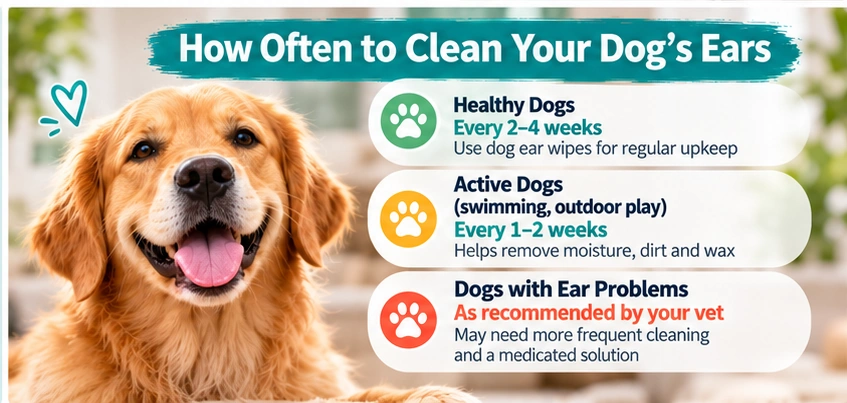
Dog Ear Cleaning Frequency Guide
| Dog or situation | Suggested approach |
|---|---|
| Healthy ears without debris | Inspect regularly; cleaning may not be needed |
| Minor visible loose dirt | Gentle external cleaning when appropriate |
| Floppy-eared dog | Regular inspection and individualized care |
| Frequent swimmer | Check after swimming and follow vet drying advice |
| Dog with allergies | Veterinary-directed maintenance plan |
| Recurrent infections | Follow treatment and recheck instructions |
| Puppy | Gentle handling training; clean only when appropriate |
| Senior dog | Adjust technique to comfort and health |
| Red, painful, swollen ear | Do not perform routine cleaning before assessment |
A useful principle is inspect more often than you clean. For a practical demonstration of safe external wiping, visit our How to Clean Dog Ears at Home in 9 Easy Steps guide.
6. How to Use Dog Ear Finger Wipes Safely
Once you have selected a suitable product, the next step is understanding how to use it. The following technique applies to routine cleaning of accessible outer-ear surfaces on a dog whose ears appear healthy. It is not a method for treating ear infections.
- Examine the ears before cleaning. Look for redness, swelling, discharge, unusual odor, or pain. If your dog shows these symptoms, stop and arrange veterinary advice.
- Choose a comfortable environment. Use a quiet location where your dog feels secure. Have treats ready and avoid sudden restraint.
- Prepare a fresh wipe. Wash your hands and remove a clean finger wipe. Follow the manufacturer’s usage instructions.
- Fit the wipe securely. Place the finger-cover wipe over your fingertip. Check that it does not slip easily.
- Lift the ear flap gently. Support the dog’s head and lift the ear flap only as far as comfortable. Do not pull or twist the ear.
- Wipe visible external dirt. Use gentle movements to remove loose debris from accessible surfaces. Do not insert the finger wipe deeply into the canal or scrape at stubborn material.
- Use a fresh wipe if the other ear needs cleaning. Discard the used wipe. Inspect the second ear independently before deciding whether it needs cleaning.
- Reward your dog. Finish with praise or an appropriate treat. Positive experiences can make future grooming easier.
- Observe your dog afterward. Watch for discomfort, persistent head shaking, scratching, or redness. If symptoms develop, stop using the product and seek veterinary advice.
The VCA behavior specialists’ ear-handling guidance offers helpful techniques for gradually introducing grooming to nervous dogs.
7. Dog Ear Wipes After Swimming, Bathing and Outdoor Walks
Different activities create different grooming needs. It is useful to recognize when simple external cleaning may help and when another approach is more appropriate.
After swimming
Swimming dogs may develop moisture around or within the ears. Gently dry the visible external ear flap. If your dog is prone to infections after swimming, ask a veterinarian whether a drying solution or special routine is advisable. Do not push a finger wipe into the canal in an attempt to absorb trapped water.
After bathing
Bathwater or shampoo may collect around the ear flap. Clean the external surface carefully and prevent shampoo from entering the canal whenever possible. If your dog develops persistent discomfort after a bath, investigate rather than repeatedly wiping.
After outdoor play
Dogs running through gardens, parks, or dusty trails may collect loose debris around their ears. A gentle wipe may be suitable for accessible dirt when the ears appear healthy. However, sudden intense one-sided head shaking after a walk may suggest a grass seed or foreign object. Do not attempt to remove a lodged object with a finger wipe.
During seasonal allergies
Some dogs experience recurring ear discomfort related to environmental allergies. If scratching is associated with itchy paws, skin inflammation, or repeated ear problems, cleaning alone is unlikely to address the cause. Seek veterinary guidance.
After a grooming appointment
Check that your dog remains comfortable following grooming. If a new product was used and your dog develops redness or discomfort, discontinue that product and ask a veterinarian for advice. Cleaning should never be used to conceal symptoms of irritation.
8. What Ingredients Should You Avoid in Dog Ear Wipes?
Ingredient selection deserves careful attention, especially for dogs with sensitive ears. Not every product that smells pleasant or contains plant extracts is appropriate for ear tissue.
Hydrogen peroxide
Hydrogen peroxide can irritate sensitive skin and is not recommended for ordinary dog ear cleaning. Avoid homemade recipes that involve pouring it into the canal.
Alcohol-based household products
Alcohol-containing household wipes are not appropriate substitutes for dog-specific ear cleaners. Certain veterinary ear products may contain drying ingredients for specialized purposes, but that does not make ordinary rubbing alcohol suitable for home use.
Strong fragrances
Heavily fragranced products may be unnecessary for cleaning sensitive ear tissue. Dogs with known sensitivities may require a fragrance-free or specifically recommended formulation. Check the label rather than relying on assumptions.
Essential oils
Do not apply concentrated essential oils to your dog’s ears. Natural origin does not guarantee safety. Ingredient concentration, purity, intended application, and the dog’s health all matter.
Unverified antibacterial ingredients
If a product advertises antibacterial effectiveness, look for reliable manufacturer documentation. Do not assume ordinary hygiene wipes can treat a bacterial infection.
Homemade vinegar mixtures
Acidic homemade solutions may irritate inflamed ear tissue. The Merck Veterinary Manual’s owner guidance on canine otitis cautions against irritating home remedies.
The safest approach is to select a suitable dog-specific product and follow the actual label instructions.
9. How to Recognize When Ear Wipes Are Not Enough
A common mistake is treating visible wax as the only problem. In reality, changes in ear debris may accompany infections, allergies, parasites, foreign objects, or other medical conditions.
Repeated scratching and head shaking
A dog that repeatedly scratches one ear or shakes its head may be experiencing inflammation or discomfort. Do not assume that cleaning harder will solve the problem.
Strong unpleasant odor
Healthy ears should not have a strong, abnormal smell. A persistent odor warrants veterinary assessment.
Redness and swelling
Inflamed tissue may be painful and more susceptible to irritation from cleaning. Avoid ordinary grooming wipes until your veterinarian advises otherwise.
Heavy black or dark brown discharge
The appearance of dark discharge alone cannot reliably diagnose ear mites or yeast infection. A veterinarian may need to examine a sample under a microscope.
Yellow or bloody discharge
Abnormal yellow material or blood requires veterinary attention. Do not attempt to remove it through repeated wiping.
Head tilt or loss of balance
These are particularly concerning symptoms. The Merck Veterinary Manual’s guide to middle and inner ear infections describes balance disturbances and neurological signs associated with deeper ear disease. Seek urgent veterinary care if your dog suddenly develops these signs.
For a comprehensive explanation of itching, discharge, and possible causes, read our Why Does My Dog Keep Scratching Its Ears and Shaking Its Head? guide.
Understand Dog Ear Wax Warning Signs10. Why HA Pet Supplies Dog Ear Wipes May Be a Practical Choice
HA Pet Supplies Dog Ear Wipes are presented as disposable finger-style wipes intended for everyday outer-ear hygiene. The finger-cover format helps owners guide the cleaning surface around visible folds without handling a large loose cloth. The supplied product imagery shows a 50-piece container.
Convenient finger-fit application
The wipe is worn over a finger, allowing controlled contact with accessible surfaces. This may suit owners who prefer straightforward external cleaning.
Practical disposable format
Used wipes can be discarded after a grooming session. A fresh wipe should be used if the other ear also needs cleaning.
Suitable purpose for ordinary surface dirt
The product’s practical role is removing ordinary loose dirt and visible wax from healthy outer-ear surfaces. It should not be presented as a treatment for infections, allergies, mites, or deeper ear-canal disease.
Compact storage
The jar format can be convenient for organizing supplies in a grooming cabinet or pet-care kit. Keep the lid closed and follow the manufacturer’s storage directions.
Part of a wider grooming routine
Ear checks can be combined with ordinary brushing, coat care, nail maintenance, and paw inspection. The HA Pet Supplies dog supplies category allows owners to explore complementary grooming items.
Product suitability still matters
Before using HA Pet Supplies Dog Ear Wipes, check the actual ingredient list and manufacturer instructions. If your dog has sensitive or inflamed ears, ask your veterinarian whether the formulation is appropriate.
Shop HA Pet Supplies Dog Ear Wipes11. Common Mistakes Buyers Make When Choosing Dog Ear Wipes
Even careful pet owners sometimes choose grooming products for the wrong reasons. Avoid these purchasing mistakes.
Buying only because the packaging says deep cleaning
A finger wipe is primarily a surface-cleaning product. It cannot replace a correctly selected liquid solution for deeper canal cleaning.
Assuming natural ingredients are always harmless
Plant-derived substances can still cause irritation or allergic reactions. Always review the formulation.
Choosing antibacterial wipes without understanding the claim
The word antibacterial does not automatically mean a product is suitable for treating an infected ear. Medical problems require proper diagnosis.
Buying a large quantity and cleaning excessively
A larger package does not mean your dog should be cleaned more often. Many healthy dogs need little or no routine ear cleaning.
Ignoring sensitivity or age restrictions
Puppies and dogs with prior allergic reactions may need specifically suitable products.
Using general household wipes
Human cleaning products may contain unsuitable ingredients. Choose wipes intended for canine ear use.
Attempting to remove stubborn wax by force
Wax deep within the canal should not be scraped out with a fingertip. Persistent heavy buildup needs assessment.
Continuing when the dog is distressed
Pain or resistance may indicate a medical problem. Stop instead of forcing the session.
Skipping veterinary care when symptoms persist
Repeated scratching, head shaking, odor, or discharge is a reason to seek help. The PDSA guide to ear problems in pets explains why these symptoms require appropriate attention.
12. How to Build a Safe, Low-Stress Ear-Care Routine
A good ear-care routine should be based on inspection, not automatic cleaning. Choose a consistent moment during normal grooming to observe your dog’s ears. Look for changes in odor, discharge, skin appearance, and comfort.
If everything appears normal, there may be no reason to clean. When small amounts of ordinary external dirt are present, use a suitable product gently. Finish before your dog becomes impatient or distressed.
Use positive reinforcement
Allow your dog to become comfortable with ear handling gradually. Reward calm behavior with praise or appropriate treats. Avoid forcing the head into an uncomfortable position.
Keep supplies organized
Store wipes, towels, and other grooming items in one location. Follow product expiry and storage requirements.
Use separate materials for each ear
Avoid transferring used cleaning materials between ears. Dispose of dirty wipes immediately.
Record recurring problems
If one ear repeatedly becomes dirty or your dog develops recurrent scratching, note when symptoms appear. This information may help a veterinarian investigate allergies, moisture exposure, or other contributing factors.
Avoid replacing veterinary treatment with grooming
If your veterinarian has prescribed medication or a cleaning schedule, follow that plan. Do not substitute ordinary wipes because they are easier to use.
For more helpful pet-care guidance, visit the HA Pet Supplies blog, where you can explore related grooming and product education.
13. Frequently Asked Questions About the Best Dog Ear Cleaning Wipes
14. Final Buying Checklist: Are Dog Ear Wipes Right for Your Dog?
Before making a purchase, review this final checklist.
Your dog’s ears: Are they comfortable, without obvious inflammation, significant discharge, or pain?
Your cleaning goal: Do you want to remove ordinary visible dirt rather than treat a medical problem?
The product: Is it specifically suitable for canine ear grooming?
The formulation: Are the ingredients clearly identified and appropriate for your dog?
The application method: Can you use the wipe gently without inserting it deep into the ear canal?
The frequency: Are you cleaning because it is needed rather than following an unnecessary daily routine?
The packaging: Is the product stored appropriately, and can you use it before its expiry date?
Your dog’s response: Does your dog tolerate gentle ear handling without distress?
If these questions can be answered confidently, finger-style wipes may be a practical addition to your grooming supplies. If your dog has an ongoing medical issue, seek veterinary guidance before introducing another product.
15. Final Thoughts: Choosing the Best Dog Ear Cleaning Wipes
The best dog ear cleaning wipes should make appropriate grooming easier without encouraging excessive cleaning or unrealistic expectations. Finger-style wipes offer a practical method for removing ordinary loose dirt and visible wax from healthy outer-ear surfaces.
They are not replacements for veterinary ear-cleaning solutions when deeper canal cleaning is required, and they should never be used as substitutes for treating infection, parasites, or painful inflammation.
The most important purchasing considerations are suitability, ingredients, wipe material, comfort, clear instructions, and your dog’s individual needs. Remember that every dog is different. Some dogs rarely need their ears cleaned, while others may require a veterinary-directed routine.
A thoughtful approach starts with regular observation, gentle handling, and knowing when to seek professional help. HA Pet Supplies Dog Ear Wipes may be a convenient option for owners looking for a finger-cover product for routine external hygiene. Choose the product that fits your dog’s needs, use it correctly, and prioritize comfort over unnecessary cleaning.
Give Your Dog a Gentle Ear-Care Routine
Discover HA Pet Supplies Dog Ear Wipes for controlled cleaning of ordinary visible outer-ear dirt and loose wax when grooming is appropriate.
Shop HA Dog Ear Wipes OnlineFor ordering inquiries, product availability, or bulk purchases, contact HA Pet Supplies.
Request a QuoteYou can also explore related grooming products through the HA Pet Supplies dog supplies collection or ask product-specific questions through the contact page.
HA Pet Supplies — Happy Pets. Healthy Pets. Happy Life.
This guide is for informational purposes only and does not replace professional veterinary advice. Always consult your veterinarian for diagnosis and treatment.