
Finding the best portable fishing bucket in 2026 may seem like a simple shopping decision, but choosing the wrong container can create unnecessary problems during a fishing trip. Imagine preparing for a relaxing morning beside a lake. Your rod is ready, your bait is organized, and the weather looks perfect. After reaching your favorite spot, you unfold your bucket and fill it with water.
Everything appears fine until you discover that the handle feels uncomfortable, the bucket takes up too much space, or the flexible sides cannot remain stable on uneven ground. If you intend to hold live bait or legally retained fish temporarily, the consequences can become more serious. Insufficient water volume, poor oxygen availability, overheating, and overcrowding can place fish under significant stress.
These problems explain why selecting a fishing bucket requires more thought than simply comparing prices. Today’s portable fishing buckets come in several designs, including collapsible fabric containers, folding plastic buckets, traditional rigid buckets, and specialized bait-holding systems.
This comprehensive guide explains how to choose the best portable fishing bucket by evaluating 11 essential features, comparing different designs, understanding fish-care requirements, and identifying common buying mistakes.
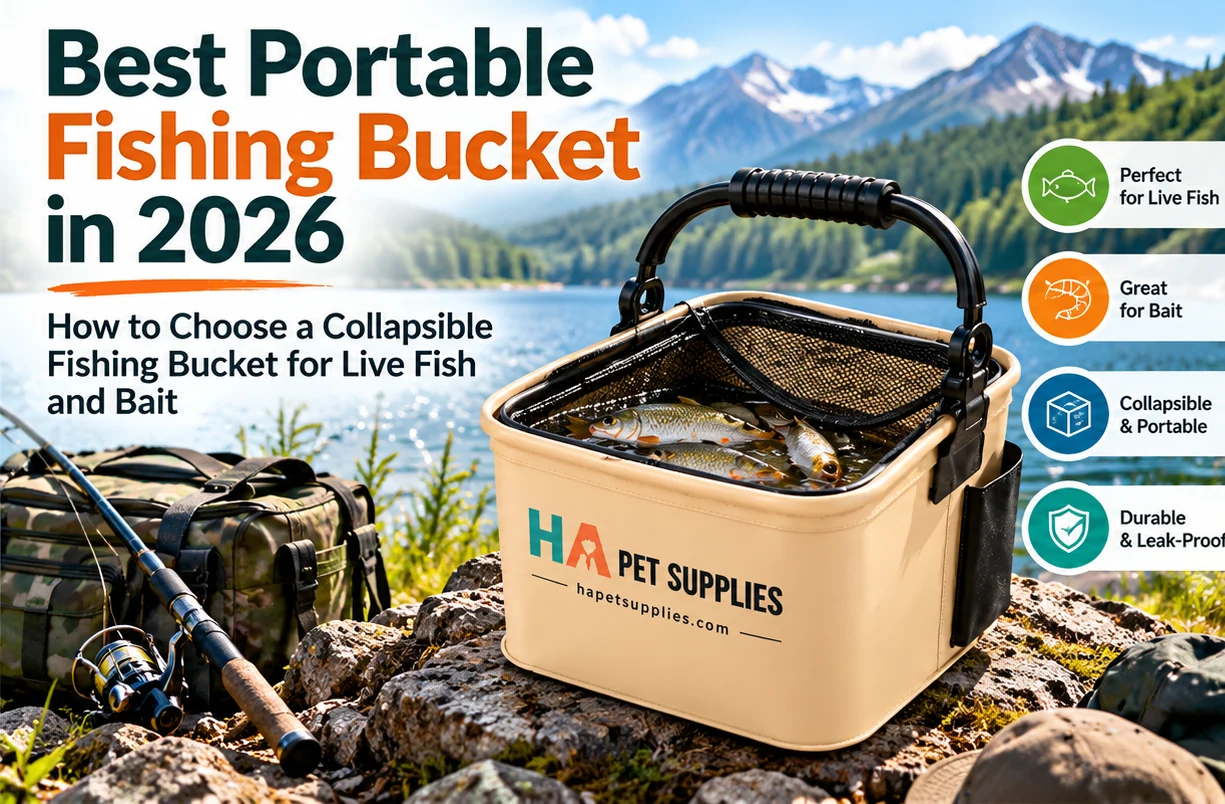
Portable fishing bucket for convenient fishing trips and bait storage.
Quick Answer: What Is the Best Portable Fishing Bucket in 2026?
The best portable fishing bucket is a container that combines suitable capacity, dependable construction, convenient portability, effective water containment, and easy maintenance for your intended activity. For anglers who walk to fishing locations or have limited storage space, a collapsible design may be especially convenient. However, for temporary live fish or bait holding, the bucket must also be suitable for the species and support appropriate water conditions.
The 11 features worth checking before buying are:
- Sufficient usable water capacity
- Durable and suitable materials
- Strong, comfortable carrying handle
- Convenient collapsible design
- Leak-resistant and stable construction
- Practical lid or opening design
- Compatibility with aeration equipment
- Easy cleaning and maintenance
- Lightweight transportation
- Good long-term value
- Suitability for your fishing activity
If you want to compare the available HA Pet Supplies portable fishing bucket, review its actual specifications before purchasing.
What Is a Portable Fishing Bucket?
A portable fishing bucket is a water-holding container designed or marketed for use during fishing-related activities. Depending on the model, anglers may use it to transport water, rinse fishing accessories, organize equipment, or temporarily hold legally permitted live bait. Portable fishing buckets are available in different sizes, shapes, materials, and construction types.
How Does a Collapsible Fishing Bucket Work?
A collapsible fishing bucket uses folding or flexible components to reduce its size when not in use. When needed, the angler expands the bucket into its working shape, positions it on a stable surface, and fills it with water. After use, the water is emptied, and the container is cleaned and dried before being folded away. This design can be particularly useful for anglers who travel with compact fishing bags or have limited storage space.
Is a Fishing Bucket the Same as a Livewell?
No. This distinction is particularly important for buyers who want to hold live fish. A standard portable fishing bucket is primarily a container. A dedicated livewell is designed to provide an environment for maintaining fish, often with integrated or separately connected circulation and aeration. Even properly designed livewells require monitoring and correct operation.
Fish held in confined water can experience oxygen depletion, waste accumulation, and temperature-related stress. The U.S. Geological Survey explains that dissolved oxygen is essential for aquatic animals and that water temperature and circulation influence its availability. Consequently, buyers should never assume that a waterproof bucket is automatically suitable for prolonged live-fish storage.
Why Choose a Collapsible Fishing Bucket in 2026?
A collapsible fishing bucket appeals to anglers who want practical equipment without carrying unnecessary bulk. Fishing trips can require several accessories, including rods, reels, tackle boxes, landing nets, food, drinking water, and weather protection. A rigid bucket may occupy valuable space even when empty. A collapsible model can help address this inconvenience.
Space-Saving Storage
The main advantage is its ability to fold down when not in use. This can make packing easier in compact vehicles, backpacks, and small equipment compartments. For anglers who keep their fishing accessories at home in limited storage space, a foldable bucket can also be more convenient between trips.
Easy Transportation
Many collapsible buckets have relatively lightweight construction. This can reduce the amount of equipment weight carried to and from a fishing location. However, remember that a filled bucket can be heavy regardless of how little the empty container weighs. The strength and shape of the handle become important when the container is filled.
Potential Limitations
Flexible containers can sometimes be less stable than rigid ones, particularly on uneven ground. Some materials may be vulnerable to punctures from sharp rocks or tools. Folding seams and joints can also require careful inspection. Therefore, the best collapsible fishing bucket is not simply the one that folds smallest. It should offer a practical balance of portability, stability, durability, and ease of maintenance.
3D Infographic: The 11-Point Fishing Bucket Buying System
Hover or tap the 3D orbital graphic below. The central bucket represents your purchase decision, and the floating feature cards orbit around it — the six most critical buying checks. Scroll further for the full 11-point breakdown.
System
The 11 Essential Features of the Best Portable Fishing Bucket
Feature 1: Choose the Best Portable Fishing Bucket Capacity
Capacity is one of the first specifications buyers should examine. A bucket that is too small may not be practical for carrying the amount of water you need. If temporary live-fish holding is involved, insufficient volume can also contribute to overcrowding and rapidly changing water conditions.
Product listings may describe the maximum theoretical capacity of a container. However, the amount of water you can conveniently transport may be lower. Consider the bucket’s shape as well as its stated volume. A tall, narrow bucket and a wider container may hold similar volumes but provide different space for fish movement or equipment access.
Feature 2: Examine the Material and Construction
The material determines how the bucket behaves during use, folding, transport, and cleaning. Portable fishing buckets may use coated fabrics, flexible plastics, rigid plastic panels, or combinations of several materials. A flexible material can improve portability and compact storage, while a rigid construction may provide greater shape stability.
Marketing terms such as heavy-duty, premium, or professional can sound impressive. However, these terms are not substitutes for actual specifications. Examine the manufacturer’s material information, intended uses, product photographs, and care instructions.
Feature 3: Choose a Strong and Comfortable Carrying Handle
A carrying handle is one of the most frequently used parts of a fishing bucket. It supports the weight of the container and its contents whenever you move it. A handle that feels comfortable when the bucket is empty may behave differently once several liters of water are added.
One liter of freshwater has a mass of approximately one kilogram, so several liters quickly create a substantial carrying load. Look for a handle designed to support the manufacturer’s recommended load, and examine the handle material, attachment points, grip shape, and overall stability.
Feature 4: Look for a Convenient Folding Design
A good collapsible fishing bucket should open and close without unnecessary difficulty. A useful design should expand into its intended shape without excessive force. Once opened, it should remain suitably stable for ordinary use. Check whether the product requires special steps for setup or storage.
Some folding buckets become flat. Others become shorter but retain much of their original width. Both designs may be convenient depending on the available storage space. For backpack fishing, a flatter design may be preferable.
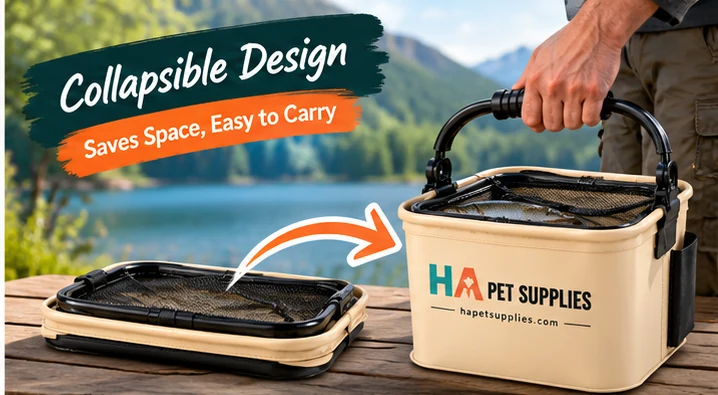
Foldable fishing bucket shown in compact and expanded positions.
Feature 5: Check Stability and Water Containment
A bucket must hold water reliably for its intended purpose. Water leakage can create inconvenience, damage equipment, and make temporary live-fish holding unsafe. However, buyers should distinguish between a material described as waterproof and a complete product advertised as leakproof.
A stable base helps keep the bucket upright, which becomes especially important on fishing trips where the ground may be uneven or slippery. When you receive a new bucket, test it in a safe location using clean water. Check the bottom, seams, and handle attachments.
Feature 6: Consider the Lid and Opening Design
Some fishing buckets feature lids, mesh covers, or partially enclosed openings. Others remain open at the top. The best design depends on the intended use. A wide opening may make filling and cleaning easier. A suitable cover may help prevent splashing or accidental escape of legally held baitfish. However, a lid should not prevent necessary gas exchange.
Some bucket designs feature viewing panels that make it easier to observe contents without opening the bucket. However, a transparent panel is not essential for every activity.
Feature 7: Evaluate Aerator Compatibility for Live Fish and Bait
Aerator compatibility can be particularly important when choosing a portable fishing bucket for live fish. Fish rely on dissolved oxygen. In small containers, available oxygen can decrease while fish continue breathing. Water temperature, fish size, stocking density, and biological waste all affect the holding environment.
A typical portable aerator uses a battery-powered air pump connected to tubing and an air stone. The system produces bubbles and water movement that promote gas exchange. However, an air pump does not automatically remove harmful ammonia, control water temperature, or eliminate handling stress. The Southern Regional Aquaculture Center provides technical guidance on oxygen and water-quality management during fish transport.
Feature 8: Choose a Bucket That Is Easy to Clean
Fishing buckets are exposed to mud, water, bait residue, and organic material. Without suitable cleaning, they may develop unpleasant odors or become difficult to maintain. More importantly, fishing equipment can carry aquatic organisms between different fishing locations.
The National Park Service recommends cleaning, draining, and drying recreational equipment to reduce the spread of aquatic invasive species. A smooth, accessible interior is generally easier to inspect.
Feature 9: Consider Empty Weight and Filled Weight
Portability is one of the main advantages of a collapsible fishing bucket. However, buyers sometimes focus too heavily on the weight of the empty container. A lightweight bucket can still become difficult to carry when filled with water.
An angler who fishes near a parked vehicle may not need the lightest possible model. Someone who regularly hikes to remote fishing locations may value reduced equipment weight. Boat anglers may prioritize stability and secure placement.
Feature 10: Compare Quality and Value Instead of Price Alone
The cheapest fishing bucket is not necessarily the best purchase. A low-priced product may be sufficient for occasional use, but poor construction can reduce its value. Similarly, an expensive bucket may include features you will rarely need.
Look beyond the initial price. Consider how frequently you will use the product. Evaluate its durability, folding convenience, handle strength, capacity, and ease of cleaning. Be cautious with vague claims such as guaranteed fish survival or universally suitable for all fish species.
Feature 11: Make Sure the Best Portable Fishing Bucket Matches Your Fishing Style
The final feature connects all the previous ones. A bucket can have excellent construction, a sturdy handle, and convenient folding features but still be unsuitable for your particular fishing activity. For shoreline fishing, compact storage and easy carrying may be most important. For boat fishing, stability and secure placement may take priority.
If you intend to keep fish alive, learn the requirements of the species and the local rules that apply. NOAA Fisheries recommends minimizing fish-handling time and using appropriate release equipment during catch-and-release fishing.
Collapsible Fishing Bucket vs. Rigid Bucket vs. Portable Livewell
Choosing the best portable fishing bucket also means understanding which type of container fits your requirements. A collapsible bucket, rigid bucket, and dedicated livewell serve overlapping but different purposes.
Collapsible Bucket
Compact storage and portable water carrying.
Excellent for backpackers and small vehicles.
Best for: portabilityRigid Bucket
Simple structure and everyday utility.
Often better shape stability on uneven ground.
Best for: general useDedicated Livewell
More controlled live-fish holding with aeration.
Requires monitoring of oxygen and temperature.
Best for: live fish| Feature | Collapsible bucket | Rigid bucket | Dedicated livewell |
|---|---|---|---|
| Compact storage | Excellent | Limited | Varies |
| Empty carrying convenience | Often good | Often good | Model dependent |
| Water transport | Suitable if designed for it | Suitable if designed for it | Not primary purpose |
| Base stability | Depends on model | Often good | Depends on installation |
| Built-in aeration | Not guaranteed | Not guaranteed | Often available |
| Cleaning | Requires attention to folds | Usually straightforward | System-specific |
| Live fish holding | Limited without proper support | Limited without proper support | Designed for managed holding |
How to Choose the Best Portable Fishing Bucket for Live Fish and Bait
Live bait and live fish require special attention because the holding container becomes a temporary aquatic environment. Many beginners focus on the bucket’s size without considering whether the water will remain suitable. That is a mistake. Even an attractive, well-constructed collapsible bucket can become unsafe when oxygen declines or the water overheats.
Understand the Difference Between Carrying Water and Holding Fish
A bucket used for water transport only needs to contain the intended water safely. A bucket holding live fish must also maintain suitable environmental conditions. Fish require dissolved oxygen and have species-specific tolerances for temperature and water chemistry. As discussed in the USGS dissolved oxygen guide, water temperature and movement affect oxygen availability.
Use Suitable Water and Prevent Overcrowding
For short-term holding at the fishing location, suitable water from the original habitat may help avoid abrupt chemistry changes, provided it is not contaminated. Untreated municipal water may contain chlorine or chloramine and should not automatically be considered suitable. Saltwater and freshwater species also have fundamentally different salinity requirements.
A crowded bucket increases oxygen demand, waste production, and the likelihood of physical contact between fish. There is no universal stocking formula suitable for every species. The number and size of fish, water volume, temperature, and aeration all matter.
Keep the Bucket Shaded and Minimize Holding Time
A container placed directly under the sun can warm quickly. For many fish, overheating creates additional physiological stress. Place the bucket in a shaded, stable location. For catch-and-release situations, prompt release generally reduces additional confinement stress. The Florida Fish and Wildlife Conservation Commission recommends minimizing handling and keeping fish in water during release whenever practical.
For a full explanation of water, oxygen, temperature, and handling, read our companion article on how to keep fish alive in a bucket while fishing.
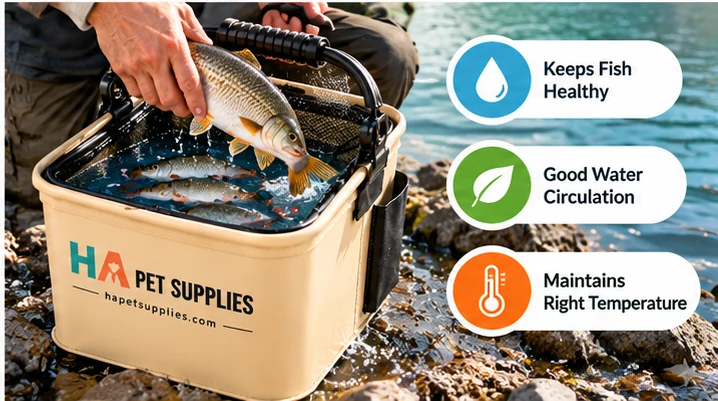
Careful fish handling beside a portable fishing bucket.
How to Choose the Right Fishing Bucket Size Without Wasting Money
Bucket capacity is frequently misunderstood by beginners. A large capacity may sound impressive, but practical suitability depends on the intended use. For general outdoor equipment rinsing, the required amount may be relatively small. For legally held baitfish, you must consider species-specific requirements rather than selecting a bucket purely by volume.
Understanding Filled Weight
| Water volume | Approximate freshwater mass |
|---|---|
| 3 liters | 3 kg |
| 5 liters | 5 kg |
| 8 liters | 8 kg |
| 10 liters | 10 kg |
| 15 liters | 15 kg |
These amounts exclude the bucket, handle, accessories, and any contents. This table is a carrying-weight illustration, not a recommendation that any particular volume is sufficient for live fish.
A large bucket may be inconvenient for anglers who walk long distances. Choose the smallest container that safely and practically meets your intended needs, without compromising any necessary live-fish conditions. Check both expanded dimensions and stored dimensions.
Common Mistakes When Buying a Portable Fishing Bucket
Choosing the wrong fishing bucket can create frustration that only becomes obvious after the purchase. The following problems are especially common among first-time buyers.
- Buying only because the bucket is cheap. Check construction, materials, capacity, and intended use.
- Ignoring folded measurements. Review the actual dimensions — a collapsible bucket may not fold into the shape you expect.
- Assuming every model is leakproof. Waterproof materials and leakproof construction are not identical.
- Forgetting about filled weight. A bucket that is easy to carry when empty may be uncomfortable once filled.
- Assuming an aerator comes included. Verify the included accessories.
- Choosing a bucket too small for its purpose. For fish, additional biological requirements apply.
- Ignoring the base. A poorly supported bucket may tip on uneven ground.
- Overlooking cleaning requirements. Difficult-to-clean folds can collect debris.
- Believing all fishing buckets are fish-safe. The ability to contain water does not establish suitability for live aquatic animals.
- Ignoring local regulations. The rules governing live bait and live-fish transport differ between jurisdictions. The National Park Service highlights the importance of responsible fishing practices.
- Buying features you will never use. Choose equipment that matches your real needs.
How to Use a Portable Fishing Bucket Correctly
Purchasing a good bucket is only the beginning. Correct setup and daily use can improve convenience, help protect the container from damage, and reduce avoidable problems.
- Inspect your bucket before leaving home. Look for damage around the base, handle, seams, and folding sections.
- Expand the bucket properly. Follow the manufacturer’s instructions and ensure all folding sections are positioned correctly.
- Choose a stable location. Place the bucket on flat ground away from sharp rocks, hot equipment, and heavily trafficked areas.
- Fill with an appropriate amount of water. Use enough water for your intended task without exceeding the product’s limits. Do not assume untreated tap water is safe for fish.
- Install accessories when necessary. If your use requires aeration, verify that the pump works correctly and that the tubing is secure.
- Handle any live fish carefully. Avoid unnecessary touching, prolonged air exposure, and rough transfers.
- Monitor the container during use. Watch for leakage, instability, and unusual changes in water conditions.
- Empty the bucket responsibly. Never transfer live organisms or untreated water between different waterbodies.
- Clean, dry, and fold the bucket. Remove debris, clean according to instructions, and dry completely before storage.
For a more comprehensive setup tutorial, read our article explaining how to use a portable fishing bucket in nine easy steps.
How to Clean and Maintain Your Collapsible Fishing Bucket
Regular maintenance is one of the simplest ways to protect your investment. Fishing equipment is frequently exposed to water, mud, sunlight, and outdoor surfaces. Without cleaning, a bucket may develop odors, accumulate residue, or become difficult to maintain.
Start by removing visible mud, leaves, bait residue, and other materials. Inspect the bottom and folding seams carefully. Different materials require different cleaning methods — avoid using harsh chemicals unless they are specifically recommended for the material and intended use. If the bucket may later hold live fish, ensure that no harmful cleaning residues remain.
The National Park Service recommends cleaning equipment, draining water, and drying gear to reduce invasive-species risks, and warns that unwanted live bait should not be released into waterways. Allow the bucket to dry completely before folding, and inspect for weakening seams, worn corners, or cracks.
Which Portable Fishing Bucket Is Best for Different Anglers?
The best portable fishing bucket depends on how and where you fish. Instead of assuming one model suits everyone, compare the different situations below.
Best for Beginner Anglers
A beginner usually benefits from a straightforward container that is easy to carry, fill, empty, and clean. Look for manageable capacity, dependable construction, and convenient storage. Avoid complicated accessories unless they serve a specific purpose.
Best for Shoreline and Remote Fishing
Shoreline anglers often need to transport equipment across uneven ground. A lightweight collapsible bucket with a reliable handle may be useful. If you regularly walk to remote fishing locations, storage size and weight become important — a folding container may fit more conveniently inside a backpack.
Best for Boat Fishing
Boat anglers may prioritize stability and secure placement. Depending on the task, a rigid bucket or dedicated container may be preferable. The container should not create a tripping hazard or interfere with movement around the boat.
Best for Legally Permitted Live Bait
A suitable bait container must allow appropriate water conditions for the species. Consider capacity, temperature, aeration, and waste accumulation. Live bait transportation rules must also be followed — some fishing locations restrict particular bait species or prohibit live bait completely.
Best for Catch-and-Release Fishing
A live-fish bucket is often unnecessary when fish should be released immediately. Using appropriate fishing tackle, minimizing handling, and returning fish promptly is generally preferable. NOAA Fisheries recommends keeping fish in water where practical and supporting the body properly when handling is unavoidable.
Frequently Asked Questions About the Best Portable Fishing Bucket
What is the best portable fishing bucket in 2026?
The best portable fishing bucket depends on the intended activity. A good option should provide suitable capacity, reliable construction, convenient carrying, stable placement, and easy maintenance. For live bait, species-specific water conditions and aeration may also be important.
Are collapsible fishing buckets worth buying?
Yes, for many anglers. They save storage space, are easy to transport, and work well for water carrying and equipment rinsing. However, check the folded dimensions, construction quality, and whether the design supports your intended use — especially if live fish or bait are involved.
Can I keep live fish in a collapsible fishing bucket?
Only for short-term holding, and only if the bucket has sufficient capacity, is shaded, is paired with suitable aeration, and is not overcrowded. A collapsible bucket is not a guaranteed live-fish survival system and should not replace a properly managed livewell for extended holding.
Does every fishing bucket include an aerator?
No. Many portable buckets are sold as containers only. Others may include accessories or have provisions for connecting them. Always check what comes in the package, and account for the separate cost and setup if an aerator is not included.
What size fishing bucket should beginners choose?
Choose based on your intended task. For general water carrying, a modest capacity is often enough. If you plan to hold permitted bait or fish, consider species requirements, aeration, temperature, and holding time. Avoid buying purely by maximum volume — filled weight matters too.
Is a collapsible fishing bucket better than a rigid bucket?
Neither is universally better. A collapsible bucket excels at compact storage and portability. A rigid bucket may offer greater shape stability and simple everyday utility. The right choice depends on how and where you fish.
Can a fishing bucket be used for live bait?
Yes, if it is suitable for the species, has enough water volume, is shaded, and is paired with appropriate aeration. Always follow local regulations on live bait transport and never release bait into a different waterbody.
How do I keep a portable fishing bucket from leaking?
Check product specifications for leak-resistant construction, inspect seams and joints, and test the bucket with clean water before your trip. Avoid placing flexible containers on sharp rocks or surfaces that could damage the material.
How long can fish survive in a fishing bucket?
There is no universal safe duration. It depends on species, water volume, temperature, aeration, and stocking density. Small, warm, unaerated containers can become unsafe very quickly. Minimize holding time and release fish promptly where lawful.
How should I clean a collapsible fishing bucket?
Remove visible debris, follow the manufacturer’s cleaning instructions, avoid harsh chemicals unless specifically recommended, rinse thoroughly, and allow the bucket to dry completely before folding. This also helps prevent the spread of aquatic invasive species.
Is a lightweight fishing bucket durable?
Lightweight construction can be durable if the materials, seams, and handle are well made. Check the manufacturer’s specifications and product details rather than assuming that low weight means poor quality.
Where can I buy a portable fishing bucket online?
You can explore the HA Pet Supplies portable fishing bucket product page, browse the fish and aquarium category, or visit the HA Pet Supplies shop for more options.
Final Checklist Before Buying a Portable Fishing Bucket
Before placing an order, review the main requirements one last time.
Portable Fishing Bucket Buying Checklist
0 of 12 complete
Final Verdict: How to Choose the Best Portable Fishing Bucket in 2026
Finding the best portable fishing bucket does not mean choosing the largest, cheapest, or most expensive container. The right product should make your fishing trips easier while matching your actual requirements.
For beginners and recreational anglers, a collapsible fishing bucket can offer practical advantages through compact storage, portability, and convenient water carrying. However, buyers should pay careful attention to capacity, materials, handle construction, stability, folding design, cleaning requirements, and included accessories.
When live fish or bait are involved, the decision becomes more important. A bucket must be suitable for the intended species, and the holding environment needs appropriate dissolved oxygen, temperature, water quality, and space. A collapsible bucket should never be treated as a guaranteed live-fish survival system.
The most reliable buying strategy is to understand your activity first and then compare products using objective specifications. By following the 11 buying criteria in this guide, you can avoid common mistakes, choose equipment more confidently, and prepare for a more convenient fishing experience.
You can also browse the HA Pet Supplies Shop, explore the educational blog, or visit the HA Pet Supplies homepage.
HA Pet Supplies | Fishing Equipment Buying Guide | Updated for 2026