

HA Pet Supplies cozy indoor cat bed for comfortable everyday sleep
Finding the best cat bed for indoor cats sounds simple until you start shopping. You see fluffy round beds, flat cushions, enclosed cat houses, raised baskets, orthopedic mattresses and dozens of fabrics. Every product promises comfort, yet you are left wondering which one your cat will actually use.
Perhaps your cat sleeps on your clean laundry instead of its expensive bed. Maybe you recently adopted a kitten and want to create a safe sleeping space. Or perhaps your older cat has started avoiding the sofa, and you are searching for something easier to access.
You do not need to buy the most expensive cat bed. You need to understand how your cat sleeps, what makes it feel secure and which materials are comfortable and practical in your home.
According to Cats Protection’s guide to choosing a cat bed, comfort, warmth and privacy are important considerations when selecting a sleeping space.
This guide explains how to identify your cat’s sleeping style, measure for the right size, compare materials and choose a bed that suits your pet’s everyday routine.
Quick answer: Which cat bed should you buy?
If you need a fast solution, start with your cat’s favorite sleeping position.
| Your cat’s habit | Bed type to consider | What matters most |
|---|---|---|
| Curls into a tight ball | Round plush bolster bed | Soft edges and a comfortable interior |
| Stretches out fully | Flat cushion or rectangular mattress | Sufficient usable length |
| Hides under furniture | Enclosed cat house bed | Privacy and a safe exit |
| Sleeps beside you | Open plush bed | Familiar placement |
| Seems stiff when getting up | Supportive, low-entry bed | Easy access and appropriate cushioning |
| Moves between sunny spots | Lightweight indoor cat bed | Easy repositioning |
| Prefers cardboard boxes | Basket or cave-style bed | Familiar shape and scent |
For cats that naturally curl up against cushions or raised edges, the HA Pet Supplies plush cat bed is a product worth considering. Its open-top basket style and soft raised sides are designed for this type of resting preference.
However, an open plush bed is not automatically the best choice for every cat. Your cat’s behavior should guide your decision.
Table of contents
- Why indoor cats need comfortable sleeping spaces
- Understanding the four main sleeping styles
- How to choose the correct cat bed size
- Best cat bed materials compared
- Open beds versus enclosed cat houses
- Choosing a bed for kittens, adults and senior cats
- How warm should an indoor cat bed be?
- Where to place your cat’s new bed
- Why cats reject new beds
- Seven mistakes to avoid before buying
- Cat bed comparison and buying checklist
- How to introduce and maintain a cat bed
- Frequently asked questions
- Final recommendations
1. Why the Best Cat Bed for Indoor Cats Matters
Cats spend a considerable portion of their lives resting. The amount varies with age, health and individual behavior, but many adult cats sleep around 12–16 hours daily.
A veterinary-reviewed explanation of cat sleeping habits from PetMD explains that cats naturally conserve energy through frequent periods of sleep and rest.
This does not mean every cat needs one special commercial bed. Cats often enjoy several resting spaces, including blankets, furniture, elevated platforms and suitable boxes.
A dedicated cat bed offers another comfortable choice.
A cat bed creates a familiar resting option
Imagine a busy household. People walk through the living room, televisions play, doors open and close, and visitors occasionally arrive.
Your cat may enjoy family activity but still want somewhere quieter.
A comfortable bed placed away from unnecessary disturbance can provide a predictable place to relax.
The Feline Veterinary Medical Association’s 2025 indoor cat welfare statement identifies safe resting places and appropriate environmental resources as essential parts of indoor feline welfare.
This matters because buying bedding should not be treated as purely decorative. The resting area must work for the animal using it.
Comfortable bedding supports normal resting behavior
Some cats prefer soft fabrics that let them curl into a compact position. Others like more supportive surfaces that allow them to change positions without sinking deeply.
A cat bed should offer sufficient usable space and appropriate cushioning. It should not force your cat into a posture it dislikes.
A plush bed can make a resting area inviting, but it is not medical treatment. If your cat shows stiffness, pain or unusual changes in movement, a veterinary assessment is more important than simply purchasing a thicker cushion.
Sleeping spaces should provide choice
Your cat may sleep in different locations depending on the time of day.
In the morning, it might choose a sunny window. During the afternoon, it may prefer a quiet bedroom. At night, it may rest closer to you.
That behavior is normal.
The Blue Cross guide to cats and sleep explains that cats commonly rotate between resting locations and benefit from having several comfortable options.
For this reason, the goal is not to make your cat use one bed constantly. The goal is to provide a suitable sleeping choice it can use whenever it wants.
2. Understand Your Cat’s Sleeping Style Before Buying
One of the most useful ways to choose the best cat bed for indoor cats is to observe how your pet sleeps.
Do not begin with product colors or decorative styles. Begin with behavior.
Watch your cat during several ordinary naps. Notice whether it curls tightly, stretches its legs, leans against furniture or hides beneath coverings.
These habits provide valuable clues.
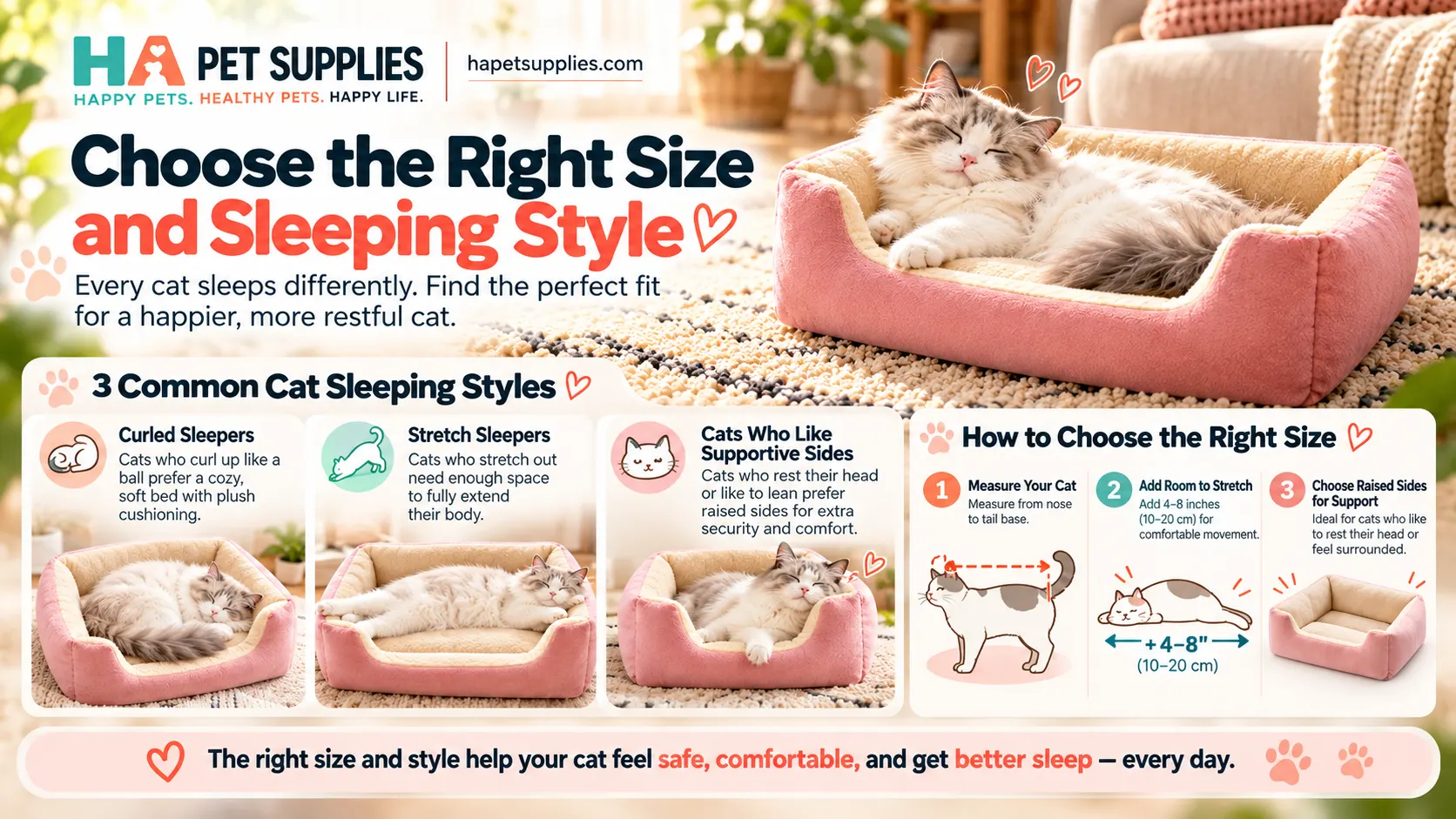
Sleeping style 1: The curled-up sleeper
A curled-up cat often rests with its paws tucked close and its tail wrapping around its body.
This position may make round beds with raised sides appealing. A soft basket-style bed provides a surrounding edge without fully enclosing the cat.
When shopping, look for a comfortable interior, soft bolsters and enough room for the cat to shift positions.
Avoid buying an extremely small bed simply because the cat looks compact when curled up. A cat should still be able to reposition comfortably.
Sleeping style 2: The full-body stretcher
Some cats sleep with their front paws extended, back legs stretched out and body occupying an impressive amount of furniture.
These cats may prefer flat sleeping surfaces. A round cat bed can work if it is large enough, but a rectangular cushion may provide more freedom.
For a stretching sleeper, prioritize usable length rather than thick raised sides.
Sleeping style 3: The hidden sleeper
Does your cat disappear into wardrobes, under blankets or inside boxes? It may prefer sleeping in an environment that feels sheltered.
An enclosed cat house bed, cave bed or suitable hiding box may be a better match.
The FelineVMA guidance on safe spaces and feline environmental needs explains the importance of secure resting and retreat options.
Some cats enjoy covered spaces because they reduce visual exposure. Others find them restrictive. Follow your cat’s preference rather than assuming every cat wants privacy in the same form.
Sleeping style 4: The social sleeper
Certain cats prefer resting near their owners. They may choose the sofa, the corner of a bed or a chair where they can watch family activity.
For these cats, the location of the bed may matter more than whether the design is round or rectangular.
Place an open plush bed close to an established resting area. Let the cat explore naturally.
If your pet already enjoys leaning against cushions, a soft raised-side design may be a practical starting point.
Can a cat have more than one sleeping style?
Absolutely. A cat may curl up in winter, stretch out during warmer weather and hide when the house becomes noisy.
Do not feel that you must assign your pet permanently to one category. Instead, identify its most common resting preference and provide alternatives where practical.
A household with a round bed, a flat blanket and a safe hiding area may meet a cat’s changing preferences more effectively than a single expensive product.
3. How to Choose the Right Cat Bed Size
Size is one of the biggest sources of buyer confusion.
A product might be described as small, medium or large without explaining how much usable space it actually offers.
Two beds with the same exterior diameter may have different interior sleeping areas because one has thick bolsters. That difference matters.
Measure your cat rather than guessing
Wait until your cat is calm and relaxed. Observe its typical sleeping position. Estimate the length of the space it occupies from the front of its body to the back, excluding an extended tail unless the tail forms part of its normal resting position.
For stretching sleepers, measure the approximate length your cat uses when lying comfortably extended.
Then compare those measurements against the advertised interior dimensions of the bed.
If the bed has thick sides, do not assume its outside diameter is the amount of usable sleeping space.
Why interior dimensions matter
Imagine two round beds, each advertised with an outside diameter of 50 cm. One has relatively thin sides and a spacious interior. The other has thick bolsters that take up more room.
Both may look similar in a product listing, but your cat will experience them differently.
A bed that is too cramped may prevent the cat from stretching or changing position. A bed that is larger than necessary is not automatically bad, but cats that enjoy curling against an edge may find an excessively spacious open bed less appealing.
The aim is a comfortable balance.
Illustrative cat bed sizing guide
These examples are only starting points for comparing usable sleeping space, not universal manufacturer size standards.
| Cat type | Approximate interior space to investigate | Additional consideration |
|---|---|---|
| Small, mobile kitten | 30–40 cm | Easy entry and space to grow |
| Average adult cat | 40–50 cm | Room to turn and settle |
| Larger adult cat | 50–60 cm or more | Wider, less restrictive interior |
| Cat that stretches extensively | Measure full resting length | Flat or rectangular bed may work better |
| Senior cat with reduced mobility | Individually measured | Low entrance and easy access |
Do not use these figures as a substitute for your own measurements. Cats vary significantly in length, build and sleeping posture.
Also remember that unusually young kittens and cats with special medical needs may require different bedding arrangements.
The correct size for two cats
Some cats enjoy sleeping close together, while others prefer separate spaces. A larger bed may accommodate bonded cats, but it should not be their only resting option.
Individual beds allow each cat to move away when it wants solitude.
The VCA Animal Hospitals’ feline environmental needs guide recommends providing multiple options for important resources, including resting spaces, particularly in multi-cat homes.
If two cats regularly share a favorite sofa, consider whether a large shared resting area and separate individual beds would suit them. Do not assume that sharing a bed is always desirable.
3D infographic: The Cat Bed Comfort Formula
Cat bed size and sleeping style guide for choosing the right fit
4. Best Cat Bed Materials: Plush, Fleece, Cotton, Foam and More
Once you understand size and sleeping style, the next question is material. This is where many buyers become overwhelmed. Product descriptions frequently use words such as ultra-soft, premium, fluffy, breathable, supportive and cozy, but these descriptions do not always tell you how a bed will feel after weeks of use.
The best material depends on your cat’s preference, your household temperature, how frequently you need to clean the bed and whether your cat has special mobility needs.
Plush cat beds: Best for cats that enjoy soft surfaces
Plush-style materials are popular because they provide a soft, inviting texture. Many plush beds also feature raised bolsters that create a cozy sleeping area.
These designs can appeal to cats that curl into compact shapes and lean against surrounding cushions.
For example, the HA Pet Supplies indoor plush cat bed features an open-top pink basket design with soft raised sides.
This style may suit a cat that already prefers sleeping on soft blankets, cushions or upholstered furniture.
However, do not assume that every plush bed has the same filling, fabric construction or washability. Check the actual specifications before buying.
Also consider temperature. A very fluffy bed may feel less appealing to a cat that prefers cool surfaces during hot weather.
Fleece cat beds: Soft and practical for cozy resting
Fleece is commonly used in pet blankets, bed covers and soft linings. It can provide warmth without requiring a thick mattress.
For cats that enjoy sleeping on folded blankets, fleece-covered bedding may be an attractive option.
One practical benefit is that some fleece bedding can be washed separately from the bed itself, depending on the product. However, fleece may collect hair, and certain fabrics develop static or pilling over time.
Choose construction quality and appropriate care instructions over the promise that all fleece products perform identically.
Cotton cat beds: A lighter bedding option
Cotton fabrics are often chosen by owners looking for a less fluffy surface. Depending on thickness and construction, a cotton cover can feel lighter than a deep faux-fur lining.
This may appeal to cats that dislike sinking into thick materials.
Cotton also varies widely. A thin cotton covering over an unsupportive filling may be less comfortable than a well-constructed cushion using another fabric.
Do not compare materials by name alone. Consider the combination of outer cover, filling, firmness and washability.
Foam cat beds: Support and stability
Foam cushioning comes in many densities and shapes. Some beds use simple foam layers, while others use specialized orthopedic or memory foam.
A supportive foam mattress may be particularly relevant when choosing bedding for an older cat with mobility difficulties.
The VCA Animal Hospitals’ guide to helping cats with osteoarthritis notes that supportive sleeping areas and easy access can help improve comfort at home for cats with osteoarthritis.
This does not mean foam is automatically the best choice for every senior cat. Some cats dislike particular textures or firmness levels.
If your cat is experiencing pain, consult a veterinarian rather than relying on a bed purchase to resolve the problem.
Faux fur and sherpa-style fabrics
Faux-fur and sherpa-style linings can feel particularly fluffy. They may appeal to cats that love soft, textured blankets.
When comparing these materials, inspect whether the fibers shed excessively, whether seams remain secure and whether loose material could be chewed or swallowed.
Cats that chew fabric may need a less fluffy, more durable alternative.
Cat bed material comparison table
| Material | Main advantage | Possible limitation | Suitable situation |
|---|---|---|---|
| Plush fabric | Soft texture and cozy appearance | May retain warmth and hair | Cats that curl up |
| Fleece | Soft, often used for warm bedding | Can collect hair and pill | Cats that enjoy blankets |
| Cotton | Can offer a lighter surface | Comfort depends on filling | Cats preferring less fluff |
| Basic foam | Firmer cushioning | Quality and density vary | Flat resting surfaces |
| Orthopedic foam | Specialized support options | Requires careful product selection | Cats with mobility needs |
| Faux fur | Deep, fluffy texture | Cleaning and loose fibers | Cats that enjoy textured bedding |
Which material is best for winter?
The best winter cat bed depends on room temperature, the cat’s health and personal preference. Soft plush bedding can be a practical choice in a comfortably heated indoor home.
An enclosed bed may help some cats feel sheltered, but it does not replace adequate ambient heating. Do not assume an extra-thick bed can keep a cat safe in an excessively cold environment.
The ASPCA’s general cat care recommendations advises providing cats with a clean, dry resting place and soft, warm bedding.
Which material is easiest to maintain?
For buyers concerned about shedding, accidents or frequent cleaning, the most important question is not simply whether the bed looks washable.
Ask whether the complete bed is machine washable, whether the cushion is removable and whether the fabric can be dried thoroughly.
A removable cover can make cleaning convenient, but only when its care instructions permit the cleaning method you intend to use.
For the HA Pet Supplies cat bed, verify the specific product care label before describing it as machine washable.
5. Open Cat Bed vs Enclosed Cat House: Which Is Better?
This is another common buying dilemma. Many shoppers search for a cat house bed when they actually want a soft sleeping space. Others purchase a fluffy open bed for a cat that strongly prefers hiding. Understanding the difference can prevent disappointment.
Open cat beds
An open bed has no roof or overhead enclosure. It may be completely flat or surrounded by soft raised sides.
Open beds are worth considering for cats that like seeing their environment while resting. They may also be easier for owners to observe and for cats to approach.
Round plush basket beds fall into this category.
Enclosed cat house beds
An enclosed bed typically has a roof, hood or cave-like structure. It creates a sheltered interior and may appeal to cats that seek visual privacy.
For example, a cat that regularly hides inside boxes might show interest in a cat sleeping house with an appropriately sized entrance.
However, an enclosed design can be less suitable for a cat that dislikes confined spaces. Its opening must also be large enough for comfortable entry and exit.
Flat cushion beds
A flat cushion offers an unobstructed sleeping area. It can be useful for stretching sleepers and cats that need easy access.
The main trade-off is the absence of surrounding bolsters. Some cats do not mind this. Others like having a soft surface to lean against.
Which type is best?
There is no universal winner.
The AAFP and ISFM feline environmental needs guidelines emphasize safe places and appropriate environmental choices as part of meeting cats’ needs.
A good home environment may include more than one type of resting place.
For an owner choosing a first bed, a soft open basket can be a sensible starting option when their cat already enjoys curling against soft surfaces.
But if the cat consistently sleeps beneath furniture or inside boxes, consider a covered hiding space too.
The smartest purchase is the one that follows the evidence your own cat provides.
6. Choosing a Cat Bed for Kittens, Adult Cats and Seniors
Age affects more than body size. It can influence how your cat enters a bed, how much support it needs and which sleeping environment is appropriate.
Best kitten bed for everyday comfort
Kittens need suitable sleeping spaces where they can rest without unnecessary disturbance. A kitten bed should be appropriately sized, easily accessible and free of loose attachments that might create chewing or entanglement hazards.
Avoid long cords, unsecured decorations and exposed stuffing.
For a mobile, healthy kitten, a low-sided cushioned bed may be convenient.
Very young kittens that still require specialized warmth or nursing care have different needs. An ordinary pet bed should not be treated as a replacement for appropriate neonatal care.
The Cornell University’s new cat care guidance offers helpful information about preparing a safe home environment for a new cat.
Best cat bed for healthy adult cats
Adult cats often have established sleeping habits. The easiest way to choose bedding is to observe what they already enjoy.
A cat that frequently curls up in a soft chair may appreciate a round plush bed. A cat that stretches across the floor may prefer a broad cushion. One that disappears under furniture might want an enclosed resting option.
Do not assume that age, breed or weight alone determines the ideal style. Individual preference is often more informative.
Best cat bed for senior cats
Older cats may have reduced mobility or joint discomfort. For these cats, accessibility deserves special attention.
A bed should not require a difficult jump, climb or awkward step over a tall bolster. Look for a stable sleeping surface, easy entry and adequate support.
The Cornell Feline Health Center’s guidance on changes in older cats explains that reduced activity, reluctance to jump and changes in resting behavior can sometimes be associated with joint pain.
If you notice those changes, arrange a veterinary assessment. A better bed may make daily life more comfortable, but it cannot diagnose or treat arthritis.
What about overweight cats?
A heavier cat may require more usable space and firmer cushioning. Check the actual dimensions and construction instead of assuming every product labeled large will be suitable.
Make sure the bed does not tip or move when the cat enters. A stable resting surface can be particularly important for cats that have difficulty repositioning their bodies.
If weight is affecting movement or health, work with your veterinarian on an appropriate management plan.
7. How Warm Should the Best Indoor Cat Bed Be?
Many cats enjoy warm resting locations. You may notice your cat following sunlight across the living room, curling up on a blanket or choosing a warmer room during winter.
That does not mean the warmest possible bed is always the safest. Cats need the opportunity to move away from heat and choose a different resting surface.
Winter cat bed considerations
During colder months, place the bed in a comfortably heated indoor room. Choose a dry area protected from strong drafts.
Soft fleece or plush bedding may be more inviting than a bare floor. The important point is to offer comfort without excessive heating.
The International Cat Care guide to home modifications discusses accessible, soft resting places for cats with joint or mobility problems and advises avoiding direct contact with heat sources that could cause burns.
Are heated cat beds necessary?
Not necessarily. Healthy indoor cats living in appropriately heated homes may be comfortable with ordinary bedding.
A heated bed is a separate product category and should be evaluated for electrical safety, temperature control and pet-specific design.
Do not place an ordinary electric heating pad inside a cat bed unless its manufacturer specifically confirms appropriate pet use.
Do not position bedding directly against radiators, open flames or unsafe heaters.
What about summer?
A plush winter-style cat bed may not be your cat’s favorite resting surface in hot weather. Offer alternative places with lighter fabrics and comfortable room temperatures.
Some cats prefer a cool tile floor during warm afternoons. That preference does not automatically mean their regular bed is unsuitable. It may simply reflect a change in temperature.
This is another reason to provide a choice of sleeping locations rather than attempting to make one bed serve every situation.
8. Where Should You Put a Cat Bed Indoors?
You can choose the correct material and size, but your cat may still ignore the bed because of its location. Placement is an important part of the buying decision.
Choose a quiet but familiar place
Start by observing where your cat already rests. Does it nap beside the sofa? Under a desk? Near a bedroom window?
Rather than choosing a completely new location, place the bed near a safe spot your cat already enjoys. Cats often feel more comfortable in familiar environments.
The FelineVMA advice on creating a comfortable feline environment highlights the importance of familiar spaces, appropriate resource placement and minimizing unnecessary environmental stress.
Keep the bed away from constant interruptions
Avoid locations where people frequently step, open doors or move furniture. A resting cat should be able to sleep without being disturbed repeatedly.
If children or other animals are present, choose an area where the cat can rest independently.
Consider a safe elevated location
Some cats prefer resting above floor level. A bed on a stable, wide, accessible platform may appeal to these cats.
However, make sure it cannot slide, tip or fall. For cats with reduced mobility, a floor-level position may be safer.
Avoid the litter box area
A resting place should not be crowded against the litter box. Cats benefit from separation between key resources. Position the sleeping area away from toilet facilities while keeping both accessible.
Watch for sunlight and drafts
A bright window may be attractive during the day, but consider temperature changes and safety. Avoid strong drafts and places that become excessively hot.
Make sure windows are secured and that the cat can leave its resting area easily.
For a detailed room-by-room guide, read Where Should You Put a Cat Bed? 9 Best Places for Safety and Comfort.
That article expands on placement and helps owners compare different areas of the home.
9. Why Your Cat Might Ignore a New Bed
You found a beautifully designed cat bed. You chose a color that matches your home. You placed it in the living room. Then your cat walked past it and slept inside a cardboard box.
This is frustrating, but it is not unusual.
Reason 1: The bed smells unfamiliar
Cats rely heavily on scent. A new product may smell different from their usual environment.
Try introducing a familiar blanket or another safe object with your cat’s scent. Avoid spraying strong perfumes or scented cleaning products onto the bedding.
Reason 2: The location is unsuitable
Your cat may dislike the bed’s position rather than the bed itself. Try moving it nearer an established resting place.
Avoid moving it repeatedly throughout the same day. Give the cat time to investigate.
Reason 3: The bed does not match the sleeping style
A stretching cat may reject a small round bed. A hiding cat may ignore a completely exposed cushion. A cat that enjoys raised surfaces may avoid a floor-level location. These preferences are important clues.
Reason 4: The texture is unfamiliar
Some cats enjoy fluffy fabric. Others prefer smoother surfaces. If the new bed has a different texture from the cat’s favorite blanket or chair, it may need time to become familiar.
Reason 5: Your cat already has several preferred locations
A cat does not need to use every resting option you provide. It may continue choosing the sofa during the day and occasionally use the new bed at night. This can still be a successful purchase.
Reason 6: The household is too busy
Loud noises, unfamiliar visitors or competition with other pets may discourage resting. Move the bed to a quieter area.
Reason 7: There may be an underlying health problem
Sudden changes in resting behavior deserve attention, especially when accompanied by limping, hiding, reduced appetite or difficulty moving.
The VCA veterinary guide to arthritis in cats explains that discomfort can affect how cats move, rest and interact with their surroundings.
If the change is sudden or your cat seems unwell, consult a veterinarian promptly.
For a dedicated troubleshooting guide, read Why Won’t My Cat Sleep in Its Bed? 7 Common Reasons and Practical Solutions.
10. Seven Common Mistakes When Buying a Cat Bed
Understanding what to avoid is just as important as knowing which features to prioritize.
Mistake 1: Buying based only on appearance
A pink plush bed might match your furniture, but the design must also suit your cat. Start with comfort, size and sleeping habits. Then consider appearance.
Mistake 2: Ignoring interior measurements
Thick raised sides can reduce usable sleeping space. Always check interior measurements when available. If only external dimensions are listed, ask the seller for clarification.
Mistake 3: Assuming bigger is always better
A larger bed can be useful for stretching cats. However, a cat that likes curling against surrounding cushions may prefer a more closely fitting design. The important factor is comfortable movement, not maximum size.
Mistake 4: Overlooking cleaning requirements
Cats shed hair, occasionally track dirt onto bedding and may experience accidents. Check whether the material is easy to clean and whether the product can dry thoroughly. Do not assume a bed is machine washable because it looks soft.
Mistake 5: Choosing an inaccessible design
High sides may be inconvenient for a kitten or a cat with limited mobility. Observe how easily your cat steps onto furniture and changes position. Select bedding that fits those physical abilities.
Mistake 6: Placing the bed beside excessive heat
Cats often enjoy warmth, but unsafe heat sources can cause injury. Keep ordinary bedding away from open flames and direct contact with heaters.
Mistake 7: Forcing your cat to use it
Never hold a cat inside its new bed or punish it for sleeping elsewhere. Allow voluntary exploration. A familiar scent, suitable placement and calm introduction are more helpful than force.
These mistakes are common because buyers often focus on individual product features instead of considering the cat’s complete environment. A successful purchase combines bed design with the conditions in which the bed will be used.
11. Cat Bed Comparison: Which Option Offers the Best Value?
When shopping for the best cat bed for indoor cats, price alone is not a reliable indicator of suitability. A less expensive bed that matches your cat’s sleeping habits may provide better everyday value than an expensive design that remains unused.
Instead of comparing only prices, compare the factors that determine whether a bed is practical.
| Bed type | Comfort features | Best suited to | Main limitation |
|---|---|---|---|
| Plush round cat bed | Soft surface and raised sides | Cats that curl up | May restrict stretching |
| Flat cushion bed | Broad, open resting surface | Stretching sleepers | No surrounding bolster |
| Enclosed cat house | Sheltered sleeping space | Cats seeking privacy | Some cats dislike enclosed entrances |
| Orthopedic foam bed | Supportive cushioning | Cats needing additional support | Must match individual mobility needs |
| Basket-style bed | Surrounding edges | Cats that lean against bedding | Interior may be smaller than outer dimensions |
| Lightweight washable mat | Simple resting surface | Cats that change locations | Limited padding |
| Heated pet bed | Controlled warmth, depending on model | Cats with specific warmth preferences | Requires appropriate safety precautions |
How to decide without wasting money
Ask yourself five questions.
First, where does my cat sleep most often? Second, does it curl up or stretch out? Third, does it prefer privacy or an open view? Fourth, how much usable sleeping space does it require? Fifth, can I clean and maintain the bed conveniently?
Once you know these answers, many unsuitable products can be eliminated.
For example, if your adult cat regularly curls against sofa cushions, enjoys plush blankets and prefers watching people from its resting area, an open plush basket bed may be a reasonable choice.
If it hides inside a wardrobe and avoids open surfaces, a covered cat house may be more suitable. If it struggles to jump or climb, prioritize easy access and appropriate support.
You can compare bedding and other accessories through the HA Pet Supplies cat supplies collection when selecting essentials for your indoor cat.
What matters more: Softness or support?
Both can matter, but they are not identical. A very soft bed may feel inviting yet provide limited structural support.
A firmer cushion may be supportive but less appealing to a cat that prefers fluffy textures.
Healthy, mobile cats may enjoy many different surfaces. Cats with mobility limitations may require more careful consideration.
Do not interpret marketing terms such as premium orthopedic as proof of medical benefit. The construction, firmness, accessibility and individual cat’s response matter more than the label.
12. How to Introduce Your Cat to a New Bed
Once you have selected the right product, the next step is introducing it properly. Many owners accidentally make a new bed less appealing by repeatedly picking up their cat and placing it inside. A gentler method is usually better.
Day 1: Let your cat discover the bed
Unpack the bed and remove plastic bags, packaging ties and any materials that could pose a hazard. Inspect the stitching, fabric and cushioning.
Place the bed near an established resting location. Do not immediately place your cat inside. Allow it to sniff, approach or ignore the bed.
Day 2: Make it familiar
If appropriate, add a clean blanket already used by your cat. A familiar scent may make the bed feel less unusual.
Avoid using strong detergents, fragrances or essential oils to make the bed smell attractive.
Day 3: Encourage positive associations
If your cat voluntarily approaches the bed, offer gentle praise or a small suitable treat. Do not place food permanently inside the sleeping area.
The goal is to make exploration pleasant without creating pressure.
Days 4–5: Observe how your cat responds
Does it sniff the bed? Place one paw inside? Sit briefly before leaving? These are all forms of exploration.
Do not assume the bed has failed simply because your cat has not slept in it immediately.
Days 6–7: Adjust one thing at a time
If the cat still shows little interest, evaluate placement and texture. Try moving the bed closer to an existing resting location.
Alternatively, remove an unfamiliar accessory or add a safe familiar blanket. Changing several things simultaneously makes it harder to understand which factor matters.
Some cats adjust quickly. Others take much longer, and some ultimately prefer different bedding. There is no guaranteed seven-day outcome.
When should you stop trying?
If your cat becomes distressed, repeatedly avoids the area or has difficulty entering the bed, do not force the issue. Reconsider the size, shape and location.
If new avoidance occurs alongside changes in health or mobility, contact your veterinarian. The objective is comfort, not compliance.
13. How to Clean and Maintain a Cat Bed
A cat bed that begins as a cozy sleeping place can become less appealing if it collects hair, dirt and odors. Regular maintenance helps keep the resting area pleasant.
Remove loose fur frequently
Use a suitable fabric brush, vacuum attachment or other cleaning method compatible with the material. Pay attention to the corners where fur collects around raised sides.
Cleaning frequency should reflect how heavily the bed is used.
Follow the product care label
Not every soft cat bed is machine washable. Some products contain filling or structural components that may be damaged by water, agitation or high heat.
Check the manufacturer’s instructions before washing. If a removable cover is supplied, follow the specific care instructions for that cover.
Avoid strong fragrances
Cats have a sensitive sense of smell. A heavily scented detergent or cleaning spray may make a familiar resting place less attractive.
The FelineVMA recommendations for minimizing environmental stressors emphasizes the importance of respecting feline sensory preferences, including sensitivity to unfamiliar smells.
Choose cleaning products and methods appropriate for the fabric and safe for pets.
Inspect the bed for damage
Check seams, raised edges, fabric surfaces and any attached decorations. If filling becomes exposed, or loose threads create a risk of swallowing or entanglement, discontinue use until the product is safely repaired or replaced.
Let the bed dry completely
Damp bedding can be uncomfortable and may encourage odors. Always allow cleaned bedding to dry fully before returning it to your cat.
Maintaining a clean sleeping area helps protect the practical value of your purchase and makes it easier to recognize when the bed needs replacing.
14. Is the HA Pet Supplies Plush Cat Bed Right for Your Cat?
After comparing sizes, materials and sleeping habits, you may be wondering whether the HA Pet Supplies design suits your pet.
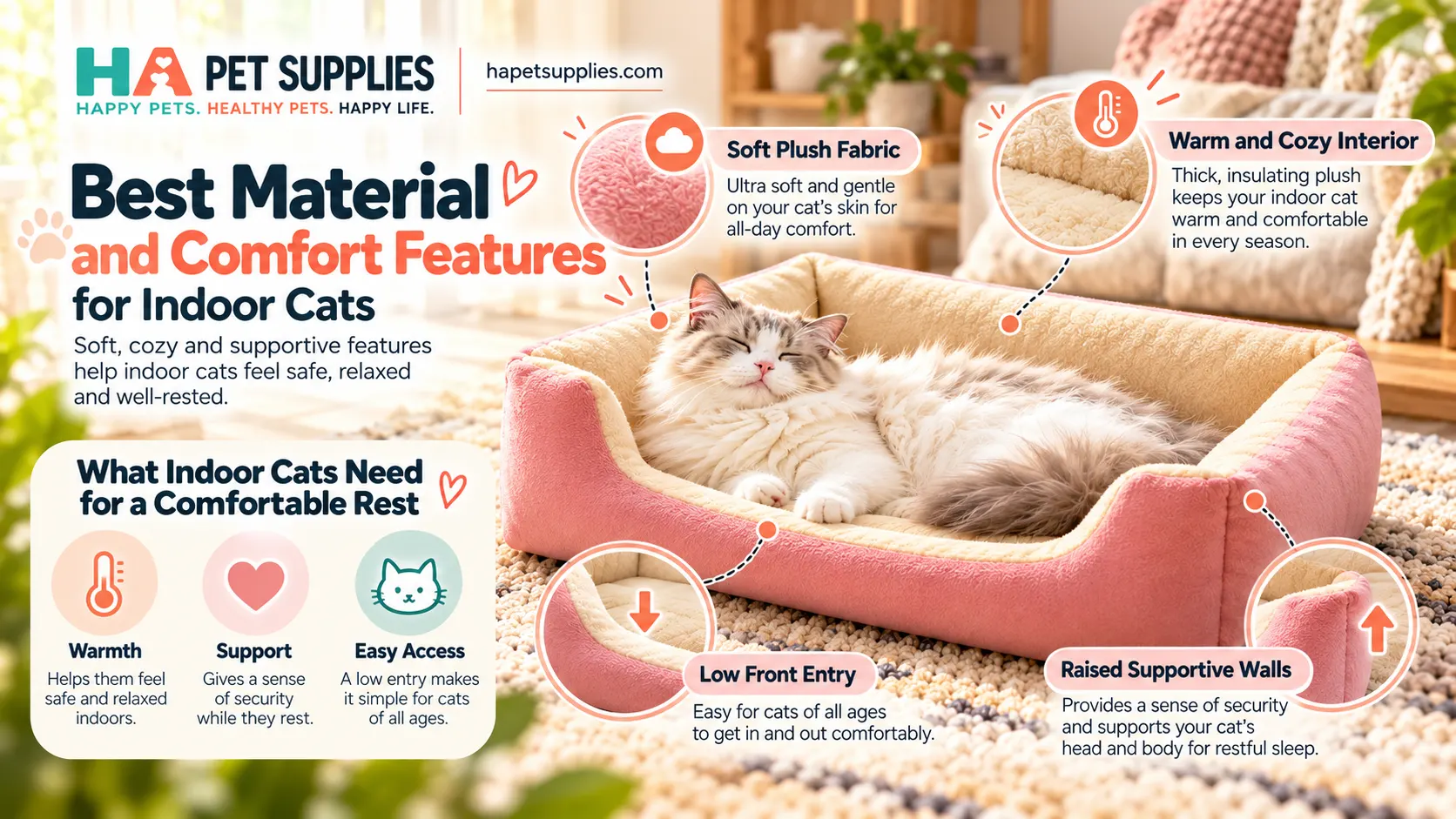
The product shown in the brand’s images is a soft pink open-top cat bed with cushioned raised sides. Its design is most relevant to shoppers who want a plush indoor resting option rather than an enclosed cat house.
When it may be a good choice
Consider this bed if your cat enjoys curling up on soft cushions, frequently rests against raised edges or prefers an open view of its surroundings.
It may also appeal to owners who want an attractive dedicated sleeping space for a living room or bedroom. The pink plush appearance offers a decorative element, while the soft raised borders create a cozy basket-style shape.
When to consider another option
A cat that consistently stretches out may require a larger flat cushion. A cat that strongly prefers hiding may need an enclosed retreat.
A senior cat with mobility difficulties may benefit from a specialized low-entry supportive bed. An indoor cat that prefers cooler surfaces may not use thick plush bedding during warmer weather.
What should you check before buying?
Confirm the actual product dimensions, available sizes, material specifications and care instructions. Check that the usable interior sleeping area accommodates your cat.
For buyers who already know they want a plush open-top design, explore the HA Pet Supplies Cat Bed online product page for product details and current options.
If you are uncertain about sizing or specifications, you can contact HA Pet Supplies for product information before choosing.
HA Pet Supplies plush cat bed designed for cozy indoor resting
15. Frequently Asked Questions About the Best Cat Bed for Indoor Cats
1. What is the best cat bed for indoor cats?
2. Do indoor cats really need a cat bed?
3. How big should a cat bed be?
4. Is a round or rectangular cat bed better?
5. Are plush cat beds suitable for winter?
6. Can kittens use adult cat beds?
7. What bed is best for an older cat?
8. Why does my cat prefer my bed instead of its own?
9. How many cat beds should I have?
10. Should I buy an enclosed cat bed?
11. How often should I wash a cat bed?
12. Are expensive cat beds always better?
13. Can a cat bed help a cat with arthritis?
14. Where is the safest place for a cat bed?
15. What is the difference between a cat basket bed and a cat house bed?
16. Can I place a cat bed next to a window?
17. What if my cat never uses its new bed?
18. Where can I buy a comfortable indoor cat bed online?
16. Final Cat Bed Buying Checklist
Before making your decision, review the following checklist.
My cat bed buying checklist
17. Final Verdict: How to Choose the Best Cat Bed for Indoor Cats
The best cat bed for indoor cats is not necessarily the fluffiest, largest or most expensive product on the market. It is a comfortable and practical resting option that matches the way your cat naturally sleeps.
Start by observing its sleeping position.
If your cat curls into a ball, investigate round plush beds with soft raised sides. If it stretches out, prioritize a flat or spacious cushion. If it prefers hiding, consider a covered resting area.
Next, measure the usable sleeping space and compare materials based on comfort, cleaning requirements and the temperature of your home.
Finally, choose a location where your cat already feels safe.
Remember that a cat bed is only one part of a comfortable indoor environment. Your cat should also have access to quiet resting choices, appropriate food and water, play, scratching opportunities and suitable hiding spaces.
If you are looking for a soft basket-style design, the HA Pet Supplies plush cat bed offers a pink cushioned resting area with raised sides for cats that enjoy curling against soft edges.
You can explore the product through HA Pet Supplies, where you can also find other pet accessories selected for everyday use.
A thoughtful choice does not guarantee that your cat will love a new bed immediately, but it gives you a much better starting point.
Choose the bed around your cat’s habits, not around the product photograph. That is the foundation of a smarter purchase.
Looking for a soft and comfortable sleeping space for your cat? Explore the HA Pet Supplies plush cat bed and compare its design with your cat’s favorite sleeping position before making a purchase.
Whether you are preparing for a new kitten or replacing an older bed, choosing the right size and material can help create a more inviting resting area.
Explore the HA Pet Supplies cat bed Request a product quote