
Have you ever watched your dog suddenly lift one paw during a summer walk, refuse to cross a snowy sidewalk, or struggle to walk comfortably on wet ground?
It is a worrying moment for any dog owner. You want your dog to enjoy walks, exercise, and outdoor adventures, but you also want to protect those sensitive paw pads from painful surfaces.
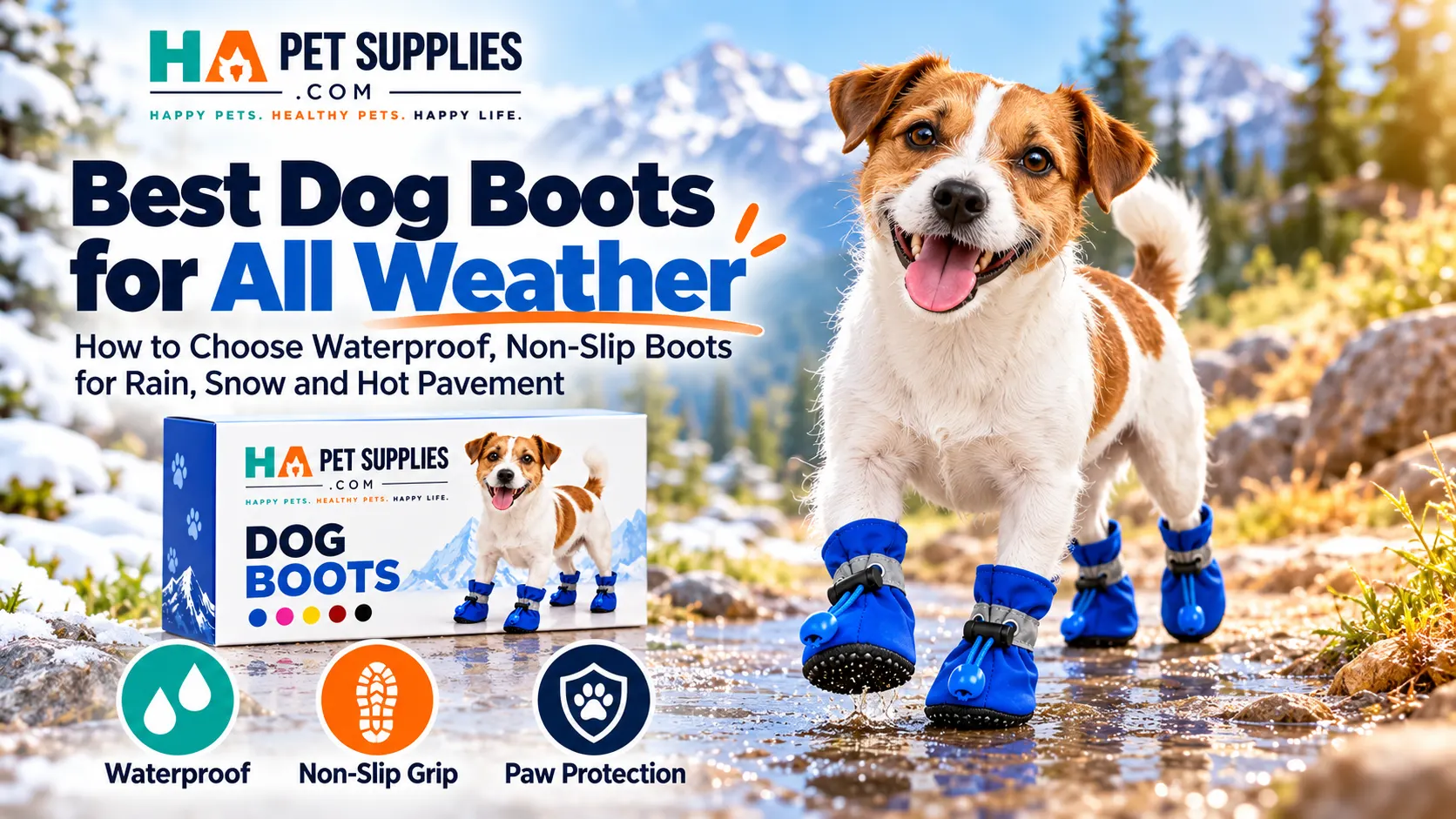
Finding the best dog boots for all weather can make those situations easier to manage. However, choosing the right pair is not always straightforward. Some dog boots claim to be waterproof but allow moisture inside. Others have thick soles that appear protective but make walking uncomfortable.
In this comprehensive guide, you will learn how to compare waterproof dog boots, identify reliable non-slip features, measure your dog’s paws, and decide when protective footwear is necessary.
Important: Dog boots can reduce exposure to certain environmental hazards, but they cannot make dangerously hot pavement or extreme winter conditions completely safe. Always consider the weather, surface temperature, and your dog’s comfort before going outside.
- 1. Quick Answer: Which Dog Boots?
- 2. Why Dogs Need Boots
- 3. Seven Essential Features
- 4. Waterproof Boots for Rain
- 5. Winter Dog Boots
- 6. Hot Pavement Protection
- 7. How to Measure Paws
- 8. Boot Type Comparison
- 9. Stop Boots Falling Off
- 10. Training Your Dog
- 11. Common Mistakes
- 12. Daily Paw Maintenance
- 13. When Boots Are Not Enough
- 14. Choosing HA Pet Supplies
- 15. FAQs
- 16. Final Checklist
1. Quick Answer: Which Dog Boots Should You Choose?
If you need to purchase protective footwear quickly, begin by identifying the main problem you want to solve. Are you worried about your dog’s paws touching hot pavement? Do you want to avoid contact with winter road salt? These situations require different types of protection.
The best dog boots for all weather should provide a practical balance of protection, comfort, and stability rather than emphasizing appearance alone.
| Your Main Concern | Features to Prioritize | What to Avoid |
|---|---|---|
| Rainy sidewalks | Water-resistant construction, secure closures, flexible soles | Boots that trap water |
| Snow and ice | Appropriate insulation, reliable traction, weather-resistant uppers | Thin, uninsulated footwear |
| Hot pavement | Lightweight, breathable construction and suitable heat protection | Heavy, poorly ventilated boots |
| Rocky trails | Durable soles, secure fit, abrasion resistance | Fragile fabric and thin soles |
| Boots falling off | Correct sizing, adjustable straps, suitable boot shape | Oversized boots |
| Sensitive paws | Smooth inner surfaces, comfortable fit, flexible construction | Rough seams and excessive pressure |
Fast recommendation: If you regularly walk your dog through changing weather conditions, begin with adjustable dog boots featuring durable soles and protective uppers. For general browsing, the HA Pet Supplies dog boots collection provides a relevant starting point. The American Kennel Club’s guidance on choosing dog boots explains why specific activities and weather conditions should influence your decision.
2. Why Dogs May Need Boots in Different Weather Conditions
Dogs naturally have protective paw pads, but those pads are not completely resistant to heat, freezing conditions, chemicals, or sharp surfaces. A dog that walks comfortably across grass may struggle on a sun-heated sidewalk or a pathway covered in ice-melting chemicals.
Summer Paw Problems
During summer, asphalt, concrete, artificial turf, and other exposed surfaces may become significantly hotter than the surrounding air. According to AKC guidance on hot pavement and dog paws, pavement exposed to sunlight can become hot enough to injure paw pads.
Winter Paw Problems
Winter introduces a different set of risks. Dogs walking through snow, ice, freezing water, or salted sidewalks can develop discomfort from low temperatures and chemical irritation. According to VCA Animal Hospitals’ winter paw protection advice, appropriate boots can help limit contact with snow, ice, and deicing substances.
Rainy Weather Problems
Rain itself is not automatically harmful to healthy dog paws. However, continuous exposure to moisture, muddy walking surfaces, sharp debris hidden beneath puddles, and slippery ground can create additional challenges. A properly selected waterproof or water-resistant dog boot can help reduce direct exposure.
Why One Pair Might Not Be Suitable for Every Season
A heavily insulated winter boot may protect against cold weather but become uncomfortable during hot summer walks. Likewise, a lightweight summer boot may provide useful separation from warm pavement yet fail to offer adequate insulation during severe winter conditions.
3. Seven Essential Features of the Best Dog Boots for All Weather
Not every protective dog shoe delivers the same experience. A suitable pair should support natural movement, remain securely positioned, and protect against the hazards for which it was designed.
Protection + Fit + Comfort = Smarter Dog Boot Selection.
Feature 1: Waterproof or Water-Resistant Materials
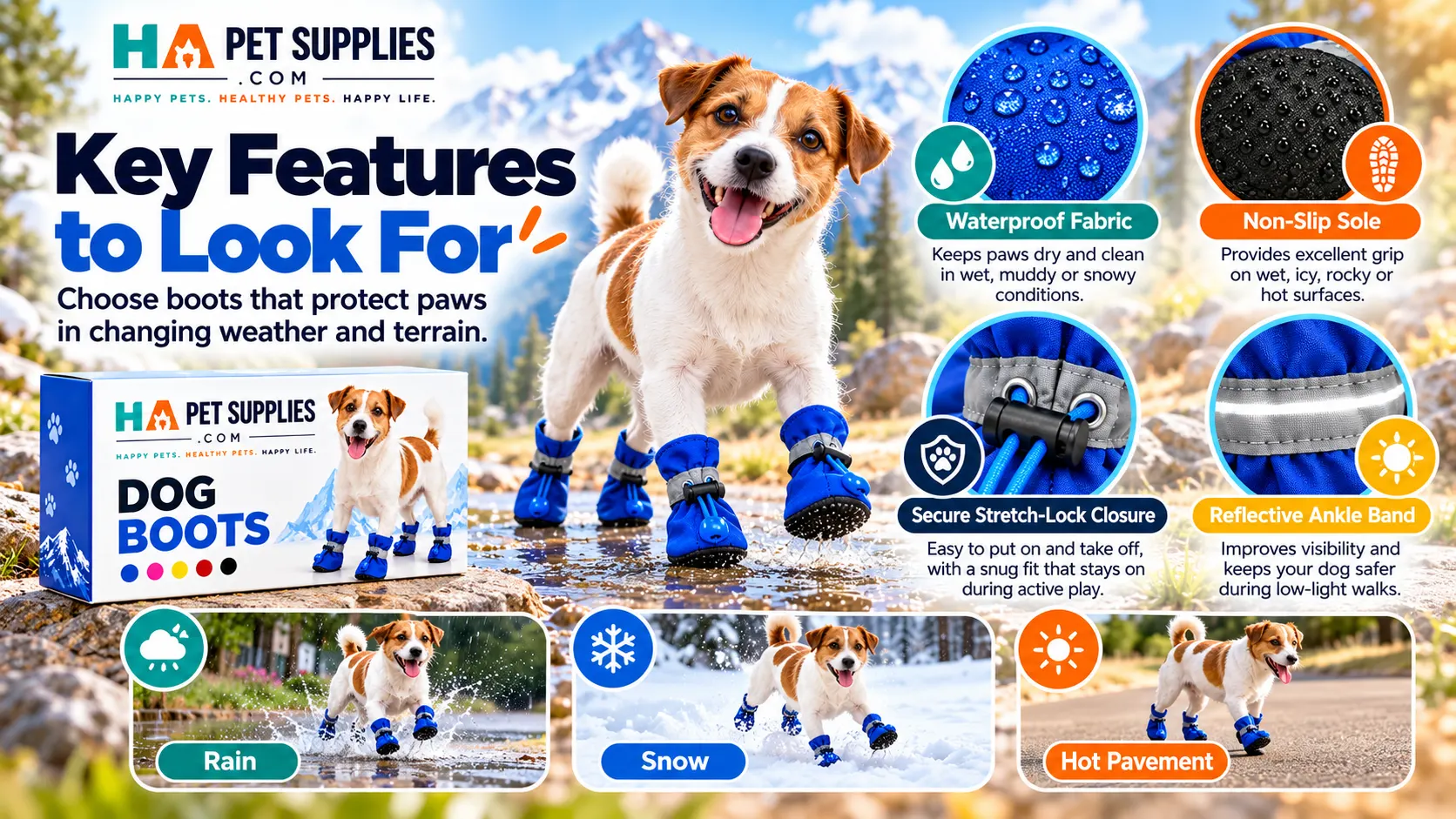
Waterproof protection is particularly important for wet sidewalks, muddy paths, and melting snow. However, “waterproof” and “water-resistant” do not necessarily mean the same thing. Inspect the upper material, stitching quality, and closure design.
Feature 2: Non-Slip Soles for Better Traction
A reliable sole should help your dog maintain contact with the walking surface. Textured rubber soles may provide useful traction on many outdoor surfaces. Avoid assuming that a thick sole automatically provides superior grip.
Feature 3: Comfortable and Flexible Construction
Dogs naturally use their paws to balance, accelerate, turn, and adjust their walking posture. Boots that are excessively stiff can interfere with those movements.
Feature 4: Adjustable Fastening Straps
Boots that repeatedly slide down or fall off often have unsuitable sizing, inadequate closure adjustment, or a shape that does not match the dog’s paw. Adjustable straps can help improve the fit, but never tighten excessively.
Feature 5: Breathability for Warm Weather
Breathability deserves special attention when choosing dog boots for summer. The PetMD guide to protecting dog paws in summer discusses the value of lightweight, adjustable, breathable protective footwear.
Feature 6: Reflective Details for Low-Light Walks
Reflective straps or trim can make a dog’s moving feet more noticeable under suitable light. However, reflective elements do not replace a leash or other visibility precautions.
Feature 7: Correct Paw Size
Even high-quality materials cannot compensate for an unsuitable fit. Dog owners should measure each paw according to the product manufacturer’s sizing instructions rather than choosing solely by breed or body weight.
4. How to Choose Waterproof Dog Boots for Rain
Rainy walks can become frustrating when your dog repeatedly shakes its feet, stops walking, or returns indoors with damp paws. Waterproof dog boots can be useful, but choosing the correct design matters more than simply selecting the first product labeled waterproof.
Check the Upper Material
The upper section should help prevent external moisture from reaching the paw. If your dog frequently walks through standing water, understand that many ordinary walking boots are not designed for full immersion.
Check the Boot Opening
One common source of moisture entry is the opening around the dog’s leg. Water may run down the fur and enter from the top, even if the outer material itself resists moisture.
Select Appropriate Wet-Surface Traction
Rain can make sidewalks, tiles, wooden surfaces, and painted crossings slippery. A textured sole may help improve stability, but you should still avoid surfaces where slipping remains likely.
For broader rainy-day care, the AKC guide to walking dogs in rain and snow offers helpful practical advice.
5. Choosing Winter Dog Boots for Snow and Ice
Winter dog boots should protect against more than cold air. Dogs may encounter frozen pathways, jagged ice, packed snow, salted sidewalks, and slushy puddles.
Insulation Matters in Cold Weather
Insulated boots may be more appropriate for prolonged winter exposure than thin protective shells. The VCA cold-weather safety guide explains why monitoring your dog’s behavior is essential during winter walks.
Protecting Paws From Road Salt
Sidewalk salt and chemical deicers can irritate paw pads and the sensitive skin between a dog’s toes. VCA’s winter ice-melt safety guidance explains why salt and other deicing substances deserve attention.
Preventing Snow Accumulation
Snow can collect between a dog’s toes, especially when longer hair surrounds the paw pads. Appropriate boots can reduce direct snow contact, but they must fit correctly.
Do Winter Dog Boots Prevent Slipping on Ice?
Winter boots with suitable tread may improve traction on certain surfaces. However, smooth ice remains hazardous. No ordinary dog boot guarantees stable footing on every frozen surface.
6. Can Dog Boots Protect Against Hot Pavement?
Hot pavement is one of the most important reasons owners begin searching for protective dog footwear. Your dog may appear excited for a walk, even when the surface outside is uncomfortable or dangerous.
Why Pavement Gets So Hot
Asphalt and other dark surfaces absorb solar energy. A day that feels manageable while you are wearing shoes may still expose your dog’s paws to dangerous conditions.
The Practical Pavement Test
Before allowing your dog onto an exposed surface, touch it with the back of your hand. If it feels uncomfortably hot, avoid having your dog walk there.
Are Waterproof Dog Boots Good for Hot Pavement?
Sometimes, but not automatically. A boot designed primarily for keeping water out may have limited airflow. Instead, consider footwear specifically designed to reduce contact with hot surfaces while allowing an appropriate level of breathability.
Dog Boots Are Not a Complete Heat Solution
Even when boots protect paw pads from direct ground contact, a dog may still suffer from overheating. If your dog is vulnerable to heat, you may also explore a dog cooling vest from HA Pet Supplies.
7. How to Measure Dog Paws for the Correct Boot Size
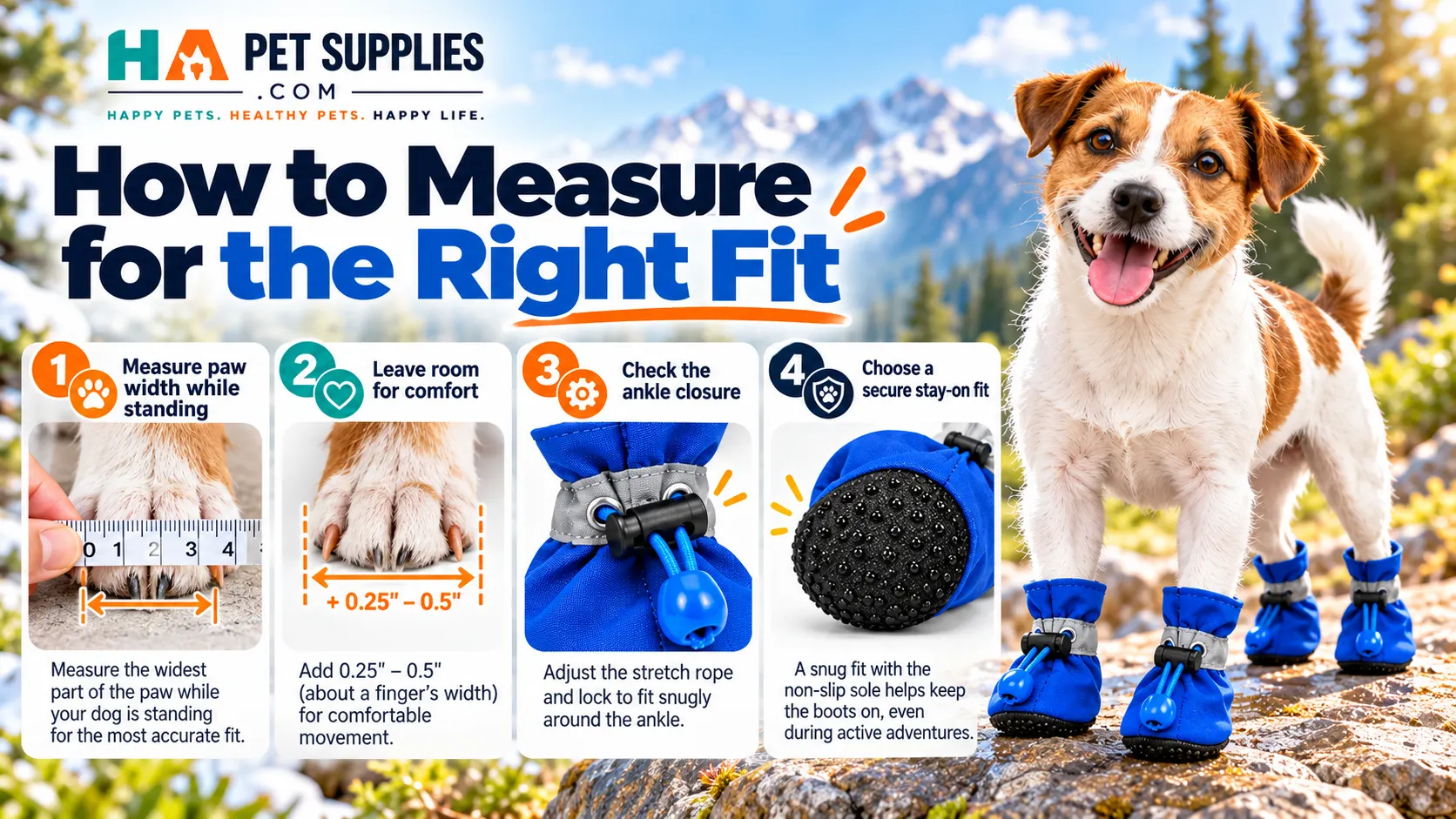
Finding the best dog boots for all weather begins with accurate sizing. Many dog owners choose footwear according to breed size because it seems convenient. Unfortunately, dogs of similar height and weight can have different paw shapes.
Step 1: Prepare Your Measuring Materials
You need a clean sheet of paper, a pencil, and a ruler or measuring tape. Choose a quiet location where your dog can stand comfortably.
Step 2: Let Your Dog Stand Naturally
Place one paw on the paper while your dog is standing. The paw should bear weight naturally because the toes spread slightly during weight-bearing.
Step 3: Mark the Widest Part
Identify the widest points of the paw, including the outer toes. Measure the distance between those marks.
Step 4: Check Paw Length
Measure from the back of the main paw pad area to the tip of the longest toe, including the natural position of the nail.
Step 5: Measure Front and Rear Paws
Do not assume that all four paws are identical. Front paws are often wider than rear paws, although this varies.
Step 6: Compare With the Actual Size Chart
Use the manufacturer’s published measurements. If your measurements fall between two sizes, follow the manufacturer-specific guidance and prioritize a secure but comfortable fit.
For a complete explanation of sizing, see our related article: How to Measure Dog Paws for Boots and Keep Boots From Falling Off.
8. Dog Boots Comparison: Which Type Is Right for You?
Many shoppers believe that the best dog boots for all weather must be the thickest or most expensive pair available. In reality, different designs solve different problems.
| Boot Type | Main Advantage | Possible Limitation | Suitable Use |
|---|---|---|---|
| Lightweight summer boots | Less bulky construction | May offer limited cold insulation | Warm-weather walks |
| Water-resistant walking boots | Protection against light moisture | May not withstand prolonged soaking | Rainy sidewalks |
| Insulated winter boots | Improved cold-weather comfort | May be too warm for summer | Snowy outings |
| Rugged hiking boots | Durable protective soles | May be heavier | Rough outdoor trails |
| Soft indoor grip booties | Potential traction on some indoor floors | Limited outdoor protection | Selected indoor use |
| Multi-season walking boots | Versatile general-purpose design | May not excel in extreme weather | Moderate seasonal changes |
The best dog boots for all weather are ultimately the boots that address your dog’s actual environment without creating new discomfort.
9. How to Stop Dog Boots From Falling Off
One of the most common complaints about protective dog footwear is that the boots fall off during walking. Fortunately, several practical checks can help identify the cause.
Problem 1: The Boots Are Too Large
When there is too much extra room, the paw moves inside the boot. Recheck the paw width and length against the size chart.
Problem 2: The Straps Are Positioned Incorrectly
A fastening system needs to hold the boot around the intended area without restricting movement. Follow the manufacturer’s closure instructions.
Problem 3: The Boot Shape Does Not Match the Paw
Some dogs have broad paws, while others have narrower feet. If repeated adjustments do not work, consider a different shape.
Problem 4: Your Dog Has Not Adapted to Wearing Boots
Some dogs initially take exaggerated steps or kick their legs after footwear is introduced. Allow time for gradual familiarization.
Problem 5: Mud, Snow, or Debris Is Affecting the Closure
After outdoor use, clean the fasteners according to the product instructions. Remove trapped hair or debris.
10. How to Train Your Dog to Wear Boots Comfortably
Buying protective boots is only the first step. Your dog also needs to feel comfortable wearing them. The objective should be confidence, not simply making your dog tolerate the footwear.
Day 1: Introduce the Boots Without Wearing Them
Place the boots nearby and allow your dog to investigate. Reward relaxed curiosity.
Day 2: Practice Gentle Paw Handling
Briefly touch and hold a paw, then offer a reward.
Day 3: Introduce One Boot
Place a boot on one paw for a brief moment. Reward calm behavior and remove the boot.
Day 4: Practice With More Than One Boot
Gradually introduce additional boots. Encourage your dog to take a few steps on a familiar, non-slip indoor surface.
Day 5: Practice Short Indoor Walks
Once your dog appears comfortable, introduce brief movement sessions. Use treats, praise, or a familiar game.
Day 6: Try a Short Outdoor Session
Choose a safe surface and mild weather. Begin with a short outing close to home.
Day 7: Evaluate the Fit and Comfort
Assess how the dog moves, whether the boots remain secure, and whether the paws show any redness.
The AKC guide to introducing dogs to protective clothing emphasizes positive, gradual introductions.
11. Common Mistakes When Buying Dog Boots
Understanding what not to do can save both money and frustration.
Mistake 1: Choosing by Appearance Alone
Bright colors and attractive styling can make a product appealing. However, the main purpose of dog boots is protection.
Mistake 2: Assuming Waterproof Means Suitable for Every Season
A waterproof material does not guarantee breathability, winter insulation, heat protection, or dependable grip.
Mistake 3: Ignoring Paw Measurements
Choosing a size based only on body weight can produce disappointing results.
Mistake 4: Using New Boots on a Long Walk
A dog that has never worn boots should not immediately begin a long hike in unfamiliar footwear.
Mistake 5: Leaving Wet Boots On After Returning Home
Keeping damp boots on unnecessarily may trap moisture against the skin.
Mistake 6: Walking on Dangerous Surfaces Because the Dog Has Boots
Protective footwear is not permission to walk across pavement that is dangerously hot.
Mistake 7: Ignoring Signs of Discomfort
A dog repeatedly stopping, licking its paws, limping, or resisting movement may be showing signs of discomfort.
12. Daily Paw Protection and Maintenance Routine
The best dog boots for all weather work most effectively when they are part of a consistent paw-care routine.
Before the Walk
Check the weather and walking surface. Inspect your dog’s paws for wounds, redness, swelling, and foreign objects.
During the Walk
Pay attention to your dog’s normal movement. If a boot begins twisting, sliding, or catching on the ground, stop somewhere safe.
After the Walk
Remove all boots. Inspect the skin around the toes, pads, and closure areas. The AKC guide to cleaning and caring for dog paws explains why regular inspection and cleaning are useful.
Should You Use Paw Balm Alongside Boots?
Paw balm may help manage dryness and support paw-pad care when an appropriate dog-safe product is used. For additional cold-weather care, see VCA’s winter skin-care recommendations.
13. When Dog Boots Are Not Enough
Protective footwear has useful applications, but understanding its limitations is essential.
Extremely Hot Weather
If outdoor surfaces are dangerously hot or the weather creates a significant risk of overheating, remain indoors.
Severe Cold
In dangerously cold conditions, shorten or cancel outdoor activity.
Existing Paw Injuries
A dog with a cut, burn, puncture wound, or other significant paw problem may need veterinary assessment.
Persistent Limping
Do not assume that footwear will correct an unexplained limp.
For a deeper discussion, read our related guide: Do Dogs Need Boots? When to Use Dog Boots for Hot Pavement, Snow, Rain and Paw Protection.
14. Choosing HA Pet Supplies Dog Boots
When selecting protective footwear, buyers often want reassurance that they are considering the right features rather than simply purchasing another accessory. At HA Pet Supplies, our goal is to help dog owners compare products according to practical needs such as fit, weather conditions, and everyday comfort.
If you are searching for dog footwear for changing outdoor environments, explore the HA Pet Supplies dog boots product page to review the available product information.
You can browse additional accessories through our dog supplies category, including products relevant to different outdoor activities. For pet owners comparing multiple everyday essentials, the HA Pet Supplies online shop also provides a convenient starting point.
Our website also provides additional learning resources in the HA Pet Supplies pet-care blog. If you have questions about a particular product before purchasing, use our contact page to ask for clarification. For product or purchasing inquiries requiring a quotation, you can also request a quote from HA Pet Supplies.
15. Frequently Asked Questions About the Best Dog Boots for All Weather
Click each question to reveal the answer.
16. Final Buying Checklist and Recommendation
Before choosing the best dog boots for all weather, remember that your goal is not simply to purchase footwear. Your goal is to help your dog walk comfortably while reducing unnecessary exposure to environmental hazards.
- Check the weather: Identify whether the main concern is rain, snow, hot pavement, or rough ground.
- Measure all paws: Compare actual paw measurements with the product’s size chart.
- Examine the sole: Look for suitable protective materials, flexibility, and traction.
- Review weather resistance: Determine whether the boots meet your moisture and temperature requirements.
- Inspect the fastening design: Make sure the closures are adjustable without placing excessive pressure.
- Plan gradual training: Allow your dog to become comfortable with the footwear.
- Monitor paw comfort: Inspect paws after use and discontinue if they cause repeated irritation.
Final Thoughts: Better Protection Starts With Better Decisions
Your dog does not understand product descriptions, waterproof ratings, or marketing promises. Your dog simply knows whether walking feels comfortable. Choosing the best dog boots for all weather is therefore about more than convenience. It is about recognizing the conditions your dog encounters, selecting appropriate protection, and knowing when changing the walking environment is safer than relying on an accessory.
If you are ready to compare options, explore the HA Pet Supplies dog boots product page and review the available details before selecting a size. For more guidance on everyday pet products and responsible purchasing decisions, visit HA Pet Supplies.
Protect their paws. Respect the weather. Make every safe walk more comfortable.