
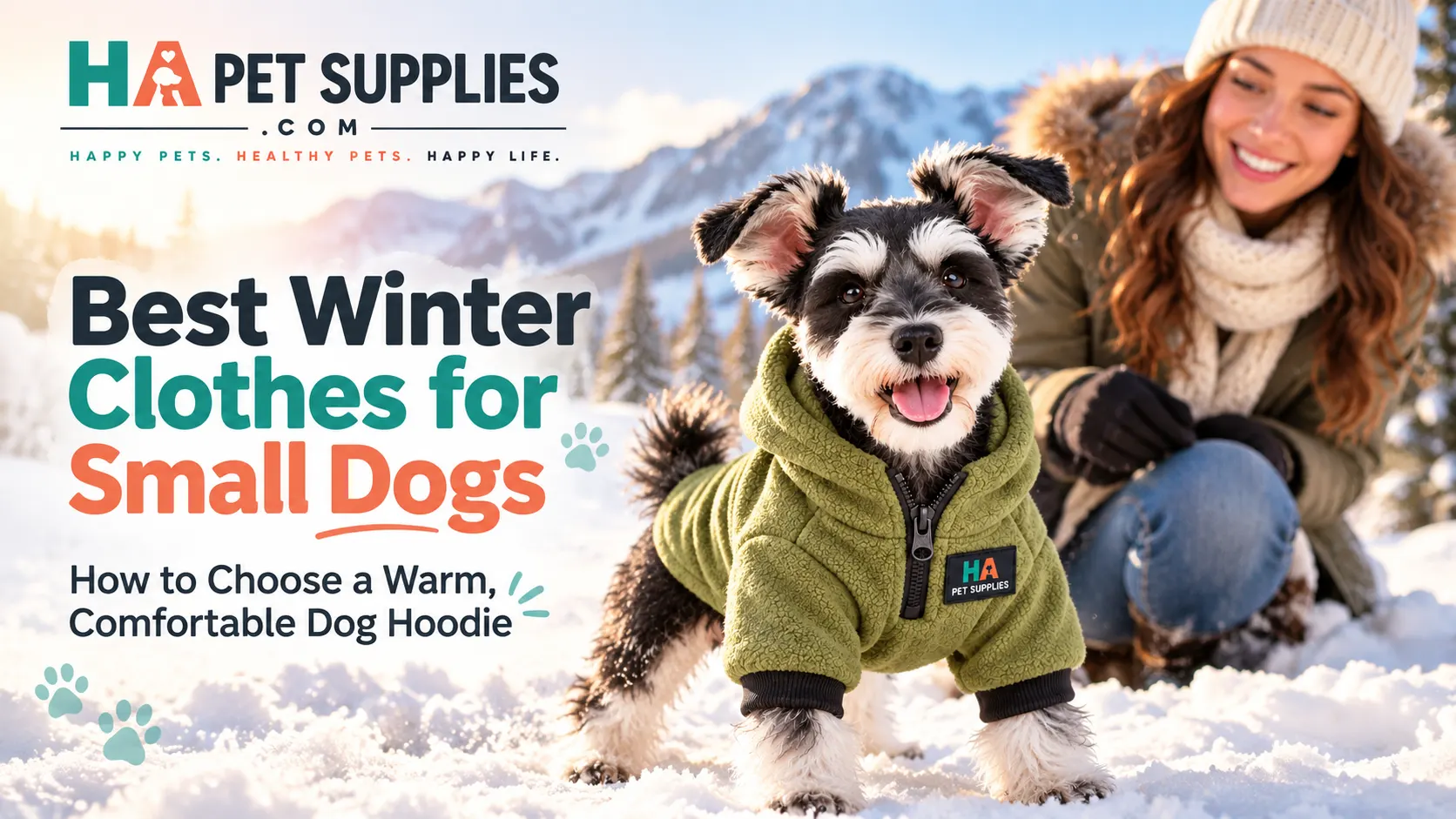
The best winter clothes for small dogs combine warmth, comfort, and a fit that lets them move naturally.
Choosing the best winter clothes for small dogs can feel surprisingly complicated, especially when winter arrives and your little companion suddenly seems less excited about going outside. Maybe your Chihuahua starts shivering during morning walks. Perhaps your Toy Poodle has recently had a haircut and appears uncomfortable in the cold. Your Pomeranian might have plenty of fur but still hesitate when the weather becomes wet and windy.
You want to do the right thing. You want your dog to feel comfortable, enjoy its normal routine, and stay safe during cold-weather outings. But when you begin shopping online, you find hundreds of dog sweaters, fleece hoodies, insulated jackets, waterproof coats, and winter outfits. Every product seems to promise warmth and comfort. How do you know which one is genuinely suitable for your dog?
According to the American Kennel Club’s guide to choosing dog winter coats, smaller dogs, hairless breeds, closely clipped dogs, and some lean or short-coated breeds may need additional warmth during winter. The same guidance emphasizes choosing a coat suitable for the actual weather conditions.
At HA Pet Supplies, our goal is to help pet owners make thoughtful purchases based on fit, comfort and everyday needs. This comprehensive buying guide explains how to compare winter clothing styles, evaluate fabric quality, measure your dog, recognize important warning signs, and decide whether a fleece hoodie is an appropriate option.
Consider a properly fitted fleece layer. A fleece hoodie or sweater may add useful comfort in cool, dry weather. Monitor fit and avoid overheating.
This interactive tool provides general clothing category guidance, not a guaranteed product outcome. Always assess your dog’s individual needs.
Quick Answer: What Are the Best Winter Clothes for Small Dogs?
The best winter clothes for small dogs are properly fitted garments that provide the right amount of coverage and insulation for the dog’s body, activity and weather conditions. For cool, dry days, a comfortable fleece hoodie or dog sweater may provide useful additional warmth. For colder, windier conditions, a more substantial winter jacket may be appropriate. For rain or wet snow, owners should consider garments with verified weather protection instead of assuming an ordinary fleece hoodie will keep their dog dry.
Need a fast winter clothing decision?
Cool and dry weather: consider a well-fitted fleece hoodie or sweater for a cold-sensitive dog.
Cold wind or rain: look for appropriate weather protection.
Freezing weather or heavy snow: prioritize safe exposure limits and suitable winter equipment; a fleece hoodie alone may not be enough.
Explore Our Green Fleece Dog Hoodie1. Why Small Dogs May Need More Winter Protection
Small dogs can be more sensitive to cold temperatures for several reasons. Their smaller bodies generally have a greater surface area relative to their mass, which can make heat retention more challenging. However, body size is only one factor. Coat thickness, age, activity level, health, grooming and individual tolerance all influence how a dog experiences winter weather.
Small body size and heat loss
A tiny dog may become uncomfortable more quickly than a larger, thick-coated dog under similar conditions. Imagine taking a small Chihuahua and a healthy Siberian Husky outside on a cold morning. Their bodies have very different natural insulation and temperature-regulation characteristics. The Chihuahua might benefit from a sweater during a short walk, while the Husky may be comfortable without additional clothing.
Thin or short coats
Some dogs have relatively little natural insulation. Short-haired Chihuahuas, closely clipped Toy Poodles and certain small terriers may be more sensitive to chilly weather than dogs with dense undercoats. A correctly fitted sweater or hoodie can provide an additional fabric layer. However, owners still need to monitor the dog and avoid extended exposure to unsafe temperatures.
Puppies, senior dogs and individual health
Young puppies and older dogs may have greater difficulty coping with temperature extremes. The AKC veterinary discussion about dogs needing winter sweaters explains that winter clothing needs differ between breeds and that puppies, senior pets and dogs with certain medical conditions require additional consideration. If your dog has a medical condition or appears unusually sensitive to cold, ask your veterinarian for specific guidance.
For a fuller explanation, read our guide to when dogs need clothes in winter.
2. How to Tell Whether Your Small Dog Is Too Cold
Before buying winter clothes, it helps to recognize the situations in which your dog may actually need additional protection. A dog cannot tell you that its chest feels cold or its paws are uncomfortable, but its behavior can provide important clues.
Shivering, reluctance to walk, and lifting paws
Shivering is one possible sign of cold discomfort. If your dog begins shivering during a winter walk, return to a warmer environment and reassess the conditions. A small dog may stop walking, pull toward home or refuse to leave a doorway when the weather is uncomfortable. Snow, ice, road salt and chemical de-icers can irritate paws. The ASPCA winter paw and cold-weather safety advice recommends cleaning paws and removing ice, salt and chemical residue after winter walks.
Seeking shelter and unusual posture
Some dogs approach doorways, move toward sheltered areas, or seek contact with their owners when they want relief from the cold. A dog that hunches, tucks its tail, slows down significantly or becomes unusually quiet may be uncomfortable. Weakness, disorientation, marked lethargy or difficulty moving can indicate a more serious problem requiring urgent veterinary attention.
The practical takeaway: if the dog is too cold, a sweater may help in some conditions, but the most immediate action is to shorten the outing and return to a safe, warm location. Do not rely on clothing alone to manage dangerous temperatures.
3. How Cold Is Too Cold for Small Dogs?
One of the most common questions about winter dog clothes is whether there is a specific temperature at which every dog needs a sweater. There is not. A dog’s cold tolerance depends on more than the number shown on a weather app. Body size, coat type, age, health, activity, wind, moisture and exposure time can all affect the risk.
Temperatures around 50°F (10°C) and 40°F (4°C)
Some cold-sensitive dogs may benefit from an additional layer around 50°F, especially when walking slowly or standing outside. However, 50°F is not a universal clothing threshold. At colder temperatures, owners should pay closer attention to smaller, thin-coated and vulnerable dogs. A suitable sweater or jacket may help provide comfort during short activities.
Freezing temperatures and wet weather
At around 32°F (0°C) and below, winter safety requires greater caution. A fleece hoodie may be insufficient, particularly when the dog is exposed to ice, wet snow, strong wind or extended outdoor conditions. The PDSA veterinary advice on winter dog coats explains that some dogs need additional insulation, but even dogs wearing coats should spend less time outdoors when cold conditions are difficult for them. Never assume that a soft fleece hoodie is waterproof.
4. Best Winter Clothes for Small Dogs: Hoodie, Sweater, Jacket or Raincoat?
Once you understand your dog’s cold-weather needs, the next decision is choosing the right clothing category. Online shops use many product names, and it is easy to confuse them.
Fleece dog hoodies
Fleece dog hoodies have a casual sweatshirt-style appearance. They often feature a soft fleece-textured body, a hood, and either a pullover neck opening or a zipper. For a dog that needs an extra fabric layer in cool, dry weather, a correctly fitted fleece hoodie may be worth considering. However, an ordinary fleece garment should not automatically be described as windproof, waterproof or sufficient for freezing weather.
Knitted dog sweaters and insulated jackets
Knitted sweaters, depending on their thickness and construction, can offer an additional insulating layer during cooler months. Insulated jackets may be more suitable for dogs that need additional protection during colder conditions. Some use padded construction and outer materials selected for particular weather requirements. Check the garment’s verified insulation and weather-protection information.
Waterproof dog coats and full-body winter garments
Waterproof coats are designed to reduce exposure to rain and moisture. If the primary problem is rain rather than cold air, a properly rated raincoat may be more useful than an ordinary fleece hoodie. The AKC comparison of different winter dog coat styles discusses lightweight jackets, insulated coats, raincoats and full-body winter garments.
| Clothing type | Suitable use to consider | Main buying concern | Limitation |
|---|---|---|---|
| Fleece hoodie | Cool, dry outings | Chest and neckline fit | Not automatically waterproof |
| Knitted sweater | Casual chilly-weather wear | Fabric stretch and coverage | Warmth varies by material |
| Insulated jacket | Colder outdoor conditions | Insulation and movement | May be excessive in mild weather |
| Raincoat | Wet conditions | Verified water protection | May offer limited insulation |
| Full-body suit | Specialized wider coverage | Leg fit and bathroom clearance | Can be difficult to size |
5. Seven Features to Look for in a Warm, Comfortable Dog Hoodie
If you have decided that a fleece hoodie might suit your dog, examine the garment carefully before purchasing. Product listings often emphasize colour and cute styling, but practical details are more important.
Feature 1: Appropriate fabric and insulation
The fabric should match the expected temperature and activity. Fleece can offer useful insulation, but its actual performance depends on material composition, thickness and construction. Avoid vague claims such as “guaranteed maximum warmth” unless the manufacturer provides credible evidence.
Feature 2: A comfortable chest fit and easy neckline
The chest is one of the most important areas to evaluate. Clothing that squeezes the rib cage may restrict movement and breathing. Clothing that is excessively loose may shift or become caught during activity. Some small dogs are sensitive to garments being pulled over their heads. A hoodie with a partial zipper may provide a more adjustable neckline opening. However, the zipper should move smoothly, and owners must keep fur away from the teeth.
Feature 3: Comfortable sleeves, cuffs and body coverage
Sleeves should allow full front-leg movement. Ribbed cuffs may help provide a neat finish, but they should never squeeze the legs. After dressing your dog, observe its walking pattern. A hoodie should cover the intended area without extending excessively over the tail. The lower portion should leave adequate bathroom clearance.
Feature 4: Safe construction and practical care
Examine the garment for loose threads, damaged seams and decorative parts that could become detached. Avoid unnecessary accessories that a dog might chew or swallow. A suitable garment should have clear care instructions so owners know how to clean and dry it safely. The AKC advice on sweater sizing and selecting the right garment emphasizes choosing an appropriate warmth level and avoiding clothing that is excessively tight or loose.
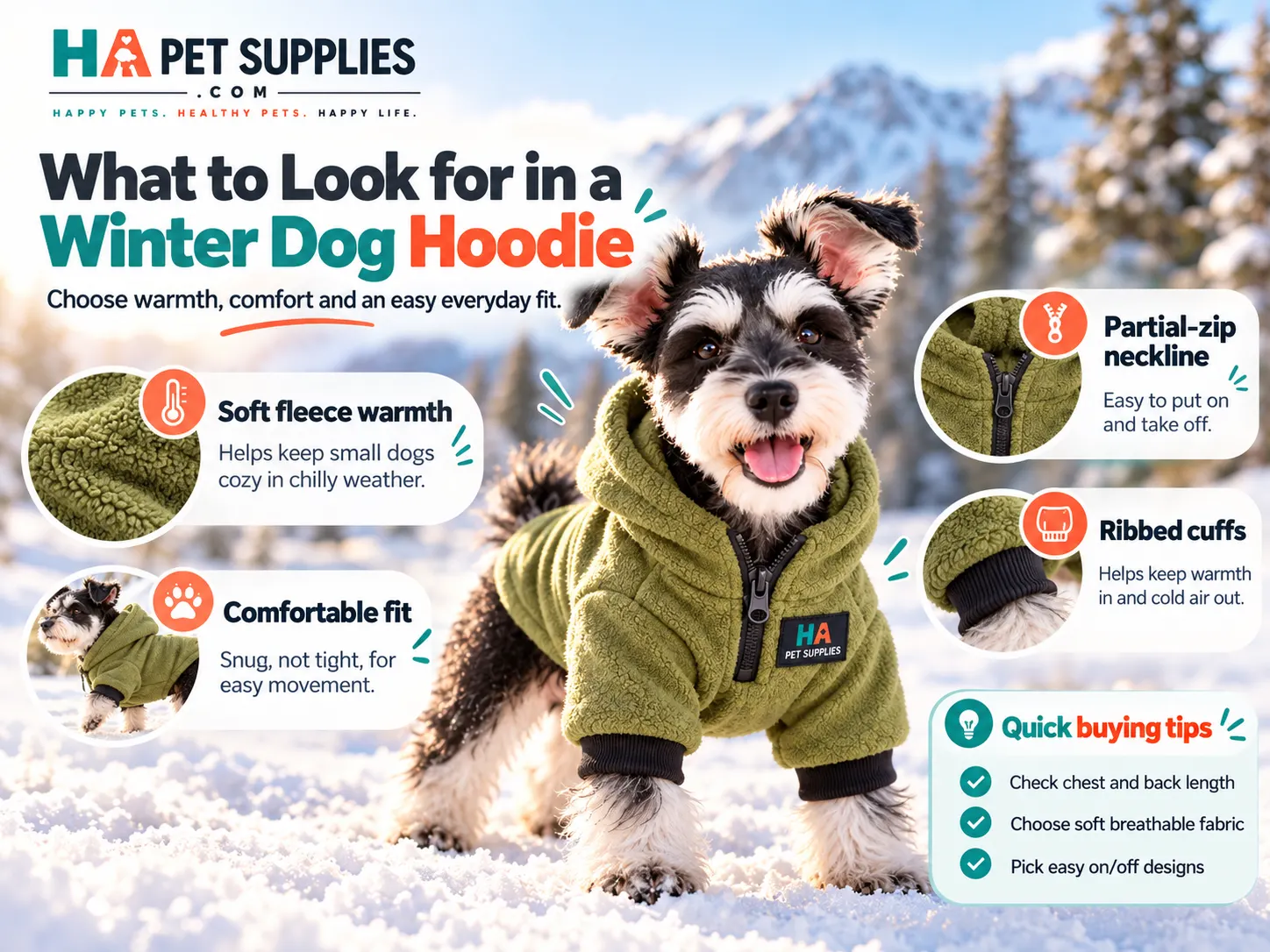
Look for visible fleece texture, a partial zipper, ribbed cuffs, and a comfortable fit around the chest and neck.
6. Why a Green Fleece Dog Hoodie May Be a Good Everyday Choice
Not every winter outing requires a heavy jacket. For some cold-sensitive small dogs, a fleece hoodie can provide a useful additional layer during suitable chilly conditions. They combine familiar sweatshirt styling with practical torso coverage.
A fleece-textured body adds a layer between the dog and the surrounding air. For some small dogs, this may improve comfort during short outdoor activities in cool, dry conditions. Olive green offers a neutral outdoor-inspired appearance that pairs naturally with many walking accessories. A partial neckline zipper may make it easier to adjust the opening when putting clothing on a small dog.
Our HA Pet Supplies Green Fleece Dog Hoodie features an olive-green fleece-textured body, partial-zip neckline, hooded design and ribbed sleeve cuffs. The product is available in green only. It may be an option for suitable small and medium-sized dogs whose body measurements match the available garment sizing. The product is not presented as waterproof, windproof or suitable for extreme-weather protection.
View HA Pet Supplies Green Dog Hoodie7. How to Measure Your Small Dog for Winter Clothes
Correct sizing is essential when choosing the best winter clothes for small dogs. Even a warm-looking hoodie may be uncomfortable if the chest is tight, the sleeves are too long or the back coverage is unsuitable.
Measure the chest girth, back length and neck girth
Ask your dog to stand naturally. Wrap the measuring tape around the widest part of the chest, usually just behind the front legs. Keep the tape level and comfortably close to the body without squeezing the rib cage. Locate the base of the neck where it meets the shoulders and measure along the back to the base of the tail. Measure around the lower neck where the clothing neckline will sit.
Dogs of similar weight can have very different proportions. For this reason, product measurements should take priority over breed or weight suggestions. The PetMD’s guide to fitting dog sweaters explains why measuring around the neck, chest and body length helps owners choose appropriately fitting clothing.
For a complete measuring tutorial, see our dog hoodie and sweater size guide.
8. Winter Clothing Recommendations for Different Small Dog Breeds
Breed characteristics can help guide your thinking, but they should not replace individual measurements and observation.
Chihuahua, Toy Poodle, and Miniature Schnauzer
Chihuahuas, particularly short-coated individuals, may be sensitive to cold conditions. A lightweight sweater or fleece hoodie may provide useful additional insulation during suitable chilly outings. Toy Poodles may have different winter clothing needs depending on coat length and grooming. A closely clipped Poodle may have less natural insulation than the same dog with a longer coat. Miniature Schnauzers vary in chest and back proportions. Measure the chest and back rather than relying only on breed recommendations.
Pomeranian, Yorkshire Terrier, and Dachshund
Pomeranians often have thick coats that can provide substantial insulation. Not every Pomeranian needs winter clothing for an ordinary short walk. Yorkshire Terriers may benefit from extra clothing in certain chilly environments. Dachshunds have body proportions that can make standard dog clothing difficult to fit. Their longer backs and relatively short legs may require special attention.
Senior small dogs and mixed breeds
Older dogs may need additional comfort considerations because of mobility changes or health conditions. Mixed-breed dogs can have unique body proportions. Measure the individual dog and select clothing based on its actual build. If your dog has arthritis, respiratory conditions or other medical concerns, ask a veterinarian for personalized winter care advice.
9. How to Help a Small Dog Get Comfortable Wearing Winter Clothes
A perfectly sized hoodie is not automatically comfortable for a dog that has never worn clothing. Some dogs are curious about a new garment, while others hesitate when fabric touches their shoulders, chest or legs.
Begin with a positive first experience
Place the hoodie somewhere your dog can see and investigate it. Allow the dog to sniff the garment voluntarily. Reward calm behavior with praise or an appropriate treat. Hold the neck opening near your dog and let the dog approach without forcing its head through. Guide the front legs carefully into position. Do not twist or pull the legs unnaturally.
Encourage natural movement and keep sessions short
Once dressed, allow your dog to walk around a safe indoor area. Offer praise when the dog moves calmly. A few comfortable minutes can be more productive than one long, stressful session. The AKC step-by-step guide to introducing winter dog clothes recommends using positive experiences and gradual training rather than forcing clothing onto a reluctant dog.
10. Keeping Small Dogs Comfortable During Winter Walks
Choosing the right winter clothing is only one part of cold-weather pet care. A safe winter routine also involves planning walks around the weather, protecting paws and avoiding prolonged exposure.
Check the weather, keep walks short, and watch for discomfort
Look at the outdoor temperature, wind and precipitation. When introducing a new hoodie or jacket, begin with a short supervised outing in suitable weather. Watch how your dog moves. Shivering, reluctance to move, repeated paw lifting and attempts to return home can indicate that the outing should end.
Protect paws and remove wet clothing
Winter pavement may contain road salt, chemical de-icers, ice and other irritants. After the walk, inspect the paws and clean away salt or chemicals. The ASPCA winter storm safety recommendations advise drying pets after winter walks and checking their paws for irritation or injury. If your dog’s fleece hoodie becomes wet, remove it after returning indoors.
The ASPCA’s ten winter safety tips offer additional advice on shelter, paw care, dangerous chemicals and general cold-weather precautions.
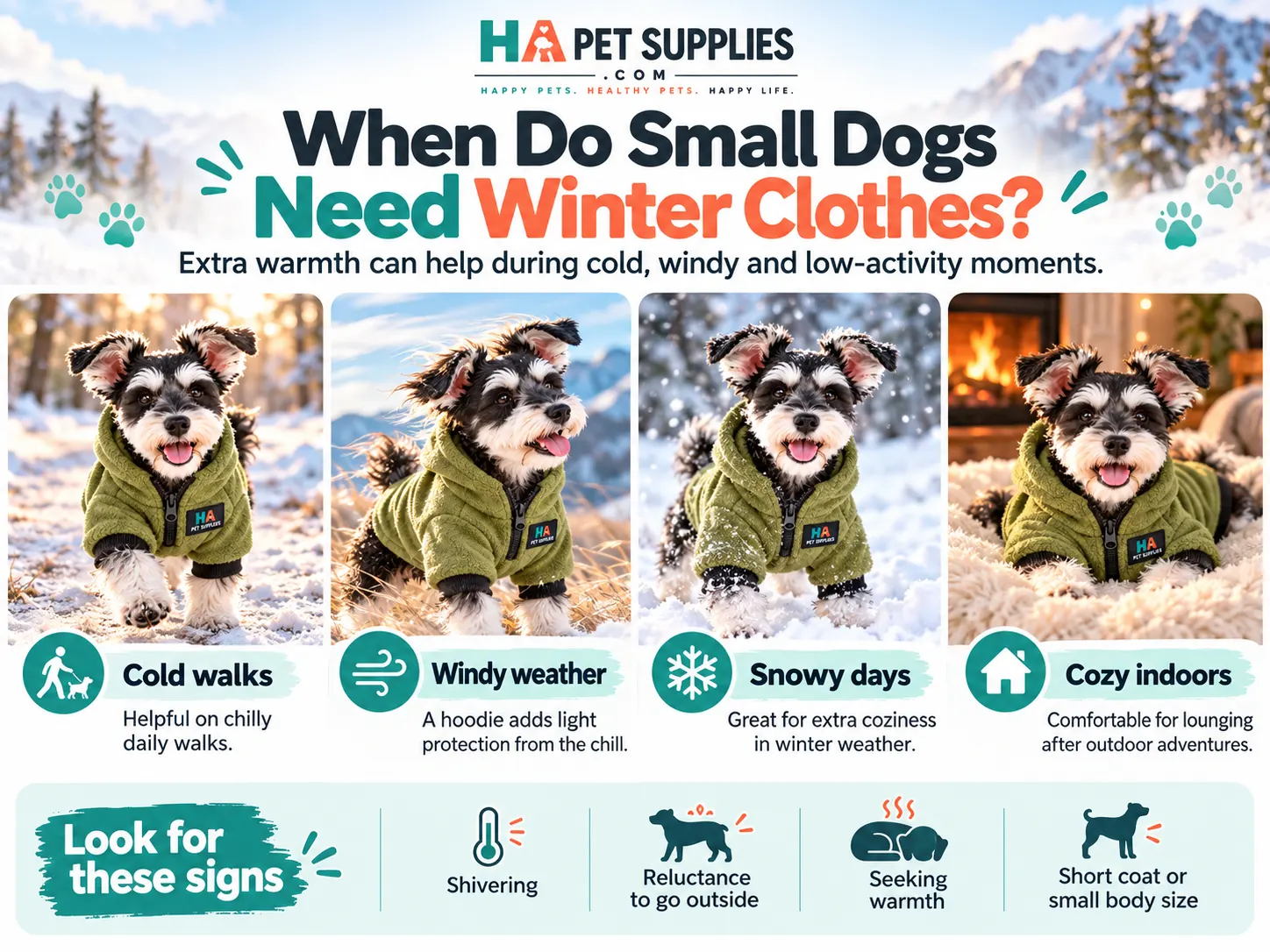
A properly chosen winter garment can be one part of a responsible cold-weather routine that also includes paw care and limited exposure.
11. Common Mistakes When Buying Winter Clothes for Small Dogs
Even experienced pet owners can make mistakes when choosing winter clothing. Most problems come from focusing too heavily on one feature while overlooking fit, weather suitability or comfort.
Mistake 1: Buying based only on appearance
A hoodie may look adorable but still have an unsuitable neck opening or sleeve length. Read the specifications and measure your dog before choosing.
Mistake 2: Assuming thicker means better
Thicker clothing may provide more insulation in some cases, but too much warmth can lead to overheating. Match insulation to the weather and activity.
Mistake 3: Choosing the wrong size
An undersized garment may restrict movement. An oversized hoodie can slide or bunch. Follow the specific manufacturer’s size chart rather than relying on generic size labels.
Mistake 4: Ignoring wet-weather needs and bathroom clearance
Fleece and knitted clothing should not automatically be treated as waterproof. A garment that extends too far along the underside may become soiled. Check the cut and fit before outdoor use.
Mistake 5: Ignoring the dog’s reaction and leaving clothing on unnecessarily
If your dog freezes, repeatedly scratches at the clothing or walks abnormally, reassess the garment. A sweater that provides comfort outdoors may become too warm inside a heated home. The AKC discussion of dogs and indoor temperatures explains why indoor comfort should be considered separately from outdoor conditions.
12. How to Care for Your Small Dog’s Winter Hoodie
Good clothing care helps keep a garment comfortable and suitable for repeated use. Winter outfits may collect loose fur, dust, mud and moisture.
Inspect before each use and follow the care label
Check the zipper, seams, cuffs and neckline. Look for loose threads, damage, or anything that could irritate the dog’s skin. Different fleece and sweater fabrics have different cleaning requirements. Do not assume every fleece hoodie is suitable for machine washing, tumble drying or high-temperature cleaning. Always follow the actual manufacturer care instructions.
Remove outdoor debris, dry completely, and store carefully
After walks, check the garment for leaves, dirt and trapped fur. Store winter clothing only when clean and fully dry. Do not put wet or damp clothing on your dog before a cold-weather outing. Fold the garment or place it in a clean, dry storage area. Before the next winter season, inspect the garment and recheck your dog’s measurements.
13. Best Winter Clothes for Small Dogs: The Final Buying Checklist
Small Dog Winter Clothing Checklist
14. Frequently Asked Questions About Winter Clothes for Small Dogs
The best choice is a properly fitted garment that matches your dog’s body, coat, activity and the weather. For cool, dry days a fleece hoodie or sweater may be useful; for colder or wetter conditions, choose a more specialized jacket or raincoat.
Not all small dogs do. Short-coated, lean, very young or senior dogs may benefit more. Thick-coated small breeds may be comfortable without a sweater in mild conditions. Observe your dog’s behavior.
An ordinary fleece hoodie is not waterproof and may not be sufficient for snow or freezing conditions. Snowy weather often requires a more protective outer layer plus limited exposure time.
Neither is universally better. Hoodies offer casual coverage and often a partial zip; sweaters can provide stretch and insulation. Choose based on fit, fabric, weather and your dog’s comfort.
It should allow normal walking, breathing and bathroom breaks without rubbing. The chest should not be tight, sleeves should not restrict front legs, and the neckline should not press into the throat.
Short-haired Chihuahuas often benefit from an extra layer in cold weather. However, individual tolerance and the actual conditions matter. Measure your dog and observe its behavior.
Pomeranians often have thick coats that provide good insulation. Many do not need clothing for short walks in mild cold, but individual needs vary. Avoid overheating during active exercise.
Yes, if the fit is correct and the weather is suitable. A closely clipped Poodle may benefit more than one with a longer coat. Check sleeve and neckline fit carefully.
Not automatically. An oversized hoodie can shift, bunch or create a tripping risk. Compare your dog’s actual measurements with the specific garment’s size chart.
Yes, especially indoors or during active exercise. Remove clothing if your dog pants heavily, becomes restless or tries to remove the garment.
Introduce the garment gradually with praise and treats. Start with short indoor sessions and respect your dog’s comfort. Never force clothing onto a distressed dog.
If your dog walks in rain or wet snow, a verified waterproof layer can be more appropriate than a standard fleece hoodie. Fleece is not waterproof by default.
Generally no, unless a veterinarian recommends it. Clothing can twist or cause overheating during sleep. A warm bed is usually preferable.
No. The confirmed colour option for this product is olive green. Other colours should not be presented as available variations.
Suitability depends on the available garment measurements, not the breed label. Check the product’s verified size chart against your dog’s measurements. The hoodie is presented as an option for suitable small and medium-sized dogs.
Wash it when it becomes dirty, damp or holds noticeable fur and odour. Always follow the manufacturer’s care label for the specific garment.
Yes. Use the HA Pet Supplies request-a-quote page for quantity or product inquiries.
Shivering may indicate the dog is still cold, unwell, in pain or frightened. Move indoors, remove wet clothing, and consult a veterinarian if symptoms persist or are concerning.
15. Final Thoughts: Choose Winter Dog Clothes for Comfort, Not Just Appearance
Finding the best winter clothes for small dogs becomes much easier when you understand what your dog actually needs. The most attractive hoodie is not necessarily the most suitable garment. A very thick jacket may be unnecessary during a mild walk, while an ordinary fleece sweater may offer insufficient protection in severe winter conditions.
The best choice combines the right amount of insulation, suitable fabric, accurate measurements and comfortable construction. Start by considering your dog’s natural coat, body size, age, health and activity. Then evaluate the actual weather. If your dog needs extra warmth during cool, dry conditions, a properly fitted fleece hoodie may be worth considering. If the weather is wet, windy or particularly cold, a more specialized outer layer may be necessary.
At HA Pet Supplies, our green fleece hoodie combines a casual hooded design with a fleece-textured body, partial-zip neckline and ribbed sleeve cuffs. It is a clothing option to consider for suitable chilly-weather outings, once the dog’s measurements and the garment’s verified specifications have been checked.
For shoppers who want more pet products, our dog supplies collection provides a starting point, while the HA Pet Supplies blog offers additional educational articles. If you are unsure which product measurements you need, visit our contact page to ask about the garment before purchasing.
A Little More Comfort for Chilly Days
HA Pet Supplies — Happy Pets. Healthy Pets. Happy Life.
Explore our olive-green fleece dog hoodie and take the next step toward finding a clothing option suited to your dog’s measurements and everyday needs.