
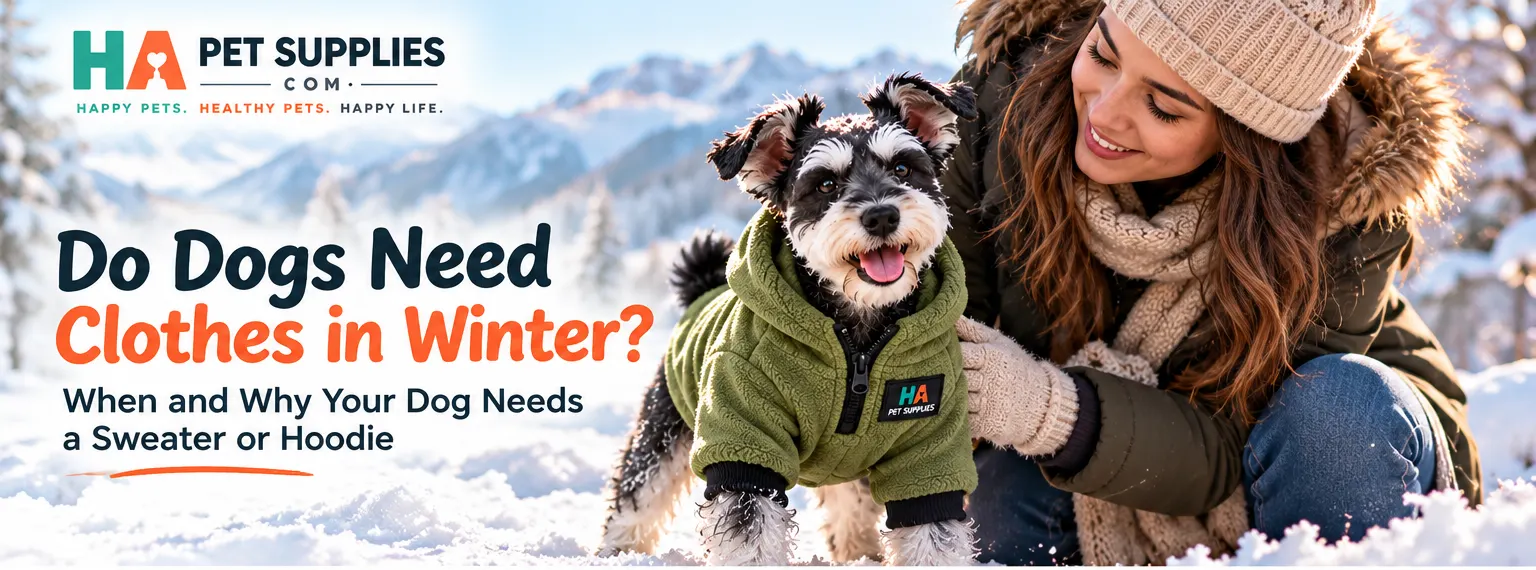
A well-fitted fleece hoodie can add comfort on chilly days but every dog is different.
Winter brings a special kind of happiness for dog lovers. There are peaceful morning walks, crisp air, quiet parks, and sometimes the excitement of fresh snow. But the colder months also bring an important question that many pet owners struggle to answer: Do dogs need clothes in winter, or is their natural fur enough to keep them warm?
Perhaps your dog has started refusing morning walks. Maybe your puppy shivers after stepping outside, or your small companion stands at the doorway looking unsure about the freezing air. You want to keep your pet comfortable, but you also do not want to buy unnecessary clothing or make your dog too hot.
The answer is not the same for every dog. Some dogs have thick, insulating coats that help them cope with cold conditions. Others have short fur, small bodies, or age-related needs that can make winter weather more difficult. A suitable sweater, fleece hoodie, or jacket may provide useful extra insulation for some dogs, while others need nothing more than shorter walks and sensible winter care.
According to the American Kennel Club’s veterinary guidance on winter sweaters, decisions about dog clothing should take account of breed, age, health, activity, and climate rather than appearance alone.
At HA Pet Supplies, we believe winter clothing should serve a real purpose: helping dogs stay comfortable during suitable cold-weather activities while allowing them to move naturally. This guide will help you decide whether your dog needs clothes, recognize important warning signs, understand different winter clothing styles, and choose a garment that fits properly.
Quick Answer: Do Dogs Need Clothes in Winter?
Yes, some dogs need or benefit from winter clothing, but not all dogs do. Small dogs, short-haired breeds, puppies, senior dogs, lean-bodied dogs, and pets with certain health conditions may benefit from extra warmth when temperatures fall. Dogs with thick double coats often have more natural insulation, although extreme conditions can still put them at risk.
Consider a suitable winter layer. A well-fitted sweater or fleece hoodie may be useful. Check your dog’s behavior and the actual temperature.
This interactive tool provides general guidance, not a temperature guarantee. Always observe your dog.
Fast decision for busy dog owners
Small or short-coated dog in chilly weather: consider a properly fitted sweater or hoodie.
Thick-coated dog on a mild, short walk: clothing may not be necessary.
Wet, windy, freezing or snowy weather: additional weather protection and shorter outings may be needed.
Shivering, weakness or significant distress: move indoors; contact a veterinarian if symptoms persist.
View Green Fleece Dog Hoodie1. Why Do Some Dogs Feel Cold More Easily Than Others?
Dogs have natural ways of maintaining body temperature. Their coats trap air and provide insulation, while normal body processes help regulate heat. However, the effectiveness of these protections varies significantly between individual dogs.
A dog’s ability to tolerate cold depends on several related factors. Coat thickness is important, but it is only one piece of the puzzle. Body size, body condition, age, activity, health, wind, rain, and exposure time can all affect comfort.
Body size makes a difference
Small dogs have a higher surface-area-to-body-mass ratio than large dogs. This generally means they can lose body heat relatively quickly, especially if they have short or thin coats. Imagine a small Chihuahua and a much larger, thick-coated northern breed standing outside in the same weather. Their experiences may be quite different. The Chihuahua may become uncomfortable relatively quickly, while the larger dog may tolerate the conditions better.
Natural coat thickness matters
Dogs with thick undercoats have a different level of insulation from dogs with fine, short, or very little hair. A Husky, for example, is generally better adapted to cold weather than a hairless breed. However, a thick coat does not provide unlimited protection from freezing conditions. The AKC guide to choosing winter coats explains how coat type, body size, and other factors influence a dog’s need for extra protection.
Age changes cold-weather needs
Puppies are still developing and may be less capable of coping with temperature extremes than healthy adult dogs. Senior dogs may also have reduced mobility or health issues that affect their comfort. An older dog who moves slowly on a winter walk may generate less warmth through activity than an energetic younger companion.
Activity level also matters
A dog running enthusiastically through a safe, cool park produces more body heat than one standing still. This explains why an outfit that seems comfortable at the beginning of a walk may become too warm after vigorous exercise. Likewise, a dog waiting outdoors for a prolonged period can become cold even if it appeared comfortable during the first few minutes.
2. Which Dogs Are More Likely to Need Winter Clothes?
Dog winter clothes may be especially useful for certain groups of dogs. Understanding these groups can help owners make more confident purchases.
Small and toy breeds
Chihuahuas, Toy Poodles, and other small dogs may have more difficulty retaining warmth during cold conditions. Their smaller body mass and, in some cases, shorter coats can make additional insulation useful. For these dogs, lightweight sweaters and fleece hoodies are often considered for everyday chilly walks.
Short-haired dogs
Dogs with short, smooth coats often have less natural insulation than breeds with dense undercoats. Some examples include Greyhounds, Whippets, and certain terriers. The PetMD veterinary-reviewed guide to dog coats discusses how individual breed characteristics influence clothing choices.
Hairless and closely clipped dogs
Dogs with little natural hair have less coat insulation available to help them tolerate cold. Similarly, dogs that have recently had their coats clipped short may temporarily be more sensitive to winter temperatures.
Puppies and senior dogs
Puppies and older dogs deserve additional attention when the weather changes. A puppy may be excited to explore snow but still struggle with prolonged exposure. A senior dog may tolerate a short outdoor visit but dislike extended walks in cold, windy weather.
For a deeper look at choosing appropriate garments, see our guide to winter clothes for small dogs.
3. Seven Signs Your Dog May Be Too Cold
One of the biggest concerns for dog owners is recognizing discomfort before it becomes dangerous. Dogs cannot explain how the temperature feels, but changes in their behavior can provide useful information.
Sign 1: Shivering or trembling
If your dog starts shivering during a winter walk, shorten the outing and move to a warmer place. Remember that shivering can also have other causes, including fear, pain, or illness.
Sign 2: Repeatedly lifting paws
Cold pavement, ice, snow, and de-icing products can make a dog’s paws uncomfortable. The ASPCA cold-weather safety recommendations emphasize cleaning and drying paws after winter outings.
Sign 3: Refusing to continue walking
A dog that normally enjoys a daily walk may stop, turn toward home, or resist going farther when uncomfortable. Do not force a reluctant dog to stay outdoors.
Sign 4: Seeking warmth or shelter
Some dogs move toward buildings, doorways, sheltered areas, or their owners when they want relief from the cold.
Sign 5: Unusual posture
A dog may hunch, tuck its tail, or change its normal posture when uncomfortable. Look at the overall situation rather than using one behavior as a diagnosis.
Sign 6: Reduced activity
A dog that suddenly becomes less active during a cold-weather outing may be uncomfortable, fatigued, or experiencing a more serious problem. Weakness, confusion, severe lethargy require immediate attention.
Sign 7: Unusually cold ears or extremities
Cold ears or paws alone do not establish a medical emergency, but they may help you notice that your dog is uncomfortable. If they occur alongside shivering, weakness, or abnormal behavior, take action promptly.
Important: A sweater or hoodie is not a treatment for hypothermia or frostbite. If these conditions are suspected, arrange urgent veterinary assessment. AKC veterinarian’s discussion of early hypothermia signs describes several symptoms.
4. How Cold Is Too Cold for a Dog Without Clothes?
There is no single outdoor temperature at which every dog suddenly needs clothing. A temperature that feels manageable for one healthy, thick-coated dog may be uncomfortable for a small, elderly, or short-haired dog.
Why wind makes a difference
Wind can increase heat loss by removing warmer air from around the body. A fleece hoodie may add insulation, but fleece should not automatically be described as windproof.
Why wet weather can be more difficult
Wet fur and damp clothing can reduce comfort and increase the risk of dangerous cooling. The AKC winter care recommendations emphasize limiting cold exposure, accounting for wind chill, and providing warm, dry shelter.
Does a dog need clothes at 50°F (10°C)?
Some dogs may appreciate a light layer at this temperature, particularly if they are small, short-coated, inactive, or sensitive to chilly weather. Other dogs will be comfortable without clothing.
What about freezing temperatures?
At 32°F (0°C) or below, owners should take greater precautions. Some dogs may require protective outerwear and very short trips outdoors. A hoodie does not make freezing weather automatically safe.
5. Dog Sweater vs. Hoodie vs. Winter Jacket: Which Is Better?
Many customers searching for dog clothes feel confused because product names overlap. The best choice depends on what you actually need.
| Clothing type | Primary purpose | Common advantage | What to check |
|---|---|---|---|
| Dog sweater | Additional insulation | Comfortable casual layer | Material and neck fit |
| Fleece dog hoodie | Warmth and casual coverage | Soft fabric and sweatshirt-style fit | Chest, cuffs, zipper |
| Winter dog jacket | Cold-weather outerwear | May offer greater coverage or insulation | Actual weather rating |
| Dog raincoat | Protection from rain | Can help keep fur dry | Waterproof claims and fit |
If you are choosing between products, the AKC overview of dog sweaters and their benefits explains why some dogs benefit from sweaters while others may become overheated.
6. How to Choose the Best Winter Clothes for Your Dog
A common buying mistake is choosing an outfit based on appearance before checking its suitability.
Start with the weather
Ask yourself when the clothing will be used. Will it be worn for a short morning walk in cool air? A brief outdoor visit? A walk in windy conditions? A casual fleece hoodie may be appropriate for some chilly outings, while heavy rain may require a different garment.
Examine the fabric
Fleece is popular for cold-weather clothing because it can add insulation without the appearance of a bulky coat. However, fleece products vary in thickness, fibre composition and performance.
Check the neckline
The neckline must allow comfortable breathing and movement. The HA Pet Supplies green fleece dog hoodie features a partial-zip neckline. When using any zipper near a dog’s fur, take care not to trap hair.
Avoid unnecessary decorative hazards
Buttons, loose ornaments, hanging cords, and poorly attached accessories may create problems if chewed or swallowed. The PetMD winter dog coat selection guide discusses fit, possible irritation, and the importance of avoiding unsafe clothing decorations.
7. How to Measure a Dog for Winter Clothes
Even an otherwise suitable winter outfit can become uncomfortable when the wrong size is selected.
Measure the chest
Use a flexible measuring tape around the widest part of your dog’s chest, usually just behind the front legs. Keep the tape level without pulling it tightly into the fur.
Measure the back length
Measure from the base of the neck to the base of the tail while your dog stands naturally. Do not stretch the dog or measure along a curled back.
Check the neck
Some products also require a neck measurement. This matters especially for pullovers, hoodies, and clothing with limited opening space.
Our detailed dog hoodie and sweater size guide walks readers through these measurements in greater detail. The PetMD guide to selecting and fitting dog sweaters also explains why neck, chest and body-length measurements matter.
Open Step-by-Step Size Guide8. Why a Fleece Dog Hoodie May Be a Practical Option
For customers who want one casual clothing option for suitable chilly outings, a fleece dog hoodie may be worth considering.
Extra coverage for chilly conditions
A fleece body creates an additional layer around the dog’s torso. For certain cold-sensitive dogs, that layer may make a short, chilly outing more comfortable.
Comfortable everyday styling
A well-fitted hoodie should allow normal movement. A dog that willingly wears a garment and moves naturally is more likely to tolerate it.
Our olive-green fleece dog hoodie has a partial zipper, hooded neckline, pullover-style body and ribbed sleeve cuffs. It is offered in green only. You can examine the HA Pet Supplies Green Fleece Dog Hoodie product details before making a decision. Do not assume that the hoodie is waterproof, windproof or rated for extreme cold.
9. How to Introduce Winter Clothes to a Dog That Dislikes Wearing Them
Some dogs accept clothes immediately. Others become confused when something unfamiliar touches their shoulders or legs.
Start by letting your dog investigate
Place the hoodie on a clean floor near your dog. Allow the dog to approach and sniff it voluntarily. Reward calm curiosity with praise or a suitable treat.
Introduce the neckline slowly
Hold the opening so your dog can investigate it. Encourage the dog to approach voluntarily rather than pushing the garment over its head.
Work on the sleeves separately
After your dog accepts the neckline, carefully introduce each sleeve. Avoid pulling the legs into uncomfortable positions.
The AKC advice on helping dogs become comfortable wearing clothes offers additional guidance on introducing clothing carefully.
10. What About Wearing Dog Clothes Indoors?
Another common question is whether dogs should wear sweaters or hoodies inside the house. The answer depends on the indoor environment and the individual dog.
Look at indoor temperature and bedding
If your dog constantly seeks warm places, consider whether its resting environment is comfortable. A suitable bed away from cold drafts may help without requiring clothing throughout the day. The ASPCA winter pet safety tips emphasizes warm indoor shelter.
Avoid overheating
A thick sweater may feel comfortable during a short outdoor walk but become unnecessary inside a heated home. Watch for excessive panting, restlessness, or unusual attempts to remove the garment.
Should a dog sleep in a hoodie?
Casual clothing is generally best removed before unsupervised sleeping unless a veterinarian gives specific instructions.
The AKC discussion of dogs and indoor winter temperatures offers useful background on canine temperature regulation.

A cozy indoor resting place can help a dog relax after a cold-weather walk. Clothing should be removed when it is unnecessary or uncomfortable.
11. Common Winter Dog Clothing Mistakes to Avoid
Mistake 1: Buying by breed instead of measurement
Two dogs from the same breed can have very different body proportions. Always compare measurements with the actual size chart.
Mistake 2: Thinking more clothing always means more warmth
Adding multiple layers can sometimes restrict movement or cause overheating.
Mistake 3: Ignoring wet fabric
A hoodie that becomes soaked during rain or snow may no longer provide the comfort you expected. Remove wet clothing and dry your dog after returning indoors.
Mistake 4: Forgetting paw protection
Even the warmest jacket does not protect a dog’s paws. The ASPCA guidance on winter paw protection recommends cleaning and drying paws after exposure to ice, salt and other winter hazards.
Mistake 5: Expecting a hoodie to replace winter safety precautions
A fleece hoodie may add warmth during suitable conditions, but it cannot make severe weather safe.
12. A Practical Winter Routine for Dog Owners
If you often feel uncertain before taking your dog outside, a simple routine can make decisions easier.
Before the walk
Check the weather forecast, particularly the temperature, wind and possibility of rain or snow. Assess your dog’s energy, behavior and general condition.
During the walk
Observe your dog’s normal behavior. If your pet repeatedly stops, lifts its paws, shivers or seeks shelter, end the outing and move somewhere warm.
After the walk
Remove wet clothing promptly. Inspect paws and remove dirt, ice or de-icing residue using pet-appropriate cleaning methods. The ASPCA winter pet safety checklist covers everyday precautions.
13. Dog Clothes Before and After: What Should Owners Realistically Expect?
Product photography often shows a dog looking unhappy without clothing and cheerful after wearing a hoodie. These images can be useful illustrations, but they should not be treated as evidence that clothing will always produce a particular emotional or medical result.
A properly fitted sweater may make a cold-sensitive dog more comfortable during suitable conditions. However, a dog that dislikes wearing clothes may become stressed even if the garment appears warm.
What a successful fit looks like
A dog should move normally, show no obvious rubbing, and tolerate the garment without distress. The clothing should remain positioned correctly during ordinary movement.
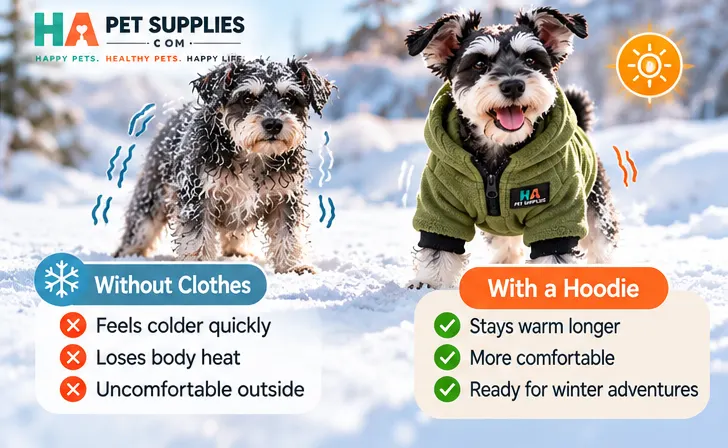
Winter clothing may provide additional warmth for cold-sensitive dogs, but comfort and safety depend on the individual dog, the fit and the weather.
14. The Winter Dog Clothes Buyer Checklist
Before selecting a sweater, hoodie or jacket, answer the following questions.
Winter clothing purchase checklist
Owners who still need assistance can ask a product question through the HA Pet Supplies contact page before ordering.
15. Frequently Asked Questions: Do Dogs Need Clothes in Winter?
Some dogs do, especially small, short-haired, senior, or cold-sensitive dogs. Others with thick double coats may not need clothing during short, mild outings. Always consider individual needs.
Not all, but many small dogs benefit due to higher surface-area-to-body-mass ratio. Assess your dog’s behavior and the weather.
A fleece hoodie may add warmth but is not waterproof or a substitute for extreme cold precautions. Keep snow outings short and dry your dog afterward.
It depends on the weather and your dog. Sweaters provide moderate insulation; jackets may offer more weather protection. Choose based on conditions.
Yes, especially indoors or during vigorous activity. Remove clothing if you notice panting, restlessness, or attempts to remove the garment.
Watch for shivering, lifting paws, reluctance to walk, seeking shelter, or unusual posture. These are signs to move indoors.
Usually not necessary in a heated home. If your dog is cold-sensitive, provide a warm bed instead of clothing unless advised by a vet.
Yes, but puppies may chew or dislike clothing. Supervise closely and ensure the fit allows movement. Short exposure is key.
Measure chest at widest point and back length from neck base to tail base. Compare with the brand’s size chart. See our sizing guide.
Yes, large short-haired or lean dogs can benefit. Size alone doesn’t determine need; coat type and weather matter.
Generally no, unless a vet recommends it. Clothing can twist or cause overheating during sleep. Provide a warm bed instead.
Introduce gradually with positive reinforcement. If your dog remains distressed, respect their comfort and use alternative warmth like shorter walks or a warm bed.
No, standard fleece is not waterproof. For rain, consider a raincoat or water-resistant layer.
Check before each use and periodically during wear for rubbing, tightness, or shifting. Remove if uncomfortable.
It is designed for cool to cold weather, not hot summer days. Always match clothing to the temperature.
16. Final Thoughts: Do Dogs Need Clothes in Winter?
So, do dogs need clothes in winter? The most useful answer is that some dogs do, some dogs don’t, and every owner should make the decision based on their own dog’s needs. Small dogs, short-coated breeds, puppies, senior dogs and cold-sensitive companions may benefit from suitable additional insulation.
Regardless of your dog’s breed, clothing should never replace safe temperature management, warm shelter, proper supervision or veterinary care when needed.
At HA Pet Supplies, our green fleece dog hoodie offers a soft fleece-textured design, partial-zip neckline, hood and ribbed sleeve cuffs. It is available in olive green only and should be selected according to your dog’s verified measurements.
You can explore additional products in our Dog Supplies Collection, while our pet care blog provides more practical information about clothing, sizing and winter comfort.
Warm little moments start with the right choice.
HA Pet Supplies — Happy Pets. Healthy Pets. Happy Life.
Discover our olive-green fleece hoodie, compare measurements, and choose a comfortable clothing option for suitable chilly-weather outings.