
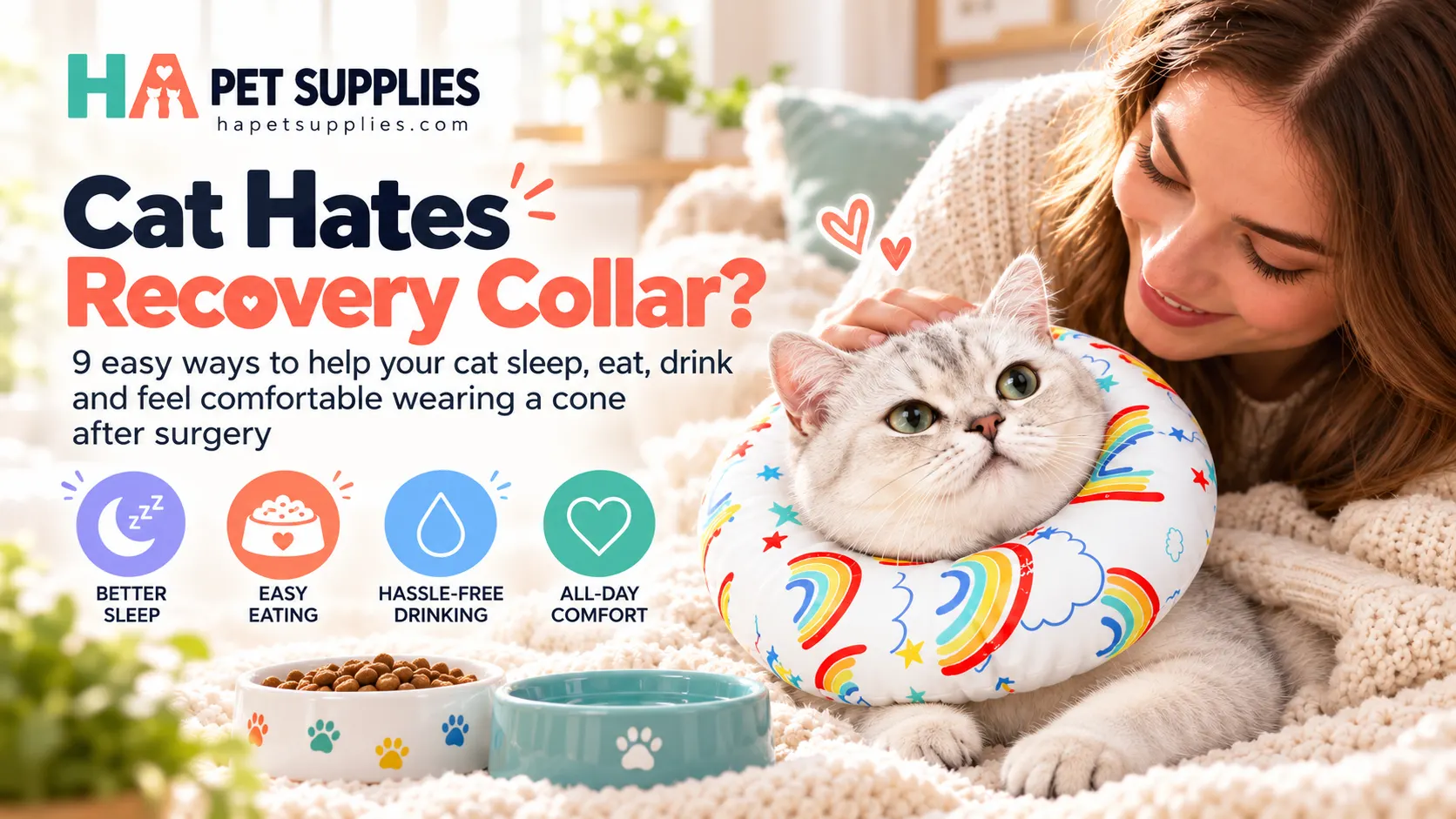
Cat hates recovery collar? You are not alone and there are practical, safe ways to help.
Quick answer: What should I do if my cat hates its recovery collar?
Begin by checking the collar’s fit and making sure the incision remains protected. Then make your cat’s environment easier to navigate.
Try these immediate solutions:
- Check whether the collar is properly fitted.
- Provide a quiet room without unnecessary obstacles.
- Replace deep food bowls with accessible shallow dishes.
- Place fresh water within easy reach.
- Provide soft bedding on a low, stable surface.
- Reassure your cat gently without forcing interaction.
- Ask your veterinarian whether a softer collar is suitable.
- Monitor eating, drinking, movement, and incision.
- Seek veterinary help if distress continues.
Do not remove prescribed wound protection simply because your cat appears unhappy. According to VCA Animal Hospitals’ Elizabethan collar guidance, many cats initially resist but eventually adapt.
📋 Table of Contents
- 1. Why does my cat hate its recovery collar?
- 2. Nine easy ways to help your cat feel comfortable
- 3. How to help your cat eat and drink with a cone
- 4. How to help your cat sleep comfortably
- 5. Soft donut collar vs plastic cone
- 6. How to check whether your collar fits properly
- 7. Recovery timeline: what to expect during the first two weeks
- 8. Warning signs that your cat needs veterinary attention
- 9. Common mistakes when a cat hates its recovery collar
- 10. Frequently asked questions
- 11. Final recovery comfort checklist
1. Why does my cat hate its recovery collar?
A cat may dislike wearing a recovery collar for several reasons. Cats are sensitive to changes in their environment and body movement. They rely on whiskers, hearing, vision, and normal movement patterns to navigate familiar surroundings. Adding a large protective cone changes how the animal interacts with furniture, feeding bowls, doorways, and sleeping areas. Even a familiar room can suddenly feel uncomfortable.
The collar feels unfamiliar
Most cats have never worn a large object around their neck. When a protective collar is introduced immediately after surgery, the experience may be especially confusing. Some cats try to shake it off, while others freeze or refuse to move. Walking backward is another common reaction to unfamiliar equipment. These reactions do not automatically mean the collar is incorrectly fitted. However, persistent panic, unsafe movement, or extreme distress should be discussed with your veterinarian.
The collar changes visibility
Traditional Elizabethan collars extend outward beyond the face. This can limit peripheral vision and make moving through narrow spaces more difficult. Your cat may repeatedly bump into furniture or avoid walking through doorways. A soft donut collar has a shorter shape and may allow greater visibility, although it offers less protection against reaching certain wounds.
Eating and drinking become awkward
A large cone can interfere with the way a cat approaches its food or water bowl. The rim may hit the floor or edge of a dish before the cat can reach the contents. As a result, some cats walk away rather than continue trying. This is one reason feeding arrangements often need adjustment during recovery.
Your cat may be experiencing pain
Not every problem is caused by the collar. A cat may be uncomfortable because of surgical pain, medication effects, nausea, or general postoperative stress. If your cat suddenly becomes more restless, aggressive, withdrawn, or unwilling to move, do not assume it is simply refusing to cooperate. The American College of Veterinary Surgeons postoperative care guide explains that changes in appetite, posture, activity, and behavior can indicate discomfort during recovery. A veterinarian should assess persistent or worsening symptoms.
2. Nine easy ways to help a cat that hates its recovery collar
Check the collar fit first
An overly tight collar creates pressure. An overly loose collar slips or allows wound access. A common guideline is two fingers between collar base and neck — follow manufacturer instructions and your vet’s advice. A correctly fitted collar allows normal breathing and swallowing, stays in place, doesn’t rub, and blocks wound access.
Create a quiet recovery room
Choose a quiet room without stairs or narrow gaps. Remove obstacles. Position food, water, bedding, and litter tray within easy reach. Avoid loud music and frequent interruptions. The Cats Protection guide recommends preparing a quiet recovery environment and minimizing unnecessary activity.
Help your cat eat
Use a wider, shallower dish. Place it on a stable surface. Offer the diet recommended by your vet. After anesthesia, some cats initially have reduced appetite, but refusal can also indicate pain or nausea. The PetMD cat surgery aftercare guide discusses postoperative appetite changes.
Make drinking water easier
Place fresh water near the resting area. Use a stable, accessible dish. Observe whether the collar prevents lowering the head. Some cats prefer a shallow bowl; others like a fountain. If your cat is not drinking, vomiting, or appears weak, contact the clinic promptly. The PetMD postoperative care FAQs explain that inadequate water intake can become serious.
Provide soft bedding
Choose a low, stable sleeping area. Use a clean blanket or supportive pet bed. Avoid elevated sleeping locations. Position the bed away from drafts, noisy appliances, and busy walkways. If the collar prevents sleep entirely, contact your vet rather than removing necessary protection.
Offer gentle reassurance
Sit near your cat and speak softly. Allow it to approach you. Offer gentle stroking without touching the surgical area. Reward calm behavior with approved treats. Avoid pulling the cat by its collar or forcing movement while frightened. Positive association can make future collar handling easier.
Ask about a softer collar
A padded donut-style recovery collar can feel less restrictive for some cats. The HA Pet Supplies Cat Recovery Collar is a soft padded donut-style product with adjustable drawstring and XS, S, M, L sizes. However, a soft donut collar does not protect every incision. Ask your vet first.
Maintain a consistent routine
Provide meals, medication, and quiet attention at familiar times. Keep the recovery area clean. Check the collar regularly for rubbing, slipping, or damage. Monitor the incision according to discharge instructions. The ASPCA after-surgery instructions emphasize incision protection, activity restrictions, and ongoing monitoring.
Contact your veterinarian
If your cat continues to panic, refuses food or water, or cannot rest, contact your vet. The collar may need resizing or replacement. Your cat may need assessment for pain or another complication. Do not give human sedatives or pain medication without veterinary instructions.
3. How to help your cat eat and drink with a cone after surgery
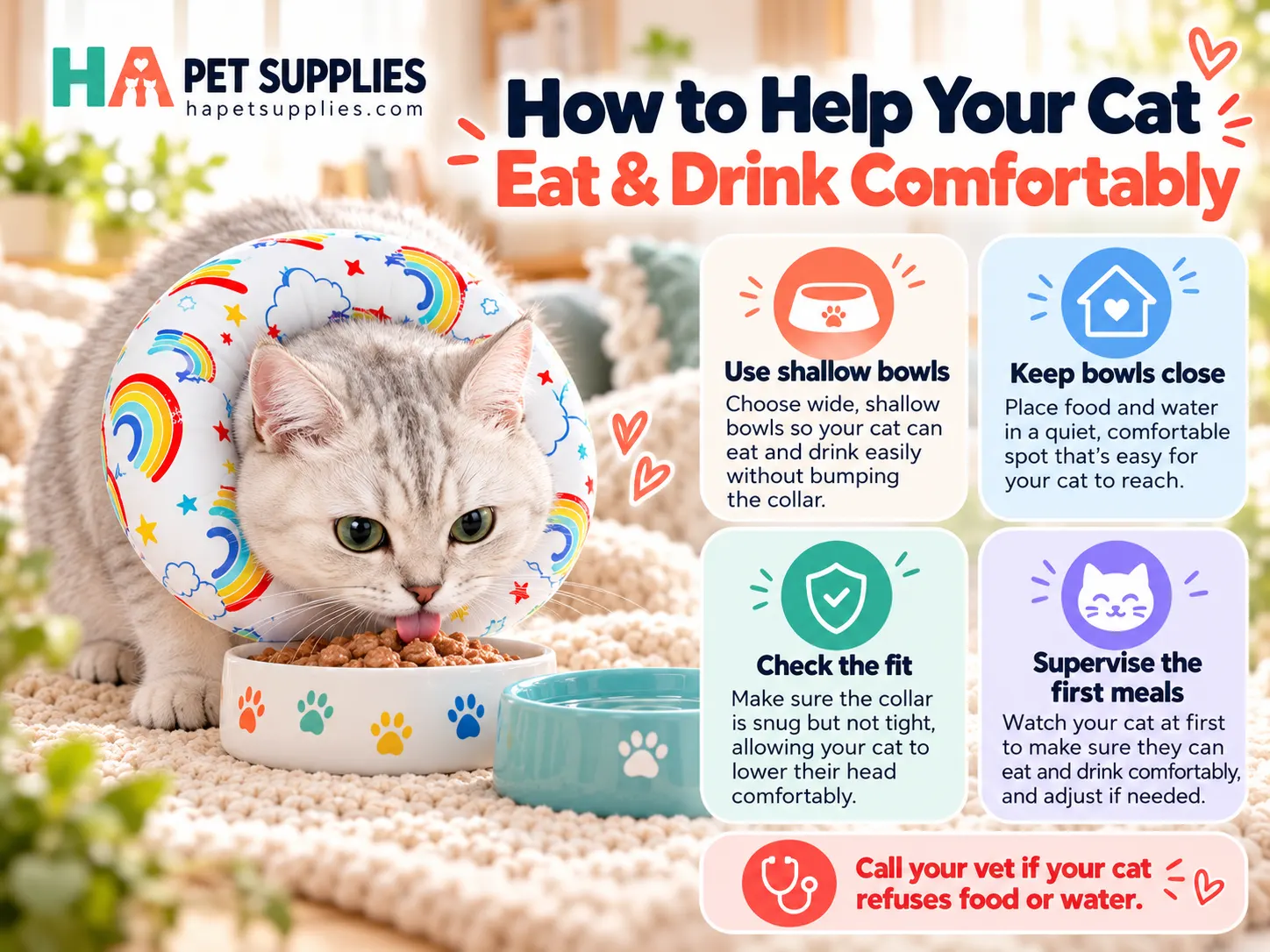
Feeding problems are among the most stressful situations following surgery. A cat may refuse food because its cone obstructs the bowl. However, nausea, pain, stress, and medication effects may also affect appetite. This means owners should not automatically blame the collar.
Start with the feeding bowl
A shallow plate often provides easier access than a deep bowl. The cat should be able to reach its food without pressing the collar against the dish. Keep the bowl in an open area away from walls or corners. If the cone hits the wall, your cat may have difficulty finding a comfortable position.
Offer small, appropriate meals
Follow the feeding instructions provided by your veterinarian. Some cats benefit from small meals after anesthesia rather than receiving a large portion immediately. If the clinic recommends your cat’s usual food, offer a familiar meal. If a special diet has been prescribed, do not switch without approval. The Cats Protection postoperative feeding advice explains that appetite may be temporarily reduced after anesthesia.
Can you remove the cone during meals?
Only if your veterinarian has specifically permitted temporary supervised removal. Some postoperative instructions allow this when necessary, but it is not appropriate for every incision or every cat. If removal is permitted, maintain direct supervision, prevent all access to the wound, and replace the collar immediately afterward. If you are unsure whether removal is safe, leave the protection in place and ask the clinic for an alternative feeding arrangement.
What if your cat still refuses food?
First, check whether the collar physically blocks the food. If access is not the problem, consider whether your cat appears nauseated, painful, unusually sleepy, or otherwise unwell. Contact your veterinarian promptly if your cat is refusing meals, especially when the problem persists or is accompanied by other symptoms.
Helping your cat drink enough water
Keep fresh water available unless instructed otherwise. You can provide more than one accessible bowl if the recovery room allows it. Observe your cat drinking rather than assuming water has been consumed. When necessary, ask the veterinarian whether wet food can help support hydration. Avoid using syringes to force water into an unwilling cat unless specifically instructed.
4. How to help your cat sleep comfortably wearing a recovery collar
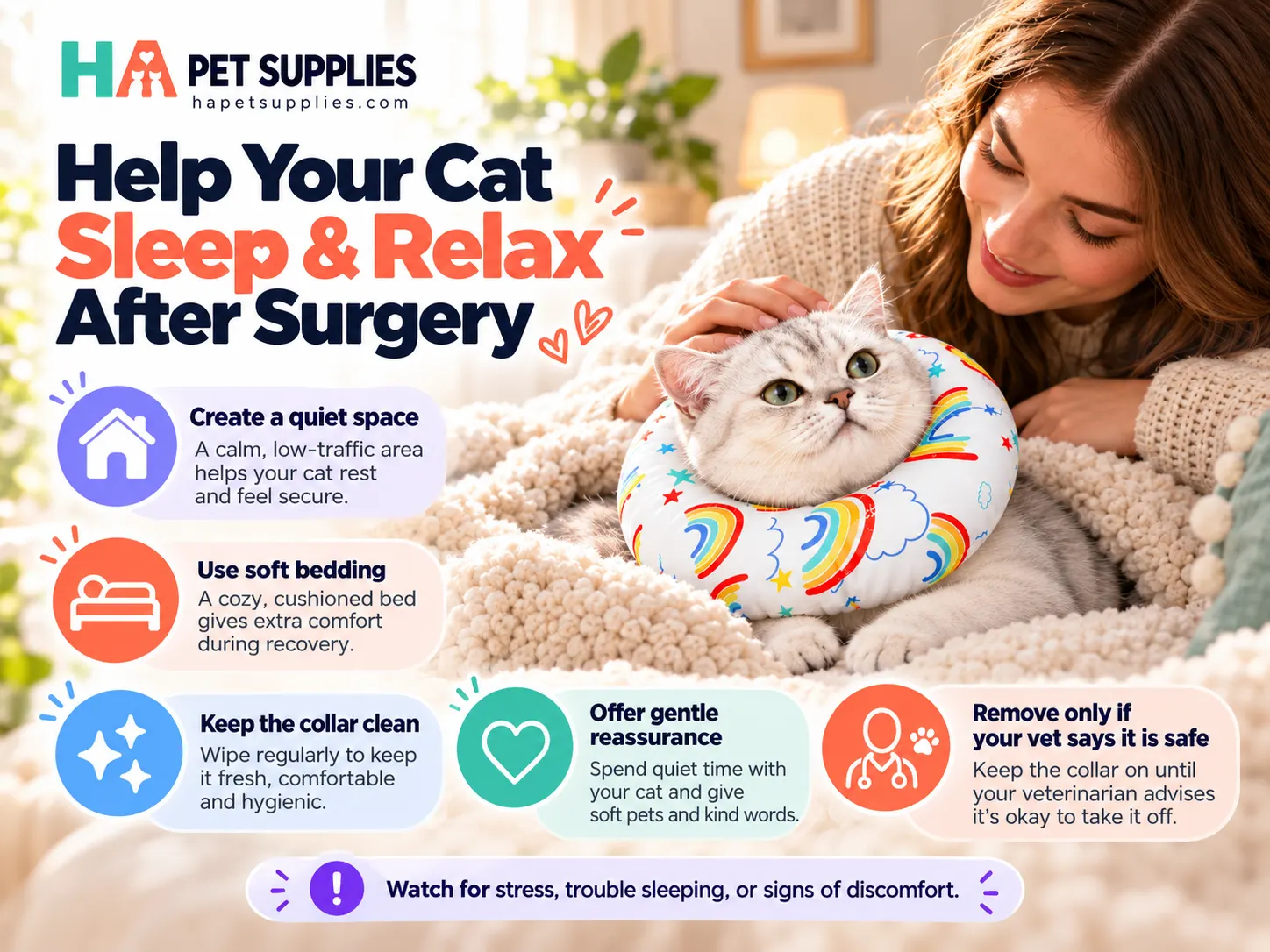
Cats spend many hours sleeping, and rest becomes particularly important during recovery. After surgery, your cat may feel tired because of anesthesia, medication, and the physical healing process. However, a cat that cannot settle may be experiencing discomfort.
Choose the right sleeping location
Provide a bed at floor level. Choose a place where the cat does not need to jump or climb. A quiet corner with soft bedding may be more comfortable than a crowded living area. Avoid placing the bed beside noisy appliances or frequently opened doors.
Keep the sleeping area spacious
Make sure your cat has enough space to reposition itself while wearing the collar. Remove objects that could trap the collar or restrict movement. If your cat is using a traditional cone, check whether nearby furniture makes turning difficult.
Use clean, soft bedding
Choose a comfortable blanket that does not irritate the skin. Keep bedding dry and clean. Avoid bulky loose materials that could become tangled around the collar or surgical area.
Maintain the prescribed collar schedule
Owners sometimes remove a cone before bedtime because their cat appears uncomfortable. This can be risky. Cats may lick their wounds during the night when nobody is supervising them. The PetMD cat surgery aftercare FAQs explain why prescribed postoperative protection should not be removed simply to give the animal a break. If the collar makes sleeping extremely difficult, seek veterinary advice about adjusting the fit or selecting a different device.
Distinguish collar discomfort from pain
If your cat repeatedly changes position, cries, pants, refuses to lie down, or becomes increasingly distressed, contact your veterinarian. These behaviors may reflect pain or another problem rather than normal collar adjustment. Follow all prescribed pain medication instructions. Never give human pain relievers to your cat.
5. Soft donut collar vs plastic cone: which is more comfortable?
| Feature | Plastic Cone | Soft Donut | Recovery Suit |
|---|---|---|---|
| Neck cushioning | Limited | Padded | No large neck ring |
| Visibility | May be restricted | Often less restricted | Usually unobstructed |
| Eating access | May require adjustments | May be easier | Usually accessible |
| Strong reach restriction | Often effective | Limited by flexibility | Depends on coverage |
| Abdominal wound protection | Often suitable | May be insufficient | Can be suitable |
| Suitable for every surgery | No | No | No |
The correct choice depends on the incision and your cat’s ability to reach it. For additional guidance, read our Best Cat Recovery Collar comparison guide. You can also review the PDSA guide to postoperative protective equipment.
6. How to check whether your cat’s recovery collar fits properly
Step 1: Check the neck opening
The collar should sit securely without compressing the throat. Follow the specific product’s fitting guidance. If you are unsure how tight it should be, ask your veterinarian to check the fit.
Step 2: Check whether the cat can breathe and swallow normally
Normal breathing and swallowing must never be restricted. If the collar appears to obstruct breathing, relieve the obstruction and seek urgent veterinary care.
Step 3: Check for skin irritation
Inspect the contact area for redness, rubbing, swelling, or hair loss. Check at least daily and more frequently if your cat is visibly uncomfortable.
Step 4: Check the closure
Make sure the fastening mechanism remains secure. For adjustable drawstrings, ensure that loose cord ends cannot become caught or chewed.
Step 5: Check wound protection
Observe whether your cat can reach the surgical incision. Do not encourage licking during the test. If the cat can access the wound, contact your veterinarian for a more effective protective device. The VCA guidance on caring for surgical incisions in cats explains why preventing access to healing tissue is essential.
7. Cat recovery collar after surgery: what to expect during the first two weeks
Day 1–2
Sleepiness and unusual behavior. Provide a quiet environment and monitor closely.
Day 3–5
Improving alertness and more movement. Continue protection and restrict activity.
Day 6–10
More interest in normal routines. Maintain incision care and follow instructions.
Day 11–14 or later
Possible veterinary healing assessment. Remove protection only when approved.
These are broad stages, not a guaranteed recovery schedule.
The first 48 hours: Your cat may feel sleepy, confused, or less interested in food. These changes can occur following anesthesia. However, worsening weakness, repeated vomiting, severe pain, or inability to eat or drink requires veterinary attention.
Days three to five: Some cats become more active as they begin feeling better. They may attempt to jump, groom, or play. Do not mistake increased energy for complete healing.
Days six to ten: The incision may appear less irritated. Your cat may also become more impatient with wearing its collar. Continue the protection schedule prescribed by your veterinarian.
Days eleven to fourteen: Some routine postoperative plans include follow-up assessments around this stage. Your veterinarian may examine the wound and determine whether the collar can be removed. Major surgery or complications may require longer protection. For a more detailed explanation of when removal is safe, read our Cat Recovery Collar After Surgery guide.
8. Warning signs that your cat needs veterinary attention
It is important to distinguish normal adjustment behavior from signs of a medical problem. A cat that dislikes its collar may still eat, drink, breathe, and move normally. A cat with a serious complication may show additional symptoms.
Refusing food: If your cat refuses food after surgery, contact the veterinarian according to the discharge instructions. Seek advice sooner if the cat is weak, vomiting, medically fragile, or otherwise unwell.
Not drinking water: Inadequate hydration can become serious. Contact your veterinarian if your cat refuses water, cannot access its bowl, or shows signs of dehydration.
Severe distress: Persistent panic, uncontrollable struggling, or an inability to rest may indicate that the collar is unsuitable or that pain is not adequately controlled.
Incision problems: Contact the veterinarian promptly if you notice increasing redness, swelling, discharge, missing stitches, or an open wound.
Breathing difficulties: Difficulty breathing is an emergency.
Difficulty urinating: Repeated straining without producing urine also requires urgent veterinary attention.
The ASPCA’s postoperative care resources provide additional information about monitoring animals following spay and neuter procedures. Do not wait for a scheduled follow-up appointment when serious symptoms develop.
9. Common mistakes when a cat hates its recovery collar
- Removing the collar too early — a cat may seem happier without a cone, but the incision may still be vulnerable. Follow the veterinary removal schedule.
- Assuming the cat is being stubborn — refusing to move or eat may indicate fear, pain, or an unsuitable collar. Investigate the cause instead of forcing compliance.
- Buying a softer collar without checking protection — a padded donut may improve comfort but fail to prevent licking. Veterinary approval is essential.
- Ignoring feeding difficulties — cats need appropriate nutrition during recovery. If accessible bowls do not solve the problem, contact the veterinarian.
- Allowing too much activity — running and jumping may damage healing tissue. Maintain prescribed activity restrictions.
- Letting other pets disturb the recovering cat — other pets may attempt to play or groom the patient. Use a quiet recovery area when needed.
- Treating pain with human medication — never give human pain relievers or sedatives without veterinary direction.
- Removing the collar overnight — cats may lick their wounds during sleep periods or when owners are not watching. Maintain effective protection as directed.
- Ignoring a dirty or damaged collar — check the product for contamination, loose stitching, and closure problems. Follow the manufacturer’s cleaning instructions.
- Waiting too long to request help — if your cat cannot adapt, is not eating, or appears increasingly distressed, call the clinic. Appropriate intervention can reduce discomfort and prevent avoidable complications.
10. Frequently asked questions
11. Final recovery comfort checklist
✅ Before settling your cat for the night, review:
- ☐ Is the collar fitted correctly?
- ☐ Can my cat breathe and swallow comfortably?
- ☐ Can my cat access food and fresh water?
- ☐ Is the sleeping area quiet and free from obstacles?
- ☐ Does the protective device stop access to the wound?
- ☐ Is the incision clean and showing no concerning changes?
- ☐ Have I followed the prescribed medication schedule?
- ☐ Does my cat appear reasonably comfortable?
- ☐ Do I know when to contact the veterinarian?
- ☐ Am I following the discharge instructions for collar removal?
If you cannot confidently answer an important question, contact the veterinary clinic rather than guessing. For additional feline comfort accessories, explore the HA Pet Supplies cat supplies collection.
12. Final thoughts: helping your cat feel comfortable without risking recovery
When your cat hates its recovery collar, it can be difficult to watch. You may feel tempted to remove the cone simply to see your pet relax. However, the purpose of a protective collar is to prevent damage to healing tissue. The safest approach is to improve comfort without compromising wound protection.
Start by checking the collar fit. Create a quiet recovery environment. Make food and water easily accessible. Provide suitable bedding. Offer gentle reassurance. Monitor pain, appetite, hydration, and the surgical incision.
If a rigid cone is causing significant difficulties, ask your veterinarian whether a softer alternative would provide adequate protection. The HA Pet Supplies Cat Recovery Collar offers a padded donut-style option for cats whose recovery needs are compatible with this design.
You can explore the available product through the HA Pet Supplies online shop. If you need help understanding product sizes or availability, visit the HA Pet Supplies contact page. For quantity inquiries or purchasing information, you can request a quote.
You can also discover additional cat care articles in the HA Pet Supplies blog collection and explore the full range of pet products on the HA Pet Supplies homepage.
Remember: The best recovery collar is not simply the one your cat likes most. It is the one that keeps your cat protected while allowing the safest, most comfortable recovery possible.
Medical disclaimer: This article provides general educational information and does not replace professional veterinary advice. Always follow your cat’s specific postoperative instructions.