
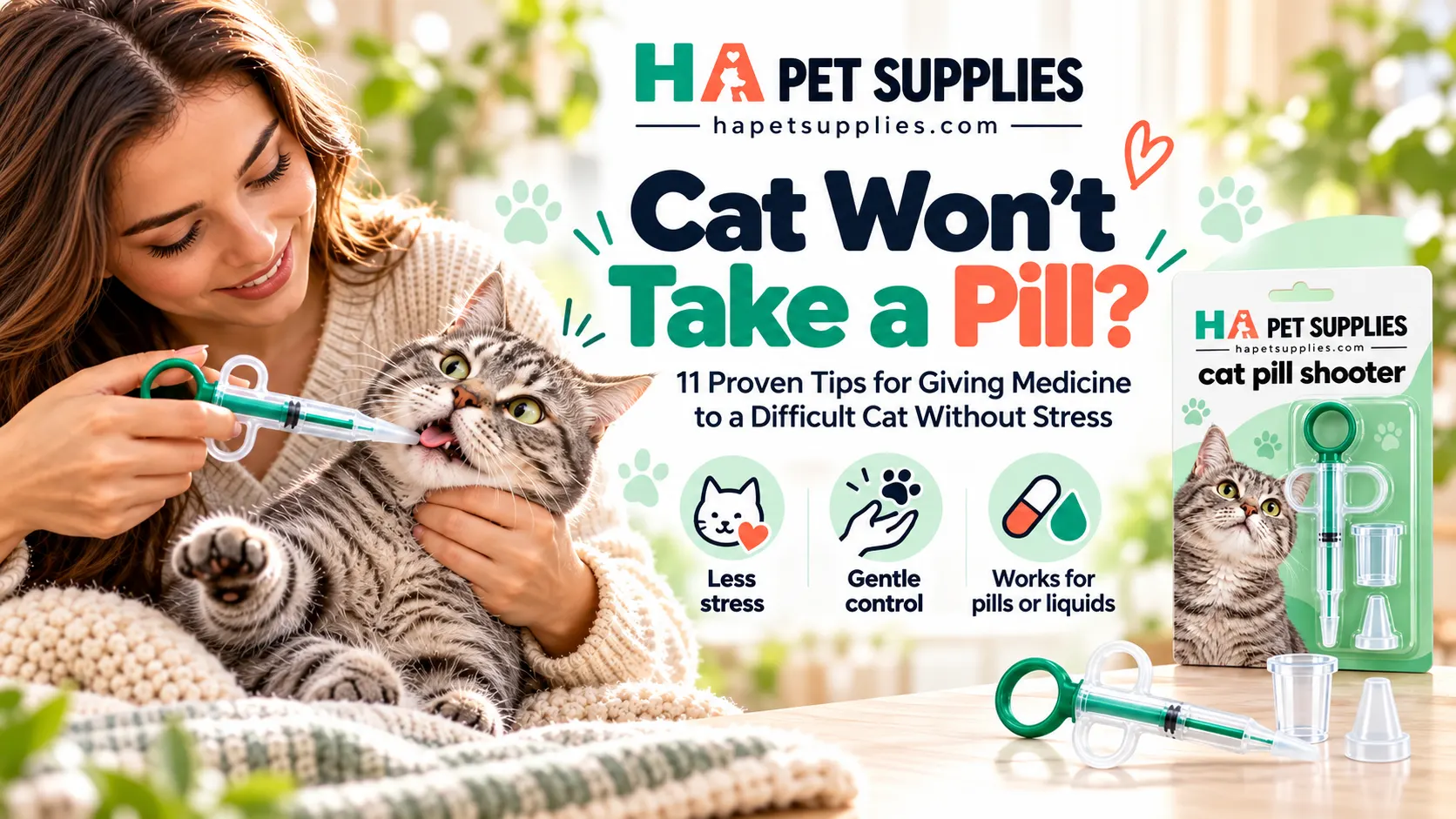
Cat won’t take a pill? You’re holding the prescribed medication, your cat is hiding underneath the furniture, and you’re worried about missing an important dose.
You have already tried putting the tablet into your cat’s favorite food. Your cat ate everything except the medicine. You tried offering the tablet directly, but your cat turned away, struggled or attempted to bite.
Now you are asking yourself several urgent questions. What happens if the medication is missed? Should you try again immediately? Can you crush the tablet? Would a cat pill shooter help? And how can you administer necessary medication without turning every attempt into a stressful experience?
However, when a cat won’t take a pill, the best solution is not necessarily stronger restraint or repeated attempts. The goal is to find a medication-delivery approach that is compatible with the prescription, appropriate for your cat and safe for everyone involved.
In this comprehensive guide, you will discover 11 useful strategies for managing pill refusal, what to do if your cat spits out medication, how to avoid dosing mistakes, and when to contact your veterinarian.
If your cat refuses prescribed medication, begin by checking the prescription instructions. When food administration is permitted, try offering the intact pill in a small amount of suitable wet food or a soft pill treat. If your cat rejects the medicine, avoid forcing repeated attempts.
Ask your veterinarian whether direct administration, a cat pill shooter or an alternative formulation is appropriate. If you cannot confirm whether the dose was swallowed, do not automatically give another tablet. Contact your veterinarian for medication-specific instructions.
PREPARATION
Quiet room, prepare supplies, gentle handling, towel wrap, calm attempts. (Tips 1, 5, 6, 9)
FOOD METHODS
Wet food, pill pockets, no crushing without approval. (Tips 2, 3, 4)
MEDICATION TOOLS
Cat pill shooter, vet demonstration, device compatibility. (Tips 7, 8)
VET ALTERNATIVES
Liquid formulations, compounded meds, consistent routine, records. (Tips 10, 11)
1. Why Does Your Cat Refuse to Take Pills?
Before choosing a different medication method, try to understand why your cat is refusing. Cats do not necessarily reject medication because they are difficult or stubborn. Their behavior may be influenced by taste, fear, previous handling experiences, physical discomfort or the way the medication is being presented.
The VCA Animal Hospitals guide to giving pills to cats explains that many cats reject pills hidden in food and may require another method.
Some cats dislike being restrained
Cats often prefer having control over their movements. Being held tightly, having the head manipulated or having the mouth opened can be stressful. A cat that is comfortable being petted may still resist medication administration.
Previous experiences can create fear
Even if you approach gently, the cat may already associate the situation with something unpleasant. Repeated forceful attempts can strengthen this association. A calmer routine may help, but some cats require a different medication formulation.
Cats may detect medicine in familiar food
Some cats become suspicious of food that has repeatedly contained medication. According to the Merck Veterinary Manual’s guidance on giving medicine to cats, mixing medication into food can sometimes lead to food avoidance.
2. Cat Won’t Take a Pill? 11 Practical Tips for Difficult Cats
The following strategies are based on common veterinary medication guidance. Not every approach is appropriate for every prescription. Always confirm medication compatibility with your veterinarian or pharmacist before changing how the tablet is administered.
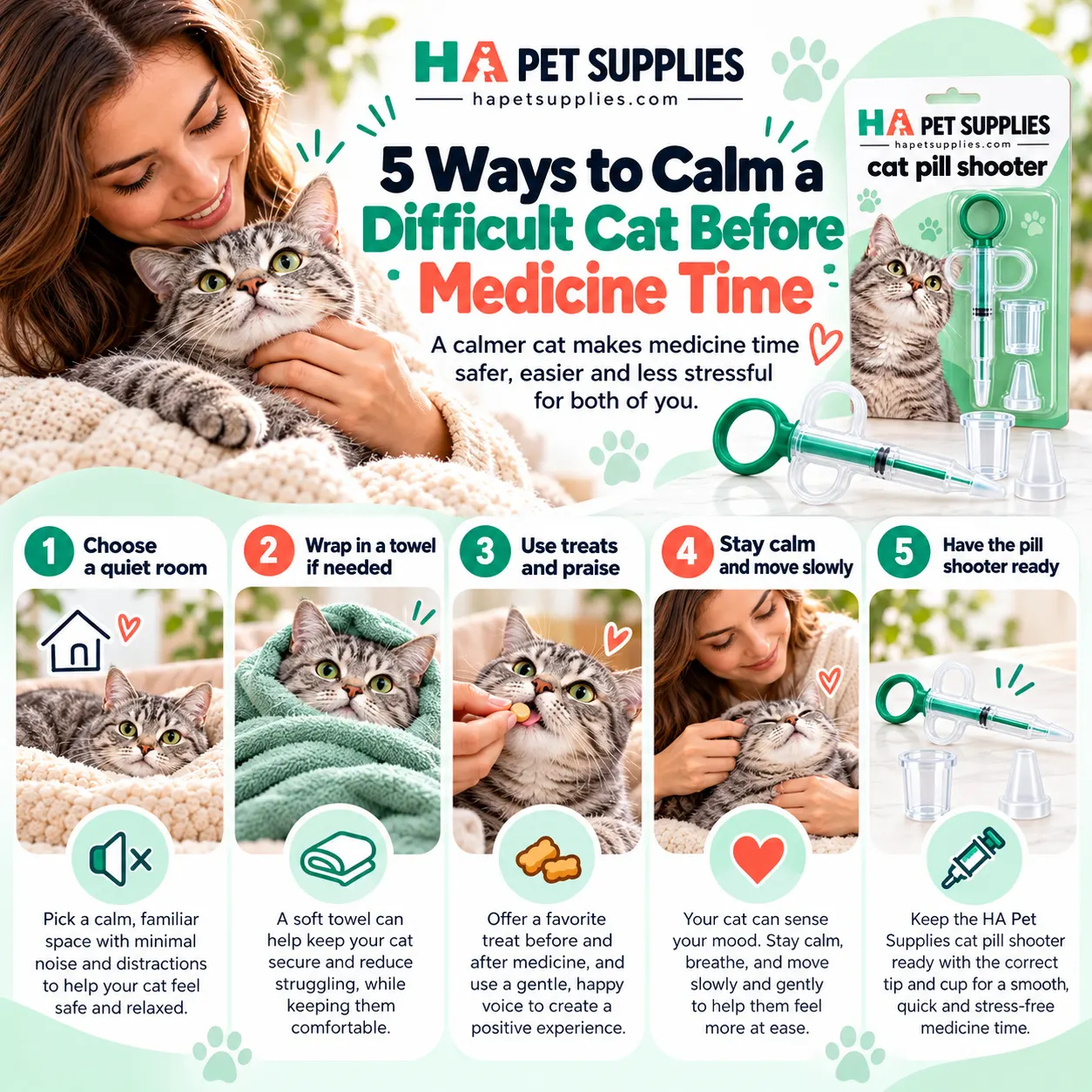
Tip 1: Choose a Quiet, Familiar Room
Choose a room where your cat normally feels safe. Prepare everything before approaching. The Cornell University College of Veterinary Medicine guidance on oral medication advises owners to prepare supplies beforehand and remain calm.
Tip 2: Try a Small Amount of Wet Food When Approved
For medications that can be given with food, disguising the tablet inside a small amount of suitable wet food may be the simplest approach. The VCA instructions for giving pills to cats recommend using a small, appealing food portion when permitted.
Tip 3: Use a Pill Pocket or Soft Medication Treat
Pill pockets are soft treats designed to conceal tablets. The VCA article on practical ways to give pets pills discusses soft treats that can be molded around tablets.
Tip 4: Avoid Crushing or Splitting Pills Without Permission
The FDA’s veterinary medication-error guidance specifically advises owners not to cut, crush or break tablets or capsules unless instructed by a veterinarian.
Tip 5: Prepare Everything Before Approaching Your Cat
Many medication attempts become stressful because the owner has not prepared. Organize everything beforehand. A short preparation checklist may be more useful than buying additional equipment.
Tip 6: Use Gentle Handling and a Towel Wrap When Appropriate
A soft towel may help some cats feel supported and reduce sudden paw movements. The PetMD veterinary guide to giving a cat a pill discusses preparation, gentle handling and alternatives for difficult cats.
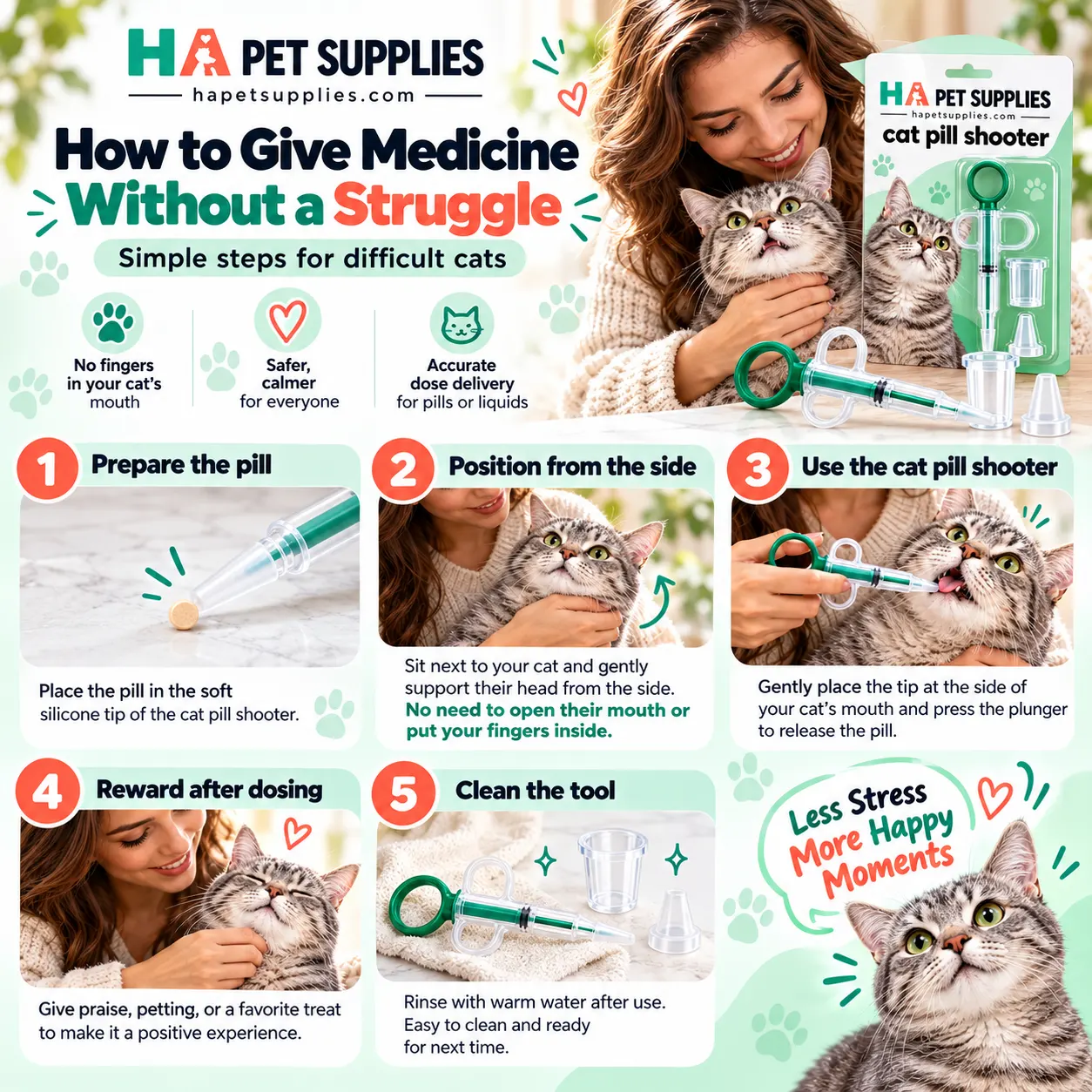
Tip 7: Ask Your Veterinarian About a Cat Pill Shooter
A cat pill shooter may help when food-based methods are unsuccessful or inappropriate. The Merck Veterinary Manual’s medication guide identifies handheld pet pillers as an alternative for placing tablets toward the back of the tongue. For complete device instructions, read our related article on how to use a cat pill shooter safely.
Tip 8: Reward Calm Cooperation
Positive reinforcement can help some cats develop a better association with handling. The goal is to make the overall routine more predictable and less unpleasant.
Tip 9: Try Short, Calm Attempts Instead of Prolonged Struggles
One controlled, veterinarian-approved attempt is preferable to several escalating struggles. If your cat becomes distressed or aggressive, discontinue the attempt.
Tip 10: Ask About Liquid or Alternative Medication Forms
The FDA guide to medications for pets recommends discussing medication administration problems and possible alternatives with your veterinarian. The PetMD guide to giving a cat liquid medicine explains that fluids require careful measurement and administration.
Tip 11: Create a Consistent Medication Routine and Keep a Record
Choose a veterinarian-approved schedule. Keep a medication log. Record the medicine, dose, time and result. This helps prevent accidental double dosing and gives your veterinarian useful information.
3. What to Do When Your Cat Bites or Scratches During Medication
If your cat bites during medication time, the immediate priority is safety. Do not continue pushing the tablet or device into its mouth. Release the cat safely and allow it to move away. If a cat bites you and breaks the skin, wash the wound promptly and seek medical advice.
For a broader overview of safe pill administration, see our companion article on how to give a cat a pill when it refuses medicine or tries to bite.
4. What If Your Cat Spits Out Its Medicine?
Do not immediately give another pill. The FDA medication questions guide explains that the correct response depends on the specific medication. Examine what happened, check the surrounding area, and record the situation.
5. Can a Cat Pill Shooter Help With a Difficult Cat?
A cat pill shooter is often considered when an owner wants to avoid putting fingers directly inside the animal’s mouth. The device holds a solid tablet at its tip. A plunger releases the medication. However, a device cannot make a cat willing to cooperate.
The HA Pet Supplies product range includes a cat pill shooter designed for pet medication delivery.
6. Cat Pill Shooter vs Pill Pockets vs Liquid Medication
| Method | Main Benefit | Main Limitation | When to Consider |
|---|---|---|---|
| Pill hidden in wet food | May avoid direct mouth handling | Cat may reject food or leave the tablet | Medication can be given with food |
| Pill pocket | Convenient concealment | Not every cat accepts it | Food-compatible medicine and treat-motivated cats |
| Hand-pilling | No special device needed | Fingers near teeth and handling difficulty | Cooperative cats with trained caregivers |
| Cat pill shooter | Reduces need for deep finger placement | Requires correct technique and compatibility | Veterinarian-recommended direct pilling |
| Prescribed oral liquid | Avoids a solid tablet | Taste, measurement and aspiration precautions | Appropriate liquid formulation is available |
7. How to Give Medication to a Cat That Refuses to Open Its Mouth
A cat that keeps its mouth tightly closed may be frightened or uncomfortable. Trying to force the jaw open can cause injury. Never pry the mouth open aggressively or force a pill shooter through clenched teeth. Ask your veterinarian about an appropriate liquid, flavored formulation or other prescribed method.
8. Can You Crush Pills or Hide Them in Food?
When a cat refuses a tablet, owners often want to crush it into wet food. That may appear convenient, but it is not always appropriate. The Merck Veterinary Manual notes that mixing medication with food may cause a cat to avoid the food.
9. What Happens if Your Cat Misses a Prescribed Dose?
The FDA guide to pet medication questions explains why correct dosing intervals can be important for treatment effectiveness. Do not double the next dose unless your veterinarian specifically instructs you to do so.
10. Creating a Calmer Daily Medication Routine
Prepare discreetly, choose the same calm environment, use permitted rewards, respect signs of distress, and record medication administration. Watch for appetite changes, unusual salivation, vomiting, lethargy or other potential adverse effects.
11. Common Medication Mistakes Owners Should Avoid
Mistakes include repeating an uncertain dose, crushing medicine without approval, mixing medicine into a large meal, using forceful restraint, using the wrong device, ignoring administration aftercare, and assuming a nose lick proves swallowing. The Cornell oral medication guidance explains why tablets and capsules may need appropriate follow-up fluid.
12. Special Medication Challenges With Kittens and Senior Cats
Kittens have small mouths and may become distressed by unfamiliar handling. Older cats may have arthritis, dental disease, swallowing difficulties or chronic medical conditions. The FDA medication-error prevention guidance recommends reviewing all current drugs, supplements and medical conditions with the veterinarian.
13. How to Choose a Suitable Cat Medication Dispenser
Check the device dimensions. Examine the tablet-holding tip. Consider the plunger mechanism. The HA Pet Supplies Cat Pill Shooter provides an option for owners comparing handheld tablet-delivery tools. For other pet-care equipment, explore the HA Pet Supplies cat supplies collection.
14. When Should You Stop and Contact Your Veterinarian?
Contact the prescribing veterinarian if your cat repeatedly refuses an essential medication, becomes aggressive or extremely frightened, may have swallowed an extra dose, has trouble breathing, vomits repeatedly, develops unusual or severe symptoms, or has difficulty swallowing.
Essential principle: A difficult medication experience should trigger reassessment, not increasingly forceful handling.
15. Frequently Asked Questions: Cat Won’t Take a Pill
16. Final Thoughts: What to Do When Your Cat Won’t Take a Pill
When your cat won’t take a pill, the experience can be frustrating and worrying. However, the best response is not stronger restraint or repeated force. It is to understand the prescription, identify why your cat is resisting and choose an appropriate method with veterinary guidance.
If your veterinarian recommends a medication-delivery tool, the HA Pet Supplies Cat Pill Shooter is an option to examine for compatible tablets. You can explore additional educational guidance through the HA Pet Supplies blog and compare relevant products in the HA Pet Supplies online shop.
For product-related questions, contact HA Pet Supplies. For veterinary supply businesses or wholesale inquiries, you can request a quote. At HA Pet Supplies, our aim is to help owners choose practical pet-care equipment while making informed decisions about animal wellbeing.
If your cat refuses medication, the goal is not to win a struggle. It is to find a safer, reliable way to deliver the treatment your veterinarian has prescribed.