
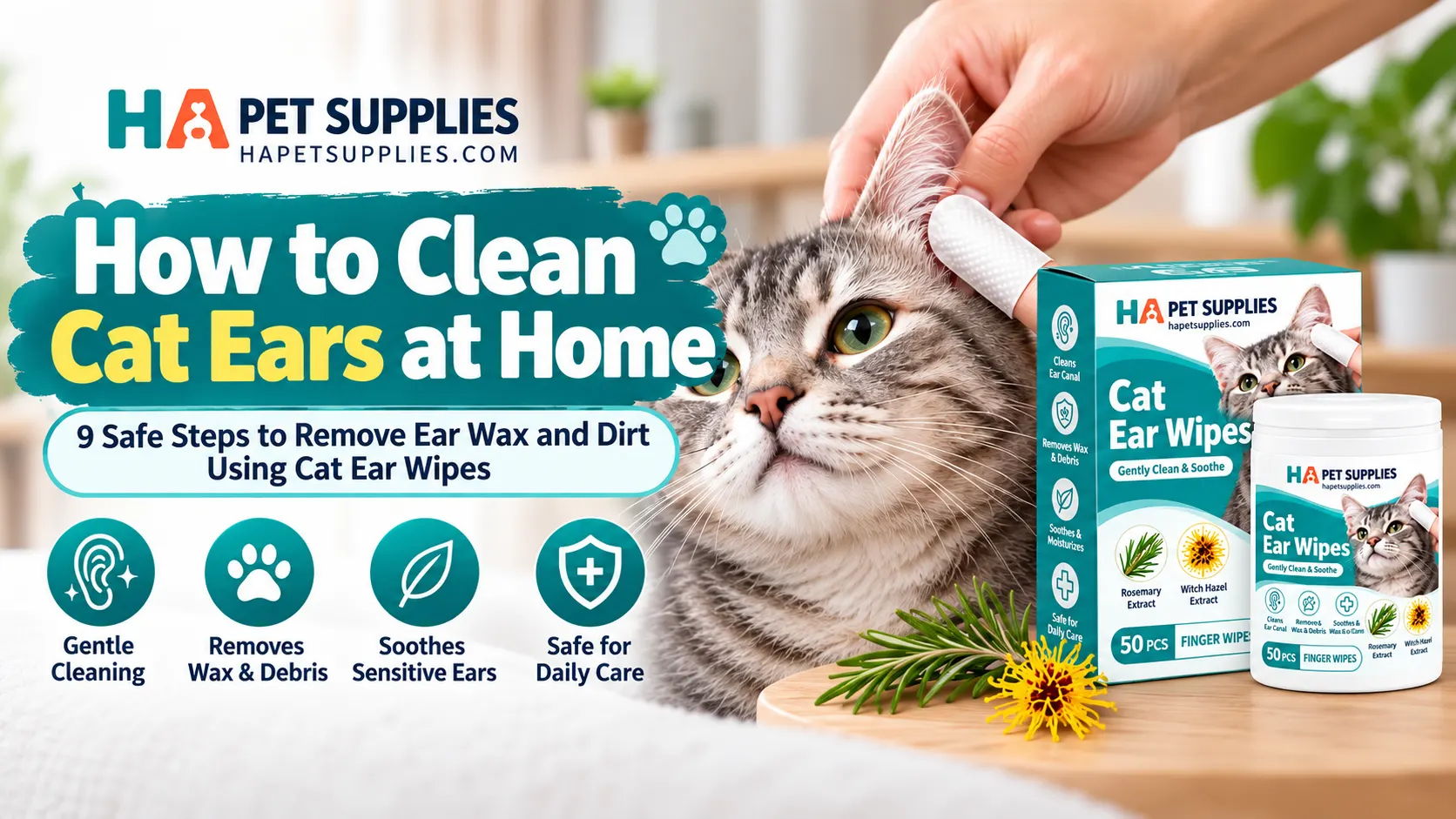
Safe at-home cat ear cleaning using HA Pet Supplies finger wipes
How to clean cat ears at home is one of the most important grooming questions for owners who notice visible ear wax, dirt, or unusual debris around their cat’s ears.
Perhaps you were petting your tabby cat when you noticed brown wax inside an ear. Maybe your kitten has been scratching more than usual, or you have recently adopted a cat and are unsure whether its ears need cleaning.
Your first thought might be to grab a cotton swab, a tissue, or a bottle of ear cleaner. But should you?
Cats have delicate ears, and using the wrong cleaning method can push dirt deeper into the canal, irritate sensitive tissue, or aggravate an existing medical problem.
The good news is that small amounts of loose wax and ordinary surface dirt can sometimes be removed safely at home using suitable cat ear wipes.
However, cleaning is not always necessary. Most healthy cats maintain relatively clean ears without regular intervention. In fact, excessive cleaning can cause irritation.
According to VCA Animal Hospitals’ veterinary instructions for cleaning cat ears, many cats never need routine ear cleaning, and owners should consult a veterinarian when the ears are red, inflamed, or painful.
This guide will help you understand when cleaning is appropriate, how to use finger-style cat ear wipes safely, and when a veterinarian should examine your cat instead.
You will learn nine practical cleaning steps, the differences between normal and abnormal ear wax, common grooming mistakes, and ways to make the experience less stressful.
📋 What You’ll Learn
- Quick Answer: Safe Cleaning
- 1. Why Cat Ear Hygiene Matters
- 2. Does Your Cat Need Cleaning?
- 3. What You Need Before Cleaning
- 4. 9 Safe Steps Using Cat Ear Wipes
- 5. 3D Infographic: Four Actions
- 6. Wipes vs Cotton vs Liquid
- 7. How Often to Clean
- 8. Ear Wax Colors: Normal or Warning?
- 9. When Wipes Are Not Enough
- 10. Common Mistakes to Avoid
- 11. Make Cleaning Less Stressful
- 12. Cleaning Kitten Ears
- 13. Choosing Safe Cat Ear Wipes
- 14. Simple Inspection Routine
- 15. FAQ
- 16. Final Thoughts
⚡ Quick Answer: How to Clean Cat Ears at Home Safely
If your cat has healthy-looking, comfortable ears with a small amount of ordinary loose dirt or wax on the visible outer ear, follow these steps:
- Examine both ears for redness, swelling, discharge, odor, or pain.
- Choose a quiet location and prepare appropriate cleaning supplies.
- Wash your hands and prepare one fresh cat-safe finger wipe.
- Help your cat feel secure without forcing restraint.
- Gently lift the ear flap and locate visible surface debris.
- Wipe only the accessible outer-ear surfaces using light pressure.
- Use a fresh wipe if the second ear also needs cleaning.
- Allow your cat to relax and check for discomfort.
- Reward your cat, dispose of the wipes, and monitor for changes.
Never push a finger wipe, cotton swab, or cleaning tool deep into your cat’s ear canal.
If your cat has persistent scratching, significant dark discharge, a strong smell, painful ears, or repeated head shaking, avoid routine cleaning and arrange a veterinary examination.
The ASPCA cat grooming guide recommends checking the ears for redness, swelling, abnormal discharge, and unusual wax.
Explore HA Pet Supplies Cat Ear Wipes →1. Why Is Cat Ear Hygiene Important?
Cats are naturally meticulous groomers. They regularly clean their fur, paws, faces, and many other areas of their bodies using their tongues and paws.
However, the inside of the ear flap is not as easy for a cat to groom independently. That does not mean every cat needs routine ear cleaning.
Healthy feline ears have natural protective mechanisms, including small amounts of ear wax. Wax helps trap environmental particles and contributes to the normal condition of the ear canal.
The purpose of at-home ear hygiene is not to remove every trace of wax. Instead, it is to recognize when dirt is ordinary, when cleaning may be helpful, and when symptoms indicate an underlying problem.
Understanding your cat’s ear anatomy
A cat’s ear has several important structures. The visible triangular ear flap is called the pinna. The pinna helps collect sound and direct it toward the ear canal.
The canal extends inward toward the eardrum, with deeper structures responsible for hearing and balance. Although owners can see the inner surface of the ear flap, they cannot safely inspect every part of the canal.
This distinction matters. A finger wipe can help clean visible external surfaces, but it should not be used to explore deep inside the ear.
According to the Cornell Feline Health Center’s overview of ear disorders, problems affecting the outer ear can sometimes progress and involve structures deeper in the ear.
That is why persistent symptoms should never be treated as simple dirt without veterinary advice.
Why do cat ears collect wax?
Ear wax is produced naturally. Its appearance and quantity may vary between individual cats. A small amount of ordinary wax does not necessarily indicate infection.
However, heavy wax production, dark debris, inflammation, or unpleasant odor may indicate that something is wrong. The safest habit is regular observation rather than aggressive cleaning.
Does every cat need its ears cleaned?
No. Many healthy cats never need routine ear cleaning. For these cats, occasional inspection may be enough.
Cleaning should be based on actual need, not the assumption that every cat needs weekly or daily wiping.
The VCA guide to feline ear cleaning explains that excessive cleaning may irritate the ear canal.
If your cat’s ears are clean, comfortable, and free of unusual discharge, you may not need to use a cleaning product at all.
2. How to Tell Whether Your Cat’s Ears Need Cleaning
Before learning how to clean cat ears at home, you should understand what normal ears look like. This simple inspection can help prevent unnecessary cleaning and identify problems that require professional attention.
What do healthy cat ears look like?
Healthy outer ears generally have clean-looking, comfortable skin. The visible inner ear flap is often light pink, although pigmentation varies between cats.
There should be no significant swelling, bleeding, unusual discharge, or strong unpleasant odor. Your cat should normally tolerate gentle outer-ear touching without appearing painful.
Is a small amount of brown wax normal?
Sometimes. A little visible wax may be ordinary. However, brown wax is not automatically harmless, and its color alone cannot confirm whether an ear is healthy.
Pay attention to the amount of material and whether other symptoms are present. A comfortable cat with a small amount of loose surface dirt is very different from a cat with heavy, dark discharge and persistent scratching.
What if your cat has black ear wax?
Dark or black debris deserves particular attention when it is unusually heavy or associated with itching, head shaking, redness, or odor.
Ear mites are one possible explanation, but they are not the only cause. The Cornell University guide to feline ear mites explains that ear mites can cause dark debris and significant irritation.
However, black discharge is not enough to diagnose mites. Other conditions can look similar.
Our detailed article on black wax in cat ears and the differences between ear mites and ordinary wax explains these warning signs in greater detail.
Understand Black Ear Wax Warning Signs →3. What You Need Before Cleaning Cat Ears at Home
Good preparation reduces stress and makes ear handling easier. Cats may be particularly sensitive to unfamiliar grooming procedures.
Trying to collect supplies while holding an anxious cat can make the session more difficult. Prepare everything before beginning.
Cat ear finger wipes
Choose wipes specifically confirmed suitable for feline ear hygiene. Finger-style cat ear wipes fit over the fingertip and allow controlled cleaning of visible outer-ear surfaces.
HA Pet Supplies Cat Ear Wipes are presented in a disposable finger-cover format designed for routine external grooming.
Before use, confirm the product’s ingredient list and age suitability from its actual packaging. Do not assume that a product is suitable for every cat merely because it is described as gentle or natural.
A clean, soft towel
A soft towel may help create a secure grooming surface. For some cats, a loose, comfortable towel wrap can reduce sudden movement.
However, wrapping should never become forceful restraint. If the cat is struggling, crying, or becoming distressed, stop.
The ASPCA’s grooming recommendations advise seeking professional help when grooming resistance creates a risk of injury.
Small treats
Prepare a reward your cat enjoys. This may be a small treat, brief play, or gentle affection. Rewards can help make ear handling a more positive experience.
Good lighting
Choose a room where the ears can be seen clearly. Adequate lighting helps you identify the visible ear flap and avoid unnecessary probing.
A flashlight may assist external inspection, but never insert an object into the ear.
A waste bin
Keep a waste bin nearby for used wipes. Disposable finger wipes should not be reused or flushed down a toilet. Use fresh material for the other ear if cleaning is necessary.
A veterinary-approved liquid cleaner when prescribed
Finger wipes and liquid ear-cleaning solutions are not interchangeable. For routine surface dirt, a wipe may be sufficient.
For cleaning debris within the ear canal, your veterinarian may recommend a specific liquid solution.
The PetMD veterinary guide to cleaning cat ears explains that the choice of cleaner should be based on veterinary guidance.
4. How to Clean Cat Ears at Home: 9 Safe Steps Using Cat Ear Wipes
The following nine-step technique is intended for cleaning ordinary loose wax or visible dirt from the accessible outer ear of a cat whose ears appear healthy.
It is not a treatment for ear infections, ear mites, painful inflammation, or deep wax buildup.
-
Examine Both Ears Before Cleaning
Begin by observing your cat’s behavior. Is your cat scratching its ears repeatedly? Does it shake its head often? Does it react when you touch its ears? Have you noticed a strong smell or unusually heavy wax?
These details matter because not every dirty-looking ear should be cleaned at home. Next, gently inspect both outer ear flaps. Look for obvious redness, swelling, sores, bleeding, or abnormal discharge.
If your cat has these symptoms, avoid cleaning and ask a veterinarian for advice.
The PetMD guide to feline ear infections describes scratching, head shaking, discharge, redness, pain, and odor as important symptoms.
-
Choose a Quiet and Comfortable Location
Select a room where your cat normally feels relaxed. Avoid crowded spaces, loud music, sudden movement, or the presence of unfamiliar animals.
Place a soft towel on a stable surface. Some cats are comfortable sitting on an owner’s lap. Others prefer remaining on the floor. Allow your cat to choose a natural position whenever practical.
Do not begin cleaning while your cat is frightened or trying to escape. If your cat is nervous, spend a few moments offering gentle affection or treats.
-
Wash Your Hands and Prepare a Fresh Cat Ear Wipe
Wash and dry your hands before handling the cleaning product. Open the wipes container and remove one fresh finger wipe.
Make sure the wipe is clean, appropriately moistened according to its design, and in good condition. Do not use wipes that have an unusual smell, are visibly contaminated, or have passed their expiry date.
Place the wipe over a clean fingertip. Check that it fits securely and will not slip off during cleaning.
If you are using HA Pet Supplies Cat Ear Wipes, follow the directions on the actual package and review any ingredient warnings.
-
Help Your Cat Feel Secure Without Forcing Restraint
Approach your cat calmly. Support the cat’s body and head without applying excessive pressure. Avoid holding the neck tightly or forcing the head into an uncomfortable position.
If your cat is relaxed, gently lift the outer ear flap. If the cat pulls away, pause. Try rewarding a brief moment of calm ear touching before continuing.
Do not continue if the cat growls, cries, bites, scratches aggressively, or shows signs of pain.
-
Identify the Visible Areas That Can Be Cleaned
Once your cat is comfortable, gently lift the ear flap. Look at the visible inner surface. You may notice small amounts of ordinary dirt near the folds or around the outer opening.
These accessible external surfaces are where finger wipes can be useful. Do not mistake the visible opening of the ear canal for an invitation to insert your finger.
The deeper ear canal contains sensitive tissue and structures that cannot be evaluated safely at home. Never attempt to reach hidden wax.
-
Gently Remove Loose Wax and Surface Dirt
Using the finger covered by the wipe, make a light, careful movement across the visible dirty area. Lift away ordinary loose dirt or wax.
Do not scrub vigorously. Do not scrape at hard deposits. Do not use your fingernail under the wipe to remove stubborn material.
If the debris does not come away easily, do not increase pressure. Repeated rubbing can irritate delicate feline skin.
The ASPCA’s cat ear-care guidance similarly advises lifting away visible debris rather than rubbing it into the ear.
-
Use a Fresh Wipe for the Other Ear
When you finish cleaning the first ear, remove the used wipe. Place it in the waste bin. Inspect the other ear separately.
If the second ear is already clean, it may not need wiping. If it has a little ordinary surface dirt, use a fresh wipe.
Using separate wipes helps reduce the transfer of visible residue between the ears. Avoid assuming that both ears need equal cleaning.
-
Allow Your Cat to Relax and Observe the Ears
After wiping, let go of the ear flap gently. Allow your cat to move into a comfortable posture. Avoid immediately repeating the process because you can still see a little natural wax.
Watch for signs of discomfort. If your cat suddenly starts scratching more intensely, repeatedly shaking its head, or reacting painfully, stop using the product.
-
Reward Your Cat and Finish Positively
End the session with a reward your cat enjoys. This may be a favorite treat, a few minutes of play, or quiet affection.
Dispose of the used materials and wash your hands. Close the wipes container securely to protect the remaining product.
If you noticed unusual wax or recurring dirt, consider making a brief note for future reference.
The final step is knowing when not to clean again. Many healthy cats need only occasional inspection rather than a scheduled cleaning routine.
View HA Cat Ear Finger Wipes →5. 3D Infographic: The Four-Part Safe Cat Ear Cleaning System
Infographic title: Clean Your Cat’s Ears Safely in Four Simple Actions
A premium 3D-style infographic using a soft white background, teal accents, realistic gray tabby cat illustrations, and four floating cards with rounded corners and subtle shadows.
Card 1 — Inspect First
Visual: A gray tabby cat sitting calmly while its owner gently lifts the outer ear flap. A magnifying-glass icon highlights the visible surface.
Message: Look for redness, pain, swelling, unusual wax, and discharge before cleaning.
Step 1Card 2 — Prepare a Fresh Wipe
Visual: A close-up of a textured white finger-cover wipe beside the HA Pet Supplies jar.
Message: Wash your hands and use a fresh cat-safe finger wipe.
Step 2Card 3 — Clean Visible Areas Only
Visual: A hand carefully wiping the inner ear flap, with a small boundary indicator showing that the wipe must not enter deeply into the canal.
Message: Remove accessible surface dirt with gentle movements.
Step 3Card 4 — Reward and Recheck
Visual: A relaxed tabby cat receiving a treat, with a teal checkmark and small heart icon.
Message: Finish positively, observe comfort, and clean again only when needed.
Step 4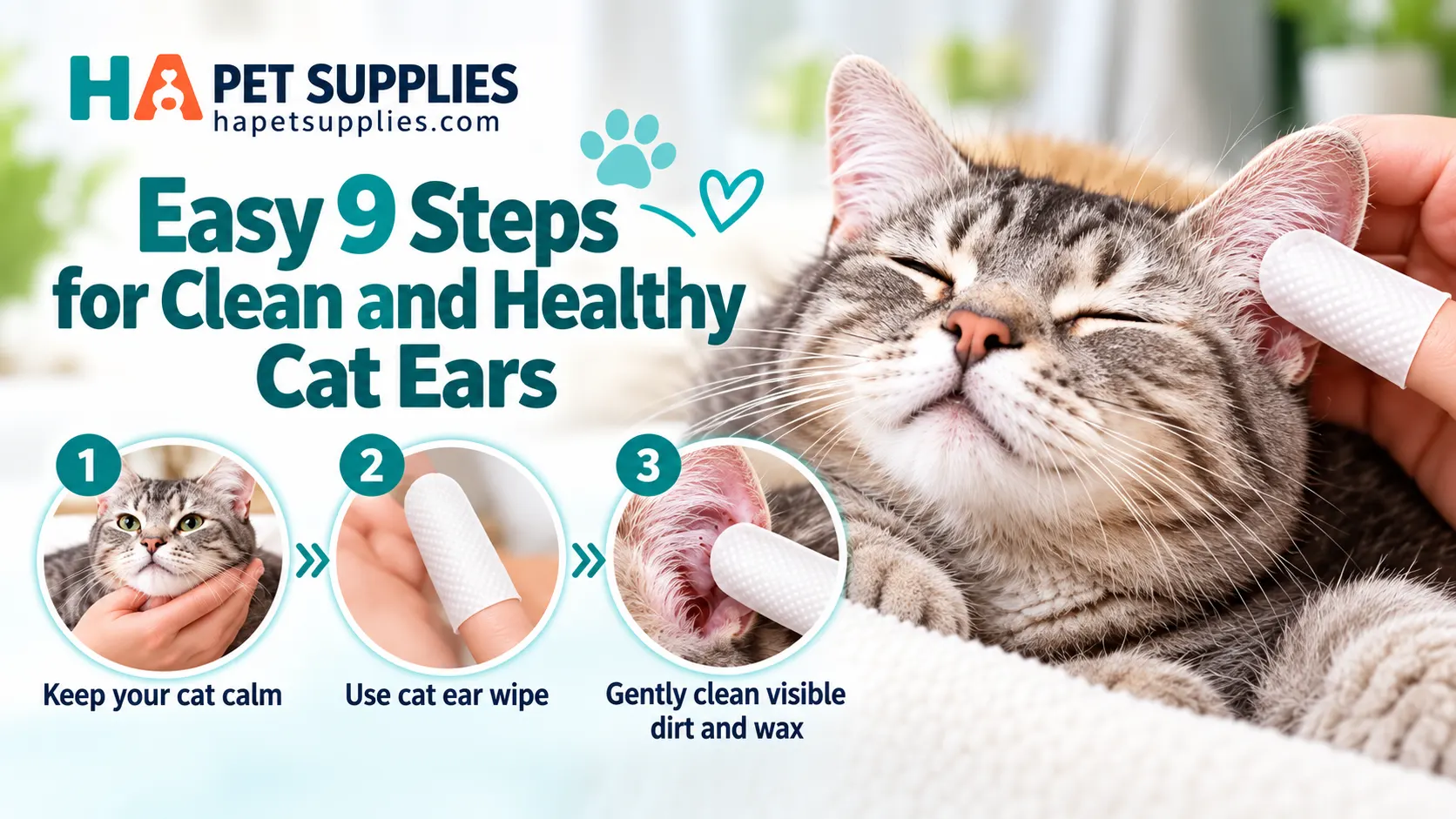
6. Cat Ear Wipes vs Cotton Pads vs Liquid Ear Cleaner
Many owners become confused when choosing between finger wipes, cotton pads, and liquid cleaners. These products can all be associated with ear care, but they do not serve identical purposes.
When cat ear wipes may be useful
Finger wipes can be convenient for removing ordinary loose dirt from accessible outer-ear surfaces. They allow owners to control the cleaning movement directly.
Because the wipe fits over the fingertip, there is no need to fold a large cloth during simple external wiping. However, the wipe should not be pushed into the canal.
When cotton pads or gauze may be appropriate
Cotton balls and gauze can also be used for external cleaning when combined with a veterinarian-approved cleaning solution.
These materials are commonly included in veterinary ear-cleaning instructions. The VCA feline ear-cleaning guide explains their role in removing loosened debris.
When a liquid cleaner may be needed
Some cats develop deeper wax buildup or have a medical condition that requires canal cleaning. In such situations, a veterinarian may recommend a specific liquid cleaner and demonstrate the correct procedure.
This is different from simply wiping the outer ear flap. Do not pour an arbitrary cleaning solution into a painful ear, especially when the condition of the eardrum is unknown.
| Cleaning situation | Finger wipes | Cotton or gauze | Liquid ear cleaner |
|---|---|---|---|
| Minor visible outer-ear dirt | Often convenient | May be suitable | Often unnecessary |
| Small amount of accessible wax | May be suitable | May be suitable | Depends on need |
| Wax deeper in canal | Not suitable for deep cleaning | Not for probing | May be vet-recommended |
| Sensitive handling | Direct fingertip control | Depends on technique | May require more handling |
| Routine surface grooming | Practical option | Practical option | Not always needed |
| Painful or inflamed ear | Avoid before assessment | Avoid before assessment | Only if veterinarian directs |
| Suspected ear mites | Not a treatment | Not a treatment | Specific prescribed treatment required |
For owners comparing different ear-care products, our Best Cat Ear Wipes buying guide explains finger-wipe materials, ingredient considerations, kitten suitability, and product-selection mistakes.
7. How Often Should You Clean Your Cat’s Ears?
The answer depends on your cat. There is no universal schedule suitable for every feline. In fact, most healthy cats do not need frequent ear cleaning.
The VCA Animal Hospitals recommendations explain that over-cleaning can irritate the canal.
Healthy indoor cats
Healthy indoor cats may have naturally clean ears with little visible wax. A regular visual inspection is often enough. If there is no unusual odor, discharge, redness, or discomfort, cleaning may not be necessary.
Outdoor cats
Outdoor cats may be exposed to additional debris and parasites. Regular inspection can help owners identify changes. However, outdoor access alone does not mean cleaning should occur daily.
Long-haired cats
Some long-haired breeds have hair around the ears. This may make grooming and inspection more challenging. But hair length does not automatically establish the need for frequent ear cleaning.
Senior cats
Older cats may have mobility limitations or health conditions that affect grooming. If a senior cat becomes less tolerant of ear handling or develops unusual wax buildup, consult your veterinarian.
Kittens
Kittens may benefit from gentle ear-handling practice. But they should not receive cleaning products unnecessarily. Confirm that any product is appropriate for their age and formulation.
Cats with recurring ear infections
Cats with diagnosed ear disease may need a specific cleaning schedule as part of treatment. Follow veterinary instructions rather than substituting ordinary wipes.
8. Cat Ear Wax Colors: Normal Dirt or a Warning Sign?
Many people search for how to remove cat ear wax because they notice material that seems unusually dark or thick. However, wax color alone is not a reliable diagnostic tool.
Different infections, parasites, and inflammatory conditions can produce similar appearances.
Light yellow or light brown wax
A small amount may be normal. If the ear looks comfortable and there are no other symptoms, aggressive cleaning may not be necessary.
Dark brown wax
Some dark wax may represent accumulated material. However, excessive dark wax, especially when associated with itching, redness, or odor, warrants veterinary assessment.
Black crumbly debris
Black, coffee-ground-like debris can appear with ear mites. But it is not specific to mites.
The VCA explanation of ear mites in cats and dogs explains that diagnosis often involves examining ear discharge or visualizing the mites.
Yellow or unusual discharge
Abnormal yellow material may reflect inflammation or infection. Contact a veterinarian rather than attempting to remove it repeatedly.
Bloody discharge
Blood can indicate injury, severe scratching, or another medical problem. A painful or bleeding ear requires prompt attention.
| Observation | Possible explanation | Recommended action |
|---|---|---|
| Minimal light-colored wax | May be normal | Monitor |
| Small amount of loose external dirt | Ordinary debris | Gentle external wiping if needed |
| Heavy dark brown debris | Possible ear disorder | Veterinary assessment |
| Black crumbly material | Mites or another condition | Veterinary diagnosis |
| Yellow abnormal discharge | Possible inflammation or infection | Contact veterinarian |
| Bloody discharge | Injury or significant disease | Prompt veterinary care |
| Strong smell with discharge | Possible infection or other disease | Veterinary examination |
Never attempt to diagnose mites or infection based only on the color of wax.
9. When Cat Ear Wipes Are Not Enough
Cat ear wipes are grooming products. They are not substitutes for diagnosing or treating ear disorders. A cat with an actual ear problem may need medication, professional cleaning, or another veterinary procedure.
Signs that require veterinary advice
Watch for persistent scratching, repeated head shaking, unusual odor, redness, swelling, discharge, or pain when the ear is touched.
The Cornell Feline Health Center’s ear-disorder guidance recommends seeking veterinary care rather than probing a cat’s ear when persistent symptoms are present.
Signs that require urgent veterinary care
Sudden loss of balance, a pronounced head tilt, unusual eye movements, collapse, or severe distress may indicate a more serious problem. Seek urgent veterinary evaluation.
The PetMD veterinary guide to cat ear infections notes that severe ear disease can sometimes involve neurological or balance-related symptoms.
What if the ear flap becomes swollen?
Persistent scratching can sometimes lead to an aural hematoma. This occurs when blood collects within the ear flap. The flap may appear puffy, thickened, or balloon-like.
The Cornell University’s guide to aural hematomas explains why these swellings need professional treatment. Do not attempt to drain one at home.
Learn When Black Ear Wax Needs a Vet →10. Common Cat Ear Cleaning Mistakes to Avoid
Even caring owners can make mistakes when trying to improve feline hygiene. Understanding these errors can prevent unnecessary irritation.
Mistake 1: Using cotton swabs inside the ear
Cotton-tipped applicators can push material deeper into the canal and cause injury. Do not probe the ear canal with them.
Mistake 2: Cleaning a painful ear
Pain suggests that the ear may be inflamed or otherwise abnormal. Stop the process and seek veterinary advice.
Mistake 3: Using hydrogen peroxide
Hydrogen peroxide can irritate sensitive ear tissue. Do not use it as a general home ear cleaner.
Mistake 4: Applying rubbing alcohol
Alcohol-based household solutions are not appropriate substitutes for veterinary ear cleaners. They may cause discomfort or irritation.
Mistake 5: Using homemade essential-oil mixtures
Cats can be sensitive to certain essential oils and other substances. Do not apply homemade mixtures to their ears.
Mistake 6: Scrubbing until the ear looks completely wax-free
Natural wax is not automatically harmful. Aggressive removal can irritate the skin.
Mistake 7: Cleaning too frequently
Over-cleaning can disrupt the normal ear environment and cause irritation.
Mistake 8: Treating dark discharge as ordinary dirt
Dark debris accompanied by scratching, odor, or inflammation may indicate disease.
Mistake 9: Using dog-only products without confirming cat suitability
A product intended for dogs is not automatically safe for cats. Check the species-specific labeling and full ingredient information.
Mistake 10: Forcing a frightened cat through the session
A struggling cat can injure itself or the person handling it. Stop and seek professional assistance when necessary.
The PetMD guide to common cat ear problems discusses why different ear conditions require different approaches rather than repeated home cleaning.
11. How to Make Cat Ear Cleaning Less Stressful
Some cats tolerate grooming well. Others become anxious as soon as someone approaches their ears. This does not necessarily mean the cat is difficult or uncooperative.
Cats may react because of unfamiliar handling, previous unpleasant experiences, or actual ear discomfort.
Start with gentle handling
Before using a wipe, practice touching your cat’s head and outer ear flap briefly. Reward calm behavior. Keep the sessions short.
Use familiar surroundings
Choose a room where your cat feels secure. Avoid sudden noises and unnecessary restraint.
Introduce the product gradually
Allow your cat to inspect the closed container. Do not surprise your cat by immediately placing a wipe against its ear.
Reward small achievements
Even allowing a few seconds of gentle ear touching can be progress. Do not insist on completing the entire cleaning routine in one session.
Stop when your cat is distressed
If the cat is biting, scratching, hissing, or attempting to escape, stop. Seek professional assistance if cleaning is necessary but cannot be done safely.
The ASPCA cat grooming recommendations emphasize avoiding grooming situations that create a risk of injury.
12. Can You Clean Kitten Ears at Home?
Kittens may benefit from early positive handling. However, young kittens have delicate skin and can be especially vulnerable when unsuitable products are used.
Before cleaning, inspect the ears. A small amount of normal wax may not require intervention. If your kitten has dark debris, persistent scratching, redness, or discomfort, veterinary assessment is important.
Ear mites are a common consideration in kittens, but diagnosis is necessary. The Cornell Feline Health Center’s ear mite information explains how these parasites can cause significant irritation.
Are finger wipes suitable for kittens?
Only use a product when its actual formulation and labeling confirm suitability for the kitten’s age. Do not assume that wipes suitable for adult cats are automatically appropriate for every kitten. If unsure, ask your veterinarian.
How can kittens become comfortable with ear handling?
Start with short sessions. Gently touch the head, offer a reward, and stop before the kitten becomes distressed. Gradually introduce brief ear inspections.
13. Choosing Safe Cat Ear Wipes for Home Grooming
Once you understand how to clean cat ears at home, the next step is selecting a suitable product. Not every wipe marketed for pets is appropriate for use near feline ears.
Look for cat-specific instructions
Choose a product intended for feline ear hygiene. Avoid using ordinary household wipes or human cosmetic wipes.
Review the ingredient list
Ingredients matter. Natural plant extracts are not automatically safe for cats. Check whether the formulation is suitable for the intended application.
Examine the wipe material
The material should be appropriate for gentle surface contact. A textured wipe may lift ordinary dirt, but it should not encourage hard scrubbing.
Consider finger-style convenience
Finger wipes fit over the fingertip and can make visible outer-ear cleaning easier to control. However, the design is not intended for deep canal cleaning.
Avoid unsupported medical promises
Products advertised as antibacterial, anti-mite, or infection-preventing should have appropriate evidence supporting those claims. Ordinary grooming wipes should not be treated as medications.
Consider packaging and storage
A lidded container can help organize supplies. Keep it closed and follow the manufacturer’s storage and expiry instructions.
HA Pet Supplies Cat Ear Wipes
HA Pet Supplies offers disposable finger-style Cat Ear Wipes presented in a 50-piece container. The finger-cover design is intended to make ordinary external ear hygiene more convenient.
Before use, review the complete product label and ensure the formulation is suitable for your cat.
For additional purchasing guidance, read our Best Cat Ear Wipes guide with nine essential safety tips.
Shop Cat Ear Wipes Online →14. Creating a Simple Cat Ear Inspection Routine
A practical routine does not need to involve frequent cleaning. Instead, incorporate ear inspection into normal grooming.
For example, when brushing your cat, briefly look at the visible ear flaps. Check whether the skin appears comfortable. Notice whether there is unusual wax, redness, or discharge.
Pay attention to persistent scratching or repeated head shaking. If everything looks normal, leave the ears alone.
If you notice a small amount of ordinary external dirt, gentle cleaning may be appropriate. If anything looks abnormal, ask a veterinarian before using a grooming product.
Why inspection is more important than excessive cleaning
Inspection helps owners notice changes. Excessive cleaning may irritate healthy ears. The ideal routine balances hygiene with preserving the ear’s normal protective environment.
Keep grooming supplies organized
Store appropriate cat-specific grooming products in a convenient location. For other feline care essentials, explore the HA Pet Supplies cat supplies collection.
If you are building a complete home grooming routine, the HA Pet Supplies shop can help you explore additional accessories.
15. Frequently Asked Questions About How to Clean Cat Ears at Home
Yes, gentle cleaning of ordinary visible outer-ear dirt may be appropriate when your cat’s ears are healthy and comfortable. However, most healthy cats do not need frequent cleaning.
For small amounts of loose, accessible wax, a suitable cat-safe wipe may be used gently on visible outer-ear surfaces. Do not attempt to remove deeply impacted wax.
For routine finger-wipe grooming, stay on visible external surfaces. Do not push the wipe deep into the ear canal.
There is no universal schedule. Many cats need only regular inspection, not routine cleaning. Follow your veterinarian’s recommendations if your cat has recurring problems.
Small amounts of ordinary brown wax can occur. However, excessive or unusual material, especially with itching, pain, or odor, should be assessed.
No. Ear mites are one possible cause of dark debris, but other ear disorders may produce a similar appearance. Veterinary diagnosis is necessary.
Ordinary grooming wipes do not reliably treat ear mite infestations. A veterinarian can recommend appropriate medication.
No. Ordinary cat ear wipes are grooming products, not substitutes for medical treatment.
Human baby wipes may contain ingredients inappropriate for cats. Choose products confirmed suitable for feline ear care.
Do not use hydrogen peroxide as a general home ear-cleaning solution. It can irritate sensitive tissue.
Do not insert cotton-tipped swabs into the ear canal. They can push debris deeper and cause injury.
Not automatically. A weekly inspection may be useful, but cleaning should occur only when appropriate.
Only when the product is confirmed suitable for their age and health. Seek veterinary advice if uncertain.
Cats may dislike unfamiliar handling or may be experiencing ear discomfort. Use gradual positive training and stop when distress occurs.
Stop using the product if irritation develops. Persistent scratching or discomfort requires veterinary assessment.
An unusual ear odor may indicate an underlying ear condition. Do not rely on wiping to remove the smell. Arrange veterinary evaluation.
No. Inspect each ear separately. If an ear is clean and healthy, it may not need wiping.
No. Disposable wipes should be discarded after use.
Avoid cleaning and seek prompt veterinary advice.
Only if the manufacturer confirms the product is suitable for cats. A dog-specific formulation is not automatically safe for feline use.
Neither is universally better. Finger wipes may suit simple external cleaning, while liquid cleaners may be needed for veterinarian-directed canal cleaning.
Rapidly recurring or excessive wax may indicate an underlying condition. Seek veterinary assessment rather than increasing cleaning frequency.
No. Ear infections have multiple possible causes. Appropriate grooming may support hygiene, but it cannot replace diagnosis and treatment.
Seek veterinary attention for persistent scratching, repeated head shaking, pain, swelling, strong odor, or abnormal discharge. Sudden balance problems or marked head tilting warrant urgent assessment.
One of the most serious mistakes is treating an inflamed or painful ear as though it simply needs more cleaning. Always inspect first and stop when warning signs appear.
16. Final Thoughts: Clean Cat Ears Safely, Gently, and Only When Needed
Learning how to clean cat ears at home is valuable because it helps owners distinguish ordinary grooming from situations that require veterinary attention.
The goal is not to keep the ears perfectly wax-free. A little natural ear wax is normal, and many healthy cats do not need routine ear cleaning.
When loose dirt or ordinary wax appears on accessible external surfaces, a suitable cat-specific finger wipe may provide a convenient cleaning option.
Always begin with a careful inspection. Work gently, avoid deep insertion, use fresh materials, and stop if your cat shows discomfort.
If the ears are red, painful, swollen, unusually smelly, or producing abnormal discharge, seek veterinary advice rather than attempting repeated cleaning.
With the right knowledge, a suitable product, and patient handling, ear inspections can become a simple part of responsible feline care.
Make Gentle Cat Ear Care Easier
Explore HA Pet Supplies Cat Ear Wipes for convenient finger-style cleaning of ordinary visible outer-ear dirt and loose wax when grooming is appropriate.
Buy HA Cat Ear Wipes Online →For product questions, availability, or bulk purchase inquiries, contact the HA Pet Supplies team.
Request a Quote →You can also explore additional grooming resources in the HA Pet Supplies blog or contact our team through the HA Pet Supplies contact page.
HA Pet Supplies — Happy Pets. Healthy Pets. Happy Life.