
How to use methylene blue for fish safely is one of the most important questions aquarium owners should ask before adding any blue treatment solution to their water. This guide explains accurate measurement, treatment planning, aquarium compatibility, monitoring, and mistakes to avoid.
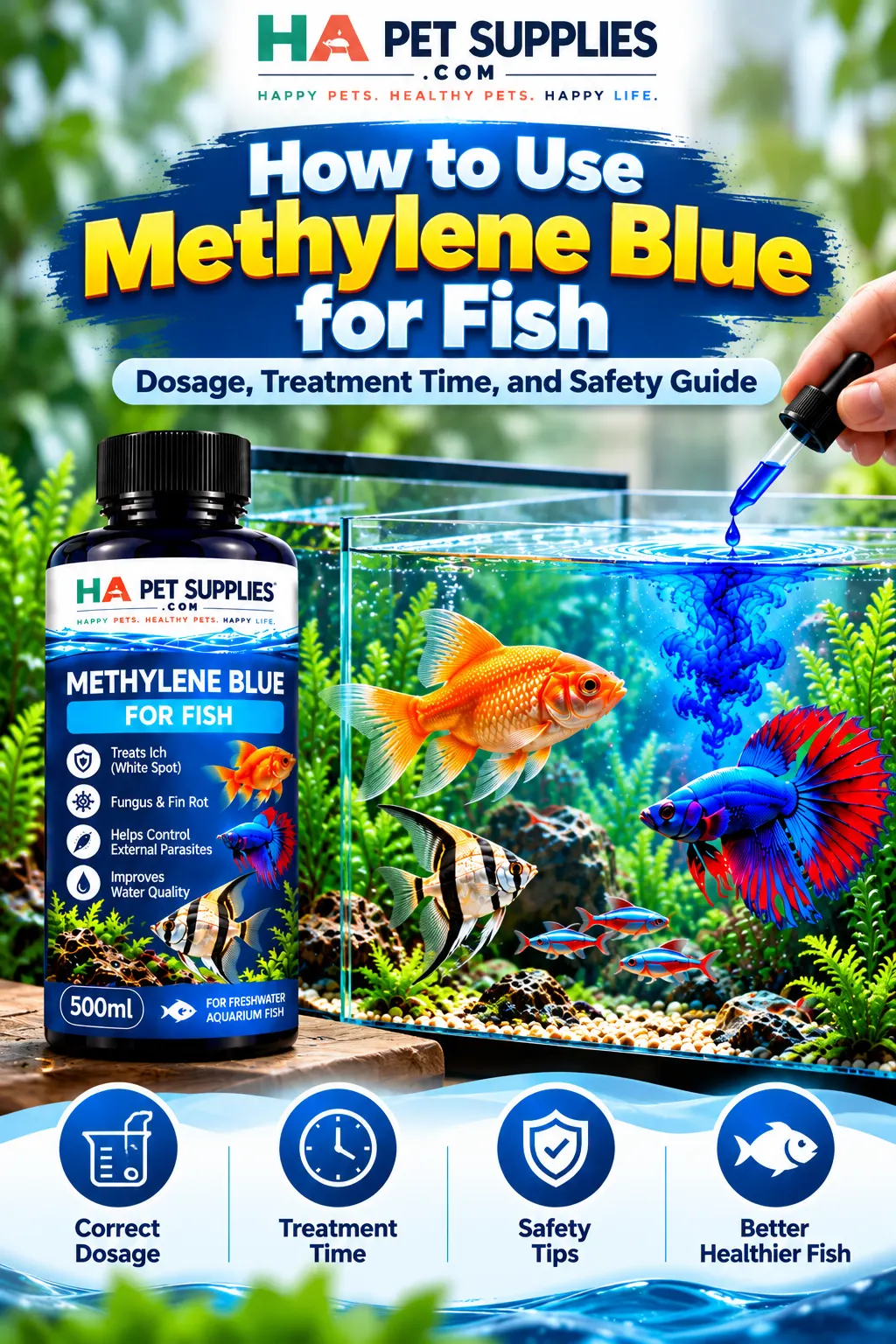
Imagine discovering an unusual white patch on your goldfish or noticing that your betta suddenly looks less active. You search for an aquarium treatment, find a bottle of methylene blue, and wonder whether you should add a few drops immediately.
The situation can feel urgent, especially when you are worried about losing a favorite pet. But rushing to medicate without identifying the cause or checking the product concentration can create additional problems.
Methylene blue is not a universal solution for every fish illness. It has recognized uses in selected ornamental fish applications, including certain superficial fungal conditions and fish egg treatments. It may also be included in particular external parasite protocols.
The exact treatment method depends on the formulation, diagnosis, species, water volume, and product instructions. A medicine suitable for a controlled treatment bath may not be appropriate for an established planted aquarium.
This detailed tutorial will help you understand how to prepare safely, measure water volume, interpret manufacturer directions, choose a suitable treatment environment, and monitor fish throughout the process.
For product information, you can view HA Pet Supplies Methylene Blue for Fish . Always confirm the actual concentration printed on your bottle before attempting any dose calculation.
Explore Methylene Blue Product1. Fish Looks Sick? Follow This Quick Safety Checklist First
If your aquarium fish is struggling, your first task is to determine whether the problem is caused by disease, the environment, or a combination of both. Some environmental emergencies require action before any medication is considered.
Fish cannot explain their symptoms, so owners must observe changes carefully. Rapid breathing, unusual swimming, hiding, skin irritation, damaged fins, or reduced appetite may all indicate a health concern. However, none of these signs proves that methylene blue is the correct treatment.
Check Immediately
- Ammonia and nitrite.
- Water temperature and pH.
- Aeration and surface movement.
- Filter operation.
- Unusual fish behavior.
- Recent water or livestock changes.
Avoid Doing Immediately
- Adding a guessed medication dose.
- Combining different medicines.
- Changing temperature abruptly.
- Moving fish repeatedly without reason.
- Replacing all biological filter media.
- Assuming clear water means safe water.
The Merck Veterinary Manual’s routine fish-health guidance describes how changes in appetite, swimming, breathing, body color, and fin condition can indicate illness. It also emphasizes water quality, nutrition, sanitation, and quarantine as essential preventive measures.
If several fish suddenly begin gasping near the surface, check oxygenation and water conditions immediately. If a single fish has a localized abnormality, examine whether injury, bullying, or infection could be responsible.
The University of Florida’s Introduction to Fish Health Management explains why disease often involves a combination of pathogens, environmental stress, and host susceptibility. Medication is only one possible part of the solution.
Learn About Fish Health ManagementWhen fish are losing balance, experiencing severe breathing difficulty, dying rapidly, or developing spreading ulcers, seek prompt assistance from an aquatic veterinarian or qualified fish-health specialist. An online dosing article cannot safely replace a diagnosis in an emergency.
2. What Is Methylene Blue, and How Does It Work?
Methylene blue is a strongly colored synthetic dye used in several scientific and therapeutic applications. In ornamental aquaculture, its historical uses include selected superficial fungal conditions, some external protozoan applications, and specific fish egg management protocols.
Unlike an aquarium water conditioner, methylene blue is not designed to remove routine waste products from an established tank. It should not be treated as a replacement for biological filtration, dechlorination, or regular water testing.
The chemical can interfere with some biological processes in susceptible organisms. Yet its usefulness varies with the disease and the fish species. A treatment that may help one external condition is not automatically effective against a different bacterial or parasitic disease.
For example, Kordon’s published methylene blue product guidance identifies selected fungal and external protozoan applications, but explicitly warns against use for certain bacterial infections, flukes, and other conditions. Those directions apply to Kordon’s particular formulation.
This distinction is useful when shopping for freshwater fish medicine. Product labels may list different concentrations, treatment methods, precautions, and intended applications. Buyers should never assume that all blue solutions are chemically identical.
Is Methylene Blue the Same as Aquarium Ich Medicine?
Not necessarily. White spot disease is associated with a particular parasite, and appropriate treatment depends on its life cycle. Some methylene blue formulations discuss selected protozoan uses, but it is not a universal first-choice cure for every case of ich.
Our companion article, Does Methylene Blue Treat Ich, Fungus, and Fin Rot? , explains why these common disease names require different treatment decisions.
Compare Common Fish Diseases3. Before Using Methylene Blue for Fish: Five Essential Checks
Learning how to use methylene blue for fish begins with preparation. A few minutes spent confirming the environment, diagnosis, and formulation can prevent avoidable treatment errors.
Check 1: Identify the Likely Condition
Observe whether your fish has fuzzy growth, small white spots, frayed fins, surface irritation, unusual breathing, or general weakness. Different symptoms may require different diagnostic approaches.
A cotton-like patch can suggest a superficial fungal condition, but some bacterial diseases may create a similar appearance. Likewise, torn fins can result from aggression or physical injury rather than infection alone.
Check 2: Confirm the Fish Species
Aquarium species vary in chemical tolerance, environmental requirements, and susceptibility to stress. A protocol used for adult goldfish should not automatically be applied to shrimp, snails, fry, or sensitive ornamental fish.
Make sure the actual formulation identifies suitable species and necessary precautions. If the species is not covered by the directions, seek professional advice.
Check 3: Read the Product Concentration
The concentration of active methylene blue determines how much ingredient is delivered in a measured volume of solution. Bottle size alone does not provide this information.
A 100ml container and a 500ml container might hold the same concentration, but that cannot be assumed. Concentration must be read directly from the verified product specifications.
Check 4: Examine the Aquarium Setup
Determine whether your tank contains live plants, delicate invertebrates, porous decorations, or established biological filtration that should not be exposed.
Methlyene blue can interfere with nitrifying filter bacteria and stain various materials. A separate treatment tank may be preferable when appropriate for the fish.
Check 5: Prepare a Monitoring Plan
Treatment should include regular observation, water testing, and documentation. Record the date, water volume, formulation, treatment instructions, and changes in fish behavior.
Good recordkeeping helps when evaluating response or consulting a specialist. It also reduces the chance of accidentally repeating medication before the approved interval.
4. How to Use Methylene Blue for Fish: 9 Essential Safety Steps
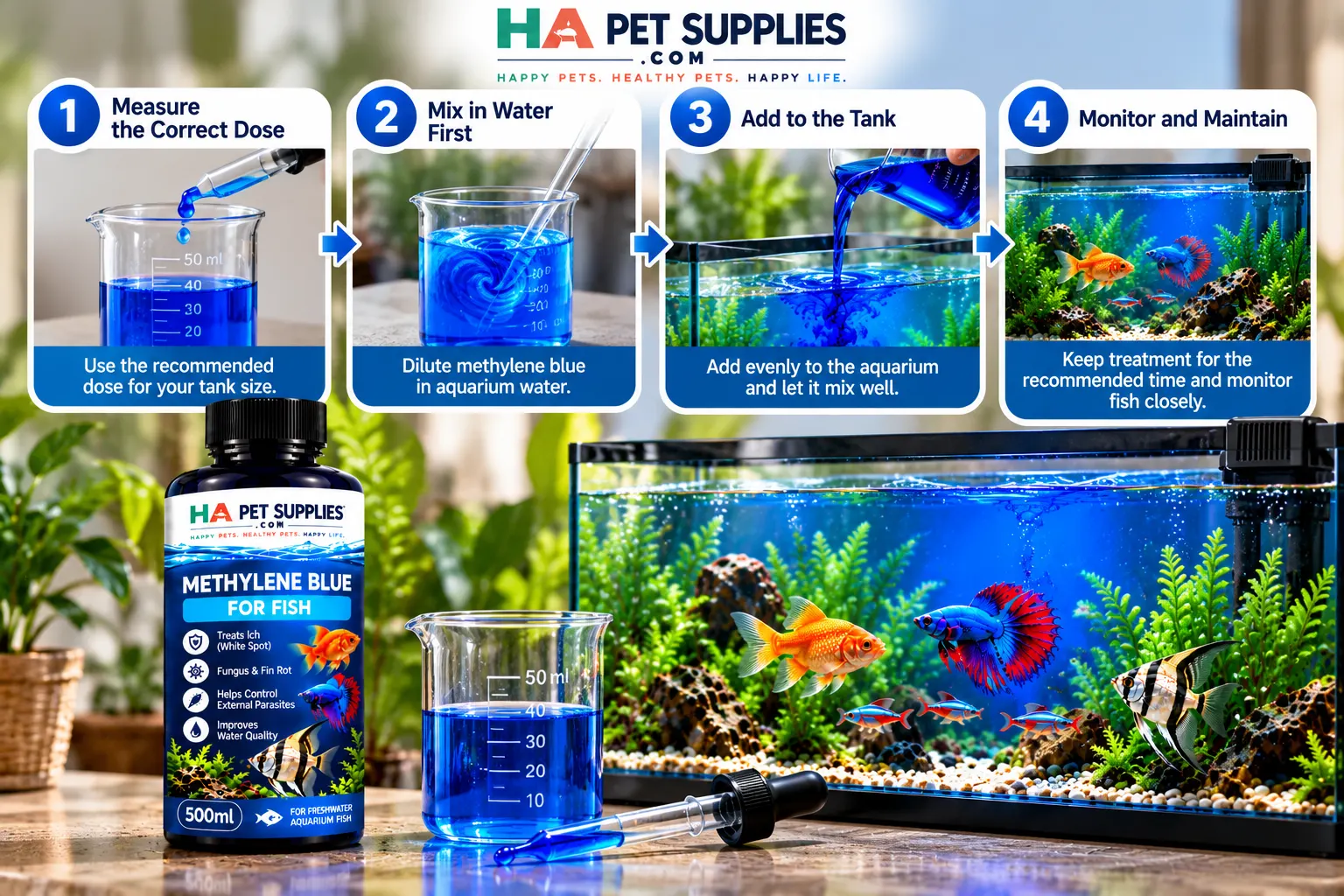
The nine steps below describe a sensible treatment-planning workflow. They do not replace the validated instructions supplied with your bottle.
3D Fish Treatment Safety Flow
Identify the Fish’s Main Problem
Begin by describing exactly what you see. Note any white spots, visible lesions, cotton-like growth, fin damage, unusual swimming, or rapid breathing.
Include the history of the aquarium. Recently introduced fish, altered feeding, sudden temperature shifts, or disturbed filtration may provide important diagnostic clues.
Test the Water Before Medication
Check ammonia, nitrite, pH, temperature, and aeration. Water problems can mimic disease, weaken fish, and complicate treatment.
The University of Florida’s ammonia guidance explains why elevated ammonia is dangerous and why aquarium water must be tested rather than judged by appearance.
Confirm That Methylene Blue Is Appropriate
Match the proposed treatment to the likely diagnosis. A drug used for some superficial fungal problems is not necessarily suitable for bacterial infections, internal parasites, or environmental poisoning.
Consult an aquatic veterinarian when symptoms are severe, spreading, or difficult to identify confidently.
Prepare an Appropriate Treatment Tank
Follow the verified directions when choosing between a separate aquarium, an approved treatment bath, or another specified method.
A separate setup is often useful because methylene blue can stain materials and interfere with established filtration.
Ensure the fish has suitable temperature, adequate oxygen, and safe water. A hospital tank is only beneficial when properly maintained.
Calculate the Actual Water Volume
Measure the water receiving medication, not merely the advertised capacity of the aquarium. Substrate, rocks, decorations, and water level can reduce the actual volume.
The Merck Veterinary Manual’s aquarium management chapter explains why accurate water measurement is necessary for treatment baths.
Read the Exact Dosage Instructions
Check the active concentration, water-volume instructions, application method, and treatment duration on your product.
Use a graduated measuring device when required. Do not estimate concentration from the darkness of the solution.
If the label is incomplete or unreadable, obtain reliable instructions before proceeding.
Apply the Treatment as Directed
Follow the verified label for measuring, dilution, mixing, and application. Do not improvise a stronger bath in the hope of faster recovery.
Avoid combining medications without proven compatibility. A combination that seems reasonable may expose fish to unnecessary chemical stress.
Observe Fish Throughout Treatment
Monitor breathing, balance, activity, appetite, and visible symptoms. Check water parameters when appropriate, particularly in a small treatment tank.
If a fish develops severe distress, promptly seek professional direction. A fish struggling to breathe should not be left in a potentially unsuitable treatment simply because the planned time has not elapsed.
Complete Treatment and Reassess
Follow the product-specific instructions for completing treatment, water changes, and any medication removal procedure.
Do not decide that treatment is complete only because the water is less blue. Review fish behavior, lesion changes, and water quality.
Continue monitoring after the treatment course. Some illnesses need follow-up evaluation or correction of the environmental problem that caused the initial stress.
5. Methylene Blue Fish Dosage: How to Understand the Numbers
Dosage is the part of aquarium medication that creates the most uncertainty for new fishkeepers. You may see recommendations in drops, milliliters, teaspoons, gallons, liters, or parts per million.
These units are not interchangeable without additional information. A volume of solution does not tell you how much active ingredient it contains unless the concentration is known.
What Does Bottle Concentration Mean?
Concentration describes how much methylene blue is present in a particular quantity of the solution. Products may display this as a percentage or another measurement.
If the concentration changes, the liquid quantity needed to deliver the same amount of active ingredient also changes. This is why copying another brand’s dosing instructions can be dangerous.
What Does PPM Mean?
PPM stands for parts per million. In dilute freshwater solutions, it is commonly used as a concentration measurement.
This concept is useful for understanding technical instructions, but readers should not attempt to construct their own treatment protocol without reliable formulation information.
How Do You Calculate Aquarium Water Volume?
For a rectangular tank, one useful starting point is the internal length multiplied by width and actual water depth. When using centimeters, dividing cubic centimeters by 1,000 gives liters.
Decorative rocks, substrate, filters, and equipment can occupy part of the calculated volume. For irregular aquariums, measuring water added during setup may provide a more accurate estimate.
Why Is Counting Drops Unreliable?
A dropper does not necessarily release identical volumes under all conditions. The opening, solution properties, angle, and user technique can affect each drop.
When a product provides graduated milliliter instructions, follow them using suitable measuring equipment. Do not convert a precise volume into an assumed number of drops without manufacturer guidance.
A manufacturer such as Kordon supplies specific directions for its own 2.303% solution. Those directions illustrate why concentration matters, but they are not instructions for the HA Pet Supplies product.
6. How Long Does Methylene Blue Fish Treatment Take?
Treatment time varies according to the diagnosed condition and approved protocol. A fish-egg application, extended bath, and brief dip are fundamentally different methods.
Some commercial product labels distinguish between these treatment categories and prescribe different durations. This is why readers should never borrow a time period from an unrelated formulation.
Short Exposure Treatments
Some professional protocols involve relatively brief exposure in a controlled container. These methods can produce high exposure over a short period and should never be improvised from casual online advice.
Temperature, pH, water chemistry, oxygenation, and fish health affect the safety of treatment baths. Follow only validated directions appropriate to the product and species.
Extended Treatment Baths
Other applications involve exposure over a longer period. These require continued monitoring of water quality, fish respiration, activity, and behavior.
A longer course is not necessarily more effective. Extending medication beyond the approved duration can increase exposure without addressing an incorrect diagnosis.
Fish Egg Treatment Timing
Fish egg antifungal protocols depend on species, developmental stage, and hatching conditions. Fertilized eggs may have different tolerances than newly hatched fry.
Breeders should follow a species-specific protocol rather than assuming one method works for every aquarium egg type.
How Do You Know When to Stop?
Complete or discontinue treatment according to the verified label and professional guidance. Do not make the decision solely from water color or one day of improved appetite.
If the fish’s condition is worsening, reassessment is needed. A treatment that does not match the underlying disease cannot be corrected simply by extending its duration.
7. Hospital Tank vs Main Aquarium: Where Should Treatment Happen?
One of the most important questions is whether methylene blue should be used in the main display aquarium. The answer depends on the exact product instructions and the aquarium’s inhabitants.
Advantages of a Separate Hospital Tank
A dedicated treatment setup gives the owner greater control over exposure, observation, cleaning, and equipment. It also reduces the chance of exposing unaffected animals and established display-tank filtration.
Methylene blue may affect beneficial nitrifying bacteria and can stain silicone, decorative rocks, porous wood, and other surfaces. Keeping treatment separate can make both management and post-treatment cleanup easier.
What Equipment Does a Hospital Tank Need?
The setup should suit the fish species and medical purpose. Basic requirements generally include safe water, appropriate temperature, sufficient space, adequate oxygen, and the ability to monitor waste accumulation.
Avoid assuming that placing a fish in a small bucket automatically creates an appropriate treatment environment. Small volumes can change rapidly in temperature and water chemistry.
Why Does Biological Filtration Matter?
A mature aquarium relies on microorganisms that process nitrogenous waste. If these organisms are disrupted, harmful ammonia or nitrite may accumulate.
The University of Florida’s discussion of chemical treatments and biofilters explains why some aquarium medications can interfere with biological filtration.
Understand Medication and BiofiltersWhat About Activated Carbon?
Activated carbon can remove some dissolved compounds and treatment chemicals from aquarium water. Depending on the product instructions, chemical filtration may need to be managed differently during and after treatment.
The Merck overview of aquatic life-support system components explains the role of activated carbon and related filtration technologies.
Do not remove essential life-support equipment without understanding how oxygenation and water quality will be maintained. Follow the actual medication label when adjusting filtration.
8. Methylene Blue Aquarium Safety: Essential Precautions
Protect Beneficial Bacteria
Established nitrifying bacteria help maintain safe nitrogen cycling. Methylene blue can interfere with this process, so exposing a mature biological filter unnecessarily creates potential risk.
Continue checking ammonia and nitrite during any treatment likely to disturb filtration. Correct environmental problems promptly using suitable aquarium-care procedures.
Protect Live Plants
Aquatic plants are sensitive to environmental and chemical changes. Product compatibility must be verified before medicating a planted display tank.
Some owners choose a dedicated bare treatment aquarium to protect their established planted environment. The setup still needs safe water, oxygen, and temperature.
Consider Shrimp and Snails
Invertebrates can differ greatly from fish in their response to aquarium chemicals. A medicine intended for ornamental fish should not automatically be assumed safe for shrimp or snails.
If a community tank contains sensitive livestock, confirm compatibility and consider specialist guidance before treatment.
Prevent Staining
Methylene blue can stain porous decorations, tank silicone, fabrics, skin, and nearby work surfaces. Use suitable protection and dedicated measuring equipment.
Avoid using kitchen containers or utensils that may later contact food. Keep the bottle securely closed and stored according to manufacturer instructions.
Avoid Unverified Chemical Combinations
Do not mix methylene blue with other medications, aquarium salts, or treatments solely because another fishkeeper recommends it. Compatibility depends on specific products and clinical circumstances.
Combined chemical exposure may introduce new risks even when each product has an established use separately.
Use Extra Caution With Fry and Eggs
Early developmental stages can have different sensitivities from adult fish. An egg-care protocol should not be treated as equivalent to a general fish bath.
If you are breeding ornamental fish, obtain guidance for the particular species and stage of development.
Do Not Use Aquarium Instructions for Food Fish
Regulations governing medication in food-producing animals are different from rules for ornamental pets. Do not use ornamental aquarium medicines in fish intended for human consumption unless the use is explicitly authorized under applicable regulations.
9. Which Fish Conditions May Require Different Treatments?
Aquarium owners sometimes choose medication according to the appearance of a symptom rather than a confirmed cause. However, similar-looking problems can require completely different care.
Superficial Fungal Conditions
Certain fungal problems are recognized applications of methylene blue protocols. White cotton-like growth may prompt investigation, particularly following injury or stress.
However, bacterial conditions can resemble fungus. A professional diagnosis helps prevent unnecessary treatment delays.
White Spot Disease
Freshwater ich involves a protozoan parasite. Treatment selection depends on the organism’s life cycle, fish species, and environmental conditions.
The Merck guide to parasitic diseases of fish explains the importance of identifying specific parasites rather than treating every external symptom alike.
Fin Rot and Bacterial Disease
Frayed fins may result from infection, aggression, poor water quality, or physical damage. Methylene blue is not a guaranteed treatment for bacterial causes.
The Merck Veterinary Manual’s bacterial disease guide explains why antimicrobial selection may depend on identification and susceptibility testing.
Ammonia and Nitrite Problems
Fish experiencing environmental toxicity need the underlying water problem corrected. A blue dye is not a replacement for properly maintained filtration, suitable water changes, and oxygen management.
Certain specialized clinical uses of methylene blue have been discussed in relation to nitrite poisoning. That does not justify using it as a universal emergency remedy when water parameters are unknown.
For a broader understanding of methylene blue’s applications, read our Methylene Blue for Fish: Uses and Benefits pillar article.
Read the Complete Benefits Guide10. Seven Common Methylene Blue Treatment Mistakes
Mistake 1: Guessing the Diagnosis
Treating all visible symptoms as fungus ignores the possibility of parasites, bacterial infection, and environmental stress. Carefully describe the problem before choosing medication.
Mistake 2: Copying Another Brand’s Dose
Formulations may differ in concentration. A dosing instruction intended for one formulation may be inappropriate for another. Always use the actual bottle’s verified directions.
Mistake 3: Estimating Water Volume
A tank’s advertised capacity is not necessarily its actual water volume. Estimate displacement from substrate and decorations carefully.
Mistake 4: Treating a Mixed Display Aquarium
A community tank may contain plants, shrimp, snails, and established biological filtration. Unnecessary exposure can create problems beyond the original illness.
Mistake 5: Combining Several Medications
Mixing treatments may introduce chemical interactions or excessive stress. Follow approved combinations only when there is reliable evidence and appropriate guidance.
Mistake 6: Extending Treatment Without Guidance
Continuing medication indefinitely does not guarantee better results. If the fish remains ill after the approved treatment period, reassess the diagnosis rather than automatically increasing exposure.
Mistake 7: Forgetting Recovery Care
Medication does not correct crowding, poor filtration, unsuitable temperature, inadequate nutrition, or aggressive tankmates. Treating a disease without correcting underlying stressors may allow problems to recur.
11. How to Monitor Fish During and After Treatment
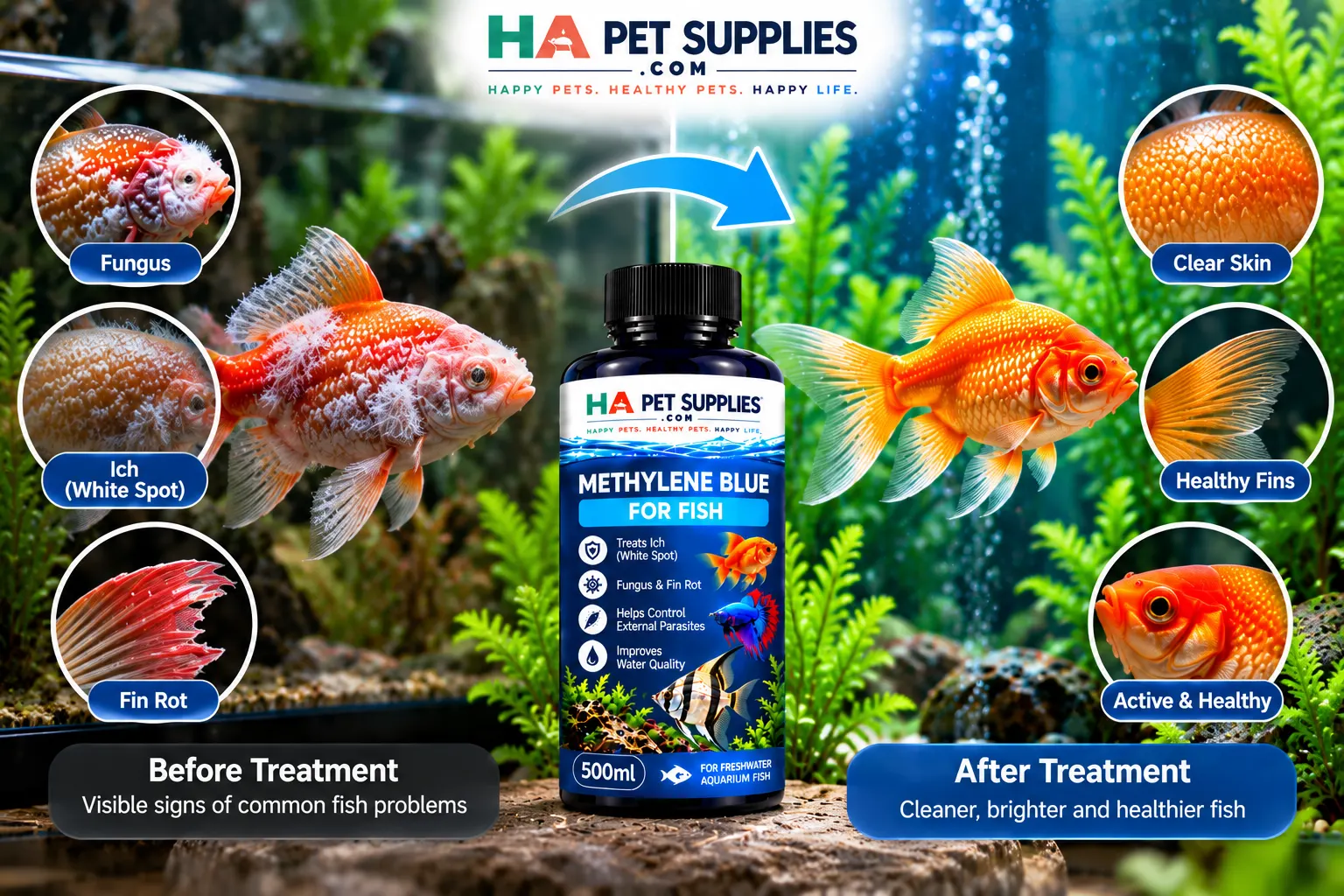
Monitoring is essential because a treated fish’s condition can change before the medication course is finished. Observing only whether visible spots disappear may overlook breathing problems, appetite loss, or water chemistry changes.
Monitor Breathing
Watch the movement of the gills and whether fish are struggling near the surface. Rapid or labored breathing can indicate serious distress and may require immediate assessment.
Monitor Swimming and Balance
A fish that becomes unable to maintain its normal position, rolls sideways, or swims erratically may be experiencing severe illness or an unsuitable treatment environment.
Observe Appetite
Changes in feeding can provide useful information about general condition. However, appetite alone cannot confirm that a fungal or parasitic infection has resolved.
Track Visible Lesions
Take clear photographs at consistent intervals if doing so does not stress the fish. Images may help compare changes in white patches, redness, or fin deterioration.
Keep Water-Test Records
Test ammonia, nitrite, temperature, and relevant parameters as appropriate. A simple record can help connect changes in fish health with changes in the environment.
| Observation | What to Record | Why It Matters |
|---|---|---|
| Breathing | Normal, rapid, labored, or surface gasping | Can reveal urgent distress |
| Swimming | Active, hiding, unbalanced, or lethargic | Shows behavioral changes |
| Appetite | Normal, reduced, or absent | Helps assess general condition |
| Skin and fins | Lesion appearance and changes | Supports follow-up evaluation |
| Water chemistry | Ammonia, nitrite, pH, temperature | Detects treatment-environment problems |
If symptoms become severe or unexpectedly worsen, consult an aquatic veterinarian. A professional can assess whether the original diagnosis was accurate and whether further investigation is required.
The Merck overview of aquarium fish discusses the wide variety of diseases and quarantine concerns associated with ornamental fish systems.
12. Choosing a Methylene Blue Product for Aquarium Fish
A well-presented product label should make it possible to identify the active ingredient, solution concentration, intended use, container volume, precautions, and instructions.
Before buying, compare these details rather than relying entirely on packaging photographs or promotional benefit statements.
Check Concentration
Verify the amount of active methylene blue present in the formulation.
Check Instructions
Confirm that the bottle includes clear directions, warnings, and intended applications.
Check Compatibility
Review species, tank setup, plants, invertebrates, and filtration precautions.
HA Pet Supplies provides a product page for Methylene Blue for Fish . For details about the exact formulation, available bottle size, and manufacturer instructions, use the product enquiry options before selecting a treatment protocol.
View Methylene Blue ProductIf you are also preparing a quarantine setup, browse the HA Pet Supplies fish supplies category to evaluate related aquarium equipment and maintenance needs.
A treatment tank may need separate equipment, suitable aeration, water testing, and appropriate temperature management. Good equipment supports proper treatment but does not replace diagnosis.
Our online pet supplies shop also provides a place to explore other aquarium-care categories. Choose supplies based on practical needs rather than collecting unnecessary medications.
13. How to Use Methylene Blue for Fish: FAQs
Select a question below to expand the answer. These interactive FAQs address concerns that commonly arise before, during, and after aquarium treatment.
1. How do I use methylene blue for fish safely?
Confirm the diagnosis, test water quality, verify product concentration, select an appropriate treatment environment, and follow the exact label directions. Monitor fish throughout treatment.
2. How many drops should I add per gallon?
There is no universal number of drops suitable for all methylene blue products. Dosage depends on concentration, treatment method, actual water volume, and manufacturer instructions.
3. How long should methylene blue treatment last?
Treatment duration varies with the purpose, formulation, and fish species. Follow verified product instructions or aquatic veterinary guidance.
4. Can methylene blue treat ich?
Some commercial formulations describe selected external protozoan uses, but methylene blue is not a universal ich cure. Diagnosis-specific treatment remains important.
5. Is methylene blue good for fish fungus?
Certain superficial fungal conditions are among its recognized applications. However, a cotton-like patch is not sufficient to diagnose fungus with certainty.
6. Does methylene blue treat fin rot?
Fin rot may involve bacterial infection, injury, or environmental stress. Methylene blue should not be considered a guaranteed standalone treatment.
7. Can I use methylene blue in my main tank?
It can interfere with biological filtration, stain aquarium materials, and create compatibility concerns. A separate treatment environment is often preferable when appropriate.
8. Is methylene blue safe for aquarium plants?
Plant compatibility must be checked for the specific formulation. Avoid unnecessary exposure of valuable planted aquariums.
9. Can methylene blue harm shrimp or snails?
Do not assume invertebrate safety. Compatibility should be confirmed before exposing shrimp, snails, or other sensitive animals.
10. Does methylene blue remove ammonia?
It is not a replacement for proper ammonia management, biological filtration, or suitable water changes. Address environmental toxicity directly.
11. Can I mix methylene blue with aquarium salt?
Do not combine treatments without a verified compatible protocol or qualified professional advice. Different species and circumstances may require different precautions.
12. Why does methylene blue turn the water blue?
Methylene blue is a strongly colored dye. The shade of water does not provide a reliable measurement of active concentration or treatment success.
13. Can I use methylene blue for fish eggs?
Certain fish egg antifungal protocols use methylene blue. Exposure and suitability depend on the species and developmental stage.
14. How do I remove methylene blue after treatment?
Follow the product’s post-treatment instructions. Some formulations recommend water changes and activated carbon, which can help remove dissolved treatment chemicals.
15. What if my fish looks worse after treatment?
Worsening breathing, balance, lesions, or activity requires prompt reassessment. Check water conditions and seek aquatic veterinary guidance rather than automatically increasing the dose.
16. Is a 500ml bottle stronger than a 100ml bottle?
Not necessarily. Bottle size describes the volume of liquid supplied. Strength depends on the active-ingredient concentration.
17. Where can I find aquarium treatment products?
Browse the HA Pet Supplies fish care collection and compare intended uses, label information, and equipment requirements.
18. Where can I ask about HA Pet Supplies methylene blue?
Visit the HA Pet Supplies contact page or submit a product enquiry using the website’s quotation form.
14. Final Advice: Safer Methylene Blue Fish Treatment
Learning how to use methylene blue for fish involves much more than determining the number of drops to add to an aquarium. The process begins with identifying the problem and confirming whether methylene blue is suitable.
Water quality, temperature, oxygen supply, filtration, species sensitivity, and treatment environment all influence the safety of aquarium medication. Neglecting these factors can undermine even a correctly selected treatment.
The most important dosing rule is simple: follow the instructions for your actual formulation. Never transfer dosage numbers from a different product simply because both contain methylene blue.
When the diagnosis is unclear, the fish is deteriorating, or multiple animals show severe symptoms, professional assessment is the safest next step. A targeted plan may include medication, environmental correction, or another intervention.
Long-term aquarium health depends on prevention. Regular testing, appropriate filtration, quarantine of new fish, suitable tankmates, nutritious feeding, and careful observation can reduce many preventable problems.
For more aquarium-care education, explore the HA Pet Supplies blog collection . You can also visit the HA Pet Supplies homepage to discover our wider pet-care range.
Explore Methylene Blue for Fish at HA Pet Supplies
Researching an aquarium fish treatment? Review product information, confirm packaging and formulation details, and ask questions before purchasing.
HA Pet Supplies provides a product information and enquiry route for customers exploring aquarium-care options.
View Methylene Blue Product Request a Quote Contact HA Pet SuppliesEducational information only. This article does not provide a dose or treatment course for an unverified formulation. Diagnosis and medication should follow reliable product labeling and appropriate aquatic veterinary guidance.