
Methylene blue for fish ich fungus and fin rot is a common aquarium-care search, but these conditions have different causes and may require different treatments. This guide explains the symptoms, treatment limitations, safety precautions, and practical steps to protect sick aquarium fish.
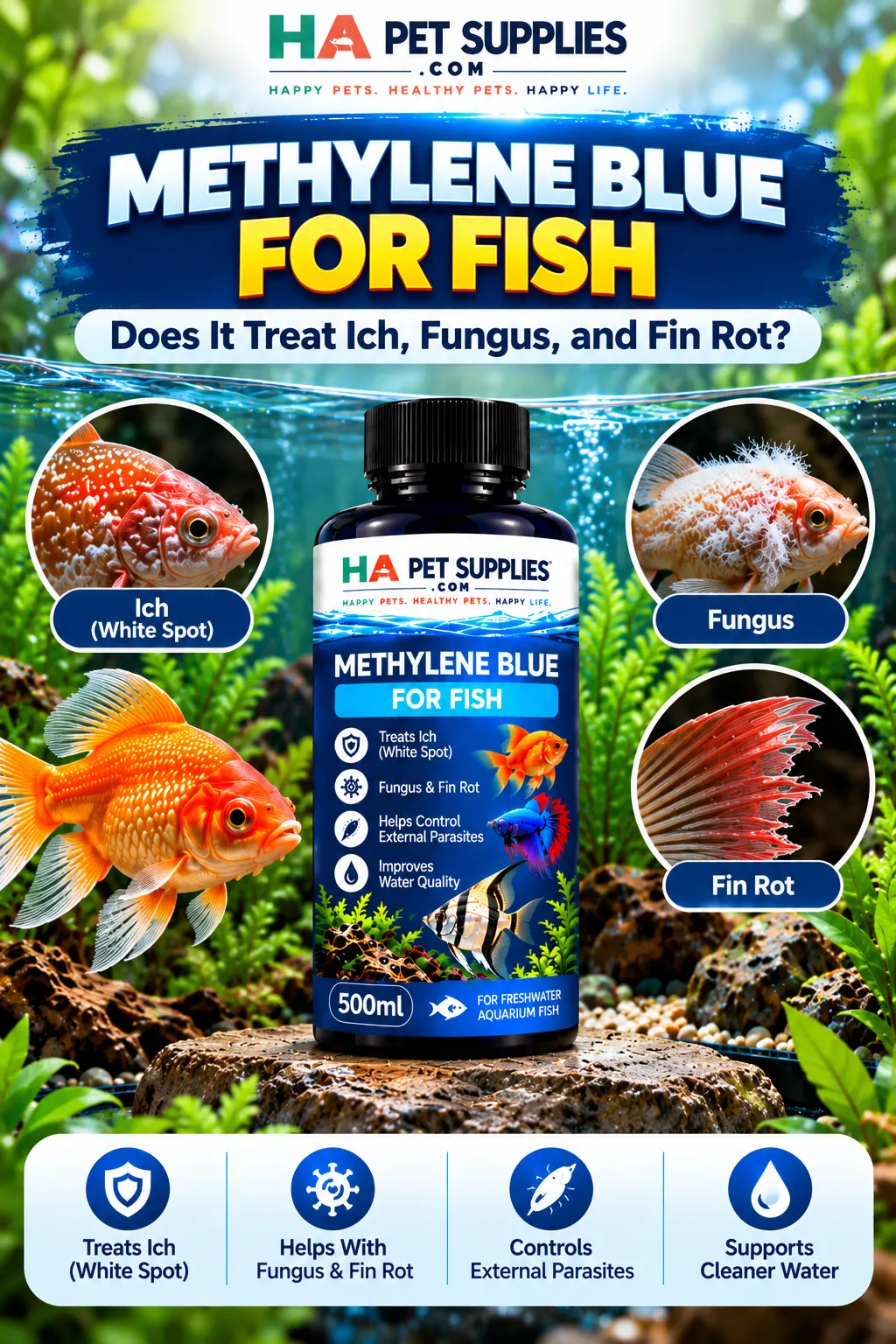
Finding white spots on your goldfish or a cotton-like patch on your betta can be frightening. You want to act quickly, but searching for aquarium treatments often produces conflicting advice.
Some products claim to help with many fish diseases. Others are formulated for particular conditions. Choosing the wrong treatment can delay recovery and expose healthy tankmates to unnecessary medication.
Methylene blue is a synthetic dye that has been used in selected ornamental fish treatment protocols. It has recognized applications in certain superficial fungal problems and fish egg care. Some formulations also describe use against selected external protozoans.
However, it is not a general-purpose antibacterial medicine. It should not be considered a guaranteed cure for fin rot, ich, or every white lesion that appears on a fish.
Understanding the differences between these illnesses will help you make better aquarium-care decisions. If you are researching the product, view HA Pet Supplies Methylene Blue for Fish and confirm the active concentration and intended use.
Explore Methylene Blue Product1. Does Methylene Blue Treat Ich, Fungus, and Fin Rot?
The answer depends on the specific disease and the treatment formulation. Methylene blue may be useful for selected superficial fungal conditions and certain external protozoan applications, but it is not equally suitable for every illness.
Ich
Freshwater ich is caused by a protozoan parasite. Some methylene blue formulations describe activity against selected protozoans, but targeted ich treatment must account for the parasite’s life cycle.
Fungus
Certain superficial fungal conditions are among the better-known uses of methylene blue. However, bacterial lesions can sometimes resemble cotton-like fungal growth.
Fin Rot
Fin rot may involve bacterial disease, injury, or environmental stress. Methylene blue is not a reliable general-purpose antibacterial treatment for these causes.
For example, Kordon’s methylene blue product guidance describes selected fungal and protozoan uses while identifying important limits involving bacterial diseases. Those instructions apply to its own formulation, not every brand.
The University of Florida’s fish-health management guide also explains how environmental stress can contribute to infectious disease. Correcting water conditions may be essential alongside any appropriate medication.
Read Fish Health Guidance2. Understanding Ich, Fungus, and Fin Rot
A healthy aquarium depends on stable water conditions, appropriate stocking, adequate oxygen, and a functioning biological filter. When these conditions deteriorate, fish can become stressed and vulnerable to disease.
Different pathogens cause different illnesses. Some organisms attack skin or gill tissues. Others develop in damaged areas or affect the fins. An effective treatment must address the correct cause.
3D Fish Disease Identification Guide
Small white spots, flashing, irritation, and possible breathing problems.
Cotton-like growth on skin, fins, eggs, or damaged tissue.
Frayed or eroding fins associated with injury, infection, or poor water quality.
Why Similar Symptoms Can Be Confusing
A white mark is not always ich, and a white fuzzy patch does not always indicate fungus. Some bacterial diseases can produce lesions that closely resemble fungal growth.
Likewise, damaged fins may be caused by sharp decorations, bullying, or an infectious condition. Owners should evaluate the entire aquarium rather than treating one visible sign in isolation.
The Merck Veterinary Manual’s guide to fish diseases describes the wide range of problems that can affect skin, fins, gills, and other organs.
Correct diagnosis is particularly important when fish are deteriorating rapidly. In these cases, an aquatic veterinarian may recommend examination or additional diagnostic testing.
3. Methylene Blue for Fish and Ich Treatment
Freshwater ich is caused by the parasite Ichthyophthirius multifiliis. It is commonly associated with small white spots that resemble grains of salt on the fish’s skin or fins.
Affected fish may rub against aquarium surfaces, hide, breathe abnormally, or show reduced appetite. Severe infections can involve the gills and require urgent attention.
Understanding the Ich Life Cycle
The ich parasite moves through several developmental stages. Some stages are associated with the fish, while others occur in the aquarium environment.
This life cycle matters because not every stage is equally vulnerable to treatment. A medicine may be effective against a particular stage while leaving another stage relatively protected.
The Merck Veterinary Manual’s parasite guide explains the importance of life-cycle-aware treatment for ich and other parasitic diseases.
Can Methylene Blue Kill Ich?
Some commercial methylene blue formulations describe selected external protozoan applications. However, that does not establish methylene blue as the best treatment for every freshwater ich infection.
The correct protocol depends on the diagnosis, species, aquarium conditions, and approved medication. A fishkeeper should not assume that adding blue dye guarantees parasite elimination.
Why White Spots May Disappear and Return
The visible appearance of ich may change as the parasite progresses through its life cycle. Therefore, disappearing white spots do not necessarily indicate that the aquarium is free from infection.
Stopping a confirmed treatment prematurely may allow the parasite to continue developing. Follow a verified, species-appropriate protocol rather than relying only on the fish’s appearance.
Should You Increase Aquarium Temperature?
Temperature can affect parasite development, but increasing aquarium temperature is not universally safe. Fish species differ in their temperature requirements and tolerances.
Warmer water also holds less dissolved oxygen. Sudden temperature changes can create additional stress for already weakened fish.
Do not raise the temperature as a treatment without checking the needs of the fish and following a reliable protocol.
Learn About Ich and Parasites4. Does Methylene Blue Treat Fish Fungus?
Methylene blue has recognized applications against certain superficial fungal conditions in ornamental fish and selected fish-egg care procedures.
However, it is important to distinguish a confirmed fungal problem from other conditions that produce similar symptoms.
How Does Fish Fungus Look?
Superficial fungal growth may appear as cotton-like white or gray material attached to skin, fins, or damaged areas.
The problem may develop after injury or when fish are weakened by environmental stress. Poor water quality and untreated wounds can complicate recovery.
Why White Patches Are Not Always Fungus
Certain bacterial diseases can produce pale or fuzzy lesions. Columnaris is one important example that may be mistaken for fungal growth.
The Merck discussion of bacterial disease in aquaculture explains the importance of identifying bacterial pathogens and their clinical signs.
Using an antifungal treatment when the underlying disease is bacterial may delay appropriate intervention. This is why professional diagnosis is especially important in severe or rapidly progressing cases.
When Might Methylene Blue Be Appropriate?
A product may be considered when the condition matches a verified indication, the species is compatible, and the treatment can be administered according to the actual product instructions.
A controlled hospital tank may be preferable to exposing an established display aquarium to a medication that can affect filtration and stain materials.
Methylene Blue and Fish Eggs
Some breeders use species-specific methylene blue protocols to manage fungal contamination of fish eggs. The appropriate method depends on egg development and the species being bred.
Do not assume that a protocol used for one species is suitable for another. Eggs and newly hatched fry can have different chemical sensitivities.
For more background, read the Methylene Blue for Fish Uses and Benefits Guide .
Read the Complete Benefits Guide5. Can Methylene Blue Cure Fin Rot?
Fin rot refers to deterioration of fin tissue. It may be associated with bacterial disease, physical injury, poor water quality, or other environmental problems.
A betta with ragged fins might be experiencing bacterial infection. Another fish with similar damage may have been nipped by a tankmate or injured by sharp decorations.
What Does Fin Rot Look Like?
Common signs may include frayed fin edges, discoloration, progressive fin loss, redness, or damaged tissue.
These observations are useful warning signs but do not prove that a bacterial infection is present.
Why Methylene Blue Is Not a Universal Fin Rot Treatment
Methylene blue is not a reliable general-purpose antibacterial medication. If the fin problem involves a bacterial pathogen, targeted care may be required.
The Merck Veterinary Manual’s bacterial fish disease guide explains how diagnosis and appropriate antimicrobial selection influence treatment.
How Can Damaged Fins Recover?
Some fin injuries can improve when the underlying cause is corrected and suitable environmental conditions are maintained.
However, severe tissue damage may require additional medical evaluation. The outcome depends on the cause, severity, fish health, and treatment.
Do not assume that increasing medication concentration will speed up fin regrowth.
6. Ich vs Fungus vs Fin Rot Comparison
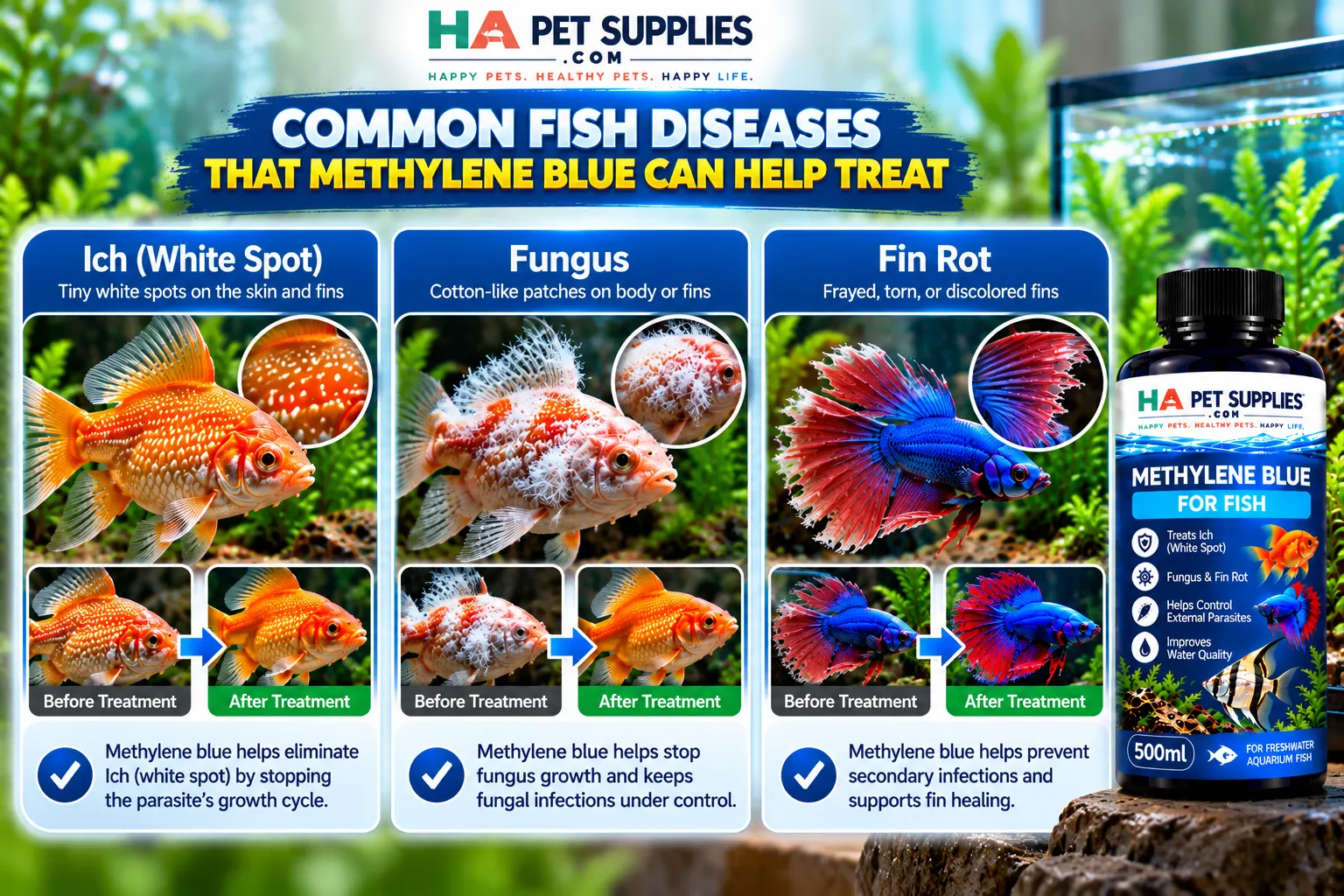
| Feature | Ich | Fungus | Fin Rot |
|---|---|---|---|
| Appearance | Small white spots | Cotton-like growth | Frayed or eroding fins |
| Possible Cause | Protozoan parasite | Fungal or fungus-like organism | Injury, bacteria, or environmental stress |
| Other Symptoms | Flashing and breathing changes | Skin irritation and damaged tissue | Redness and progressive tissue loss |
| Methylene Blue Role | Formulation-dependent and limited | Selected superficial fungal protocols | Not a general antibacterial solution |
| Priority | Confirm parasite and treatment protocol | Distinguish fungus from bacterial lesions | Identify infection or injury |
Comparing these diseases helps fishkeepers avoid treating unrelated symptoms with the same medicine. Identifying the cause is more important than choosing the first product mentioned online.
The University of Florida’s diagnostic evaluation guidance explains the importance of collecting accurate information about fish disease.
Understand Fish Disease Diagnosis7. How to Identify the Problem Before Treatment
When your fish becomes sick, begin with observation and basic testing. Do not rush to medicate before checking whether the problem may be environmental.
Observe the Symptoms
Look for unusual skin patches, white spots, fin damage, abnormal swimming, reduced feeding, and changes in breathing.
Record when symptoms started and whether other fish are affected. A photograph taken without disturbing the fish may help compare changes.
Test Aquarium Water
Check ammonia, nitrite, temperature, pH, and aeration. Fish can experience serious environmental problems even when the water appears clean.
The University of Florida’s ammonia guide explains the importance of testing and controlling toxic ammonia.
Review Recent Aquarium Changes
New fish, disturbed filter media, changes in feeding, temperature fluctuations, and aggression can contribute to stress.
These observations can help explain why a fish became unwell. They may also identify problems that medication cannot solve.
Seek Professional Advice When Necessary
When multiple fish are affected, lesions spread quickly, or fish show severe distress, contact an aquatic veterinarian or qualified fish-health professional.
The Merck routine fish-care guidance provides additional information about preventive management and early disease recognition.
8. When Should You Consider Methylene Blue?
Methylene blue should only be considered when the formulation is suitable for the diagnosed condition and the fish species.
For example, certain superficial fungal conditions may be appropriate applications. Other problems, including serious bacterial diseases, may require a different approach.
A separate treatment tank can help reduce exposure of unaffected animals and established filtration. However, that tank must have suitable water quality, temperature, and oxygenation.
If you need to understand how medication concentration affects dosing and treatment time, read our methylene blue dosage and safety guide .
Read Dosage and Safety Guide9. Methylene Blue Aquarium Safety Precautions
Protect Beneficial Filter Bacteria
Established aquarium filters rely on beneficial microorganisms that process nitrogenous waste.
Methylene blue can interfere with biological filtration, potentially affecting ammonia and nitrite control.
The University of Florida’s biofilter guidance explains how chemical treatments can influence filtration bacteria.
Consider Plants and Invertebrates
Shrimp, snails, and live plants may have different tolerances to aquarium chemicals.
Do not assume that a medication suitable for one fish species is automatically compatible with every aquarium inhabitant.
Prevent Staining
Methylene blue may stain silicone, porous decorations, clothing, and nearby work surfaces.
Use dedicated measuring equipment and handle the liquid carefully. Follow manufacturer instructions for storage and cleanup.
Do Not Guess Dosage
Bottle capacity does not tell you the active-ingredient concentration. Products may contain different strengths.
Always read the actual product label and calculate the appropriate water volume before following verified treatment instructions.
Avoid Mixing Medications
Combining medications without reliable compatibility guidance may introduce new risks.
Never combine treatments solely because they are recommended in unrelated online discussions.
The University of Florida’s stress and fish disease guide discusses how environmental stressors influence fish health.
10. Seven Steps for Managing Sick Aquarium Fish
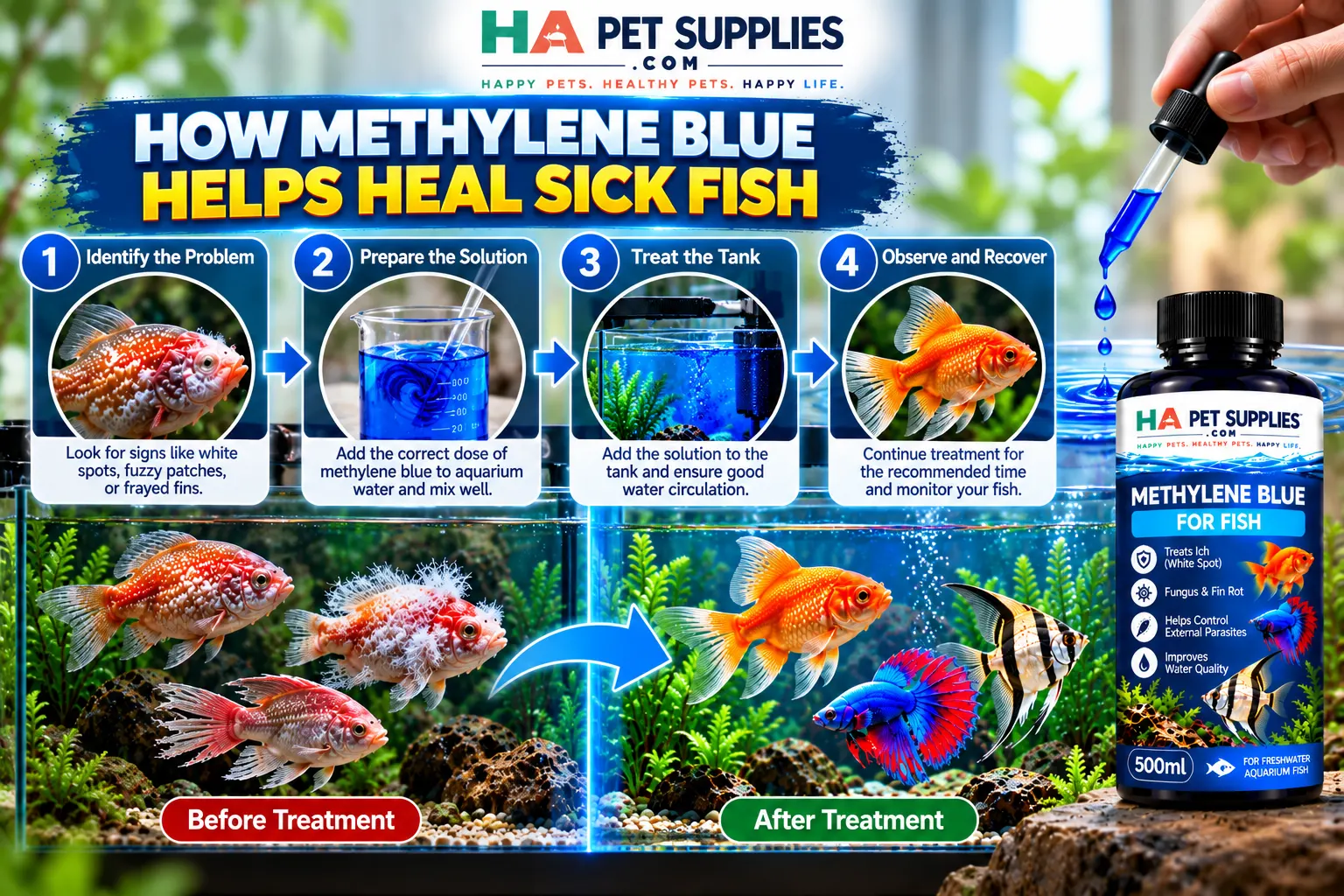
Observe the Symptoms
Look for white spots, fungal-looking growth, damaged fins, changes in activity, and unusual breathing. Record when the symptoms began.
Check Water Parameters
Measure ammonia, nitrite, temperature, and pH. Check filtration and oxygenation. Address urgent environmental problems.
Identify the Likely Cause
Consider parasites, fungus, bacteria, injury, and environmental stress. Seek diagnostic help if the condition is uncertain.
Choose an Appropriate Treatment
Select treatment based on the diagnosis. Do not assume methylene blue is suitable for every aquarium illness.
Prepare the Treatment Environment
Follow verified instructions for a separate treatment setup when appropriate. Maintain safe temperature, oxygen, and water.
Follow the Exact Product Directions
Confirm concentration, actual water volume, treatment method, and duration. Do not copy dosing instructions from another formulation.
Monitor and Reassess
Observe fish behavior, breathing, appetite, and lesions. Continue testing water and address underlying causes of stress.
11. Common Fish Treatment Mistakes
Using Medication Without a Diagnosis
Similar-looking symptoms may have different causes. A treatment selected for the wrong disease can delay appropriate care.
Ignoring Water Quality
Poor water conditions can worsen fish stress and make recovery more difficult. Always evaluate the aquatic environment.
Using an Incorrect Dose
Methylene blue concentrations can differ across products. Never estimate the dose from the color or bottle size.
Treating an Entire Community Tank
Unnecessary chemical exposure can affect plants, invertebrates, and beneficial filtration. Consider a controlled treatment environment when appropriate.
Combining Random Medications
Mixing aquarium treatments without verified compatibility may introduce additional chemical stress.
Stopping Monitoring Too Early
Visible improvement does not always indicate complete resolution of the disease. Follow appropriate aftercare and continue observation.
Ignoring the Original Cause
Repeated illness may reflect overcrowding, aggressive tankmates, poor filtration, or unsuitable water parameters. Address those underlying factors.
12. How to Prevent Ich, Fungus, and Fin Rot
Prevention begins with maintaining a stable environment. Suitable water chemistry, filtration, nutrition, and stocking can reduce several factors associated with fish illness.
Quarantine New Fish
A properly managed quarantine setup can help detect symptoms before introducing new livestock into an established aquarium.
Maintain Good Water Quality
Regularly monitor ammonia, nitrite, pH, temperature, and filtration performance. Correct problems before they become severe.
Avoid Overstocking
Crowding may increase waste, competition, and stress. Research species requirements before adding more fish.
Choose Suitable Tankmates
Fin nipping and aggression can damage tissue and create additional health concerns. Choose compatible species.
Provide Appropriate Nutrition
Feed a diet suitable for the species and manage leftover food to help maintain water quality.
Keep Equipment Clean
Use suitable fish-safe cleaning procedures and avoid transferring potentially contaminated equipment between aquariums.
For aquarium-care products and related equipment, explore the HA Pet Supplies fish supplies collection .
Explore Fish Supplies13. Methylene Blue for Fish FAQs
Click each question to expand the answer.
1. Does methylene blue treat ich?
Some formulations describe selected external protozoan applications, but methylene blue is not a universal ich cure. Choose a verified, diagnosis-specific protocol.
2. Can methylene blue treat fish fungus?
Certain superficial fungal conditions are recognized applications. However, the condition should be correctly identified before treatment.
3. Does methylene blue cure fin rot?
It is not a general antibacterial treatment. Fin damage may require environmental correction, injury management, or targeted medical care.
4. What causes white spots on fish?
Freshwater ich is a common possibility, but other conditions can produce pale marks. Accurate diagnosis matters.
5. Is cotton-like growth always fungus?
No. Some bacterial infections can produce similar appearances. A professional examination may be needed.
6. Can damaged fish fins grow back?
Some fin damage can improve when the underlying cause is corrected and conditions are suitable. Outcomes vary.
7. Can I use methylene blue in my main aquarium?
It may interfere with biological filtration, stain materials, and create compatibility concerns. A separate treatment setup is often preferable.
8. Is methylene blue safe for plants?
Compatibility depends on the formulation and aquarium conditions. Review product instructions before exposing plants.
9. Can it affect beneficial bacteria?
Yes. Methylene blue may interfere with nitrifying microorganisms that support the aquarium nitrogen cycle.
10. Is methylene blue safe for shrimp and snails?
Do not assume compatibility. Invertebrates may have different chemical sensitivities. Check the exact product guidance.
11. How long should treatment last?
Treatment time depends on the formulation, diagnosis, species, and application method. Follow verified directions.
12. How many drops should I use?
There is no universal number of drops for every methylene blue product. The active concentration and water volume are essential.
13. Does methylene blue remove ammonia?
It is not a substitute for filtration, water testing, or appropriate water management.
14. Can ich return after treatment?
Yes. Persistent parasite stages or incomplete treatment may contribute to recurrence. Follow a disease-specific protocol.
15. Should I increase aquarium temperature for ich?
Not without considering the species and the full treatment protocol. Temperature changes can increase stress and affect oxygen availability.
16. Can methylene blue be used for fish eggs?
Some species-specific egg-care protocols use methylene blue to manage fungal contamination. Use appropriate guidance.
17. Can I combine methylene blue with aquarium salt?
Only use a combined treatment when supported by verified instructions or qualified veterinary guidance.
18. Where can I find more fish-care information?
Visit the HA Pet Supplies educational blog for additional aquarium and pet-care articles.
19. Where can I buy methylene blue for fish?
Explore the HA Pet Supplies methylene blue product page and confirm its formulation before use.
20. What if my fish gets worse during treatment?
Reassess water conditions and seek qualified fish-health advice promptly. Do not automatically increase the dose.
14. Final Recommendations
Methylene blue for fish ich fungus and fin rot is an important topic because these conditions have different biological causes and may require different responses.
Certain superficial fungal applications are among the recognized uses of methylene blue. Selected formulations also discuss some external protozoans, but no single medication can be assumed to treat every aquarium disease.
Fin rot requires particular care because the underlying problem may involve bacteria, physical injury, or environmental stress. A dye should not replace a correct diagnosis and targeted care.
The most effective long-term approach includes water testing, appropriate filtration, suitable tankmates, quarantine, good nutrition, and early attention to unusual fish behavior.
If you are exploring fish-treatment products, visit the HA Pet Supplies online shop or browse the HA Pet Supplies homepage for related pet-care products.
Explore Methylene Blue for Fish at HA Pet Supplies
Find product information, review aquarium-care options, and ask about product formulation and availability before choosing a treatment.
View Methylene Blue Product Request a Quote Contact HA Pet SuppliesThis article provides general educational information. It does not replace advice from a qualified aquatic veterinarian or verified product-specific instructions.