
HA Pet Supplies | Dog Mobility and Rehabilitation Guide
Primary Focus Keyword: dog wheelchair • Secondary: when does a dog need a wheelchair, dog wheelchair for back legs, weak back legs in dogs, dog mobility support, dog wheelchair for paralyzed hind legs, senior dog mobility, dog wheelchair for arthritis.
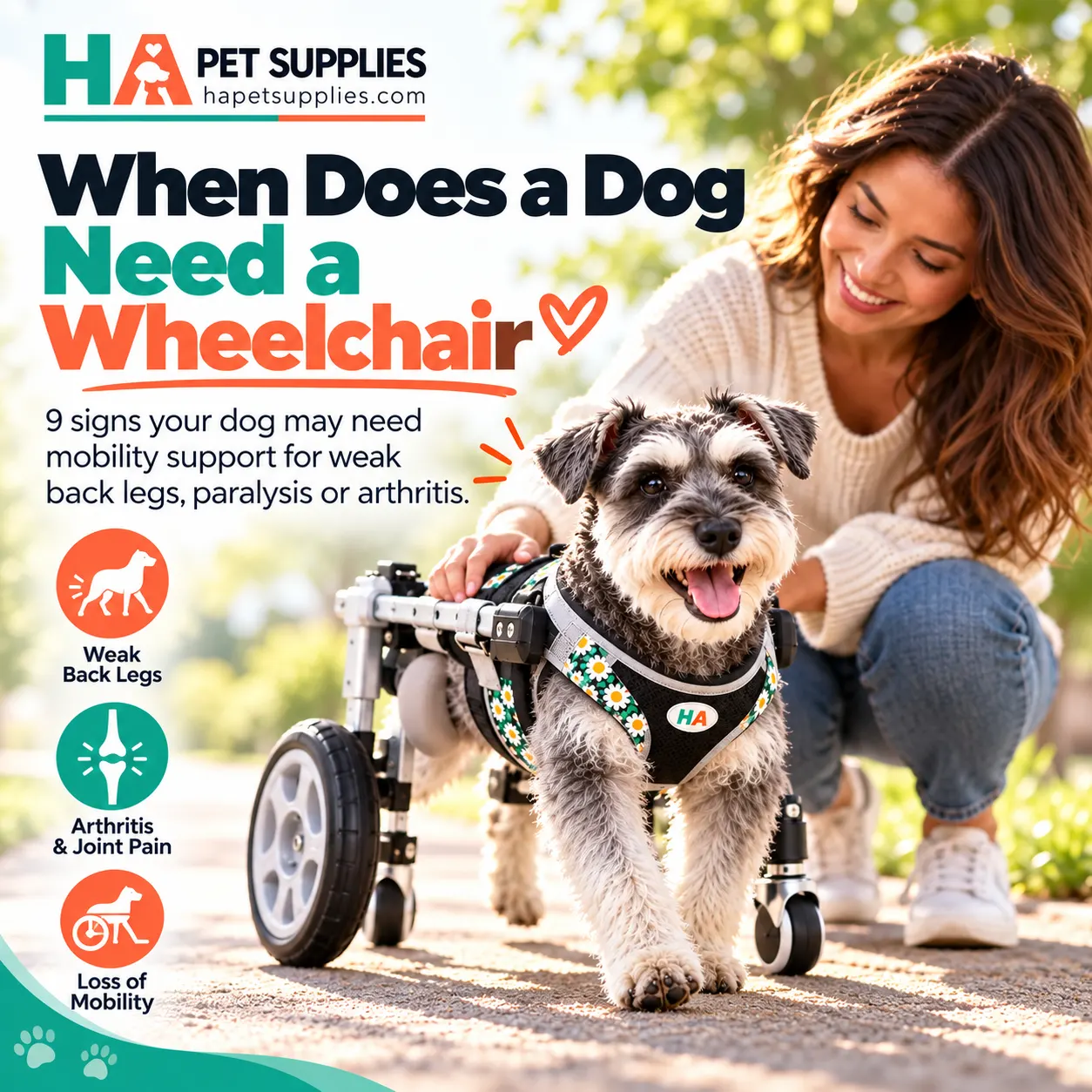
HA Pet Supplies wheelchair supporting assisted dog mobility
A dog wheelchair may become an important mobility aid when your companion struggles to stand, walks with weak back legs, drags its paws, or can no longer enjoy normal activities without assistance.
Watching your dog struggle to move can be frightening. Perhaps your normally energetic companion suddenly refuses to climb stairs. Maybe your senior dog needs help standing after a nap. Or perhaps your dog has already been diagnosed with a neurological condition, and you are wondering whether a wheelchair could help.
The first question is not simply whether your dog needs a wheelchair. It is why your dog is having difficulty moving and whether a wheelchair is a safe, appropriate solution.
Some mobility problems can improve with treatment, medication, rehabilitation, or changes to the home environment. Others may involve long-term weakness or paralysis that requires additional support.
This guide explains nine important warning signs, common medical causes, wheelchair suitability, immediate steps you can take, and how to make an informed decision without rushing into buying equipment your dog may not need.
Quick Answer: When Does a Dog Need a Wheelchair?
A dog may benefit from a wheelchair when it has persistent rear leg weakness, partial or complete hind limb paralysis, difficulty supporting its back end, or another diagnosed mobility condition that makes walking difficult.
A rear-support wheelchair may be suitable when the dog has adequate front leg strength, can tolerate the device comfortably, and has been assessed by a veterinarian.
However, sudden weakness or paralysis is a potential medical emergency, not a reason to immediately order a mobility cart.
The American Kennel Club’s veterinary guidance on dog wheelchairs explains that mobility carts may be used in selected cases involving degenerative disease, spinal problems, severe joint disease, and certain disabilities.
What should you do right now?
- Sudden inability to stand, paralysis, severe pain, or new bladder dysfunction: Seek emergency veterinary assessment immediately.
- Gradually worsening weakness, stumbling, or paw dragging: Arrange a prompt veterinary appointment and ask whether mobility support or rehabilitation is appropriate.
- An existing diagnosis with stable hind limb weakness: Discuss a rear-support wheelchair, suitable measurements, and a safe introduction plan with the treating veterinarian.
1. Why Dogs Lose Mobility in Their Back Legs
Dogs depend on coordinated movement between their bones, muscles, joints, nerves, and spinal cord. When one of these systems is injured or affected by disease, walking can become more difficult.
Not every case of hind leg weakness indicates permanent disability. A dog might be experiencing a painful joint condition, a nerve disorder, or a temporary injury that responds to treatment.
Understanding the difference matters because purchasing a wheelchair before diagnosis can delay necessary care.
Arthritis and joint problems
Osteoarthritis can cause pain, stiffness, reduced movement, and difficulty rising from rest. Dogs may stop jumping onto furniture, avoid stairs, or become reluctant to walk.
These changes can develop gradually, making them easy to mistake for normal aging.
The American Animal Hospital Association’s senior pet guidance identifies difficulty rising, reluctance to play, limping, and changes in posture as potential arthritis-related warning signs.
A dog with arthritis does not automatically need a wheelchair. Veterinary pain management, weight control, rehabilitation, and home modifications may be more suitable initially.
Degenerative myelopathy
Degenerative myelopathy is a progressive spinal cord disease that can cause increasing hind leg weakness, incoordination, paw dragging, and eventually paralysis.
Unlike many painful orthopedic conditions, degenerative myelopathy typically begins without significant pain from the disease itself.
The Cornell University College of Veterinary Medicine’s degenerative myelopathy guide discusses mobility management options including non-slip surfaces, harnesses, and wheelchairs for selected dogs.
Veterinary diagnosis remains essential because several other conditions can produce similar symptoms.
Intervertebral disc disease and spinal injuries
Intervertebral disc disease, often abbreviated IVDD, occurs when spinal disc material affects nearby spinal structures. Depending on the location and severity, affected dogs may experience pain, weakness, poor coordination, or paralysis.
Some cases require urgent surgery or intensive medical management.
The Merck Veterinary Manual’s guide to canine spinal disorders explains how different spinal conditions affect movement and neurological function.
A wheelchair may eventually become appropriate for some dogs, but acute spinal symptoms require veterinary assessment before mobility equipment is introduced.
Injury, muscle loss, and other conditions
Injuries, muscle weakness, nerve damage, orthopedic disease, and certain neurological disorders can also impair a dog’s ability to walk.
A dog with significant front leg weakness may need different support from a dog whose mobility problems affect only the back legs.
This is why diagnosis, physical examination, and assessment of the dog’s remaining movement are essential before selecting a wheelchair.
2. Nine Warning Signs Your Dog May Need a Wheelchair
These nine signs can help owners recognize when a veterinary mobility assessment is necessary. They do not diagnose a condition, and none proves that a wheelchair is needed.
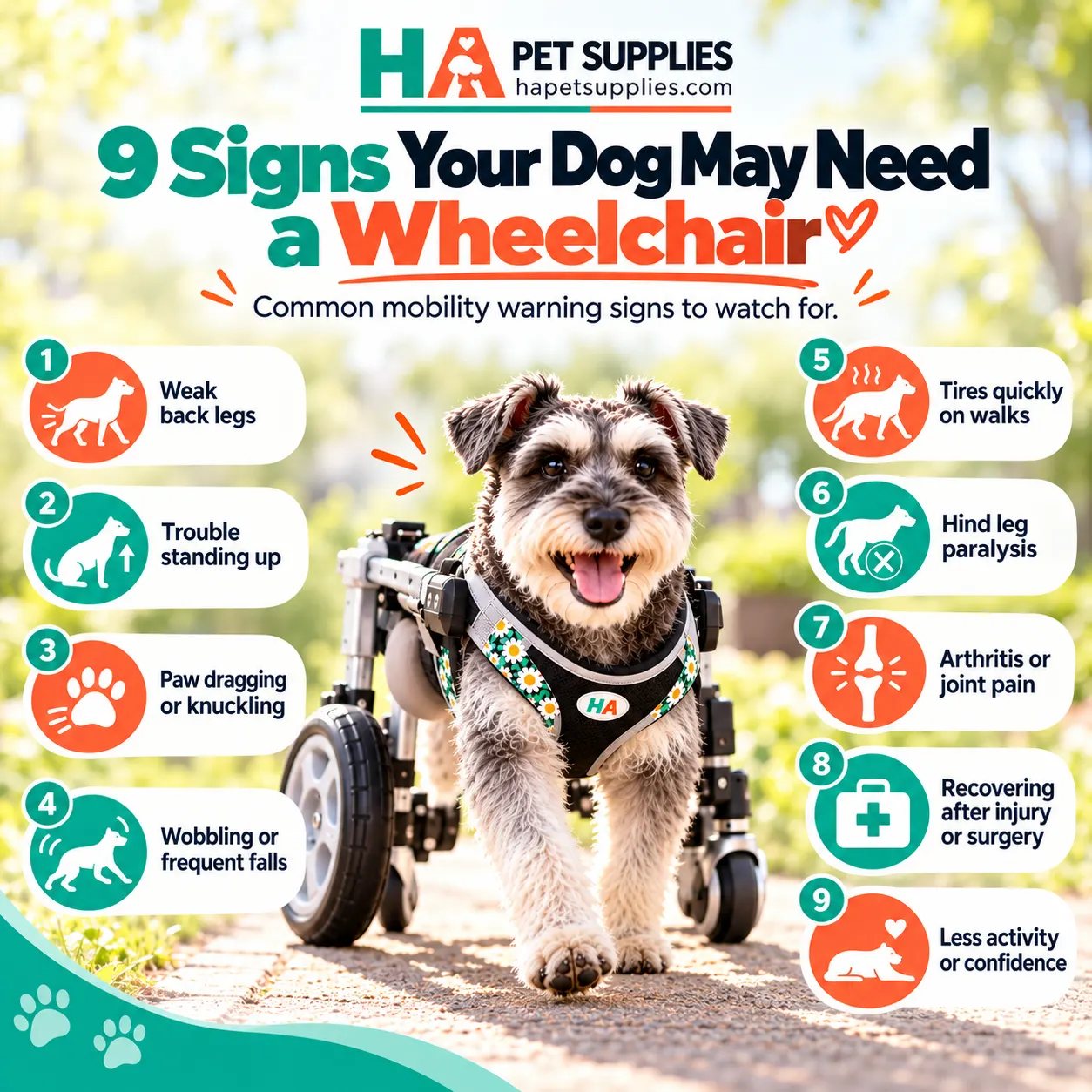
Nine mobility warning signs – when to seek veterinary assessment
Sign 1: Your dog struggles to stand up
One of the earliest mobility changes owners notice is difficulty rising from the floor. Your dog may push forward with its front legs while its hindquarters remain low. It might repeatedly attempt to stand before succeeding, or need several seconds to regain balance.
This difficulty may be most noticeable after sleeping or resting.
Possible causes include arthritis, muscle weakness, orthopedic injuries, and neurological conditions. If your dog becomes uncomfortable while standing, forcing it upright can increase distress or worsen an underlying injury.
What to do: Record how often the problem occurs and whether one or both rear legs appear affected. Arrange a veterinary evaluation, and use a veterinarian-approved support harness for essential transfers when appropriate. A dog wheelchair may become an option when rear leg weakness persists despite suitable medical management and the dog can use its front legs effectively.
Sign 2: Your dog drags its back paws
Dragging the back paws is particularly important because it may indicate that the dog cannot position its feet normally. You might notice worn toenails, scratches on the upper surface of a paw, or scuffing sounds while your dog walks.
Some dogs turn their paws under so that the top of the foot touches the floor. This is commonly described as knuckling. Paw dragging can damage the skin and nails, particularly when sensation is reduced.
It can occur with several neurological conditions, including degenerative myelopathy and some spinal disorders. The Merck Veterinary Manual’s information about paralysis in dogs describes the neurological evaluation used to identify affected nerves and limbs.
What to do: Prevent additional paw injury and arrange prompt veterinary assessment. Do not assume protective boots or a wheelchair will correct the underlying neurological problem. After diagnosis, a wheelchair with appropriate hind limb positioning support may help selected dogs move without dragging their paws.
Sign 3: Your dog’s back legs become increasingly weak
Some dogs gradually lose the strength required to support their hindquarters. Initially, they may still walk but appear slower or less stable. Over time, their rear legs may bend unexpectedly, or they may sit down after only a few steps.
Owners sometimes describe this as their dog’s back end collapsing. Weakness may result from neurological disease, muscle loss, pain, or other medical conditions.
A veterinarian may need to distinguish true muscle weakness from pain-related reluctance to bear weight.
What to do: Observe whether the weakness is worsening over days, weeks, or months. Sudden or rapidly progressing weakness requires urgent evaluation. For a dog with a diagnosed, stable condition, a rear leg wheelchair may reduce the amount of manual support needed during supervised movement. However, the dog’s front legs must be strong enough to propel and stabilize the cart.
Sign 4: Your dog frequently loses balance
Walking requires coordination between the brain, spinal cord, nerves, and muscles. When coordination is affected, a dog may sway from side to side, cross its hind legs, stumble on turns, or struggle to maintain a straight path.
These symptoms should not be dismissed as ordinary clumsiness. Loss of coordination may reflect neurological dysfunction, vestibular problems, pain, or weakness.
According to the Merck Veterinary Manual’s overview of nervous system disorders, lack of coordination and limb weakness are among the possible signs of nervous system disease.
What to do: Restrict access to stairs and slippery floors. Take a short video of the abnormal walking pattern if you can do so without making your dog walk unnecessarily. A rear wheelchair may help some dogs with hindquarter instability, but pronounced whole-body balance problems may require different support.
Sign 5: Your dog stops enjoying normal walks
A dog that once eagerly approached the door may become reluctant to leave its bed. You might notice shorter walks, frequent stops, refusal to climb steps, or unusual fatigue.
Behavior changes can be easy to overlook because dogs cannot explain their discomfort. Some owners interpret reduced activity as laziness, especially in older pets. In reality, the dog may be protecting painful joints or struggling with muscle weakness.
The AAHA’s guide to recognizing pet pain explains how reluctance to move, unusual behavior, and changes in posture can indicate pain.
What to do: Consider whether your dog is reluctant because of pain, fatigue, fear, or difficulty walking. Have the cause assessed before increasing exercise. A dog wheelchair may eventually support short, enjoyable outdoor activities, but only when the underlying problem has been identified.
Sign 6: Your dog has partial or complete hind leg paralysis
Paralysis means a loss of voluntary movement. It can affect one limb, both hind limbs, or more extensive parts of the body. Some dogs retain limited movement, while others cannot move their rear legs at all.
Sudden paralysis requires immediate veterinary attention. Conditions involving the spinal cord may be time-sensitive, and delaying care to purchase a wheelchair can compromise treatment opportunities.
An existing diagnosis of stable paralysis creates a different situation. In some dogs, a rear-support wheelchair can provide a means of assisted mobility while the front legs continue to move. However, paralyzed dogs may also have impaired sensation, bladder dysfunction, or a higher risk of pressure injuries.
What to do: Follow the treating veterinarian’s instructions on spinal protection, treatment, rehabilitation, bladder care, and safe movement. A wheelchair should be considered only after the dog’s condition has been assessed and the device is judged appropriate.
Sign 7: Your senior dog has severe stiffness or arthritis-related limitations
Older dogs commonly experience age-related changes, but persistent pain and mobility problems should never be accepted without evaluation. An arthritic dog may struggle after resting, move stiffly during cold weather, or avoid climbing stairs.
Severe arthritis can substantially affect quality of life. However, wheelchair use is not necessarily the first treatment.
The AAHA pain management guidelines emphasize individualized pain assessment and combining appropriate medical and nonmedical treatment approaches.
For many dogs, medication, weight management, controlled exercise, physical rehabilitation, and non-slip flooring are important before a wheelchair is considered.
What to do: Request a veterinary pain and mobility assessment. Discuss whether a supportive harness, home adaptations, or a mobility cart would offer the most benefit.
Sign 8: Your dog frequently falls or collapses while walking
Frequent falling is a serious mobility concern. A dog may appear to walk normally for several steps before its rear legs give way. Other dogs stumble repeatedly when turning or moving across uneven surfaces.
Falls increase the risk of injury and may cause the dog to become frightened of movement. They can also indicate significant pain, weakness, or neurological dysfunction.
A wheelchair may provide rear body support for some dogs, but it cannot reliably prevent all falls. An incorrectly fitted device may introduce additional instability.
What to do: Keep your dog on secure, level surfaces and arrange a prompt veterinary examination. If collapse is sudden, repeated, or accompanied by other concerning symptoms, seek emergency care. Until a safe mobility plan is established, avoid stairs and unsupported walking in hazardous areas.
Sign 9: Your dog needs constant lifting or support to move
Some owners eventually find themselves supporting their dog’s hindquarters almost every time the pet walks. Daily activities such as moving outdoors, reaching food, or going to the toilet may become physically demanding for both the owner and the dog.
A support sling can help with short transfers, but continuous lifting may become difficult during longer activities.
For a dog with stable rear limb impairment and sufficient front leg strength, a wheelchair may allow more independent assisted movement.
What to do: Ask your veterinarian whether the dog would benefit from a properly fitted rear cart, a lifting harness, or a more comprehensive rehabilitation plan. When considering the equipment, review our HA Pet Supplies adjustable dog wheelchair to understand the rear-support design. Confirm the exact size, load capacity, harness arrangement, and suitability before ordering.
3. Emergency Warning Signs: When You Should Not Wait for a Dog Wheelchair
A wheelchair may improve mobility in selected long-term conditions, but it cannot treat an acute spinal injury or rapidly developing neurological disease.
When a dog suddenly loses mobility, the priority is diagnosis and treatment rather than choosing equipment.
Seek immediate emergency veterinary care if your dog suddenly cannot stand or move its hind legs, experiences severe back or neck pain, develops rapidly worsening weakness, or loses bladder control alongside new mobility symptoms.
Other concerning signs include major trauma, difficulty breathing, extreme distress, or an inability to urinate.
Do not repeatedly test whether the dog can walk. Restrict unnecessary movement, handle the animal carefully, and contact an emergency veterinary clinic for transport instructions.
The Merck Veterinary Manual’s spinal disease guidance provides further context on conditions affecting the spinal cord.
🔴 Emergency
Sudden inability to walk, severe spinal pain, loss of bladder control. Seek emergency veterinary care immediately. Do not fit a cart before assessment.
🟠 Progressive Concern
Gradually worsening weakness, stumbling, paw dragging. Arrange a prompt veterinary appointment. Discuss mobility support after diagnosis.
🔵 Planned Assessment
Diagnosed stable hind leg paralysis or chronic weakness. Discuss a rear-support wheelchair with your vet and rehabilitation professional.
Immediate action versus longer-term mobility planning
| Situation | Recommended next step | Wheelchair priority |
|---|---|---|
| Sudden inability to walk | Emergency veterinary evaluation | Do not fit a cart before assessment |
| Severe spinal pain | Urgent veterinary care | Not the immediate priority |
| Progressive hind leg weakness | Prompt veterinary appointment | Discuss after diagnosis |
| Diagnosed stable hind leg paralysis | Rehabilitation and mobility assessment | May be appropriate |
| Arthritis with difficulty walking | Pain and mobility evaluation | One possible later option |
| Mild age-related slowing | Routine veterinary investigation | Not automatically necessary |
4. Dog Wheelchair vs Other Mobility Solutions: Which Is Better?
A dog wheelchair is not the only option available to owners of dogs with limited mobility. The correct solution depends on whether the dog needs occasional assistance, ongoing rear leg support, rehabilitation, or treatment for an underlying condition.
| Mobility solution | Best potential use | Main limitation |
|---|---|---|
| Rear dog wheelchair | Stable rear limb weakness with adequate front leg strength | Requires proper fit, training, and supervision |
| Support sling | Short transfers, toileting, and assisted standing | Requires the owner to provide lifting support |
| Four-wheel mobility cart | Selected dogs requiring support at both ends | More complex and requires careful fitting |
| Non-slip floor mats | Dogs slipping indoors | Does not directly support weak limbs |
| Dog ramp | Dogs needing help accessing different heights | Cannot replace medical care or restore strength |
| Veterinary rehabilitation | Improving or maintaining appropriate function | Requires professional assessment and a tailored plan |
A dog that can walk comfortably but occasionally struggles on slippery flooring may benefit more from non-slip surfaces than a wheelchair. Meanwhile, a dog with a diagnosed neurological condition and significant hindquarter weakness may benefit from more comprehensive equipment.
The AAHA senior care recommendations discuss rehabilitation and home modifications, including ramps, appropriate harnesses, and improved flooring.
For owners exploring additional mobility accessories, the HA Pet Supplies dog supplies collection offers related pet care products. Remember that supportive accessories cannot replace veterinary diagnosis or treatment.
5. What Type of Dog Wheelchair Does Your Dog Need?
Choosing a dog wheelchair is not simply a matter of finding one that looks comfortable or matches your dog’s breed. Different wheelchair designs provide different levels of assistance.
Rear leg dog wheelchair
A rear wheelchair generally consists of a support frame, wheels, and body-supporting components. It is intended for dogs whose rear legs need assistance but whose front legs can provide enough movement and stability.
This type may be suitable for selected dogs with stable hind limb paralysis, diagnosed degenerative conditions, or significant rear leg weakness. The goal is to support movement while avoiding excessive pressure on the dog’s body.
Four-wheel dog wheelchair
Some dogs require assistance with both their front and rear limbs. A four-wheel design may be considered when a dog has more generalized weakness.
However, these devices require careful evaluation because a dog with substantial weakness may not have sufficient strength or coordination for independent movement. A veterinary rehabilitation professional can help determine whether a full-support cart is appropriate.
Dog wheelchair for senior dogs
Senior dogs do not necessarily require specialized wheelchair technology solely because of their age. The important considerations are their medical condition, measurements, strength, and comfort.
A senior dog with arthritis may need pain management and rehabilitation, while another dog with stable hind limb paralysis may require a mobility cart. Age alone should not determine the purchase.
6. How to Know Whether Your Dog Is Ready for a Wheelchair
Before purchasing any mobility cart, consider whether the following questions have been answered.
Dog Wheelchair Readiness Checklist 0 of 7 reviewed
Use this checklist to organize questions for your veterinarian. It is not a medical assessment or a pass-fail test.
A wheelchair should help a dog move comfortably within its physical capabilities. It should not force the body into an abnormal posture or cause new pain.
Once suitability is established, correct sizing becomes the next priority.
Our detailed guide, Best Dog Wheelchair for Back Legs: How to Choose the Right Size, explains the measurements and fitting considerations owners should understand.
7. How to Measure Your Dog Before Buying a Wheelchair
Accurate measurement is essential because dogs of similar breeds can have very different body proportions. A small dog with a long torso may require a different frame configuration from a compact dog of similar weight.
Before buying, record your dog’s current weight, rear leg height, body length, and relevant torso width.
The exact measurement points depend on the wheelchair manufacturer’s instructions, so measurements should always be compared with the actual model’s sizing chart. Never assume that adjustable means universally sized.
Rear leg height
Many rear wheelchair sizing systems require the dog to be measured with its hind leg positioned in a natural bend. The goal is to estimate the support height without overstretching the limb.
If your dog experiences pain or cannot tolerate handling, request professional assistance rather than forcing a measuring position.
Body length and width
The frame should allow natural front leg movement without rubbing the chest, abdomen, or hindquarters. Excessively narrow frames can produce uncomfortable pressure. Oversized frames may interfere with balance and steering.
Proper fitting is especially important for dogs with reduced sensation because they may not respond normally to rubbing.
Weight capacity
Every wheelchair has a specific recommended weight range. Never purchase a cart without checking that your dog’s weight falls within its verified capacity. If the manufacturer’s weight rating is unavailable, request clarification before ordering.
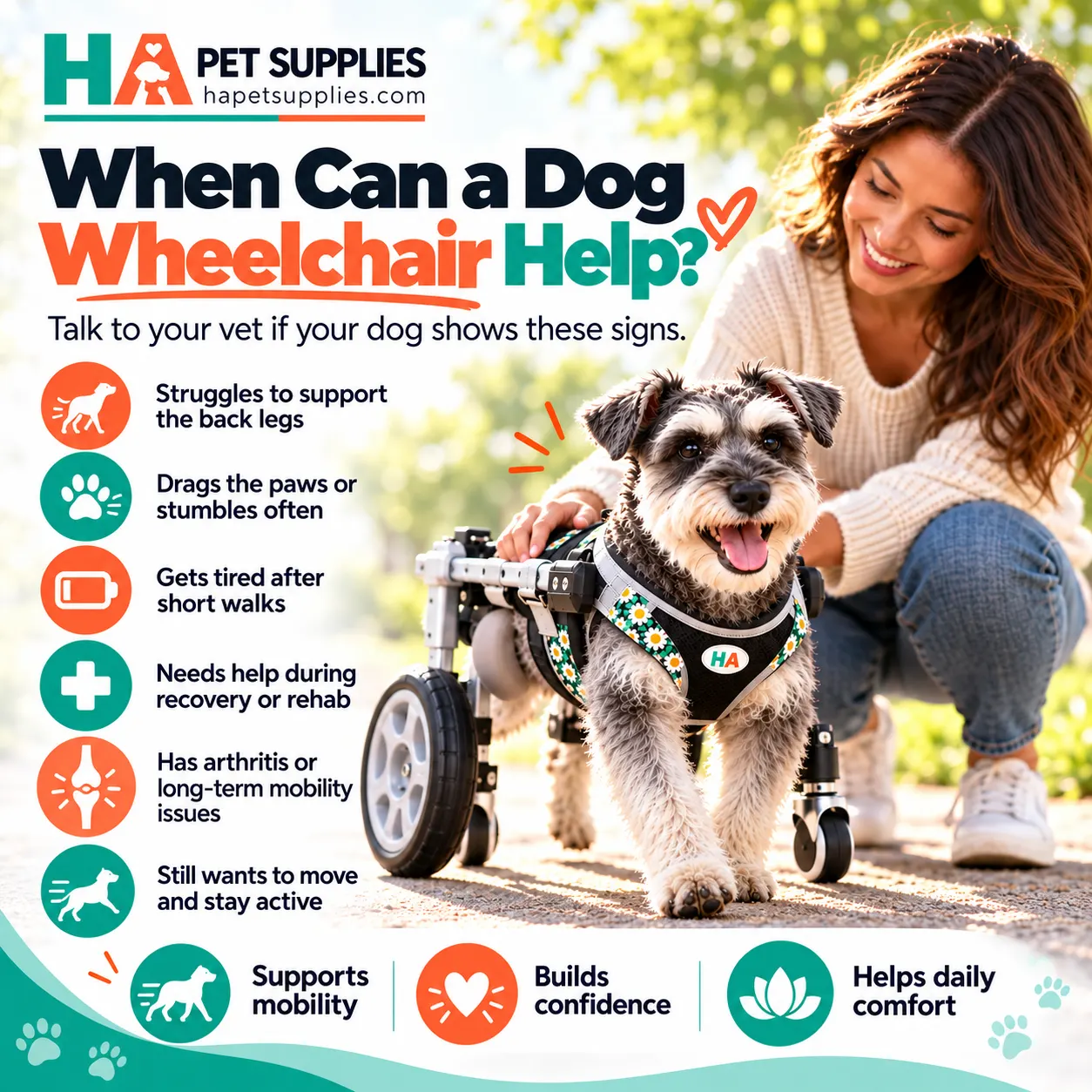
Rear leg dog wheelchair for supported outdoor movement – key fit points
8. Can a Dog Wheelchair Improve Quality of Life?
For some dogs, a properly selected wheelchair can create more opportunities to participate in comfortable daily activities. However, improvement should be measured through the dog’s behavior and physical condition rather than assuming that more movement is always better.
A useful mobility plan should consider whether the dog appears comfortable, willingly participates, maintains appropriate activity levels, and experiences fewer limitations during everyday tasks.
Caregivers should also watch for signs of pain, fatigue, pressure injuries, or reluctance to use the device.
The AAHA chronic pain assessment guidance describes the importance of monitoring changes in a dog’s normal activities and behavior over time.
Measuring improvement realistically
Instead of expecting your dog to return immediately to long walks, choose smaller, meaningful goals. Your dog may initially succeed by standing comfortably in the cart or taking a few supported steps.
Later goals may involve short supervised walks or easier movement within a familiar space. A dog that appears distressed, develops skin injuries, or consistently refuses the device may require adjustments or a different approach.
Wheelchair use and rehabilitation
Veterinary rehabilitation may involve controlled exercise, therapeutic movement, balance training, and other individually selected treatments. A wheelchair can sometimes be incorporated into this broader plan.
It should not replace rehabilitation exercises when those exercises remain medically appropriate. The goal is to support the dog’s existing abilities while minimizing unnecessary discomfort.
Emotional wellbeing and confidence
Mobility problems can also change a dog’s daily routine. A dog accustomed to exploring outdoors may become less engaged when walking becomes difficult.
Appropriate mobility assistance may make certain enjoyable experiences accessible again. However, emotional wellbeing also depends on adequate rest, social interaction, comfort, mental stimulation, and the dog’s willingness to participate.
A wheelchair is one tool, not a complete quality-of-life solution.
9. How to Introduce a Dog Wheelchair Safely
A dog may feel uncertain when first introduced to a mobility cart. The equipment looks unfamiliar, touches parts of the body in new ways, and changes how the dog moves. The best approach is usually gradual and positive.
Begin with familiarization
Allow your dog to investigate the wheelchair while it is stationary. Reward calm interest without forcing interaction. Place the cart in a quiet environment where your dog feels secure.
Check the fit before movement
Follow the manufacturer’s assembly and fitting instructions. Ensure that the wheelchair supports the body without restricting breathing, compressing sensitive areas, or interfering with front leg movement. Watch for twisting, excessive leaning, or abnormal positioning.
Practice short sessions
Once professional guidance confirms the fit, begin with brief supervised attempts on firm, level ground. Encourage small voluntary steps and reward relaxed behavior. Never drag your dog forward or force it to continue when it appears uncomfortable.
Build confidence gradually
As your dog becomes familiar with the device, you can introduce simple turns and slightly longer sessions if appropriate. The amount of practice should depend on the dog’s diagnosis, physical endurance, and veterinary recommendations.
Our step-by-step article, How to Train a Dog to Use a Wheelchair: 7 Easy Steps, provides a more detailed training plan.
10. Common Dog Wheelchair Mistakes to Avoid
Even a suitable wheelchair can cause problems when selected or used incorrectly. One of the biggest mistakes is purchasing a mobility cart before identifying the medical cause of weakness.
Another is choosing a wheelchair based only on breed, weight, or product photographs. Improper sizing may lead to discomfort, unstable movement, or excessive pressure.
Owners should also avoid leaving dogs unattended in mobility carts. Wheels can become caught on furniture, harnesses can shift, and uneven terrain can create tipping hazards.
Using a wheelchair for too long
Dogs should not remain in walking wheelchairs continuously. Rest periods allow normal repositioning, skin inspection, and recovery from activity. The appropriate length of each session depends on the individual dog.
Ignoring skin irritation
Harness pressure can produce rubbing, particularly around the groin, chest, abdomen, or other contact points. Check the skin after every session and stop using the equipment if persistent redness, swelling, or sores appear.
Allowing the hind paws to drag
Dogs with partial or complete paralysis may not position their hind paws correctly. Dragging can cause abrasions, broken nails, and injuries that may go unnoticed when sensation is impaired. Discuss suitable paw protection and compatible leg supports with a rehabilitation professional.
Giving medication without veterinary advice
A wheelchair cannot replace treatment for a painful medical condition. Likewise, owners should never administer human pain relievers such as ibuprofen or naproxen without veterinary direction.
The FDA guidance about pain relievers for pets explains why human medications can cause serious harm in dogs.
For dogs receiving prescribed anti-inflammatory medicines, the FDA’s dog NSAID safety advice also discusses monitoring for adverse effects and following veterinary instructions.
11. What to Do If Your Dog Has Weak Back Legs Today
If your dog is struggling to walk, there are several practical ways to make the environment safer while arranging appropriate veterinary care. First, determine whether the symptoms are sudden or gradually developing.
Sudden weakness, inability to walk, severe pain, or significant neurological changes require urgent assessment.
For a dog with gradual or already diagnosed mobility limitations, focus on reducing preventable hazards. Place non-slip mats where your dog normally walks. Keep food, water, and comfortable bedding within easy reach.
Prevent access to stairs or elevated furniture when the dog cannot navigate them safely. Use assistance with transfers only in ways recommended by a veterinary professional.
A properly selected supportive harness may help with certain short movements, but avoid lifting the dog in a way that twists or compresses an injured back.
Record changes in mobility and comfort so you can describe them accurately at your veterinary appointment.
You may also find relevant mobility and household accessories in the HA Pet Supplies online shop, but your dog’s immediate medical needs should determine which products are appropriate.
Keep a simple mobility diary
Record the date, walking ability, number of falls, appetite, apparent pain, and willingness to participate in usual activities. Short videos of naturally occurring movement can also help the veterinary team understand the problem.
The objective is not to create an informal diagnosis. It is to provide useful observations that support professional assessment.
12. How to Choose Mobility Support Without Wasting Money
Owners searching for a dog wheelchair are often trying to solve two problems at once: helping their dog and avoiding an expensive purchasing mistake.
A suitable wheelchair must match the dog’s condition, body proportions, and available strength. Before comparing prices, establish the type of support needed.
Next, verify the product’s specifications, including available sizes, maximum supported weight, frame adjustment range, harness components, and wheel configuration. Check whether the product provides suitable support for the dog’s hind legs and whether any additional accessories are required.
When a seller does not provide the necessary measurements, request them rather than assuming the product will fit. A responsible buying decision may also involve consulting a canine rehabilitation professional.
For help with product availability and specifications, you can request a wheelchair quote from HA Pet Supplies and include your dog’s measurements and the type of mobility support recommended by your veterinarian.
If you need to clarify product details, the HA Pet Supplies contact page provides another way to submit an enquiry.
13. Frequently Asked Questions About Dog Wheelchairs
A dog may need a wheelchair when diagnosed rear limb weakness or paralysis substantially limits comfortable movement, and a veterinarian determines that mobility support is appropriate.
Some dogs with partial hind limb weakness can still walk independently or with assistance. Others may need a harness or wheelchair. The appropriate solution depends on the cause and severity of the weakness.
Yes, some dogs with stable hind limb paralysis can use a suitable wheelchair. They need adequate front limb function, appropriate fitting, and protection against paw dragging and pressure injuries.
It may benefit selected dogs with severe mobility limitations, but arthritis is often managed through a combination of veterinary pain relief, rehabilitation, weight control, exercise modification, and environmental improvements.
No. A wheelchair provides physical support and does not repair damaged nerves or reverse paralysis. Recovery depends on the underlying condition and treatment.
Do not force it. Review the fit, rule out pain, and try gradual positive-reinforcement training if the veterinarian considers the device appropriate.
A walking wheelchair should normally be removed for sleep and extended rest. Dogs need opportunities to lie down comfortably and change position without continuous harness pressure.
There is no universal safe duration. Begin with short sessions under veterinary guidance, gradually adjusting activity according to comfort, stamina, and skin condition.
Age alone does not determine suitability. The decision depends on the dog’s strength, medical condition, comfort, and ability to benefit from supported movement.
No. Some dogs improve with medical treatment, rehabilitation, environmental changes, or short-term lifting assistance. A wheelchair should be selected only when it addresses the dog’s actual needs.
A rear-support wheelchair may be appropriate for dogs with significant hind limb impairment and sufficient front leg strength. The best model must also fit the dog’s measurements and medical requirements.
Some wheelchair designs permit normal urination and defecation, but this depends on the harness arrangement and the dog’s condition. Neurologically affected dogs may need separate bladder or bowel care.
It is not recommended, particularly when symptoms are new, worsening, or unexplained. A medical assessment helps avoid inappropriate equipment and delayed treatment.
A harness may be sufficient for short transfers or occasional help. A wheelchair may be useful for longer supervised movement in selected dogs with stable mobility limitations. The decision should be individualized.
Some dogs become more willing to participate in familiar activities after adapting to an appropriate mobility aid. However, not all dogs tolerate wheelchairs, and physical comfort remains the priority.
14. Final Thoughts: Recognizing When Your Dog Needs Mobility Support
Noticing that your dog is struggling to walk can be emotionally difficult, especially when familiar daily activities become challenging. The important thing is to recognize changes early and respond appropriately.
A dog wheelchair can be a valuable mobility aid for selected dogs with chronic hind limb weakness, diagnosed paralysis, or other conditions that affect rear leg function.
However, a wheelchair is not the right answer for every case of weakness, arthritis, or difficulty walking.
The most reliable approach begins with a veterinary examination, followed by an assessment of whether medical treatment, rehabilitation, home adaptations, supportive equipment, or a combination of these options is needed.
For some dogs, the best outcome may be improved pain control and a safer home. For others, a properly fitted wheelchair may provide opportunities for comfortable supervised exploration.
At HA Pet Supplies, we believe that choosing mobility equipment should begin with understanding the animal’s individual needs.
If your dog has been assessed and may benefit from rear limb support, explore the adjustable HA Pet Supplies dog wheelchair and confirm the specifications before deciding.
For more practical guidance on mobility care and responsible pet ownership, visit our pet care education blog.
The goal is not simply to help your dog move farther. It is to help your dog live as comfortably, safely, and happily as possible.
Need help choosing the right mobility support?
Request a personalised quote or contact our team with your dog’s measurements and veterinary recommendations.