
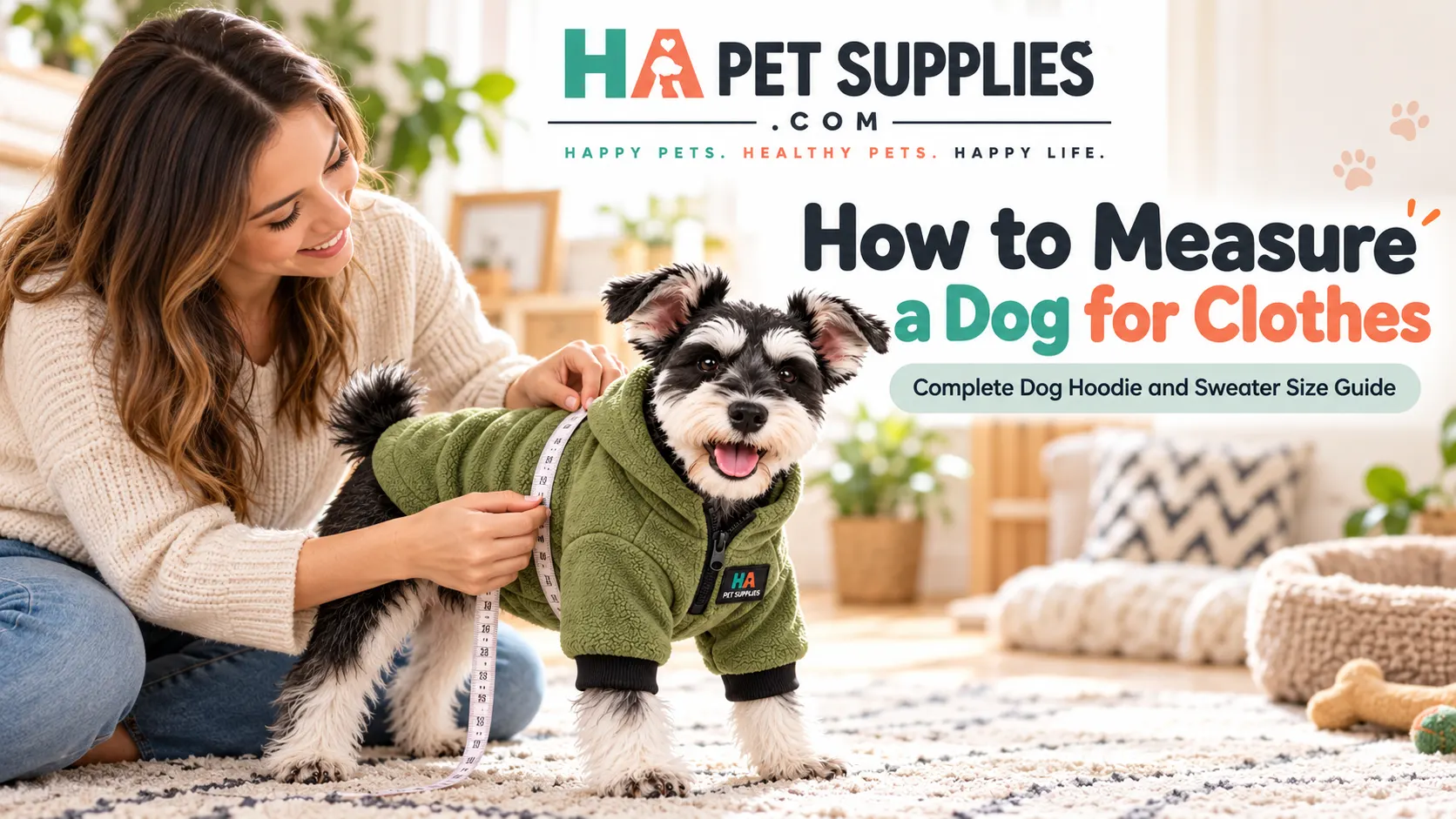
Measuring your dog at home takes just a few minutes and three simple measurements.
How to measure a dog for clothes is one of the most useful skills to learn before buying a sweater, hoodie, coat, or any other dog outfit online. You might have found an adorable fleece hoodie that seems perfect for your dog. The colour looks attractive, the material appears comfortable, and you can already imagine your companion wearing it on a chilly morning walk.
Then you reach the size selection. Small, medium, large, extra-large — what do these labels actually mean for your dog? Perhaps your dog is a Miniature Schnauzer, Pomeranian, Toy Poodle, Chihuahua, or another small breed. You know its age and approximate weight, but you are unsure whether that information is enough to choose a clothing size.
Maybe you have already bought a dog sweater that was too tight around the chest. Or perhaps a previous hoodie slid backward, restricted your dog’s movement, or was so loose that your pet kept stepping out of it. These experiences are frustrating for owners, but they can also be uncomfortable for dogs.
The good news is that choosing a suitable clothing size does not have to involve guessing. With a flexible measuring tape, a few minutes of patience, and three important measurements, you can make a more informed decision. According to the American Kennel Club’s dog clothing measurement guide, chest girth, neck girth, and back length are the three key measurements commonly used for dog apparel.
This complete guide from HA Pet Supplies explains how to take those measurements, understand different size charts, avoid common mistakes, and evaluate the fit of a dog hoodie or sweater before your companion wears it outside.
Enter your dog’s measurements above to create a copyable record. This tool does not assign a hoodie size — always compare with the specific manufacturer’s chart.
This tool provides a record of your measurements. It does not assign a garment size because the product’s manufacturer size chart must be verified first.
Quick Answer: How to Measure a Dog for Clothes in 3 Steps
If you are in a hurry, start with these three measurements.
- Chest girth: Measure around the widest part of your dog’s rib cage, usually just behind the front legs.
- Back length: Measure along the top of the body, from the base of the neck to the base of the tail.
- Neck girth: Measure around the lower neck where the neckline of the clothing will sit.
Have your dog stand naturally on a flat, non-slip surface. Use a soft measuring tape and avoid pulling it tightly against the body. Write all three measurements down in either centimetres or inches, then compare them with the size chart for the exact garment you want to buy. Do not choose a size based only on breed, age, or body weight. The PetMD’s veterinarian-reviewed dog measuring tutorial also explains how to measure a dog’s length, neck, and rib cage with a flexible tape or a piece of string.
View HA Pet Supplies Dog Hoodie1. Why Measuring Your Dog Matters Before Buying Clothes
Dog clothing sizes are not universal. A medium sweater from one seller may have a different chest measurement, back length, and neckline opening from a medium sweater sold by another company. Even two outfits from the same manufacturer may fit differently if their designs use different materials or construction styles. This means that simply choosing the same letter size you bought previously may produce disappointing results.
Clothing that is too tight can restrict movement
Imagine wearing a jacket that presses against your chest every time you bend or lift your arms. Dogs can experience similar discomfort when their clothing is too restrictive. A tight sweater may make it difficult for a dog to extend its front legs, turn comfortably, or breathe normally. A narrow neckline may also rub against the neck or make dressing unpleasant. The American Kennel Club’s guidance on properly fitted dog sweaters explains that clothing that is too tight can restrict movement, while clothing that is too loose can become tangled or create a tripping risk.
Oversized dog clothing creates different problems
Some shoppers deliberately buy an oversized hoodie because they think extra space will always be more comfortable. A little appropriate room for movement is important, but excessive looseness can be a problem. An oversized garment may rotate around the body, bunch behind the legs, or slip over the shoulders. Long sleeves may interfere with walking. A garment that hangs too low may become dirty during bathroom breaks. The safest choice is not automatically the largest available size. It is the size that best matches your dog’s measurements and the specific design.
A dog’s body shape matters more than its breed name
Two dogs can belong to the same breed and have different proportions. For example, one Pomeranian may have a relatively broad chest and compact body, while another has a narrower chest and longer back. A Toy Poodle may have a different build from a Chihuahua of similar weight. These differences help explain why product size charts should take priority over breed-based recommendations. Breed labels can provide a useful starting point, but they cannot guarantee fit.
2. What You Need Before Measuring Your Dog
You do not need professional grooming equipment or a complicated sizing tool. Most pet owners can take the necessary measurements at home with a few common items.
A flexible measuring tape
A soft fabric tape is the easiest option because it bends naturally around the dog’s chest and neck. Rigid rulers are less useful for measuring curved areas. If you do not have a soft measuring tape, use a piece of non-stretch string and then measure the marked length against a ruler. Avoid stretchy elastic strings because they may produce inconsistent results. The Ruffwear’s technical guide to measuring dogs for gear demonstrates the importance of accurately locating the widest part of the rib cage for clothing and equipment.
A notebook or phone
Record measurements immediately after taking them. Do not try to remember several numbers while holding your dog’s attention. It can help to write each measurement twice and note which unit you used. For example, write “chest circumference” rather than simply “chest” so you remember that the number represents a measurement all the way around the body.
A calm dog and suitable treats or praise
Choose a moment when your dog is relaxed. A dog jumping, twisting, or attempting to play with the tape will be difficult to measure accurately. Positive reinforcement can make the experience easier. Reward your dog for standing calmly, letting you position the tape, and remaining relaxed. If the dog becomes worried or frustrated, stop and try again later. There is no reason to rush. PetMD recommends a calm approach and discourages forcing a dog to remain in position during measuring.
3. How to Measure a Dog’s Chest for Clothes
Chest girth is one of the most important measurements for sweaters, hoodies, jackets, and harnesses. It represents the circumference around the widest part of your dog’s chest.
Step 1: Position your dog correctly
Ask your dog to stand naturally on a flat surface. The front legs should be in a normal position rather than stretched forward or bent underneath the body. The dog should not be lying down or sitting.
Step 2: Locate the widest part of the rib cage
Look behind the front legs. This is usually where the chest is widest. Place the measuring tape around the entire rib cage at that point. Be careful not to confuse chest girth with the width of the chest as seen from the front. Chest girth means measuring all the way around the body.
Step 3: Position the measuring tape
Keep the tape approximately level around the dog’s body. It should follow the body comfortably without squeezing the skin or compressing the coat excessively. A practical two-finger check can help you avoid making the tape too tight. The American Kennel Club explains this approach in its apparel measurement instructions.
Step 4: Record the measurement and repeat once
Read the number where the tape meets. Write the result down using the chosen unit. Remove the tape and measure again. If the second result differs significantly, reposition the tape and check the location. Taking a second measurement reduces the chance of choosing a size based on an accidental reading.
4. How to Measure a Dog’s Back Length for a Hoodie
Back length helps determine how far a garment extends along the dog’s body. For some products, this measurement is used as the main sizing reference. For others, it works together with chest girth.
Step 1: Keep the dog standing
The back should be in a natural position. Avoid measuring while your dog is curled up, stretching, or looking sharply to one side.
Step 2: Find the starting point and measure to the tail base
Locate the base of the neck where it meets the body, near the shoulders. Extend the measuring tape along the upper back to the point where the tail meets the body. Do not measure to the end of the tail. Keep the tape following the spine without pulling it tightly. The PDSA’s veterinary guide to measuring dogs for coats recommends measuring the back from the neck to the base of the tail and checking that clothing allows normal activities.
Step 3: Write the result down and compare
Record the back measurement separately from the chest and neck. Look for a size chart that specifies back length rather than an unclear generic “length” label. Some brands measure their products differently. If the manufacturer provides a special measuring diagram, follow it.
5. How to Measure a Dog’s Neck for Clothes
The third important measurement is neck girth. This is particularly relevant for pullover sweaters and hoodies with partial neck openings.
Step 1: Locate the base of the neck
Find the lower portion of the neck where the garment’s neckline would naturally rest. Do not automatically measure high near the head unless the particular size chart requests that location.
Step 2: Wrap the tape around the neck
Keep the tape close enough to obtain an accurate measurement without pressing into the throat. Your dog should be able to breathe and move normally. A small amount of comfortable space is important. Use the garment maker’s instructions rather than assuming all neck openings have identical stretch or construction.
Step 3: Record the number and consider the opening style
Write the neck circumference alongside the chest and back measurements. A sweater with a stretchy neck may fit differently from a hoodie with a fixed or partially zippered opening. The opening must also be wide enough for safe dressing. The HA Pet Supplies green fleece hoodie includes a partial-zip neckline. This detail can make the opening adjustable while dressing, but it does not remove the need to confirm the correct size. The PetMD’s guide to dog sweater fit identifies neck, chest, and body length as key measurements when choosing clothing.
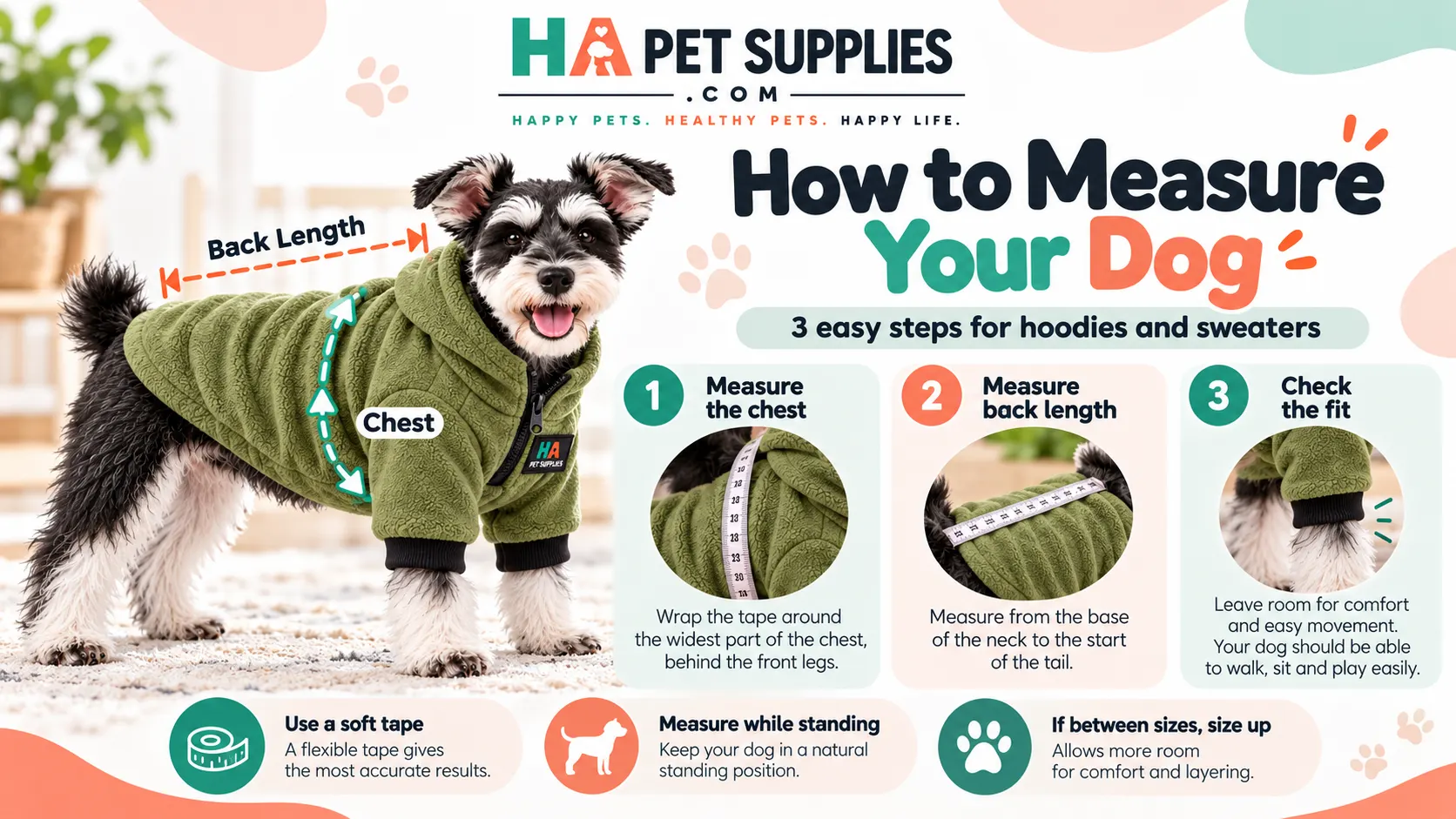
Measure the widest part of the chest, the base of the neck, and the back from the neck to the tail. These three measurements help you compare dog clothing sizes more confidently.
6. How to Read a Dog Clothes Size Chart Without Getting Confused
Now that you know how to measure a dog for clothes, the next step is learning how to use the numbers. This is where many first-time buyers become confused. Imagine that you measure your dog and record three values, but the online shop shows five sizes, several ranges, and a list of recommended breeds. Which information should you trust? Start with the actual numerical measurements.
Understand what the size letters mean
Size labels such as XS, S, M, L, and XL organize a particular manufacturer’s garments. They are not universal measurements. A medium dog sweater from one brand may be smaller than a medium hoodie from another. Therefore, choosing the same size every time can lead to mistakes.
Look for the chest measurement first
For many dog clothing designs, chest girth is a major sizing consideration because the body of the garment wraps around the torso. Check whether your dog’s chest measurement falls within the stated range. For example, consider the following fictional illustration:
| Example size | Chest range | Back range |
|---|---|---|
| A | 30–36 cm | 20–25 cm |
| B | 36–43 cm | 25–31 cm |
| C | 43–50 cm | 31–38 cm |
These are not HA Pet Supplies hoodie measurements and must not be used as a product size chart. They only demonstrate how to read a manufacturer’s ranges.
If your dog’s chest measures 40 cm and its back measures 28 cm, both hypothetical measurements would fall within example size B. That suggests B is worth investigating. You would still need to check the neckline, garment design, and any manufacturer instructions.
What if the chest and back suggest different sizes?
This situation is common. Your dog may have a broad chest and relatively short back, or a narrow torso with a long body. Instead of choosing randomly, check which measurement the manufacturer identifies as the primary sizing reference. You may also need a different garment shape. Forcing your dog’s proportions into an unsuitable clothing design is not a good solution. If chest size requires a larger garment but that garment would cover the tail or hang loosely around the legs, ask the seller for measurements or look for a more suitable cut.
Check whether the clothing stretches
Some knitted sweaters are relatively stretchy. Other garments use fabrics or seam structures that stretch less. Do not assume that a garment will accommodate a wider chest simply because it looks soft. If the stretch characteristics are not listed, request clarification before ordering. For example, Ruffwear’s dog coverall size chart demonstrates how an outdoor dog apparel company uses chest girth along with product-specific fit information. Its measurements belong only to that product and should not be reused for a different hoodie.
7. What to Do if Your Dog Is Between Two Clothing Sizes
A dog whose measurements fall exactly between two size ranges can create a difficult buying decision. You might wonder whether to choose the smaller size for a neat appearance or the larger size for extra comfort. There is no universally correct answer without understanding the product’s construction.
Why sizing up may sometimes help
When a dog is just above the maximum measurement for one size, moving to the next size may prevent excessive tightness. The PetMD measuring and sizing advice generally recommends considering the larger size when a dog falls between sizes. However, that guidance does not mean every larger garment will fit every dog.
Why a larger size can still be wrong
Suppose your dog’s chest measurement suggests a larger hoodie, but its back is much shorter than the garment’s listed length. The clothing may become loose near the tail or interfere with movement. An oversized opening can also allow the front legs to slip out of position.
Prioritize the measurements that affect movement
Start with the chest and the manufacturer’s primary sizing reference. Then confirm that the neck opening is comfortable and the back length remains practical. If the garment has sleeves, pay attention to the leg openings and cuff placement. A correct chest measurement alone cannot guarantee that a sleeved garment will fit properly. If you are comparing small-dog winter clothing styles, our guide to choosing comfortable winter clothes for small dogs explains which practical features to evaluate before purchasing.
8. How to Measure Small Dogs, Puppies and Different Body Shapes
Small-dog clothing can be especially challenging because minor measurement differences may noticeably affect the fit. A few centimetres may change whether a cuff sits correctly, whether the hoodie covers the intended back area, or whether the neckline feels comfortable.
Measuring a Miniature Schnauzer
Miniature Schnauzers can have different body proportions despite sharing a breed name. Some may have broader chests, while others have comparatively longer backs. Measure the full chest circumference rather than assuming the dog’s breed automatically corresponds to a particular clothing size. If the dog has been groomed recently, remember that coat length can affect how a garment sits.
Measuring a Pomeranian or Toy Poodle
Pomeranians often have substantial coats that can make the body’s outline difficult to see. Use your hands to locate the actual rib cage beneath the fur. Avoid compressing the coat excessively, but do not measure so loosely that the tape sits far beyond the body. Toy Poodles may have varying body proportions and coat lengths. A recently clipped dog may have a different practical fitting experience from the same dog with a longer coat.
Measuring a Dachshund or Chihuahua
Dachshunds often have longer backs relative to their chest and leg proportions. Standard size charts may not always accommodate this shape well. A garment that fits the chest could be too short along the back, while a longer garment could have overly loose openings. A Chihuahua’s small body can make a poorly positioned measuring tape a significant source of error. Use a flexible tape and work slowly.
Measuring a puppy or older dog
Puppies grow quickly, so clothing sizes may change within relatively short periods. Measure the puppy close to the time of purchase and recheck the fit regularly. Senior dogs may have mobility limitations, sensitive joints, or medical conditions that affect their tolerance for dressing. Avoid forcing the legs into uncomfortable positions. If your dog has arthritis or other movement difficulties, ask a veterinarian which clothing designs and dressing methods may be appropriate.
9. How Body Condition Can Affect Your Dog’s Clothing Size
Dogs can change body shape over time. Weight gain, weight loss, aging, and changes in muscle condition may affect how a previously comfortable hoodie fits. This means clothing measurements are not permanent.
Why weight does not tell the whole story
Two dogs can weigh the same amount and have different chest circumferences. One may be long and lean; another may be compact with a broader rib cage. Body weight may be included as a supplementary reference in some size charts, but it should not replace direct measurements.
Changes in chest circumference and muscle
If a dog gains or loses weight, the chest and torso may change enough to affect clothing fit. Older dogs sometimes lose muscle or develop movement limitations. These changes can affect the way clothing sits, even when overall weight remains similar. Look at your dog’s actual comfort rather than assuming an old size is still correct. Unexpected weight loss or gain should not be treated only as a clothing issue. If your dog’s body condition has changed significantly without an obvious explanation, discuss the situation with a veterinarian. The American Kennel Club’s body condition assessment guide explains how rib coverage, waist shape, and abdominal appearance help owners understand body condition.
10. How to Check Whether a Dog Hoodie Fits Properly
Measurements help you select a garment, but the final fit check happens when your dog wears it. A size chart cannot account perfectly for every body shape or movement pattern.
Check the chest, neck and front legs
The main body should not squeeze the rib cage. Your dog should be able to breathe and move comfortably. Look for pressure, rubbing, or signs that the neckline is pulling into the throat. A hood should not cover the eyes or interfere with normal movement. Ask your dog to walk several steps. The sleeves should not pull backward or restrict normal front-leg extension. Inspect the underarm areas for bunching and rubbing.
Check the cuffs and back
Ribbed cuffs should sit comfortably around the legs. They should not leave persistent pressure marks or cause your dog to alter its stride. The hoodie should provide its intended coverage without extending awkwardly over the tail. Look for fabric that shifts, rolls, or gathers around the waist.
Check bathroom clearance and behaviour
Make sure the garment does not interfere with normal urination or defecation. This is particularly important for long-bodied sweaters and garments with substantial lower-body coverage. The veterinary charity PDSA’s dog coat fit checklist explains that dogs should be able to move and perform ordinary activities comfortably while wearing a coat. If your dog repeatedly freezes, scratches at the outfit, walks unusually, or tries to escape, remove the garment and reassess it.
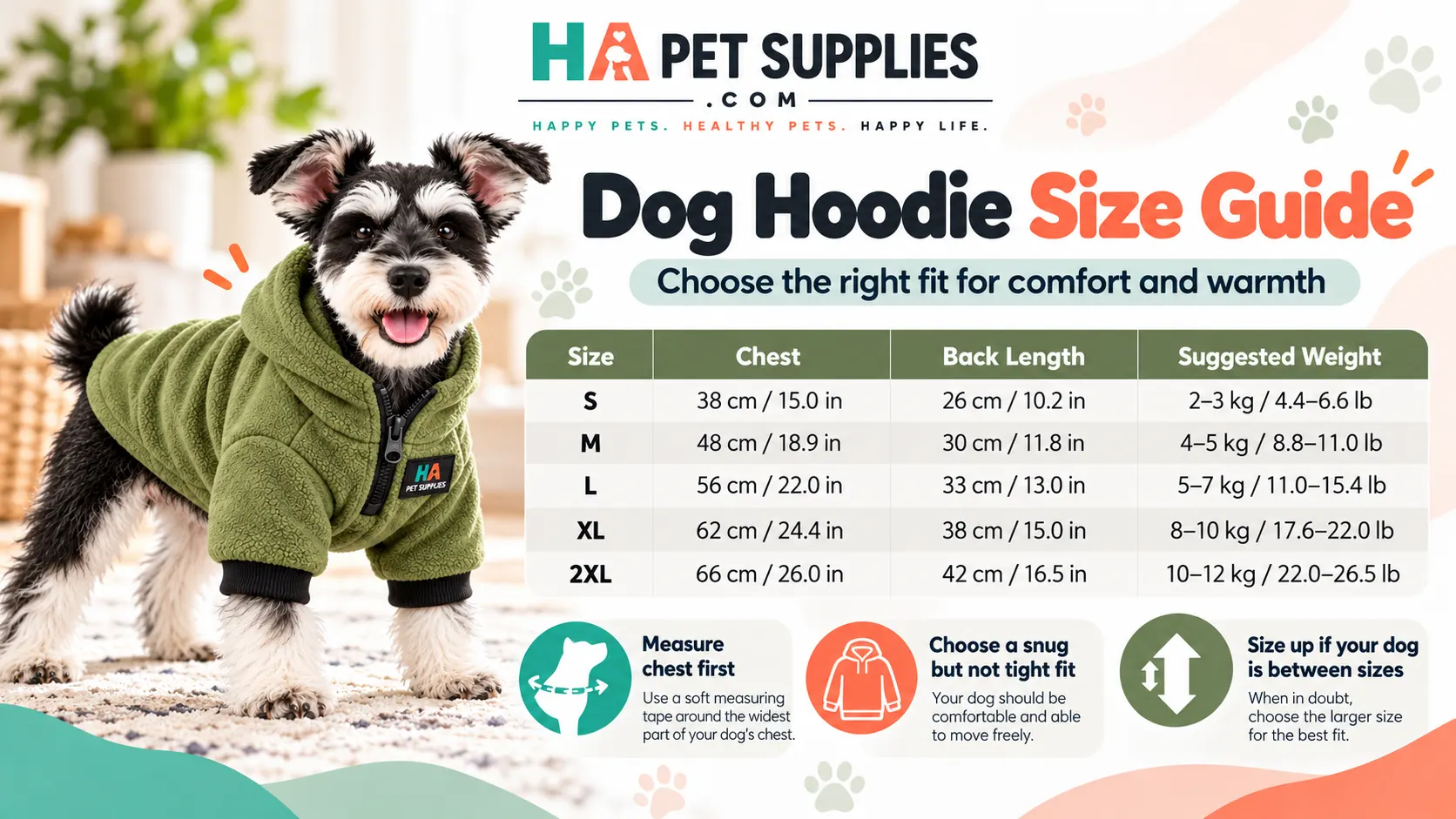
A good dog hoodie fit should allow normal walking, comfortable chest movement and enough clearance around the neck and front legs. Use a verified size chart rather than relying on a generic chart.
11. Seven Common Mistakes When Measuring a Dog for Clothes
Mistake 1: Measuring while the dog is sitting
A sitting position can change the way the back and chest are positioned. Ask your dog to stand naturally on a non-slip surface and repeat the measurement once.
Mistake 2: Pulling the measuring tape too tightly
A tape wrapped tightly around the chest may produce a smaller result than the dog’s comfortable clothing measurement. Hold the tape close to the body without squeezing it.
Mistake 3: Measuring chest width instead of circumference
If a product chart requests girth, measuring only across the front of the chest will produce an incorrect number. Wrap the tape all the way around the widest part of the rib cage.
Mistake 4: Measuring to the end of the tail
Back length generally finishes at the base of the tail, not the tip. Including the tail may cause you to choose an unnecessarily long garment.
Mistake 5: Mixing centimetres and inches
Record the unit beside every measurement and convert carefully when necessary. One inch equals 2.54 centimetres.
Mistake 6: Trusting breed recommendations too much
A size chart might describe a garment as suitable for Pomeranians, Schnauzers, or Toy Poodles. Those labels are examples, not guarantees. Rely on the actual body measurements.
Mistake 7: Using the wrong product’s size chart
A generic dog hoodie chart found online may look similar to the chart used by the seller. Compare your dog’s measurements with the specific model’s verified chart.
12. How to Choose Between a Dog Hoodie, Sweater and Jacket After Measuring
Once you know the measurements, you can compare clothing styles more effectively. Correct sizing matters for every clothing type, but the construction can change how the garment fits.
Pullover dog hoodies
A pullover hoodie has a body that is placed over the dog’s head and front legs. Some designs use a partial neck zipper, while others rely on stretchy fabric. When considering this style, pay attention to the neck opening, chest circumference, sleeve length and back coverage. Our olive-green fleece dog hoodie features a partial-zip neckline, pullover body, hood and ribbed cuffs. It is offered in green only. You should verify its actual available sizes and measurements before making a size recommendation.
Knitted dog sweaters and winter jackets
Knitted sweaters may have more stretch than certain other clothing designs. However, the amount of stretch depends on the material and construction. Winter jackets may have straps, fasteners or more structured materials. Because their fit can differ from casual sweatshirts, use the jacket maker’s own measurement instructions.
When should you choose winter clothes?
Before purchasing any winter garment, consider whether your dog needs an additional layer at all. Small, short-coated, elderly or cold-sensitive dogs may benefit from clothing in suitable conditions, while some thick-coated dogs have enough natural insulation. Our pillar article, Do Dogs Need Clothes in Winter?, explains the factors to consider before choosing a sweater or hoodie. The ASPCA’s winter safety guidance also recommends appropriate protection for short-haired dogs and emphasizes keeping pets warm and dry during dangerous winter conditions.
13. How to Introduce a New Hoodie After Choosing the Correct Size
Finding the correct size is only the beginning. Your dog also needs to feel comfortable with the garment itself.
Let your dog inspect the hoodie and start with short sessions
Before dressing your dog, place the garment nearby. Allow your pet to sniff it and investigate without pressure. Try briefly placing the neck opening around your dog without fully dressing it. If the dog accepts this calmly, continue gradually. Avoid forcing the head or legs through an opening.
Put the hoodie on gently and observe movement indoors
Open the partial zipper, if present. Guide the head through the neckline carefully, followed by the front legs. Keep fur away from zipper teeth and avoid pulling on the ears. Before going outside, encourage your dog to walk naturally around the room. Check the chest, back, cuffs and neckline. If the dog moves uncomfortably or seems distressed, remove the hoodie.
Make the experience positive and remove clothing when needed
Use praise and appropriate treats during the introduction. Keep sessions short. A properly fitted hoodie may be suitable for some supervised chilly-weather activities, but that does not mean it should be worn all day. Monitor your dog’s comfort, especially after exercise or when moving into a heated indoor environment. For broader winter care considerations, the ASPCA’s winter pet safety tips discuss cold exposure, paw care, and providing warm indoor shelter.
14. When Should You Measure Your Dog Again?
Measurements are not necessarily permanent. A dog may need a different clothing size after growing, changing body condition, or experiencing changes in mobility.
Growing puppies and adult dogs
Measure growing puppies before purchasing new clothes and regularly reassess garments they already wear. Do not assume clothing that fitted last month will remain suitable. Healthy adults with stable body condition may not need frequent remeasurement. However, it is sensible to check fit at the beginning of a new clothing season or before buying from a different manufacturer.
Senior dogs, grooming changes and weight changes
Older dogs may experience muscle or body-condition changes that affect clothing fit. If a previously comfortable garment begins to rub or shift, remeasure your dog. A major coat trim can change how a garment sits, particularly on dogs with thick or long fur. Recheck measurements if your dog gains or loses a noticeable amount of weight. Do not treat unexplained weight changes as merely a clothing issue. Veterinary advice may be appropriate.
15. A Practical Dog Clothing Size Checklist Before Ordering
Ready-to-buy size checklist
16. Frequently Asked Questions About Measuring Dogs for Clothes
Use a soft measuring tape to record the circumference around the widest part of the chest, the length of the back from the base of the neck to the base of the tail, and the circumference around the lower neck. Measure while your dog is standing naturally.
Chest girth is often particularly important because the garment must fit around the widest part of the torso. However, back length, neck circumference, sleeve openings and overall design also matter.
Yes. You can use a non-stretch string or ribbon to measure around the body. Mark the point where the string meets, lay it flat and measure the length with a ruler.
Standing is generally preferable. It allows you to measure the back, chest and neck in a natural position. A sitting posture can change the body’s shape and affect certain measurements.
Not always. Some manufacturers include weight as an additional guide, but body measurements are generally more useful. Two dogs with identical weights can have different chest and back proportions.
A larger size may be appropriate in some cases, particularly when the smaller one would be tight. However, do not automatically size up without checking the back length, neck and sleeves.
It should remain comfortably positioned without squeezing the chest, throat or legs. The dog should walk, turn, sit and breathe normally.
Only when the actual garment measurements and construction match the dog’s body. Size letters alone are not reliable evidence of compatibility.
The measurements you record can be used when comparing many types of clothing. However, each product may have a different size chart or require additional measurements.
Gently locate the underlying body beneath the coat. Measure without aggressively compressing the fur or leaving excessive space. Check the garment afterward for rubbing, matting or discomfort.
Measure before purchasing new clothing and whenever the current garment begins to feel different. Puppies can grow quickly.
Some dogs are unfamiliar with the sensation of clothing. Others may be uncomfortable because the fit, texture or opening style is unsuitable. Remove the garment and use gradual positive introduction.
Yes. Excessive length may cause the garment to shift, bunch or interfere with bathroom breaks. Compare back measurements and check how the garment sits on the dog.
No. Different manufacturers use different patterns, measurements and sizing conventions. Always compare your dog’s actual measurements with the chart supplied for the specific product.
Consider coat length, body size, age, activity, health and the actual weather. Some dogs benefit from extra insulation, while others do not need clothing for ordinary cool-weather outings.
It may fit an individual Schnauzer if the dog’s measurements match an available size. The breed name itself does not guarantee compatibility. Check chest, neck and back measurements against the verified product chart.
No. The confirmed colour option is olive green. Other colours should not be presented as available variations of this product.
Yes. Contact HA Pet Supplies with your dog’s chest, back and neck measurements, and request the actual garment size specifications. For quantity inquiries, the website also provides a dedicated quotation form.
17. Final Thoughts: How to Measure a Dog for Clothes With Confidence
Learning how to measure a dog for clothes can make shopping for pet outfits much less confusing. Instead of guessing whether your dog needs a small, medium or large hoodie, you can use actual measurements to narrow down the available options. The basic process is simple: measure the chest, back and neck while your dog stands naturally, record the numbers accurately, and compare them with the size chart for the specific garment.
However, a successful purchase involves more than finding numbers that match. The finished clothing should allow your dog to move naturally, breathe comfortably and perform normal activities without rubbing or restriction. If a size chart is unclear, ask the seller for the actual garment dimensions. If the clothing fits poorly, do not force your dog to wear it just because the label appears correct.
At HA Pet Supplies, we encourage customers to consider fit, weather suitability and their dogs’ individual needs before ordering. Our olive-green fleece dog hoodie features a partial-zip neckline, hooded design, fleece-textured body and ribbed sleeve cuffs. Its size suitability must be confirmed using actual garment measurements, not generic breed suggestions or unverified size charts.
For readers deciding whether a fleece hoodie is the right clothing style, our winter dog hoodie buying guide explains the features to consider for cooler-weather outings. You can also browse other options in the HA Pet Supplies dog supplies collection or explore additional educational articles in our pet care blog.
Find a Comfortable Fit for Your Dog
The HA Pet Supplies Green Fleece Dog Hoodie is available in olive green. Check your dog’s measurements, review the verified product details, and contact us if you need assistance.