
Methylene blue for fish is a familiar aquarium treatment, but the right diagnosis matters more than the color of the medicine. Learn when it may help, when to avoid it, and how to protect your fish and filtration system.
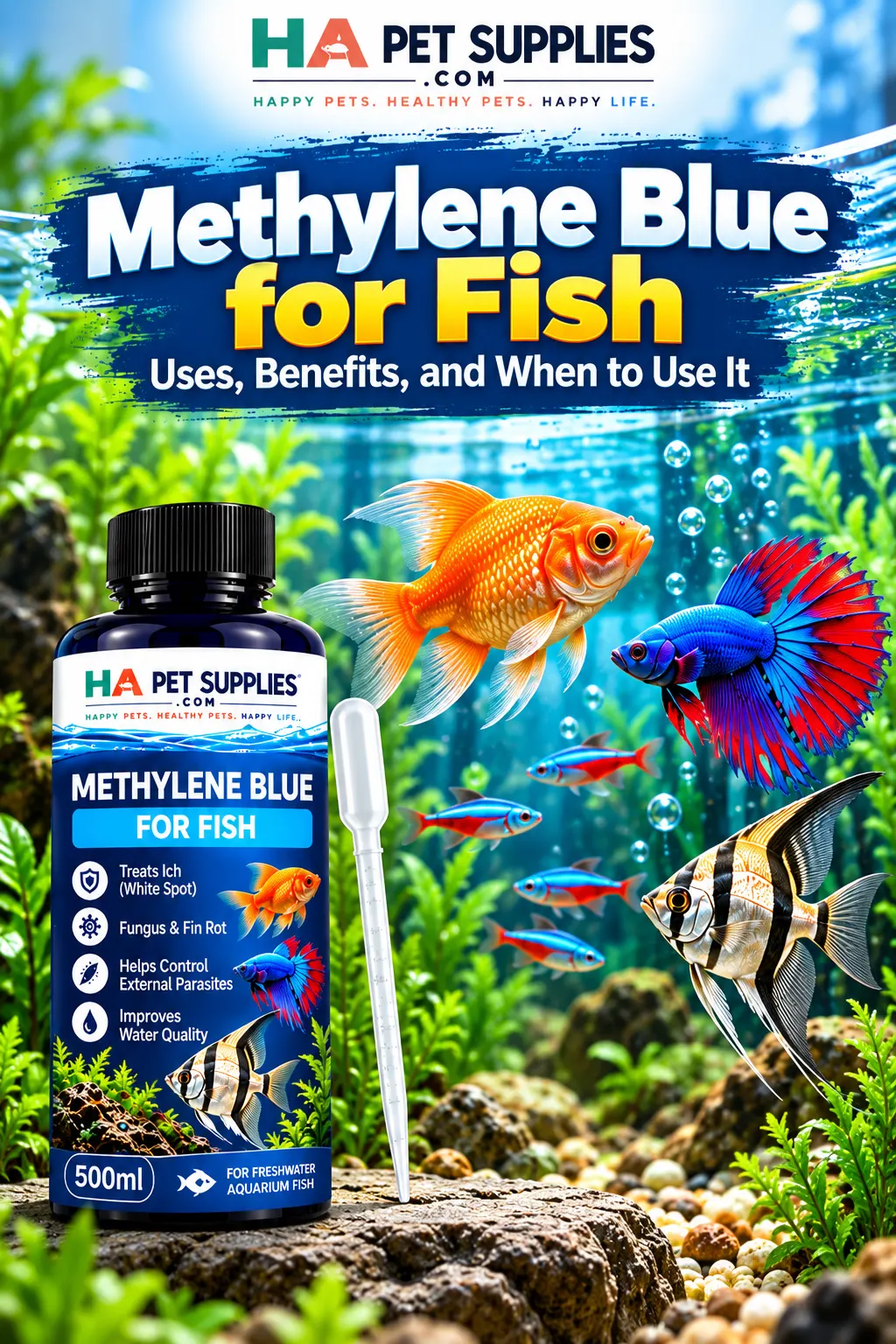
You notice something unusual in your aquarium. Perhaps your goldfish has white patches, your betta has damaged fins, or a newly purchased fish has stopped eating. A quick internet search suggests methylene blue, but the advice is confusing. Some websites call it a powerful fish treatment; others warn that it can damage a healthy tank.
Both concerns deserve attention. Methylene blue has established applications in ornamental aquaculture, especially in certain superficial fungal and fish egg treatments. Yet fish symptoms have many causes, and one medication cannot solve them all. A disease affecting the skin may look similar to a bacterial lesion, physical injury, or stress caused by dangerous water chemistry.
This pillar guide explains what methylene blue is, seven potential uses and practical benefits, why aquarium diagnosis matters, the role of quarantine, and the safety questions every owner should answer before treatment. It is designed for beginners who need understandable advice and experienced fishkeepers who want a structured refresher.
If you are already comparing products, you can view HA Pet Supplies Methylene Blue for Fish while reading. Confirm the bottle’s actual concentration and labeling before use, because treatment directions vary between formulations.
Explore Methylene Blue for Fish1. Sick Aquarium Fish? Start Here
When a fish becomes sick, acting quickly is helpful only if the action addresses the correct problem. Many aquarium emergencies are environmental rather than infectious. Water that appears crystal clear may still contain harmful ammonia or nitrite, and a strong filter flow does not always guarantee adequate oxygen.
Begin by observing the fish without handling it unnecessarily. Is it breathing rapidly, remaining near the surface, hiding, or rubbing against decorations? Are several fish affected or only one? Have you added new livestock, replaced filter media, cleaned the aquarium, or changed feeding practices?
Test the water for ammonia, nitrite, pH, and temperature. Check aeration and whether the filter is running. The University of Florida’s fish-health guidance explains that testing dissolved oxygen, ammonia, nitrite, and pH is fundamental during a disease investigation.
Read UF Fish Health GuidanceDo Immediately
- Check breathing and movement.
- Test essential water parameters.
- Verify aeration and filtration.
- Record visible symptoms.
- Review recent aquarium changes.
- Seek help for severe distress.
Avoid Immediately
- Guessing a disease from one spot.
- Combining several medications.
- Adding an unmeasured dose.
- Suddenly changing the temperature.
- Discarding all filter media.
- Assuming blue water means treatment works.
If ammonia is elevated, follow a suitable emergency water-management plan rather than treating the symptom with an unrelated dye. The University of Florida’s ammonia guide explains how ammonia arises, why it damages fish, and why water testing is essential.
If the symptoms seem infectious, a separate observation or treatment aquarium may help. However, the quarantine setup must itself have safe temperature, oxygen, and water conditions. Moving an already weakened animal into a poorly prepared container may create additional stress.
At this stage, your objective is not to purchase the strongest possible medicine. It is to determine whether the aquarium has an urgent water problem, a likely infectious disease, physical injury, or a combination of contributing factors.
2. What Is Methylene Blue for Fish?
Methylene blue is a synthetic dye with a long history in scientific, medical, and aquatic applications. In ornamental fishkeeping it is associated with certain external treatments and fungal management, including specialized applications involving fish eggs.
It is different from aquarium salt, a water conditioner, biological filtration media, or an ordinary aquarium water clarifier. Those products are intended for different purposes. A fish-care product should always be chosen for a clearly identified need rather than because it appears in a general list of aquarium medicines.
A review published in Reviews in Aquaculture discusses methylene blue as an ornamental fish therapeutic dye, including antiparasitic applications, fish-egg antifungal treatment, and species-dependent outcomes. This distinction is important: treatment performance and safety are not identical across fish species or experimental conditions.
Explore the Scientific ReviewWhy Is the Solution Blue?
The substance has a strong blue color that becomes especially noticeable when mixed with water. Many fishkeepers associate that color with the treatment, but appearance should never be used as a substitute for measurement.
A darker shade does not prove greater purity, stronger action, or safer dosing. Two commercial bottles may contain different active-ingredient concentrations, so directions written for one brand cannot automatically be applied to another.
Is Methylene Blue a General Fish Medicine?
It is more accurate to describe methylene blue as a treatment chemical with selected applications. Fish infections can be caused by bacteria, parasites, fungi, and other organisms. The correct treatment must match the cause and the animal’s condition.
The Merck Veterinary Manual’s overview of aquarium fish medicine describes the importance of professional diagnostic methods, including examination and targeted testing where required.
Even when a fish has an obvious external lesion, its cause may be more complicated than the first appearance suggests. Successful care often requires both an appropriate intervention and correction of the stressors that allowed the illness to develop.
3. Methylene Blue for Fish: 7 Important Uses and Potential Benefits
The following seven points cover commonly discussed applications and practical advantages of methylene blue. They should not be interpreted as seven guaranteed medical outcomes. Suitability always depends on the exact formulation, diagnosis, concentration, and fish species.
3D Aquarium Care Decision Guide
Recognize the specific symptoms.
Check water quality and diagnosis.
Use verified label instructions.
Track fish health and tank conditions.
Interactive-looking 3D infographic created with CSS. No separate image or script is required.
Use 1: Managing Certain Superficial Fungal Conditions
One of the better-known applications is selected superficial fungal treatment. White or gray cotton-like growth can sometimes appear on injured fish tissue or affected body surfaces. Fishkeepers often search for fungus medication after noticing this appearance.
However, cotton-like growth is not a diagnosis by itself. Some bacterial conditions and fungus-like organisms can look similar. The fish may also have underlying damage caused by poor water quality or injury.
An educational resource from the Australian and New Guinea Fishes Association discusses fungal disease management and methylene blue applications . Its discussion also identifies important concerns involving biological filtration and staining.
If your fish has spreading lesions, severe tissue damage, or worsening behavior, professional evaluation is preferable to assuming the problem is ordinary fungus.
Use 2: Reducing Fungal Problems in Some Fish-Egg Protocols
Fish breeding creates a different challenge. Eggs are vulnerable to environmental changes and, under some circumstances, fungal contamination. Some breeders use methylene blue as part of a carefully controlled egg-care procedure.
This use is not universal. Species, egg development, water conditions, and the treatment protocol all influence outcomes. A method suitable for angelfish eggs may not be suitable for zebrafish eggs or other species.
Scientific research summarized in the ornamental fish treatment review highlights that hatch-related results vary between species. Beginners should not copy breeder dosing methods without verifying that the method fits their particular fish.
Use 3: Certain Selected External Parasite Applications
Methylene blue has been discussed in some external parasite protocols, but this does not mean it treats every parasite found in a home aquarium. Organisms differ in their biology, location, and response to medication.
A protozoan parasite affecting fish skin may require a different approach from a gill fluke or intestinal parasite. An internal infection cannot reasonably be treated as if it were a superficial fungal problem.
The Merck Veterinary Manual’s fish parasite guide explains the major parasite categories and why identifying the organism matters for treatment.
Use 4: A Dedicated Treatment-Tank Option
A practical advantage of a separate treatment tank is control over the environment and the medication process. Fish can be observed more easily without exposing every animal in an established display aquarium to a chemical.
This matters particularly because methylene blue may interfere with beneficial microorganisms responsible for biological filtration. It can also stain materials used in aquarium decoration.
A treatment tank should have appropriate temperature, oxygen supply, safe water, and enough room for the fish. A bare container is not automatically safe simply because it contains fewer decorations. It still needs careful monitoring.
Use 5: Measurable Application in Liquid Form
Liquid products can be measured with suitable equipment when the label provides clear, concentration-specific instructions. This can help fishkeepers administer a planned treatment consistently.
Yet a dropper is only useful when its measurement method matches the instructions. Drop sizes can vary, and a pipette without reliable markings should not be treated as a precise milliliter-measuring instrument.
Never estimate a dose from the darkness of the water. Instead, calculate the actual water volume and follow the instructions for the exact product.
Use 6: Supporting a Structured Observation Plan
Treatment works best when fishkeepers record symptoms and monitor changes. A structured plan may include daily notes about swimming, appetite, breathing, visible lesions, and water quality.
This approach helps distinguish a real improvement from temporary behavior changes. It also makes it easier to explain what has happened when consulting an aquatic veterinarian.
The University of Florida’s fish diagnostic evaluation guidance stresses the value of systematic information and water testing during disease investigations.
Use 7: A Purpose-Specific Addition to Fish-Care Supplies
Aquarium owners often buy general maintenance products and forget that different medications serve different purposes. Keeping accurate product information available helps avoid hurried decisions when illness appears.
HA Pet Supplies offers Methylene Blue for Fish as an aquarium-care product. Before choosing it, confirm the actual bottle size, concentration, compatible species, and approved use.
For complementary supplies such as aquarium equipment and fish-care accessories, explore the fish supplies category . Treatment chemicals should complement, not replace, sound everyday husbandry.
View HA Methylene Blue Product4. When Should You Use Methylene Blue for Fish?
The most useful way to answer this question is to separate a suspected problem from a confirmed one. Finding an unusual mark on a fish is a reason to investigate, not automatic permission to medicate the aquarium.
Situation A: A Confirmed, Suitable Superficial Fungal Problem
If the condition has been appropriately identified and the exact formulation is suitable, methylene blue may be considered under the relevant treatment instructions. A separate treatment environment may protect the main aquarium from unnecessary exposure.
Situation B: A Species-Appropriate Egg Care Protocol
Some fish breeders use specific treatment protocols to help manage fungus on eggs. The appropriate concentration and exposure depend on the species and circumstances.
Situation C: A Professional Recommends a Specific Protocol
An aquatic veterinarian or fish-health specialist may recommend an external treatment after reviewing the diagnosis, fish species, environment, and risks. This is more reliable than applying a remedy simply because it has worked for another hobbyist.
When Should You Avoid Guessing?
Avoid choosing methylene blue based only on poor appetite, cloudy water, lethargy, or damaged fins. Such symptoms may occur for many reasons. They may require water management or a different diagnostic approach.
The pet-owner guidance in the Merck Veterinary Manual’s routine fish care article explains the importance of water quality, nutrition, sanitation, and quarantine in preventing disease.
If you need general aquarium-care reading before deciding what to purchase, our pet-care blog collection can help you explore related topics.
5. Methylene Blue for Fish: Ich vs Fungus vs Fin Rot
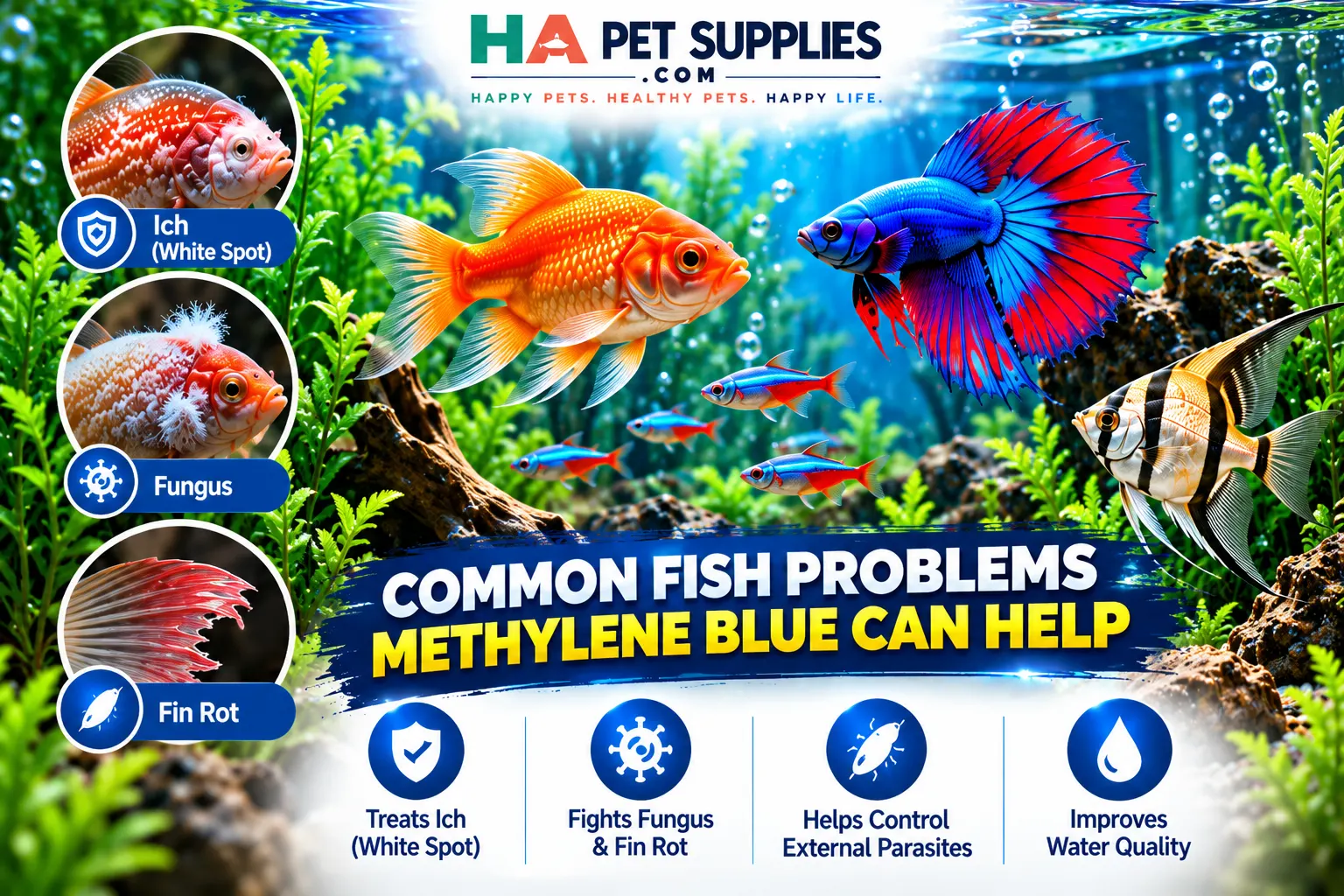
Three questions appear repeatedly in aquarium searches: Does methylene blue treat ich? Can it help fungus? Does it cure fin rot?
These conditions may all create visible changes, but they are not the same disease. Confusing them can lead to inappropriate medication and delays in effective care.
Ich: The White Spot Disease
Ich, or freshwater white spot disease, is caused by the parasite Ichthyophthirius multifiliis. Affected fish may show small white spots, irritation, flashing, or breathing problems.
Its life cycle influences when a treatment can reach vulnerable stages. Because the organism also spends time away from the fish, visible spots are not the whole disease process.
Methylene blue is not a universally established first-choice ich cure. A condition-specific plan based on the parasite and aquarium environment is important. The Merck parasitic disease reference discusses life-cycle-dependent approaches to ich management.
Fungus: White Cotton-Like Growth
Some superficial fungal problems can resemble white tufts of cotton attached to the skin, fins, or injured tissue. Certain methylene blue formulations and protocols have been used for these conditions.
However, a white fuzzy lesion should not be treated as a definitive fungal diagnosis. Some bacteria, including organisms that produce columnaris disease, can create confusing appearances.
Fish may also develop secondary infections following injury or environmental stress. Identifying the cause is therefore essential.
Fin Rot: Damaged or Eroding Fins
Fin rot is a descriptive term for deterioration of fin tissue. It may be associated with bacterial infection, injury, or unfavorable water conditions.
If bacteria are involved, a dye alone may not address the problem. Fish also require correction of any ongoing stressors, such as aggressive tankmates, poor water quality, or mechanical injury.
The Merck guide to bacterial diseases of fish discusses the importance of diagnosis and targeted antimicrobial selection.
| Condition | Common Appearance | Main Concern | Methylene Blue Role |
|---|---|---|---|
| Ich | Small white spots and irritation | Protozoan parasite | Not a universal first-choice cure |
| Superficial fungus | Cotton-like growth | Fungal or fungus-like condition | Established use in some protocols |
| Fin rot | Frayed or eroding fins | Bacteria, injury, or environmental stress | Not a guaranteed standalone treatment |
| Ammonia stress | Gasping, lethargy, irritated gills | Water-quality toxicity | Does not replace water correction |
If your main concern is distinguishing these three diseases, see our detailed guide: Does Methylene Blue for Fish Treat Ich, Fungus, and Fin Rot?
Compare Ich, Fungus, and Fin Rot6. Is Methylene Blue for Fish Safe?
Safety is not determined only by the name of the active ingredient. Concentration, exposure duration, species sensitivity, tank conditions, and concurrent treatments all matter.
Protect the Biological Filter
Beneficial microorganisms help convert ammonia into nitrite and then nitrate. This biological process is a major part of normal aquarium maintenance.
Methylene blue may interfere with the functioning of a biological filter. If a mature filter is affected, ammonia and nitrite can rise. Those changes can become dangerous independently of the original illness.
University of Florida’s review of chemical treatments and biofilter bacteria discusses the way treatment chemicals can influence bacterial filtration performance.
Understand Biofilter RisksBe Careful With Live Plants
Plants are living aquarium organisms, not merely decorations. Some medications can affect their growth or interact with the environment in which they are rooted.
Avoid assuming that a product suitable for a particular fish is necessarily suitable for all planted aquariums. Follow the specific compatibility guidance provided with the actual formulation.
Check Shrimp and Snail Compatibility
Community aquariums may contain shrimp, snails, and other invertebrates. These animals can differ greatly from fish in their response to medications.
A chemical should not be introduced into a mixed-species tank unless the product directions confirm that the intended use is compatible with its inhabitants.
Expect Possible Staining
Methylene blue can stain silicone, porous rocks, wood, clothing, and skin. The staining problem is especially relevant to decorated display tanks that owners want to preserve.
Manufacturer information from Kordon’s methylene blue product guidance discusses staining, porous materials, and removal of the dye following treatment. Its instructions are specific to that manufacturer’s formula, not a dosage guide for other products.
Never Assume Every Fish Species Is Equal
Fish differ in physiology, size, age, and tolerance to chemical exposure. A protocol studied in one species may be inappropriate for another.
This is particularly important for fry, highly stressed animals, and species with special husbandry requirements. Ask a qualified professional when product compatibility is uncertain.
7. How to Use Methylene Blue for Fish Responsibly
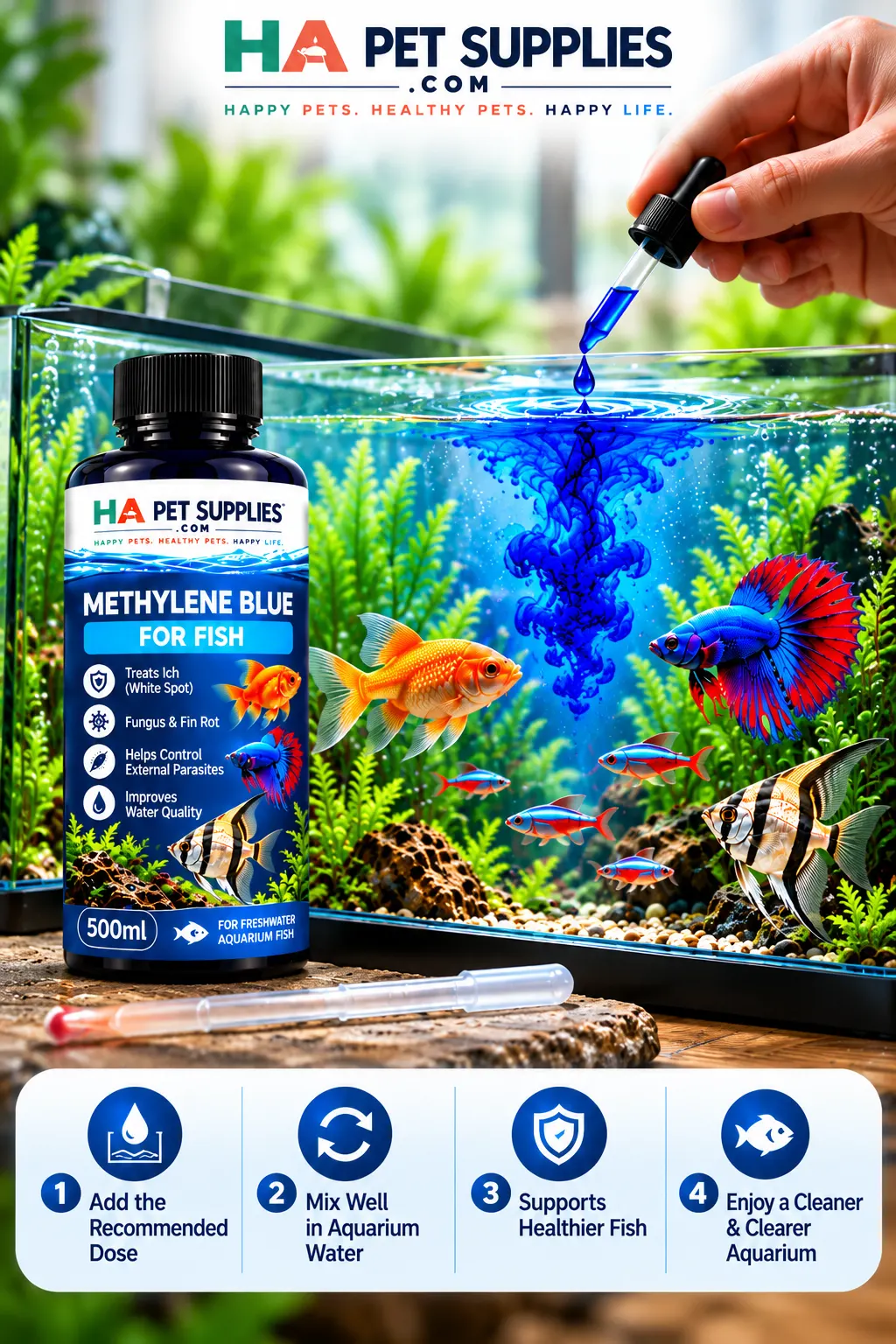
Beginners often want a simple treatment recipe. Yet using any fish medicine safely requires a few checks before measuring the first dose.
The following process is a planning checklist. It deliberately does not provide a universal dose because product strength and approved instructions vary.
Observe the Symptoms
Look for changes in skin, fins, breathing, appetite, and movement. Record when the problem began and whether multiple fish show similar symptoms.
Test Aquarium Water
Check ammonia, nitrite, temperature, and pH. Assess aeration and inspect the filter. Correct critical environmental problems using a suitable fish-safe management plan.
Confirm Treatment Suitability
Make sure methylene blue is appropriate for the condition. Consult a qualified fish-health professional if the cause is uncertain or the fish is severely ill.
Choose the Treatment Environment
Follow the verified label when choosing a quarantine tank, controlled bath, or another application method. Protect established filtration and sensitive livestock.
Calculate Actual Water Volume
Measure the quantity of water that will receive medication. Aquarium dimensions alone can overestimate the water volume when gravel, decorations, and equipment occupy significant space.
Read the Exact Product Instructions
Verify concentration, dose, treatment duration, application method, and precautions. Do not substitute directions from a different brand or concentration.
Measure and Apply Correctly
Use appropriate measuring equipment and follow the validated directions. If dilution is required, use the method specified for that formulation.
Monitor Fish and Water
Watch respiration, activity, feeding, and visible symptoms. Continue testing water parameters, particularly if filtration may have been affected.
Finish Treatment as Directed
Follow the approved course and any necessary post-treatment water changes. Do not prolong treatment simply because the water remains blue.
If you need more detail about dosing logic, treatment time, or planning a separate treatment setup, see the companion methylene blue dosage and safety guide .
Read the Complete Dosing Safety Guide8. Methylene Blue for Fish: Dosage and Treatment Time Explained
The first fact every buyer should understand is that bottle volume does not equal active-ingredient concentration. A 100ml bottle and a 500ml bottle may contain liquids of identical strength, different strength, or even different formulations.
Therefore, a generic recommendation such as “add a few drops” cannot safely apply to every bottle. Drop size also varies according to the measuring device.
Why Does Tank Size Matter?
A treatment plan must account for the actual water volume exposed to the medication. A tank marketed as a particular capacity may contain less water after substrate, rocks, and decorations are added.
This difference can become significant, especially in smaller aquariums. Overestimating the water volume may result in excessive chemical concentration if the dose is calculated incorrectly.
How Long Should Treatment Continue?
Treatment time depends on the condition, product concentration, species, application method, and response. Egg-care protocols and treatment baths are not necessarily interchangeable.
A fish that looks better after a short period may still require observation or a different clinical assessment. Conversely, continuing medication after the approved period can expose fish unnecessarily.
The Merck aquarium management guidance discusses accurate water volume, treatment-bath planning, and the need to consider medication effects on aquatic systems.
9. Common Methylene Blue Fish Treatment Mistakes
Mistake 1: Treating Without Diagnosing
A white mark on the skin may reflect parasites, fungus, bacteria, injury, or another process. Treating without evaluating the likely cause may expose fish to an inappropriate medicine while the underlying condition continues to worsen.
Mistake 2: Ignoring Ammonia and Nitrite
Harmful dissolved compounds cannot reliably be detected by the appearance of aquarium water. Test results are essential, particularly after filter disruption, excessive feeding, or a major change in tank maintenance.
Mistake 3: Medicating the Entire Display Tank
A decorated community aquarium contains more than fish. Biological filtration, plants, invertebrates, and porous materials may all be affected by the treatment. A dedicated treatment system is often more controllable.
Mistake 4: Assuming More Is Better
Increasing the concentration without validated instructions does not guarantee better treatment. Higher or repeated exposures may create additional risk for sensitive fish.
Mistake 5: Combining Random Remedies
Aquarium forums sometimes recommend mixing salt, dye, and multiple medicines. A combined treatment should only be used when the protocol is appropriately validated for the species and clinical situation.
Mistake 6: Judging Results by Water Color
Blue water does not establish that a particular parasite has been eliminated or that an infection has resolved. Improvement should be judged by fish health, a confirmed diagnosis, and relevant follow-up assessment.
Mistake 7: Forgetting Long-Term Prevention
Treating a fish without addressing crowding, unsuitable water conditions, aggressive tankmates, or poor feeding practices can allow the problem to return. Prevention is not glamorous, but it is usually more dependable than repeated emergency medication.
10. Comparing Aquarium Fish Treatments and Maintenance Products
Fishkeepers sometimes compare methylene blue with water conditioners, aquarium salt, antifungal products, and antibacterial medicines. These comparisons can be misleading unless the intended purpose is understood.
| Product Type | Main Purpose | Important Limitation |
|---|---|---|
| Methylene blue | Selected external and egg-care applications | Not suitable for every fish illness |
| Water conditioner | Preparation of source water as labeled | Not a fish infection treatment |
| Biological filtration | Processing nitrogenous waste | Not a medication for active infection |
| Targeted ich treatment | Addressing a confirmed parasitic condition | Species and formulation precautions apply |
| Antibacterial medication | Selected diagnosed bacterial infections | Requires appropriate veterinary selection |
| Water testing kit | Detecting environmental problems | Diagnostic aid, not direct treatment |
For someone buying their first aquarium, a dependable test kit and suitable filtration may be more urgently needed than keeping several bottles of medication on a shelf.
For someone with a confirmed superficial fungal problem, an appropriate treatment product may be relevant. This is why a product’s value should be judged by suitability, not by the number of diseases named in an advertisement.
HA Pet Supplies’ online shop helps customers browse fish-care items and related pet supplies. Consider the needs of your particular aquarium before making a purchase.
Browse Aquarium Care Products11. Keeping Fish Healthy After Treatment
The best aquarium management plan does not end when the visible symptoms disappear. Fish still require stable water, nutritious food, suitable social conditions, and careful observation.
Keep Water Chemistry Stable
Regularly monitor the parameters that matter for your particular species. Record measurements so gradual changes can be recognized before they become serious emergencies.
Maintain Biological Filtration
Avoid unnecessary destruction of established filter media. Beneficial bacteria require suitable conditions to process ammonia and nitrite effectively.
Quarantine New Livestock
Introducing a new fish without observation can increase disease risk. A well-managed quarantine system allows fishkeepers to check for abnormalities before adding animals to a community tank.
Choose Suitable Tankmates
Aggressive behavior can damage fins, disrupt feeding, and create stress. Research the social needs and compatible conditions of the species you keep.
Feed Appropriately
Overfeeding can worsen water quality, while poor nutrition may affect overall health. Select a suitable diet, feed appropriate portions, and remove unnecessary waste as part of routine care.
Watch for Recurring Symptoms
If the same problem returns repeatedly, investigate the environment rather than simply repeating a medication. Recurring lesions may reflect unresolved injury, persistent pathogens, or husbandry stress.
The Merck guide to fish disorders and diseases provides further context on the many conditions that can affect ornamental fish.
Readers looking for more pet-care articles can explore the HA Pet Supplies blog . Everyday prevention and early recognition often make a greater long-term difference than emergency product purchases.
12. Methylene Blue for Fish: Frequently Asked Questions
Click any question below to expand the answer. These FAQs address common concerns raised by beginner and experienced fishkeepers.
What is methylene blue for fish used for?
It is used in selected ornamental fish treatment applications, especially some superficial fungal and fish egg-care protocols. The exact application depends on the formulation, species, and confirmed problem.
Does methylene blue cure ich?
It should not be considered a universal or guaranteed cure for ich. A targeted protocol based on the parasite’s life cycle and fish species is more appropriate.
Can methylene blue treat fish fungus?
Certain superficial fungal conditions are recognized applications. However, white cotton-like growth can have several causes, including bacterial disease. Confirm the diagnosis first.
Does methylene blue work for fin rot?
Fin damage may result from injury, infection, or poor water conditions. Methylene blue is not a guaranteed standalone solution. The cause determines treatment.
How much methylene blue should I add?
Follow the exact product concentration and verified label instructions. Do not estimate dosage from bottle size, water color, or generic drop counts.
How long should treatment last?
Duration varies according to the application, formulation, and species. Follow the validated instructions or aquatic veterinary advice.
Can methylene blue damage my filter?
It may interfere with beneficial nitrifying bacteria. A separate treatment tank can help protect established filtration.
Is it safe for shrimp and snails?
Do not assume compatibility with invertebrates. Different animals may have different chemical sensitivities. Confirm suitability before exposure.
Will methylene blue stain my aquarium?
Yes, staining of silicone, porous decorations, and nearby materials is possible. Carefully planned treatment can reduce unwanted damage.
Can I use it in a planted tank?
Plant compatibility must be checked. A separate treatment environment may be preferable to exposing a planted display tank unnecessarily.
Is methylene blue a water clarifier?
No. It does not replace biological filtration, water changes, or testing. Aquarium water can look clear while containing harmful dissolved substances.
Can I use methylene blue with salt?
Only follow a combined treatment if it is specifically supported by validated instructions or a qualified aquatic veterinarian. Do not mix chemicals based on guesswork.
Can methylene blue be used for fish eggs?
It has been used in certain fish egg antifungal protocols. Safety and effectiveness can vary by species, developmental stage, and treatment method.
Is methylene blue suitable for bettas?
This depends on the problem, formulation, and fish condition. Check the exact product directions and species compatibility.
Where can I buy methylene blue for fish online?
Visit the HA Pet Supplies methylene blue product page to review product information and availability. Confirm concentration and label details before purchasing for treatment.
13. Final Verdict: When Is Methylene Blue Worth Considering?
Methylene blue for fish can be a useful part of ornamental fish care when selected for a suitable purpose and used under verified instructions. Certain superficial fungal conditions and species-specific egg-care protocols are among its recognized applications.
However, responsible treatment begins before the medicine enters the water. Fishkeepers must understand the symptoms, evaluate the aquarium environment, and confirm that the product matches the problem.
White spots, fungal-looking patches, fin damage, and unusual behavior are not interchangeable diagnoses. Different conditions require different responses. A medicine may help in one situation and be unsuitable in another.
The most important long-term lesson is that stable water quality, suitable filtration, careful feeding, quarantine, and early observation remain the foundation of fish health. Medication is an additional tool, not a replacement for those practices.
If you are researching the product for your aquarium, explore HA Pet Supplies to discover our fish-care products and educational resources.
Explore HA Pet Supplies Methylene Blue for Fish
Find aquarium treatment information, review product availability, or ask about packaging and ordering options. Always confirm the exact formulation and directions before treatment.
View Methylene Blue Product Request a Quote Contact HA Pet SuppliesThis article provides general educational information for ornamental fishkeepers. It is not a substitute for diagnosis or treatment advice from a qualified aquatic veterinarian. Follow verified product labeling and applicable regulations.