
Description
Fishing Line That Makes Every Cast Count
Fishing line can make the difference between enjoying a relaxing
day on the water and spending valuable time fixing knots,
clearing tangles, or wondering whether your line is suitable
for the fish you want to catch.
Explore the HA Pet Supplies fishing line brand story below,
from common fishing frustrations to choosing, spooling,
and using the right line with greater confidence.
enjoyable fishing trip.
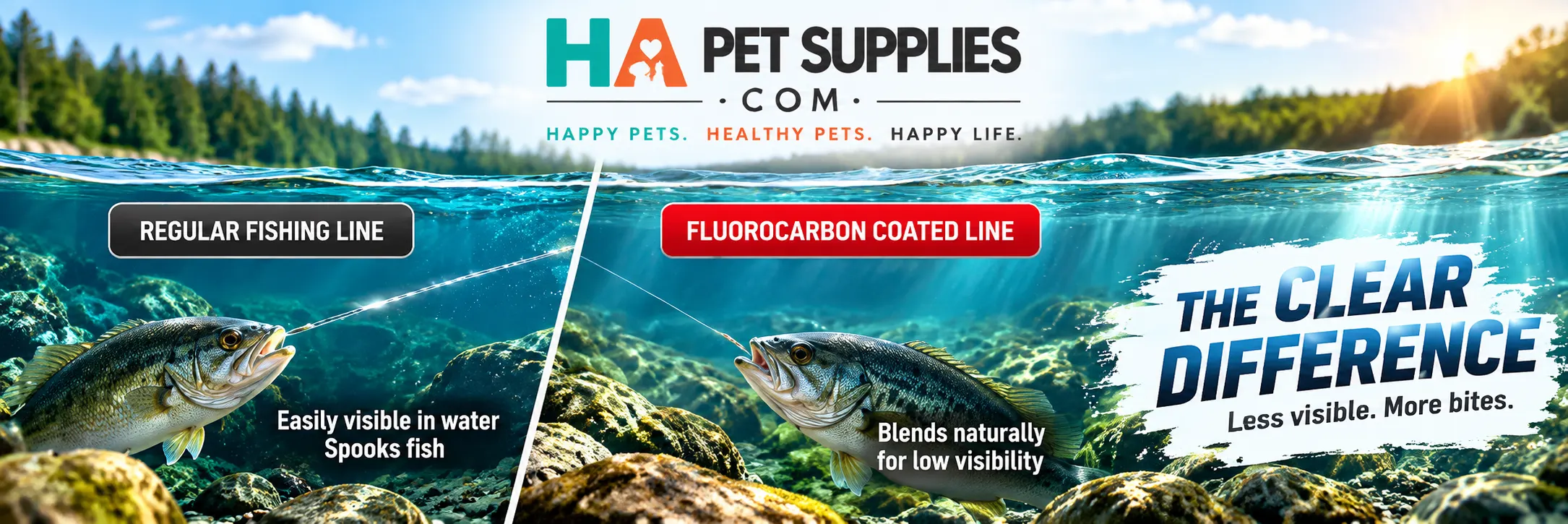
line for different water conditions.
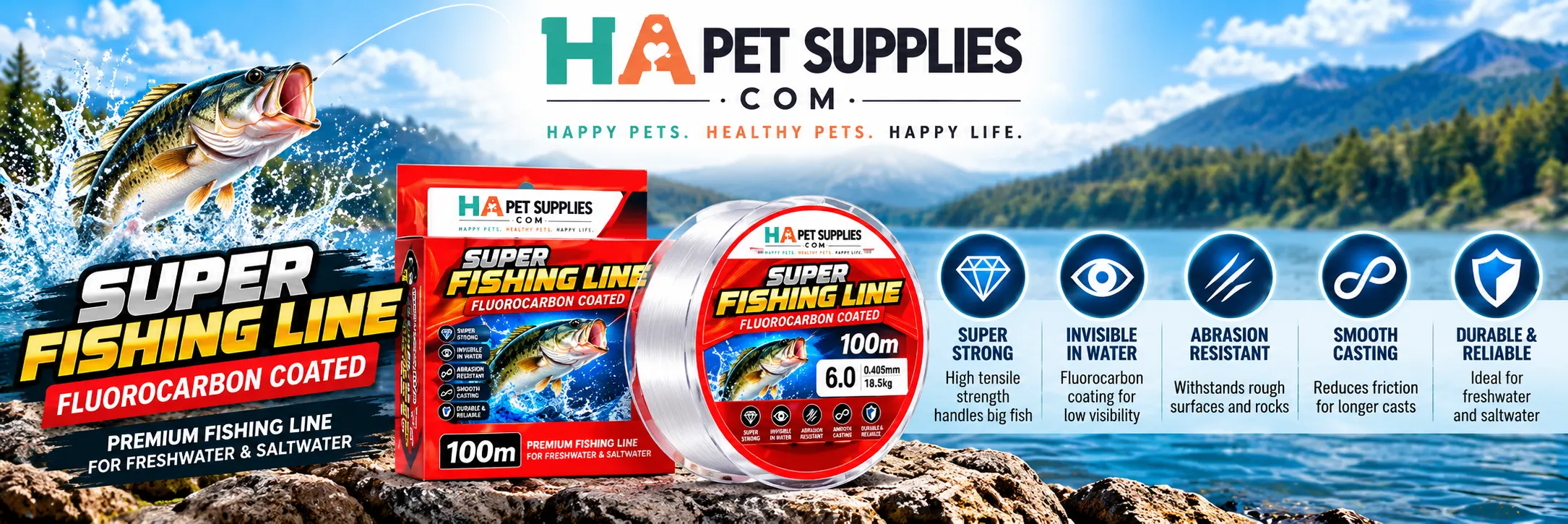
Supplies fluorocarbon coated nylon fishing line.
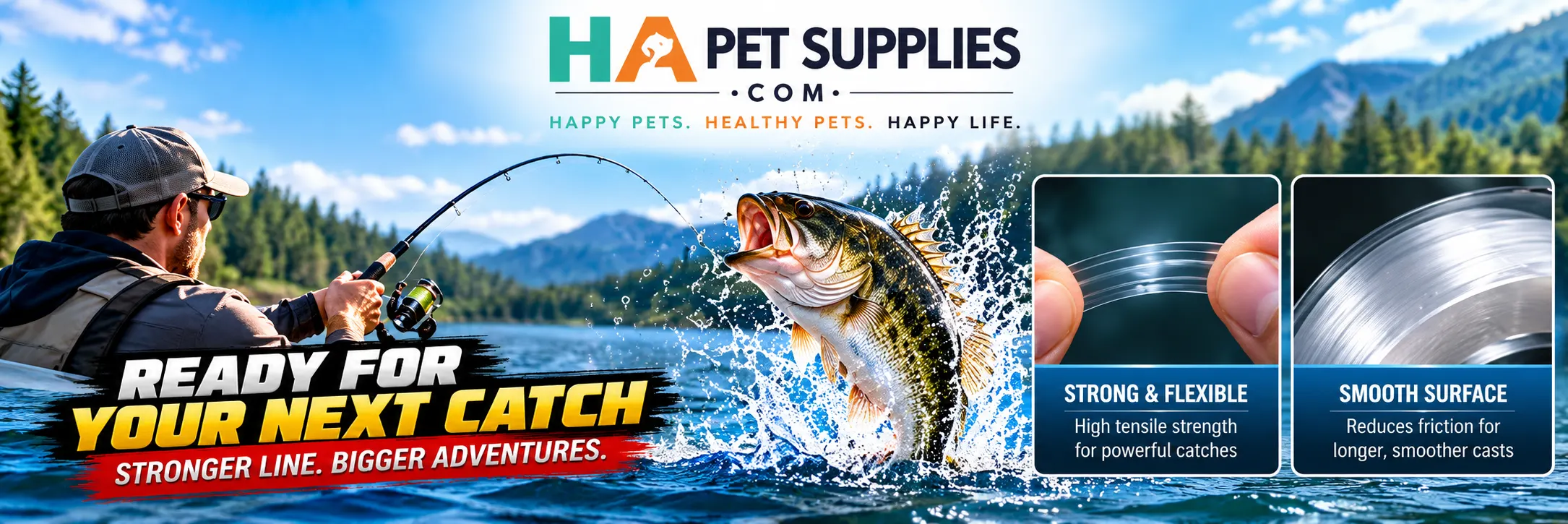
technique help create a more confident fishing experience.
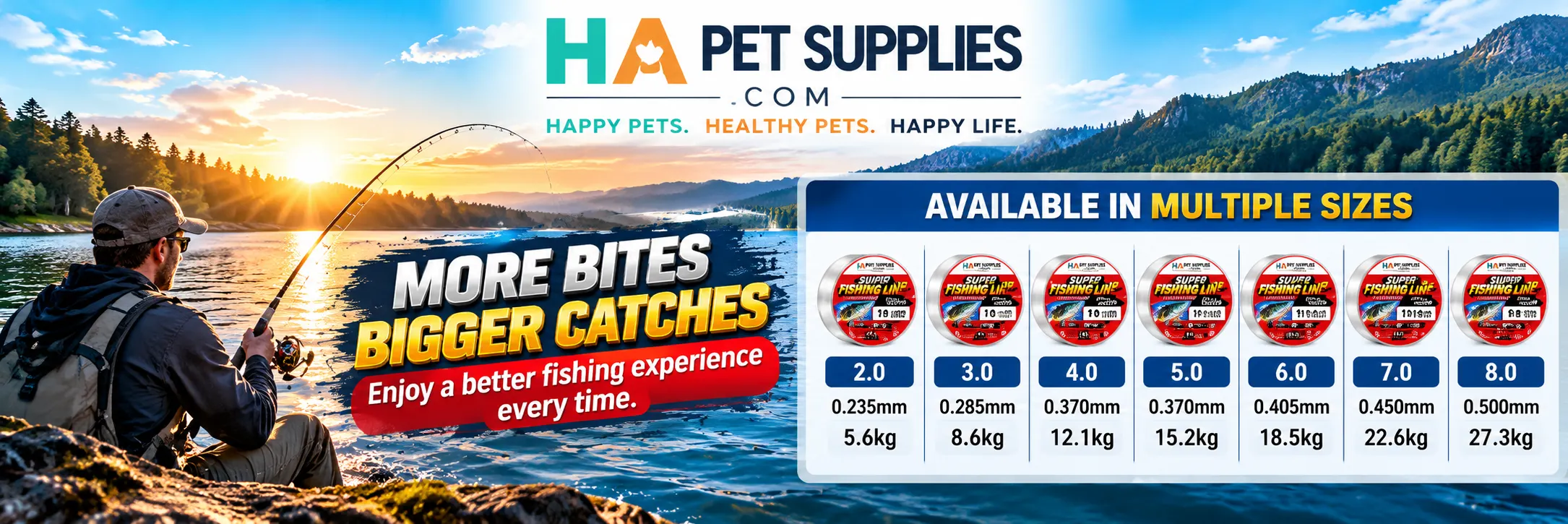
choosing the right spool. Confirm exact ratings on the
product label.
HA Pet Supplies Premium Fishing Equipment
100M Fishing Line – Strong Fluorocarbon Coated
Nylon Monofilament Fishing Wire
Fishing line is one of the most important
connections between your fishing reel, lure, and the fish
you hope to catch. Whether you are preparing for your first
fishing trip, replacing worn fishing wire, or exploring
different line materials, selecting the appropriate fishing
line can make your setup easier to manage.
The HA Pet Supplies 100m fishing line features
nylon monofilament construction with a fluorocarbon coating.
It is designed for anglers looking for a clear fishing line
that offers practical handling characteristics and a
convenient spool length for a variety of fishing setups.
Unlike pure fluorocarbon fishing line, a fluorocarbon coated
fishing line combines a nylon monofilament core with an outer
coating. This distinction is important because the core
material influences stretch, flexibility, handling, and
overall line behavior.
For anyone wondering whether nylon fishing line,
monofilament fishing line, fluorocarbon fishing line,
or braided line is the better option, this product guide
explains the essential differences without overwhelming
you with unnecessary technical language.
Choose fishing line based on your reel capacity, target fish,
fishing technique, water conditions, and the manufacturer’s
verified breaking-strength rating. A thicker fishing wire
is not automatically the best choice for every situation.
Fishing Line Product Overview
Choosing the right fishing line does not have to be
complicated. Many first-time buyers begin by searching
for a strong fishing line or invisible fishing line,
only to discover dozens of fishing line spool options
with different materials, sizes, colors, and ratings.
One of the most common mistakes is choosing fishing wire
exclusively by advertised strength. The strongest line
on the shelf may be unnecessarily thick for a small reel,
difficult to cast with lightweight lures, or poorly suited
to the fishing technique being used.
A practical approach begins with understanding the
balance between diameter, handling, knot performance,
stretch, and the conditions in which you plan to fish.
HA Pet Supplies offers this 100m fluorocarbon coated
fishing line for anglers interested in a nylon-based
line with a coated exterior. Its transparent appearance
makes it an option worth considering when line
visibility matters.
The product is supplied on a fishing line spool
that makes it convenient to store the unused line,
inspect the label, and transfer the fishing wire
to a compatible reel.
The main benefit of purchasing fishing line on a
clearly labeled spool is knowing what material
you are using and having a reference for its
advertised diameter and breaking strength.
This is especially useful when you need to
replace the line later.
If you are assembling a complete fishing kit,
you can explore related equipment in the
HA Pet Supplies fish supplies collection
.
Selecting compatible equipment helps prevent
unnecessary frustration after purchasing
your fishing line.
For further independent guidance on choosing
monofilament, fluorocarbon, or braided line,
the educational resource
Take Me Fishing’s fishing line guide
explains how materials and fishing conditions
influence the decision.
7 Benefits of Our 100M Fishing Line
Before choosing any fishing line, it helps to connect
product features with real fishing situations.
A fishing wire should not simply look impressive
in its packaging; it should be appropriate for
how you intend to fish.
familiar handling characteristics associated
with monofilament fishing line.
to ordinary nylon line. Actual visibility
and abrasion behavior depend on the product
and fishing conditions.
defined length for reel filling, replacement,
and selected leader applications.
for anglers who prefer a subtle line
presentation in suitable water conditions.
accessible for beginners learning knots,
line management, and reel spooling.
nylon-based line can be used in a range of
freshwater and saltwater fishing setups.
replacement line organized between trips
and protects it from unnecessary tangling
when stored properly.
The best fishing line is not necessarily the
thickest or most expensive. It is the one that
works with your reel, supports your technique,
and has an appropriate tested strength rating.
For example, anglers using lightweight lures
may prioritize smaller diameter and manageable
casting performance. Someone fishing around
rocky structure may place greater importance
on checking abrasion damage and selecting
suitable line construction.
Therefore, when evaluating a strong fishing line,
compare the actual specifications instead of
relying only on promotional expressions such
as super strong or ultra invisible.
What Is Fluorocarbon Coated Fishing Line?
Fluorocarbon coated fishing line is commonly
manufactured using a nylon monofilament core
with an exterior fluorocarbon-based coating.
It should not be confused with line constructed
entirely from fluorocarbon.
The difference matters because the core
material controls many of the line’s
mechanical characteristics.
The coating may influence the surface,
but it does not automatically give the
complete line every property associated
with pure fluorocarbon.
How Nylon Fishing Line Works
Nylon fishing line is typically formed as
one continuous strand of synthetic material.
This construction is known as monofilament.
It is popular because it is widely available,
relatively simple to handle, and compatible
with many common fishing techniques.
Monofilament generally provides some stretch
when placed under load. That stretch can help
absorb sudden movements from fish, although
excessive stretch may reduce the immediate
feedback an angler feels through the rod.
Another characteristic of nylon fishing line
is memory. After spending time wound tightly
around a spool, the line may retain some
curvature. Proper installation and storage
can help reduce avoidable line-handling problems.
How Pure Fluorocarbon Differs
Pure fluorocarbon fishing line uses a different
polymer from nylon monofilament. It is often
chosen for underwater presentation, sinking
behavior, abrasion characteristics, and
resistance to ultraviolet exposure.
However, pure fluorocarbon can also feel
stiffer than some nylon alternatives.
This can influence knot tying, spool
management, and the way line behaves
on smaller spinning reels.
The
Florida Fish and Wildlife Conservation Commission
fishing line guide
explains the fundamental differences between
monofilament, fluorocarbon, and braided lines.
Is Fluorocarbon Coated Line Invisible?
No fishing line should be described as
completely invisible in every underwater
environment. Visibility depends on line
thickness, color, water clarity, lighting,
viewing angle, and the material itself.
The term invisible fishing line is often
used as marketing language for clear or
low-visibility products. A transparent line
may look less noticeable in some conditions,
but its appearance will change depending
on the surrounding environment.
If your fishing location has particularly
clear water, consider line diameter and
leader presentation alongside the line’s
coating. A good presentation involves
more than selecting a particular label.
HA Pet Supplies 100m fishing line is described
as fluorocarbon-coated nylon monofilament.
It should not be advertised as 100% fluorocarbon.
Fishing Line Comparison Table
Comparing fishing line materials is one
of the easiest ways to understand which
product suits your preferred fishing style.
The following table describes common
category-level characteristics rather
than making unsupported claims about
individual competing brands.
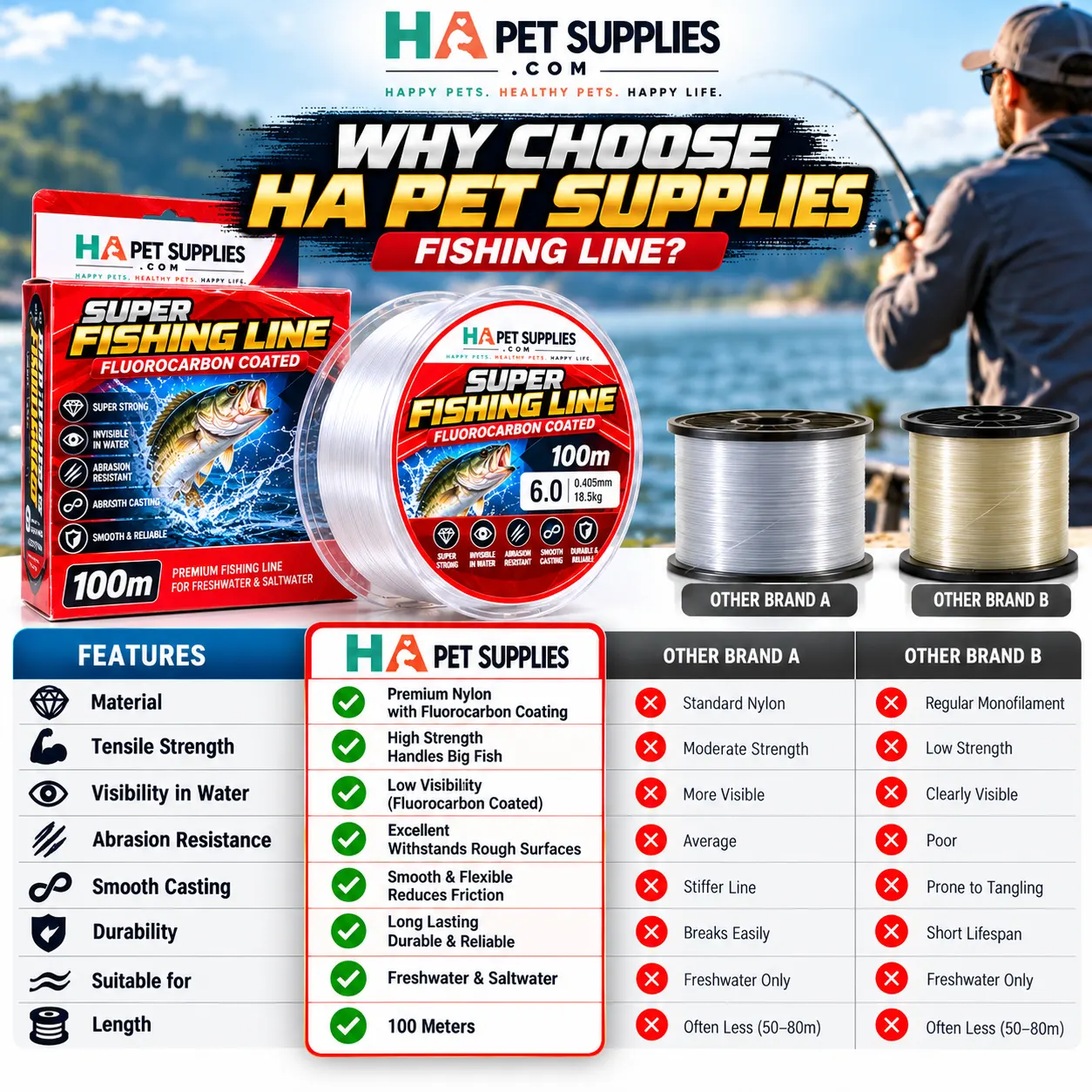
| Feature | HA Pet Supplies Coated Nylon | Standard Nylon Monofilament | Pure Fluorocarbon | Braided Fishing Line |
|---|---|---|---|---|
| Core Material | Nylon monofilament | Nylon | Fluorocarbon polymer | Woven synthetic fibers |
| Exterior Coating | Fluorocarbon coated | Varies by product | Not a coated nylon core | Varies by product |
| Line Visibility | Clear appearance; performance varies | Depends on color and diameter | Often selected for low visibility | Depends strongly on color and leader |
| Stretch | Nylon-based; exact stretch unverified | Generally moderate | Typically lower than nylon | Generally very low |
| Beginner Handling | Suitable when matched to reel and size | Often beginner friendly | May be stiffer | Requires careful knot and spool setup |
| Diameter | Depends on selected size | Depends on pound test | Depends on pound test | Often thinner at similar rated strength |
| Spool Length | 100 meters | Varies | Varies | Varies |
| Typical Uses | General fishing setups, subject to rating | General-purpose fishing | Leaders and clear-water techniques | Techniques favoring low stretch |
| Best Choice For | Buyers seeking coated nylon line | Buyers seeking simple nylon line | Buyers seeking pure fluorocarbon properties | Buyers seeking braided construction |
Which Fishing Line Should Beginners Choose?
For many beginners, nylon monofilament
fishing line is a practical starting point.
It provides an accessible introduction
to spooling, tying knots, managing drag,
and learning different casting techniques.
Fluorocarbon coated nylon fishing line
may appeal to anglers who prefer a coated
line while retaining a nylon-based core.
Pure fluorocarbon and braided fishing
lines can also be useful, but each
has different handling characteristics.
If your main concern is casting lightweight
lures, select a line diameter appropriate
to your reel and lure weight. If your
main concern is fishing around cover,
inspect the line regularly and compare
abrasion-related product data.
When comparing products in our
online fishing and pet supplies shop
,
look beyond the front packaging and
examine the manufacturer’s stated
specifications before ordering.
100M Fishing Line Product Specifications
Understanding fishing line specifications
helps you avoid ordering a spool that
is too thick, too weak, or otherwise
unsuitable for your fishing reel.
The following table separates the supplied
product description from numerical ratings
that must be confirmed with the supplier
before publication.
| Specification | Product Information |
|---|---|
| Brand | HA Pet Supplies |
| Product Name | 100M Fluorocarbon Coated Fishing Line |
| Product Category | Fishing Line and Fishing Wire |
| Core Material | Nylon Monofilament |
| Coating | Fluorocarbon Coated |
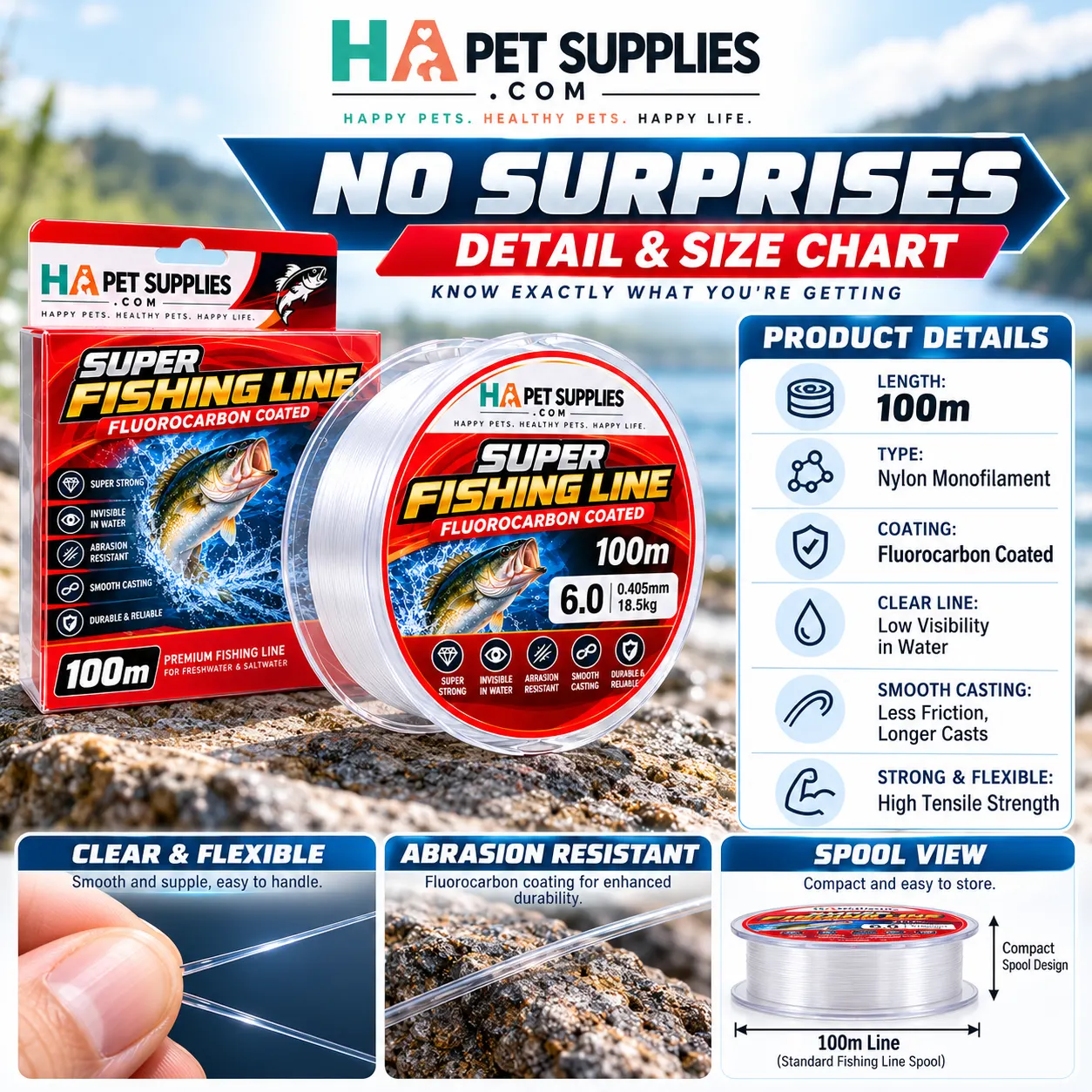
| Line Length | 100 Meters |
| Appearance | Clear or Transparent |
| Packaging | Fishing Line Spool with Retail Packaging |
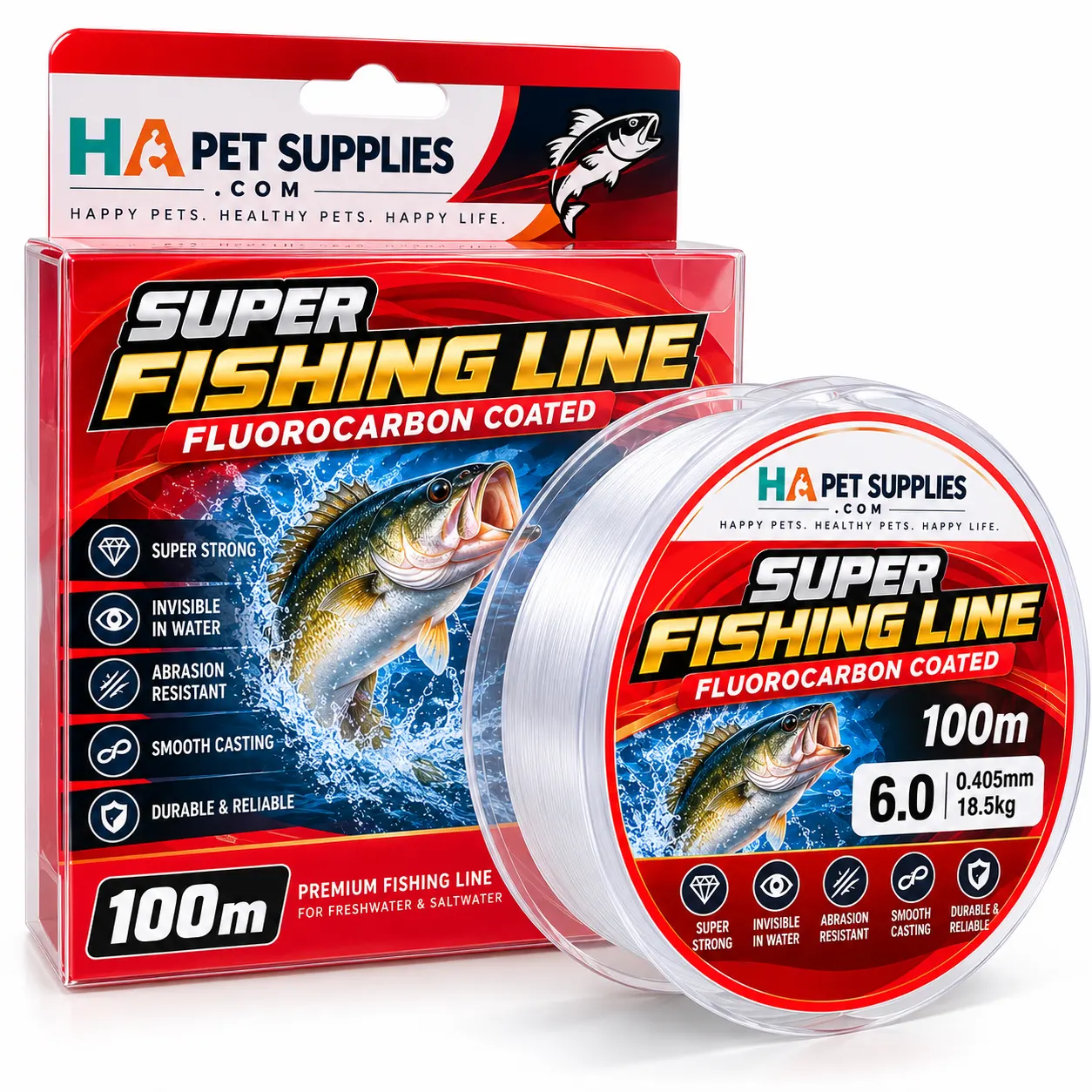
| Example Size Displayed | 6.0 — supplier confirmation required |
| Example Diameter Displayed | 0.405mm — supplier confirmation required |
| Example Breaking Strength Displayed | 18.5kg — supplier confirmation required |
| Primary Application | Fishing reel and suitable line applications |
| Care | Store dry, protected from heat and sunlight |
The 0.405mm diameter and 18.5kg strength
appear in the supplied packaging design.
They should be treated as unverified
until confirmed with the actual manufacturer
specifications or reliable test documentation.
Do not interpret the 18.5kg figure as
a guaranteed fish-catching capacity.
What Does 100M Fishing Line Mean?
A 100m fishing line spool contains
a nominal length of one hundred meters
of fishing wire. This refers to the
amount of line supplied, not to its
breaking strength or casting distance.
Whether one 100m spool is enough to
fill your reel depends on the reel’s
capacity, the line diameter, and
whether you use backing beneath the
main fishing line.
Some larger reels require more than
100 meters of line, while smaller
reels may require less. Check the
reel manufacturer’s capacity markings
before deciding how many spools to buy.
Fishing Line Product Details
Construction and Surface
The construction of this fishing line
combines a nylon monofilament core
with a fluorocarbon-coated surface.
The nylon core makes it part of the
broader monofilament fishing line
category rather than a pure
fluorocarbon product.
A coated fishing wire may have
different surface handling characteristics
from an uncoated nylon line, but actual
differences should be evaluated using
manufacturer data and practical testing.
Line Color and Presentation
Clear fishing line is frequently
chosen by anglers who want a relatively
subtle line appearance. The visibility
of the line depends on surrounding
light, water clarity, and the
background against which it is viewed.
In darker water, a transparent line
may behave visually differently from
the way it appears in a clear lake.
Similarly, sunlight near the surface
can make some lines more noticeable.
Fishing Line Strength
Fishing line strength is normally
expressed as a breaking-strength
rating in pounds or kilograms.
That rating does not necessarily
represent the force a finished
knot will withstand.
Knots, abrasion, sunlight exposure,
and previous loading can influence
the line’s remaining strength.
This is why inspection matters
even when using a relatively
heavy fishing line.
Fishing Line Diameter
Diameter has a direct effect on
how much fishing line fits on a
reel. A thicker fishing wire
occupies more spool space and
may influence casting and
lure presentation.
A thinner fishing line generally
allows more line to fit on the
same reel, but diameter alone
does not determine quality
or strength.
Compatibility With Fishing Reels
This 100m fishing line may be
considered for spinning reels,
baitcasting reels, and other
appropriate setups, provided
the selected diameter and
breaking-strength rating are
compatible with the equipment.
Read the reel’s capacity markings
and instructions before installation.
Overfilling a spinning reel may
increase loose line loops, while
insufficient line can reduce
effective casting performance.
Applications Around Water
Fishing line is used in many
different environments, including
lakes, ponds, rivers, reservoirs,
and coastal locations.
Selecting line for these environments
requires attention to fish species,
local structure, current, tackle,
and corrosion-resistant equipment
where saltwater is involved.
A fishing line suitable for a
peaceful freshwater pond is not
automatically suitable for offshore
fishing or heavy saltwater applications.
Matching the complete setup remains
essential.
Fishing Line Buying Essentials
Four questions can help narrow
your choice before purchasing
a new fishing line spool.
What fish species are you targeting?
What line diameter fits your reel?
What breaking-strength rating is suitable?
Do you prefer nylon, coated nylon,
fluorocarbon, or braid?
How to Choose the Correct Fishing Line Size
Fishing line size can refer to
diameter, breaking strength,
or a manufacturer-specific
numbering system.
These values are related,
but they are not interchangeable.
Understand Pound Test
Pound test describes a fishing
line’s rated breaking strength.
For example, a line labeled
10 lb test has a nominal strength
rating of ten pounds under
the relevant test conditions.
The number is not a promise
that you can lift a fish
of exactly that weight.
A properly adjusted drag,
the fishing rod, the knot,
and how a fish moves all
contribute to the outcome.
General Fishing Line Strength Guide
These examples are broad
educational starting points.
Actual recommendations vary
with the fish species, technique,
water conditions, and tackle.
| General Fishing Setup | Illustrative Line Range | Considerations |
|---|---|---|
| Ultralight Freshwater | 2–6 lb | Smaller fish, light lures, and appropriate ultralight gear |
| Light Freshwater | 6–10 lb | General light tackle and many smaller freshwater species |
| Medium Freshwater | 10–20 lb | Larger fish, cover, and technique-specific needs |
| Heavier Fishing | 20–40 lb | Stronger equipment and more demanding fishing situations |
| Specialized Heavy Fishing | 40 lb and above | Species-specific tackle, currents, and heavy-duty techniques |
These ranges are not a direct
conversion of the HA Pet Supplies
size numbers. Always use verified
diameter and strength ratings
for the precise product variation.
Should You Choose a Thicker Line?
Thicker fishing line is not
necessarily better for beginners.
While a larger diameter may
be appropriate for certain
heavy-duty applications,
it also occupies more space
on the reel.
With some spinning setups,
an unnecessarily heavy
monofilament line can
become less manageable.
It may spring off the
spool in larger loops,
particularly if line
memory is significant.
Conversely, a fishing wire
that is too light for the
application may leave
insufficient margin for
abrasion, strong current,
or unexpected loads.
Choose the diameter that
matches your reel and
fishing conditions, rather
than selecting the highest
strength rating available.
How Much Fishing Line Does a Reel Need?
Reel capacity is commonly
printed on the spool body
or supplied in the
manufacturer’s instructions.
It may indicate how many
meters or yards fit at
a specified diameter.
As a practical approach,
begin by checking those
markings and comparing
them with the diameter
printed on your fishing
line spool.
If the reel requires more
than 100 meters, consider
whether suitable backing
or additional line is
needed. A backing setup
must be appropriate for
the reel and fishing method.
Do not assume every
100m fishing line spool
will completely fill
every spinning reel.
HA Pet Supplies Fishing Line User Manual
Correct installation is one
of the most important steps
after purchasing new fishing
line. Even well-made fishing
wire can develop problems
if installed with excessive
slack, poor line control,
or an unsuitable spool-filling
technique.
The following instructions
describe a general approach
for installing nylon-based
fishing line on a spinning
reel. Always follow the
reel manufacturer’s specific
guidance when it differs.
Check Your Fishing Reel
Inspect the reel spool,
line roller, bail, and guides
for damage or rough edges.
Confirm that the line diameter
and strength are suitable for
the reel’s published capacity.
Remove Damaged Old Line
If replacing existing fishing
line, remove the worn line
carefully. Avoid leaving
loose fishing wire on the
ground or near water,
where it can entangle wildlife.
Position the Fishing Line Spool
Place the supply spool
so the line can feed
smoothly toward the reel.
Follow the reel maker’s
guidance for supply spool
orientation, since incorrect
feeding can contribute
to line twist.
Thread the Fishing Line
Pass the fishing line
through the appropriate
rod guide. Open the spinning
reel bail before attaching
the line to the spool.
Make sure the line runs
through the correct
path before beginning.
Secure the Line to the Reel
Use a suitable spool
attachment knot, such as
an arbor knot where appropriate.
Ensure that the line
is firmly secured and
does not slip around
the spool during winding.
Apply Gentle Line Tension
Close the bail manually.
Maintain steady, controlled
tension while winding.
A soft clean cloth can
help guide the line,
but do not squeeze
tightly enough to
generate excessive heat.
Wind the Fishing Line Evenly
Turn the reel handle
at a comfortable pace.
Watch the line as it
lays across the spool.
Stop periodically if
loops or twisting develop,
and correct the issue
before continuing.
Stop at the Correct Fill Level
Fill the reel according
to its manufacturer’s
recommended spool level.
Many spinning reels
are filled slightly
below the outer lip,
but the correct spacing
depends on the reel model.
Cut and Test the Fishing Line
Cut the line neatly,
attach the appropriate
terminal tackle,
inspect the connection,
and test line release
under controlled conditions.
Check for loose coils,
knots, and abnormal resistance.
If the fishing line starts forming
loose loops during installation,
stop and check the line feed,
spool fill, and tension rather
than forcing more line onto
the reel.
How to Tie Fishing Line to Hooks and Lures
A secure connection is necessary
whether you are using nylon fishing
line, a fluorocarbon coated fishing
line, or a specialized leader.
Common knots include the improved
clinch knot and Palomar knot,
but knot suitability depends
on line material and diameter.
Before tightening a knot,
moisten it when recommended
for the line material.
Tighten smoothly and inspect
the finished knot for
crossed wraps, sharp bends,
or visible damage.
Practice tying knots before
your fishing trip.
A neatly tied knot can
reduce unnecessary failures
caused by poor knot construction.
How to Adjust Reel Drag
The reel’s drag system allows
fishing line to leave the spool
under load. Appropriate drag
adjustment helps reduce sudden
stress on the line and tackle.
A common starting guideline
is to set drag to a fraction
of the line’s verified breaking
strength, then adjust for
rod, knots, fishing conditions,
and technique.
Do not lock the drag simply
because a product is promoted
as strong fishing line.
Excessive drag can damage
equipment or cause a knot
or line to fail.
Fishing Line Care, Storage and Maintenance
Good maintenance can help
your fishing line remain
suitable for use over time.
The important question
is not simply how old
a line is, but whether
its condition remains
appropriate for the
fishing demands placed on it.
Inspect Before Every Trip
Run a careful visual inspection
along the accessible fishing line.
Look for cloudiness, cuts,
rough sections, discoloration,
unusually tight coils, or
visible abrasion.
Pay special attention to
the last section nearest
the hook or lure.
This area frequently
contacts rocks, vegetation,
underwater structure,
and fish.
Store the Spool Correctly
Keep unused fishing wire
in a cool, dry area
away from prolonged
direct sunlight and
excessive heat.
Avoid storing loose line
where it can become
tangled with other tackle.
Nylon-based monofilament
may deteriorate after
prolonged exposure to
sunlight and environmental
stress. Keeping the spool
protected between trips
is a sensible precaution.
Clean After Fishing
If fishing in saltwater,
rinse compatible tackle
with fresh water according
to the equipment maker’s
instructions.
Avoid harsh chemicals
that may damage the line
or reel components.
Allow equipment to dry
appropriately before
long-term storage.
Check the reel spool
for accumulated dirt
or debris that could
affect the next trip.
When Should You Replace Fishing Line?
Replace fishing line
when it becomes visibly
damaged, excessively
abraded, brittle, or
unreliable under the
expected fishing load.
Frequent anglers may need
to replace line more often
than occasional anglers.
Usage, sunlight exposure,
fishing environment,
and line construction
all influence replacement
decisions.
Dispose of Old Fishing Line Safely
Discarded fishing line can
entangle birds, fish,
and other wildlife.
Never leave unwanted
fishing wire on the
shoreline, dock,
riverbank, or boat ramp.
The
Florida Monofilament Recovery
and Recycling Program
explains how some single-filament
fishing lines can be collected
for specialized recycling
and why ordinary household
recycling is not appropriate.
Follow the rules of your local
collection program, especially
for coated line, braided line,
and mixed-material products.
If appropriate recycling is
unavailable, secure and
dispose of the fishing line
according to local guidance
so it cannot entangle animals.
Additional practical measures,
including inspecting frayed
line and retrieving loose
fishing wire where safe,
are outlined in the
fishing line conservation guidance
.
Why Choose HA Pet Supplies Fishing Line?
Buying fishing line is easier
when you understand what
you are purchasing and
how the product fits
your intended application.
At HA Pet Supplies,
this 100m fishing line
is presented with a clear
product identity:
nylon monofilament
with fluorocarbon coating.
That helps customers
distinguish it from
pure fluorocarbon
and braided alternatives.
1. Clear Product Identification
Our product description explains
the core material, coating,
and intended use without
treating all fishing line
categories as interchangeable.
2. Convenient 100m Spool
A defined spool length
makes it simpler to plan
line replacement and
compare reel capacity.
It also helps buyers
evaluate whether
additional spools
or backing may be needed.
3. Practical Beginner Guidance
Choosing fishing line
involves more than reading
a product label.
We provide clear explanations
of line diameter,
spooling, care,
and common fishing
line questions.
4. Access to Related Supplies
Anglers can explore the broader
fish supplies category
when preparing their
fishing equipment or
browsing related products.
5. Product Questions and Quotes
If you need clarification
about available fishing
line variations, quantities,
or an order, use our
contact page
to ask questions before
placing a purchase.
6. Educational Fishing and Aquatic Care Content
HA Pet Supplies also publishes
practical information about
aquatic care and related products.
While fishing equipment
and aquarium treatments
serve different purposes,
responsible aquatic care
is an important topic
for customers interested
in fish-related supplies.
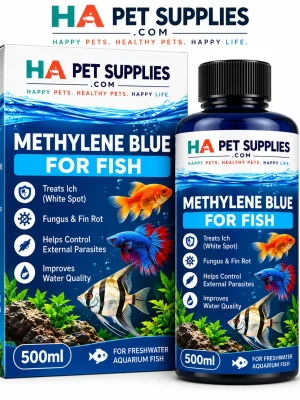
For aquarium owners,
our separate guide to
methylene blue for fish
explains the topic in
an aquarium treatment context.
Methylene blue is not a
fishing line treatment
and should never be
applied to fishing wire.
Aquarium readers considering
treatment products can also
consult our explanation of
methylene blue dosage
and safety
before making decisions
about appropriate aquarium
treatment practices.
If your interest involves
fish health rather than
recreational angling,
our article discussing
methylene blue for ich,
fungus, and fin rot
covers another specialized
aquatic care topic.
These aquarium resources
are provided for readers
with separate aquatic
care needs and are not
recommendations for
treating fishing equipment.
How to Buy the Right Fishing Line Online
Purchasing fishing line online
can save time, but it also
creates a challenge:
buyers cannot always feel
the line’s stiffness,
inspect its construction,
or compare spool sizes
in person.
A good online purchasing
decision begins with checking
the exact specifications
rather than relying
exclusively on photographs.
Step 1: Identify Your Fishing Style
Determine whether you are
using lightweight freshwater
tackle, general spinning
equipment, a baitcasting
setup, or specialized
fishing gear.
Different techniques place
different demands on fishing
line. This can influence
the ideal material,
diameter, and strength.
Step 2: Check Your Reel Capacity
Before ordering a 100m
fishing line spool,
compare its diameter
with the reel’s stated
line capacity.
If the reel capacity
is substantially larger
than the supplied length,
plan accordingly.
Avoid assuming that
one spool will
always be sufficient.
Step 3: Check the Actual Material
Read whether the
fishing line is
nylon monofilament,
fluorocarbon coated nylon,
pure fluorocarbon,
or braided construction.
These are different
material categories.
Even products with
similar-looking transparent
fishing wire may behave
differently in use.
Step 4: Compare Breaking Strength
Choose a verified
breaking-strength rating
appropriate for your
target species and
fishing technique.
Remember that fishing line
strength, knot strength,
and reel drag are
separate considerations.
Step 5: Consider Visibility
In clear water,
some anglers prefer
smaller diameter
or subtle line colors.
In other conditions,
line visibility may
be less important
than strength,
handling, or
abrasion considerations.
Step 6: Inspect the Product Information
Look for clear details
about the spool length,
material, available
sizes, and storage
requirements.
The more accurately
a product is described,
the easier it becomes
to compare it against
your existing tackle.
Step 7: Ask Before Ordering
If you need a
particular line diameter
or strength rating,
confirm availability
before buying.
At HA Pet Supplies,
you can
request a fishing line quote
and specify your intended
order requirements.
Confirm material, line length,
reel compatibility, available
diameter, verified breaking
strength, quantity,
and any packaging variation.
HA Pet Supplies 100M Fishing Line Description
Prepare for your next
fishing adventure with
HA Pet Supplies 100m
fluorocarbon coated
nylon fishing line.
This fishing wire
combines a nylon
monofilament core
with a coated exterior
and a clear appearance.
Designed for anglers
who want to explore
nylon-based fishing line
options, the product
is supplied in a
convenient 100-meter
spool format.
Whether you are
learning to fill
a spinning reel,
organizing replacement
fishing line,
or selecting a
new line material,
understanding the
product’s construction
helps you make
an informed choice.
Monofilament fishing line
is widely used across
different fishing styles.
Its flexibility and
familiar knot-tying
characteristics make
it a useful category
for many beginners.
The fluorocarbon coated
construction makes
this product distinct
from standard uncoated
nylon fishing line,
while retaining
a nylon-based core.
Select the appropriate
size for your tackle,
spool the fishing line
correctly, and inspect
it regularly for wear.
Proper preparation
can reduce preventable
fishing problems and
help you spend
more time enjoying
your fishing experience.
Browse additional
aquatic and fishing
products through the
HA Pet Supplies website
or explore educational
buying guides in our
product advice blog
.
Frequently Asked Questions About Fishing Line
The following frequently
asked questions address
common concerns from
beginners and experienced
anglers buying fishing
line online.
1. What is the best fishing line for beginners?
Nylon monofilament fishing line
is often a practical choice
for beginners because it is
generally easy to handle
and widely available.
The best option still depends
on the reel, target fish,
and fishing technique.
2. What is fluorocarbon coated fishing line?
Fluorocarbon coated fishing line
generally consists of a nylon
monofilament core with a
fluorocarbon-based exterior
coating. It differs from
fishing line made entirely
from fluorocarbon.
3. Is nylon fishing line strong?
Nylon fishing line is available
in many breaking-strength
ratings and can be suitable
for numerous fishing techniques.
Its actual strength depends
on line size, manufacturing
quality, knots, wear,
and operating conditions.
4. Is this fishing line completely invisible underwater?
No. Clear fishing line
may be less noticeable
in certain conditions,
but no line should
be assumed completely
invisible in every
water environment.
Visibility changes with
lighting, water clarity,
thickness, and color.
5. What does 100m fishing line mean?
It indicates that the
spool contains a nominal
length of 100 meters.
It does not describe
line strength,
diameter, or
maximum casting distance.
6. Can I use this fishing line on a spinning reel?
It may be suitable
for a spinning reel
when the chosen diameter,
line strength, and
material characteristics
match the reel’s
specifications.
Check reel capacity
before installing.
7. Is monofilament better than braided fishing line?
Neither material is
universally better.
Monofilament is often
favored for accessible
handling and stretch,
while braid is often
selected for low stretch
and smaller diameter
relative to strength.
The better choice
depends on technique.
8. What fishing line size should I buy?
Choose fishing line
based on the reel’s
capacity, target species,
lure or bait,
and local fishing
conditions. Compare
the actual diameter
and verified breaking
strength before ordering.
9. Does thicker fishing line always mean stronger line?
Within the same material
and product family,
thicker line often
has a higher
breaking-strength rating.
However, different
materials and
manufacturers can offer
different strengths
at similar diameters.
10. How do I stop fishing line from tangling?
Use the correct spool
orientation, maintain
controlled tension,
avoid overfilling
the reel, and
close the bail
manually when appropriate.
Inspect the line
for excessive memory
or damage.
11. How often should I replace fishing line?
Replacement frequency
depends on usage,
line material,
sunlight exposure,
abrasion, and storage.
Replace line when
it shows damage
or can no longer
be relied on
for the intended use.
12. Is 100 meters enough to fill a fishing reel?
That depends on
the reel’s capacity
and the line diameter.
Some reels require
more than 100m,
while others require
less. Read the
reel manufacturer’s
capacity markings.
13. Can nylon fishing line be used in saltwater?
Nylon fishing line
can be used in
suitable saltwater
fishing setups,
provided its
strength and diameter
are appropriate.
Rinse compatible
fishing equipment
after saltwater use.
14. Is fishing wire the same as fishing line?
Fishing wire is sometimes
used as a general
shopping term for
fishing line.
However, actual
metal wire leaders
are different from
nylon monofilament,
fluorocarbon,
and braided lines.
15. Does fluorocarbon coated line sink?
Sinking behavior depends
on the overall material
composition and
construction of
the fishing line.
A fluorocarbon coating
does not automatically
mean the product
behaves like pure
fluorocarbon underwater.
16. What is fishing line memory?
Line memory describes
the tendency of
fishing line to
retain curves or
coils after being
stored on a spool.
Excessive memory
can contribute
to handling and
casting difficulties.
17. How do I know whether my fishing line is damaged?
Look for abrasion,
cuts, roughness,
discoloration,
unusual stiffness,
and damaged knots.
If a section
appears unreliable,
replace it before
fishing.
18. Can I use this fishing line for bass fishing?
Nylon-based fishing line
can be used for
many bass fishing
techniques when
the line size
is appropriate.
Consider lure weight,
cover, reel capacity,
and your preferred
presentation.
19. How should I store an unused fishing line spool?
Store the spool
in a cool, dry
location away from
excessive heat
and direct sunlight.
Keep the free
line end secured
to prevent
unnecessary tangles.
20. Where can I buy HA Pet Supplies fishing line online?
You can browse products
through the HA Pet Supplies
website or request
purchasing information
using the
online quotation form
.
Confirm available sizes
and current product
specifications before ordering.
Is HA Pet Supplies 100M Fishing Line Right for You?
HA Pet Supplies 100m
fluorocarbon coated
nylon fishing line
is an option for
anglers seeking
a clear nylon-based
monofilament fishing wire
supplied on a
convenient spool.
Its main identifying
characteristics are
the nylon core,
fluorocarbon-coated
construction,
transparent appearance,
and nominal
100-meter length.
Before making your
final purchase,
choose a suitable
diameter and verify
the breaking-strength
rating for the
product variation
you intend to order.
Whether you are
preparing for recreational
freshwater fishing,
comparing fishing
line materials,
or replacing old
fishing wire,
understanding the
complete setup
will help you
purchase more confidently.
You can also explore
practical product guides
in the
HA Pet Supplies blog
for additional advice
about equipment
and aquatic products.
Ready to Upgrade Your Fishing Line?
Explore the HA Pet Supplies
100m fluorocarbon coated
nylon fishing line
and choose a suitable
option for your
next fishing setup.
Need help confirming
available sizes,
ordering quantities,
or product specifications?
Contact HA Pet Supplies
before placing your order.
Reviews
There are no reviews yet.