
Dog hates recovery collar? If your dog has just returned home from surgery and refuses to settle down while wearing a protective cone, you may be feeling worried, frustrated, or unsure what to do next.
Maybe your dog keeps walking backward, bumping into furniture, refusing food, or standing in one position because they do not know how to lie down comfortably. Perhaps they have been whining throughout the night, pawing at the cone, or looking at you as though they desperately want it removed.
For many owners, watching their dog struggle with something intended to protect them can be emotionally difficult. You want your dog to be comfortable, but you also know that removing the recovery collar could allow them to lick or chew stitches.
The important thing to understand is that disliking a recovery collar does not necessarily mean your dog cannot learn to tolerate it. Many dogs initially struggle because a protective cone changes their vision, movement, hearing, and ability to reach familiar objects. With a properly fitted collar, a calm environment, and gentle positive reinforcement, some dogs become significantly more comfortable.
However, persistent distress can also indicate pain, poor collar fit, nausea, or another medical problem. These possibilities should not be ignored.
This guide explains nine practical ways to help your dog sleep, eat, drink, and adjust to recovery equipment while keeping their surgical incision protected.
Dog hates recovery collar after surgery comfort guide
Quick answer: What should you do if your dog hates wearing a cone?
First, make sure your dog can breathe normally and that the protective collar is not excessively tight, damaged, or rubbing their neck. Next, check that the collar still prevents access to the surgical incision.
Move your dog into a quiet room with fewer obstacles, offer food in a shallow bowl, ensure water is accessible, and provide comfortable bedding with enough space for the cone.
Use calm praise and gentle rewards to help your dog associate the collar with positive experiences.
If your dog remains extremely distressed, cannot eat or drink, appears painful, or repeatedly escapes the protective device, contact your veterinarian about an adjustment or approved alternative.
The VCA Animal Hospitals guide to Elizabethan collars explains that dogs may initially find cones unusual, but many gradually adjust. It also recommends shallow feeding dishes, proper fitting, and careful supervision.
Quick-action guide: First check the problem
Cannot sleep with the cone
Provide spacious bedding, remove nearby obstacles, check the fit, and keep prescribed protection in place overnight. If your dog cannot settle despite adjustments, contact your veterinarian to rule out pain or poor fit.
Cannot reach food
Try a wide, shallow dish or plate on a non-slip surface. Slightly raising the bowl may help some dogs. If your dog still cannot eat, contact your vet about a supervised collar adjustment.
Cannot drink comfortably
Use a stable bowl with a wide opening and reposition it so the collar does not strike the rim. Monitor actual water intake. If your dog cannot drink, seek prompt veterinary advice.
Panicking or trying to escape
Stay calm, avoid forcing movement, and check for rubbing or pressure. Persistent panic requires veterinary assessment for pain, poor fit, or an approved alternative device.
Still reaching the stitches
If your dog can reach the incision, the protective device is not working. Do not leave the wound exposed — contact your veterinarian about a different size or style immediately.
📋 Table of Contents
- 1. Why dogs hate wearing recovery collars
- 2. Nine easy ways to make a collar comfortable
- 3. When your dog refuses to sleep
- 4. Dog won’t eat or drink: Troubleshooting
- 5. Plastic cone vs inflatable vs suit
- 6. Panicking or removing the collar
- 7. How long to adjust to a cone
- 8. 24-hour comfort routine
- 9. Common mistakes to avoid
- 10. When to call the vet
- 11. FAQ
1. Why does your dog hate wearing a recovery collar?
Before solving the problem, it helps to understand why your dog reacts negatively to protective equipment. Dogs experience the world through movement, smell, sight, sound, and familiar daily routines. A recovery collar may interfere with several of these experiences simultaneously.
A cone changes your dog’s peripheral vision
A traditional cone surrounds your dog’s head. Depending on its material, width, and transparency, it can make the surroundings appear unfamiliar. A dog who normally moves confidently around furniture might suddenly hesitate. They may not understand why the edges of the cone strike objects before their face reaches them.
The collar changes how everyday movement feels
A dog normally lowers their head to sniff, reach toys, investigate food, and settle into a comfortable sleeping position. A rigid cone changes the space around the head. The dog may need to approach objects at a different angle. Even simple movements such as turning through a doorway or lying beside furniture can become awkward.
The American Kennel Club guide to teaching dogs to wear cones describes how reduced visibility, unfamiliar sounds, and movement restrictions can contribute to cone-related stress.
Your dog may associate the collar with surgery
Consider what has happened from your dog’s perspective. They traveled to an unfamiliar veterinary clinic, experienced medical handling, underwent anesthesia, and returned home feeling different from normal. Now they are wearing an unfamiliar object around their neck. The collar may become associated with discomfort or a stressful experience.
Pain or nausea may be part of the problem
Not every dog who appears upset by a cone is reacting to the cone itself. Postoperative pain, nausea, medication effects, or anxiety can influence behavior. A dog that refuses food may feel nauseated after anesthesia rather than being unable to reach the food bowl.
The American College of Veterinary Surgeons postoperative care guidance explains that temporary appetite changes, restlessness, and reduced energy can occur after anesthesia, while persistent or worsening symptoms should be discussed with the veterinary team.
2. Nine easy ways to help a dog feel comfortable wearing a recovery collar
These nine strategies address the most common problems encountered by owners after surgery. The goal is to improve comfort without increasing the risk of licking, chewing, or damaging the incision.
Way 1: Make sure the recovery collar fits correctly
One of the first things to check when a dog hates a recovery collar is whether the device fits properly. A collar that is too tight may rub the neck or cause unnecessary discomfort. A collar that is too loose may rotate, slip off, or fail to protect the incision.
For many rigid cone designs, the front edge should extend slightly beyond the dog’s muzzle. The correct size depends on the dog’s neck circumference, muzzle length, and the manufacturer’s fitting instructions.
The PDSA recovery collar fitting guide explains how to fit plastic, fabric, and inflatable collars and emphasizes both comfort and wound protection.
For a more detailed measurement guide, read Best Dog Recovery Collar: How to Choose the Right Size and Safest Design.
Way 2: Create a quiet and comfortable recovery space
A calm environment can make an important difference to a dog struggling with a cone. Your dog’s normal resting area may contain obstacles that become difficult to navigate while wearing a protective collar.
Choose a comfortable recovery location with enough room for your dog to turn around naturally. Remove unnecessary furniture, clutter, loose cords, and other objects that could catch the collar. Avoid placing the bed in a narrow corner where the dog may become trapped.
The PDSA guide to caring for dogs after surgery recommends a warm, quiet resting environment and limiting unnecessary movement during recovery.
Way 3: Help your dog sleep without removing the cone
One of the most common complaints from dog owners is that their dog refuses to lie down while wearing a recovery collar. Some dogs pace around the house. Others sit upright for long periods or repeatedly change position.
A large plastic cone can extend far beyond the dog’s face. If the bed is against a wall or surrounded by furniture, the dog may struggle to turn around. Moving the bed to a more open area can make lying down easier.
The PDSA cone sleeping advice recommends leaving the cone on overnight and keeping your dog close enough to hear if problems occur.
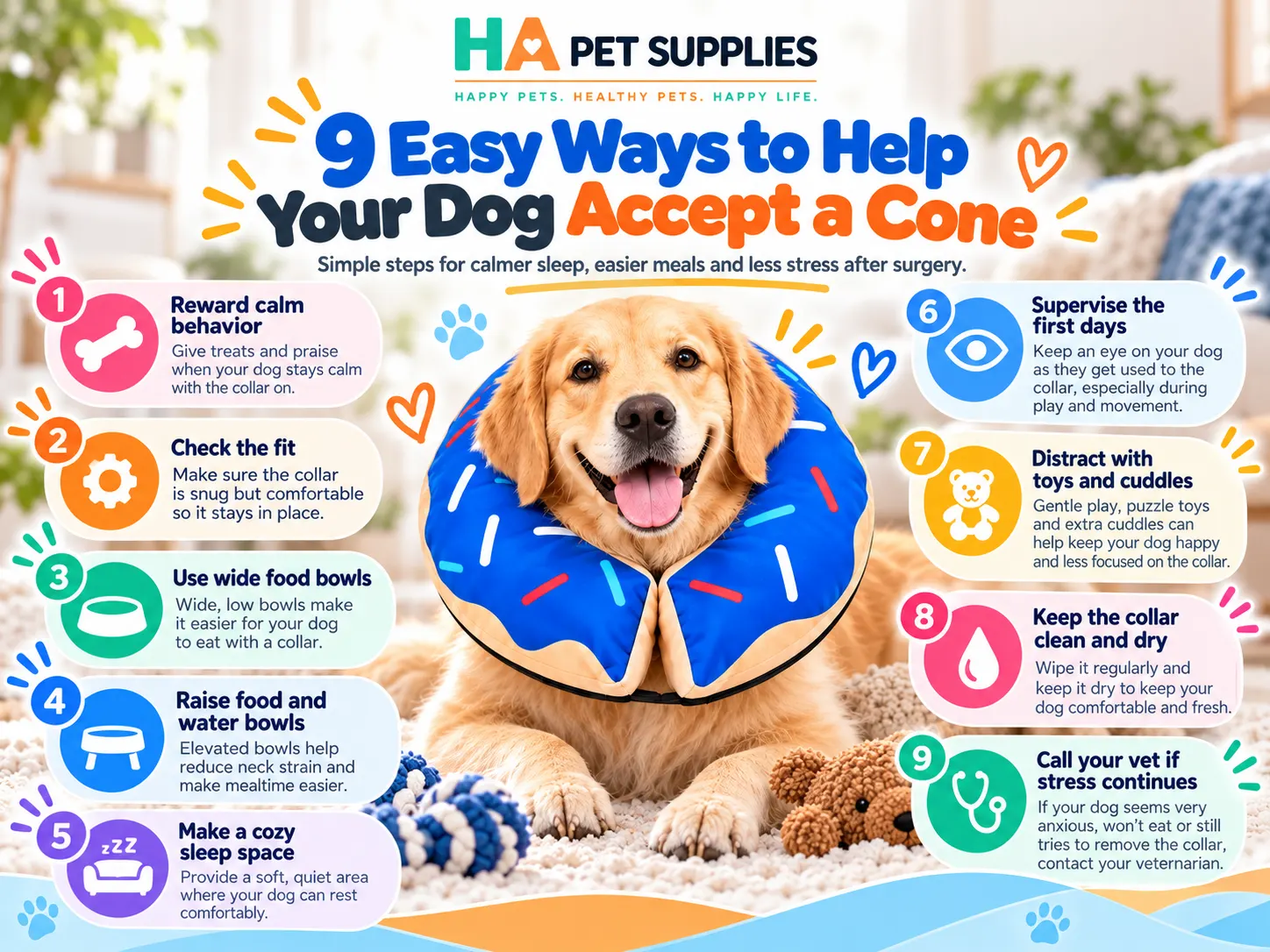
Nine easy ways to help a dog accept a recovery collar
Way 4: Make eating easier with a recovery collar
A dog wearing a cone may struggle to reach food inside a deep bowl. The cone’s outer edge can strike the rim before the dog’s mouth reaches the food. Some dogs respond by backing away from the bowl or refusing to try again.
Try a wide, shallow dish or plate on a stable, non-slip surface. For some dogs, slightly raising the food bowl can improve access. Follow the feeding instructions provided by the veterinary clinic.
The VCA postoperative feeding instructions explain why appetite and feeding schedules may differ immediately after anesthesia.
Way 5: Help your dog drink water comfortably
Fresh drinking water is essential during postoperative recovery. Some dogs struggle to drink while wearing a cone because the collar’s edge strikes the water bowl. Try a stable bowl with a wide opening. Make sure the collar does not block access to the water.
The VCA guidance on feeding and drinking with a cone explains that shallow dishes or appropriately elevated bowls can sometimes help.
Way 6: Use positive reinforcement instead of forcing your dog
Some dogs become frightened when a recovery collar is suddenly placed around their neck. Positive reinforcement can help make the equipment less intimidating. Speak gently and reward your dog when they remain relaxed. Avoid punishing your dog for pawing at the cone or showing fear.
The AKC positive-reinforcement cone training guide provides a detailed method for gradually helping dogs accept protective collars.
Way 7: Provide safe mental stimulation to reduce boredom
A recovering dog may become frustrated because their normal activities are restricted. Gentle mental stimulation can help. If your veterinarian permits it, consider an easy food puzzle, slow feeder, or suitable stuffed toy. Choose an activity your dog can complete without vigorous movement.
The AKC guide to recovery after spay or neuter surgery discusses calm enrichment and food-based activities during periods of restricted movement.
Way 8: Consider a more comfortable recovery collar when appropriate
If your dog continues to struggle with a rigid plastic cone, a different protective device may sometimes improve comfort. However, never choose comfort at the expense of wound protection. A collar must prevent the dog from reaching the incision.
The PetMD veterinary-reviewed guide to cone alternatives explains the different uses and limitations of inflatable collars, padded rings, soft cones, and recovery suits.
For a detailed side-by-side comparison, read the HA Pet Supplies article Best Dog Recovery Collar: Inflatable Donut vs Plastic Cone vs Recovery Suit.
If you are considering a soft or inflatable collar, you can also explore the HA Pet Supplies dog recovery collar and review its available size and design information before discussing suitability with your veterinarian.
Explore Dog Recovery Collar OptionsWay 9: Follow veterinary instructions and monitor your dog’s comfort
The final and most important strategy is maintaining communication with the veterinary team. If your dog is consistently uncomfortable, struggling to settle, or refusing food and water, there may be more happening than simple collar frustration.
The VCA surgical discharge instructions explain the importance of pain management, wound protection, restricted activity, and recognizing postoperative complications.
3. What to do when your dog refuses to sleep with a cone
Difficulty sleeping deserves special attention because rest is important during healing. A dog that cannot settle may become increasingly distressed, while an owner who repeatedly removes and replaces the cone may create additional opportunities for incision damage.
Start by checking the environment. Move the bed away from walls or furniture that the cone continually hits. Make sure your dog can turn around and stretch out without becoming trapped. Keep the room quiet and comfortably ventilated.
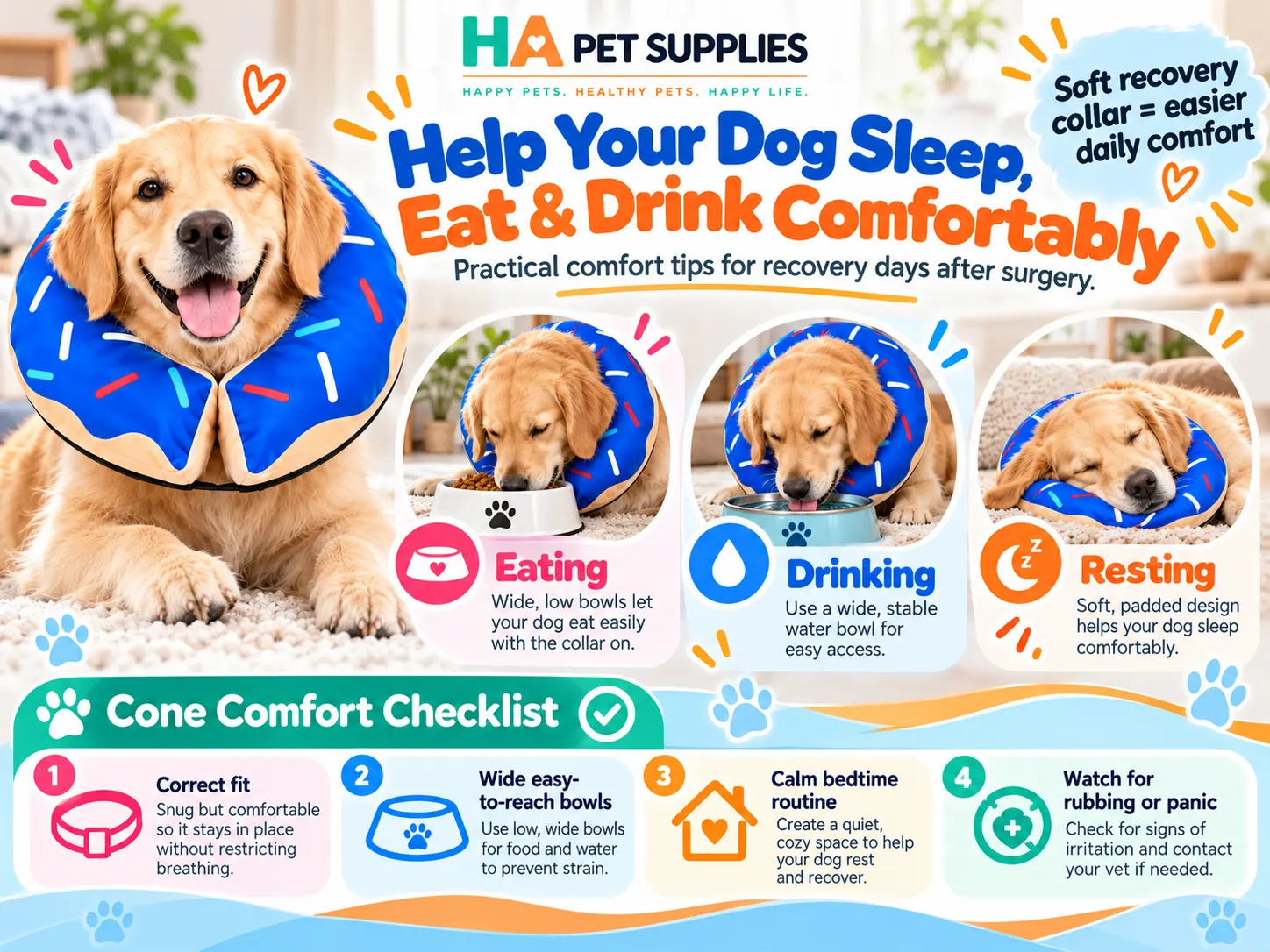
Dog recovery collar tips for comfortable eating and sleeping
Should you remove the cone when your dog lies down?
Generally not when continuous protection is prescribed. Your dog may wake up during the night and start licking the incision. It takes very little time for a determined dog to interfere with stitches. Instead of removing necessary protection, ask the veterinary team to help with fitting or approve a suitable alternative.
4. Dog won’t eat or drink with a cone: A practical troubleshooting guide
When a dog refuses food or water, it is important to identify the actual cause. A recovery collar might physically block access to a bowl, but postoperative appetite changes can also be related to anesthesia, nausea, pain, or stress.
| Problem | Possible cause | Recommended first action |
|---|---|---|
| Cone hits food bowl | Bowl is too deep | Try a shallow stable dish |
| Dog hesitates near water | Awkward drinking position | Adjust bowl placement |
| Dog can reach food but won’t eat | Nausea, pain, stress, or another issue | Contact vet if persistent |
| Dog spills water repeatedly | Bowl or collar positioning | Use a stable accessible bowl |
| Dog cannot swallow comfortably | Incorrect fit or medical concern | Seek prompt veterinary assessment |
| Dog vomits after surgery | Anesthesia, medication, or complication | Contact veterinary team |
The PDSA postoperative feeding advice recommends contacting the veterinarian when appetite does not return as expected or vomiting occurs.
5. Plastic cone vs inflatable donut vs recovery suit: Which feels most comfortable?
Different recovery devices can change how a dog moves, rests, and interacts with the environment. However, comfort is individual. Some dogs tolerate rigid cones remarkably well, while others prefer designs that leave the face unobstructed.
Plastic Cone
Broad physical barrier
Inflatable Donut
Less vision obstruction
Recovery Suit
Covers selected incisions
| Feature | Plastic cone | Inflatable donut | Recovery suit |
|---|---|---|---|
| Peripheral vision | May be restricted | Usually less restricted | Unrestricted |
| Eating and drinking | May require bowl adjustment | Often easier | Usually unaffected |
| Sleeping | Can take adjustment | May feel less bulky to some dogs | Often allows normal head positioning |
| Paw protection | Often effective if fitted correctly | Can be inadequate | Usually inadequate |
| Abdominal wound protection | Often effective | Depends on dog’s reach | May be appropriate |
| Main concern | Bulk and rubbing | Access to incision | Fabric movement or chewing |
The PetMD’s veterinarian-reviewed recovery collar comparison emphasizes that wound location, reliable protection, comfort, and durability should all influence product selection.
6. What if your dog panics, walks backward, or keeps trying to remove the cone?
Some dogs freeze when a cone is placed around their head. Others walk backward, shake their head, rub against furniture, or paw repeatedly at the fastening. These behaviors may reflect confusion or fear, but they can also indicate physical discomfort.
If your dog escapes the cone
Do not leave the incision unprotected. If the device slips over the head or allows the dog to reach the wound, it needs reassessment. The ASPCA after-surgery instructions advise owners to use an appropriately sized protective collar and seek assistance when their pet can still access the incision.
If your dog is genuinely panicking
Persistent frantic behavior, intense distress, or inability to settle warrants professional help. Contact your veterinary team to check for pain, nausea, inappropriate fit, or another underlying issue. Do not administer over-the-counter sedatives, human anxiety medication, or calming supplements without veterinary approval.
7. How long does it take for a dog to get used to a recovery collar?
Some dogs begin adjusting within hours. Others need several days of calm, consistent handling. There is no reliable universal timeline. Factors affecting adjustment include temperament, previous experiences, collar fit, comfort, pain, incision location, and the recovery environment.
The VCA guide to surgical incision healing explains that external sutures or staples are often removed around 10–14 days after surgery, while the actual schedule and protection needs vary.
Readers who want to understand collar removal should see the HA Pet Supplies pillar guide Dog Recovery Collar After Surgery: When Can You Remove It and How to Stop Licking Stitches?.
8. A practical 24-hour dog recovery collar comfort routine
A simple routine can reduce uncertainty while helping you recognize meaningful changes. The following is an example, not a substitute for instructions from the treating veterinarian.
Morning — Assess
Check comfort, incision, collar fit, appetite, hydration, and medications.
Midday — Rest
Provide calm companionship, appropriate food, and short toilet breaks.
Evening — Prepare
Recheck collar, refill water, arrange spacious bedding, remove obstacles.
Overnight — Protect
Keep prescribed protection in place and remain able to hear problems.
9. Common mistakes that make recovery collars harder for dogs
- Mistake 1: Removing the cone every time your dog complains. Repeated removal creates opportunities for licking.
- Mistake 2: Choosing a collar based only on softness. A comfortable donut collar is not appropriate if your dog can reach the incision.
- Mistake 3: Using the wrong collar size. A poorly fitted collar may rub, slip off, or fail to prevent licking.
- Mistake 4: Ignoring water accessibility. A dog may avoid drinking because a cone interferes with the bowl.
- Mistake 5: Keeping the recovery area cluttered. Furniture and narrow walkways can make navigation frightening.
- Mistake 6: Encouraging too much activity. Excessive activity can strain a healing incision.
- Mistake 7: Assuming whining is always behavioral. Persistent or worsening vocalization deserves veterinary attention.
- Mistake 8: Letting the collar become dirty or damaged. Clean and inspect the device according to the manufacturer’s instructions.
- Mistake 9: Removing the collar before healing is complete. Follow veterinary instructions about when protection can safely stop.
10. When should you call the veterinarian?
Some issues can be addressed through practical environment changes. Others require professional medical assessment.
| Observation | Recommended response |
|---|---|
| Mild hesitation walking with cone | Supervise and improve the environment |
| Cone collides with food bowl | Try shallow or repositioned bowls |
| Collar rubs neck | Contact vet for fitting adjustment |
| Persistent crying or inability to rest | Contact vet to assess pain and distress |
| Refusal of food beyond expected recovery | Contact vet promptly |
| Cannot drink normally | Seek prompt veterinary advice |
| Repeated vomiting or worsening weakness | Seek urgent veterinary assessment |
| Increasing redness, swelling, or discharge | Contact vet promptly |
| Incision opens or tissue is exposed | Seek emergency veterinary care |
| Breathing difficulty or collapse | Seek emergency veterinary care immediately |
The VCA discharge and surgical wound guidance explains the importance of monitoring incisions for swelling, discharge, and signs of deterioration.
11. Frequently asked questions
Dogs may dislike a recovery collar because it changes their peripheral vision, alters how everyday movement feels, and may be associated with the stress of surgery. Pain or nausea can also contribute. With proper fit and gentle reinforcement, many dogs gradually adjust.
Provide spacious bedding in an open area, remove nearby obstacles, check the collar fit, and keep prescribed protection in place overnight. If your dog cannot settle despite adjustments, contact your veterinarian to rule out pain or poor fit.
Generally not when continuous protection is prescribed. Your dog may wake during the night and lick or chew the incision without anyone noticing. Ask your veterinarian about fitting or an approved alternative instead of removing necessary protection.
Try a wide, shallow dish on a non-slip surface. Slightly raising the bowl may help some dogs. If your dog still cannot eat, determine whether the collar physically blocks access or whether nausea, pain, or stress is involved. Contact your vet if appetite does not return as expected.
Use a stable bowl with a wide opening and reposition it so the collar does not strike the rim. Monitor actual water intake. If your dog cannot drink, seek prompt veterinary advice rather than removing protection and walking away.
Some dogs find inflatable donut collars more comfortable because they leave the face unobstructed. However, some dogs can still reach their paws, tail, or abdominal incision while wearing a donut. The safest choice is the one that reliably protects your dog’s specific wound, with veterinary approval.
Walking backward may reflect confusion with the unfamiliar sensation of the cone, or it may indicate the collar is striking obstacles or causing discomfort. Check the fit, clear the environment, and contact your vet if the behavior persists.
Some dogs adjust within hours, while others need several days. Factors include temperament, previous experience, collar fit, comfort, pain, incision location, and the recovery environment. If your dog never appears to adjust, contact your vet about an alternative.
Recovery suits can be suitable for some abdominal incisions when approved by your veterinarian. However, they do not protect uncovered areas like paws, ears, or tail. They must also stay clean, dry, and intact. Always get veterinary approval before substituting.
Never administer over-the-counter sedatives, human anxiety medication, or calming supplements without veterinary approval. Some human medications are dangerous for dogs. Your veterinarian can assess whether medication is appropriate and prescribe something safe.
If your dog can remove the collar, it is not securely fitted or the design is unsuitable. Do not leave the incision unprotected. Contact your veterinarian about a different size or style that stays in place.
Only when your veterinarian confirms the incision is sufficiently healed and no longer requires protection. Stitch removal and collar removal are separate decisions. Follow your discharge instructions carefully.
Finding a comfortable recovery collar through HA Pet Supplies
If your dog is struggling with a traditional cone, it may be worth discussing an alternative protective design with your veterinarian. A soft or inflatable collar may offer comfort advantages for certain dogs, but it must still provide appropriate wound protection.
At HA Pet Supplies, dog owners can explore available pet care products, including recovery-related accessories. Before purchasing, measure your dog’s neck accurately, review the product’s size information, and determine whether the collar can protect the specific surgical site.
The HA Pet Supplies dog recovery collar product page provides a starting point for exploring the product. For owners considering additional dog care accessories, the dog supplies collection may also be useful.
If you are also buying other care essentials, explore the HA Pet Supplies shop for available products. Remember that product support can help clarify available dimensions and materials, but medical decisions about surgical protection should be made with your veterinary team.
Daily recovery collar comfort checklist
Use this checklist alongside your dog’s specific discharge instructions.
Conclusion: Your dog can recover comfortably while keeping stitches protected
When your dog hates wearing a recovery collar, it can be tempting to remove it simply to make them happier. However, postoperative protection is important because licking and chewing may interfere with healing. The goal should be to make the protective equipment easier to tolerate without compromising its purpose.
Start by checking the collar’s fit and creating a calm recovery environment. Make sleeping easier with appropriate bedding and a clear resting area. Help your dog eat and drink by adjusting bowls and monitoring appetite and hydration. Use positive reinforcement, gentle companionship, and suitable mental stimulation to reduce anxiety and frustration.
If your dog continues to struggle, speak to the veterinarian about fitting, pain management, or an alternative protective device. Most importantly, do not ignore persistent distress or concerning changes to the surgical incision.
A little preparation and careful monitoring can make the recovery period more manageable for both dog and owner.
For more information about collar duration and incision protection, read the HA Pet Supplies guide on how long dogs should wear a recovery collar after surgery.
You can also find other practical pet care resources through the HA Pet Supplies blog.
© HA Pet Supplies — Helping you care for your dog’s recovery.