
A dog recovery collar after surgery can be one of the most important tools for protecting your dog’s healing incision. Whether your dog has just been spayed, neutered, undergone orthopedic surgery, or had a lump removed, preventing licking and chewing is an essential part of recovery.
But for many dog owners, the hardest part begins after returning home from the veterinary clinic. Your dog may look uncomfortable wearing a cone. They may bump into furniture, struggle to settle down, refuse their usual food, or stare at you as though they desperately want the collar removed.
This guide explains how long dogs commonly need recovery collars, what to check before removing them, how to prevent licking stitches, and how to make the recovery period safer and more comfortable.
10–14 Days
Typical protection window for routine procedures.
Vet Approved
Always follow your veterinarian’s removal instructions.
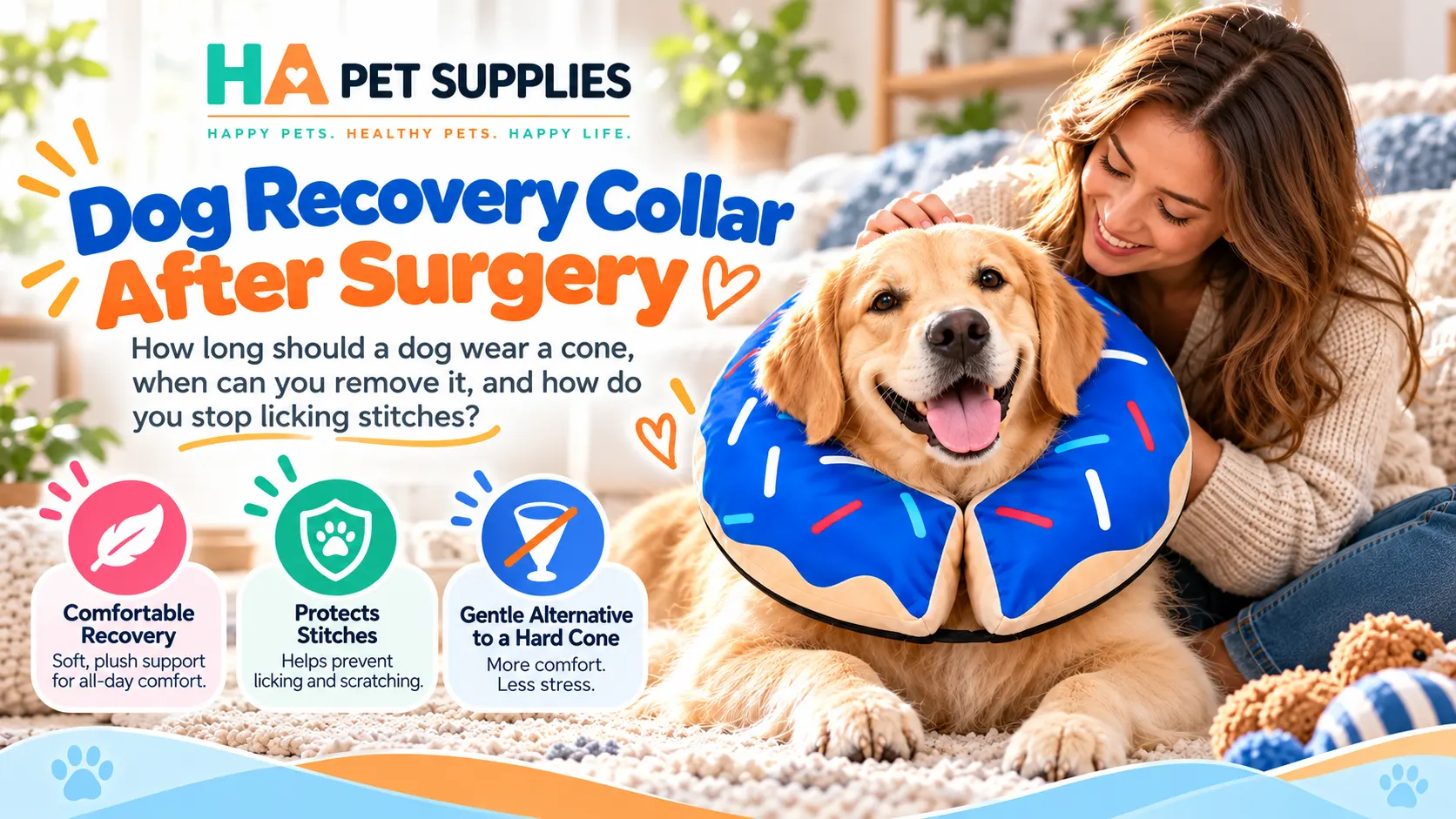
Dog recovery collar after surgery protecting a Golden Retriever
Quick answer: How long should a dog wear a cone after surgery?
For many routine surgical procedures, dogs may require a recovery collar for approximately 10–14 days, although some postoperative instructions specify shorter or longer periods. The exact duration depends on the procedure, incision location, healing progress, and the veterinarian’s instructions.
Your dog should generally wear the prescribed protective collar continuously, including overnight, unless your veterinary team explicitly approves a temporary removal or alternative.
According to VCA Animal Hospitals’ surgical incision care guidance, external sutures or staples are often removed approximately 10–14 days after surgery, depending on the procedure.
📋 Table of Contents
- 1. Why dogs need a recovery collar
- 2. How long should a dog wear a cone?
- 3. Dog recovery timeline: Day 1–14
- 4. When can you safely remove it?
- 5. Why dogs lick stitches
- 6. 7 ways to stop licking stitches
- 7. How to choose the right collar
- 8. Normal vs. warning signs
- 9. Eating, drinking, and sleeping
- 10. Daily care checklist
- 11. Common mistakes to avoid
- 12. Frequently asked questions
1. Why does your dog need a recovery collar after surgery?
A dog recovery collar is designed to stop your dog from physically reaching a sensitive wound or surgical incision with their mouth. Dogs naturally investigate uncomfortable areas of their bodies through licking. A healing incision may feel itchy, tender, or unfamiliar.
However, surgery creates delicate tissue that needs time to repair. Repeated licking can interfere with that process. One of the most common misunderstandings is that dog saliva helps surgical wounds heal. Although licking is a normal canine behavior, repeated licking of a surgical incision introduces moisture and contamination and can damage healing tissues.
The American College of Veterinary Surgeons identifies incision protection, activity restriction, and regular monitoring as important parts of postoperative care.
What does a recovery collar actually protect against?
A properly selected collar may help prevent your dog from reaching the incision, removing stitches, irritating wounds, reopening healing tissue, and causing additional complications. The collar does not heal the wound by itself. Instead, it provides a physical barrier while the body completes the healing process.
Does every dog need the same type of collar?
No. The location of the surgical incision makes a significant difference. For example, a collar suitable for protecting an abdominal incision may not provide enough protection after surgery on the dog’s front paw, ear, eye, or tail.
If you’re considering a more comfortable option, explore the available HA Pet Supplies dog recovery collar and confirm that its shape and fit will prevent access to your dog’s specific surgical site.
Explore Dog Recovery Collar Options2. How long should a dog wear a cone after surgery?
There is no universal removal date that works for every dog. For routine procedures, many veterinary recovery instructions use a general window of approximately one to two weeks, but the appropriate collar duration varies with the surgery performed.
The ASPCA after-surgery instructions discuss the importance of limiting activity, preventing licking, and protecting the incision throughout the postoperative recovery period.
After spay surgery
Spaying generally involves an abdominal incision, and the tissues may need protection even after the dog begins behaving normally. Depending on the veterinary clinic’s instructions, protection may be needed for approximately 10–14 days or another specified period.
After neutering surgery
A male dog’s neutering incision may be smaller than a typical spay incision, but it can still become damaged through licking or chewing. Some veterinary clinics recommend approximately 7–10 days of continuous cone use after routine spay or neuter surgery. The SPCA of Texas postoperative instructions provide this type of specific protocol.
After orthopedic surgery
Orthopedic procedures may involve more complicated healing, deeper tissues, larger incisions, implants, or specific movement restrictions. The collar might be required for approximately 10–14 days or longer if the incision needs additional protection. However, full orthopedic recovery can continue for many weeks or months.
After eye or ear surgery
Eye and ear procedures require especially careful protection. Dogs may scratch their faces with their paws, rub against carpets, or press their heads into furniture. Inflatable collars do not reliably prevent these behaviors. Your veterinarian may require a correctly sized rigid cone that prevents access to the sensitive area.
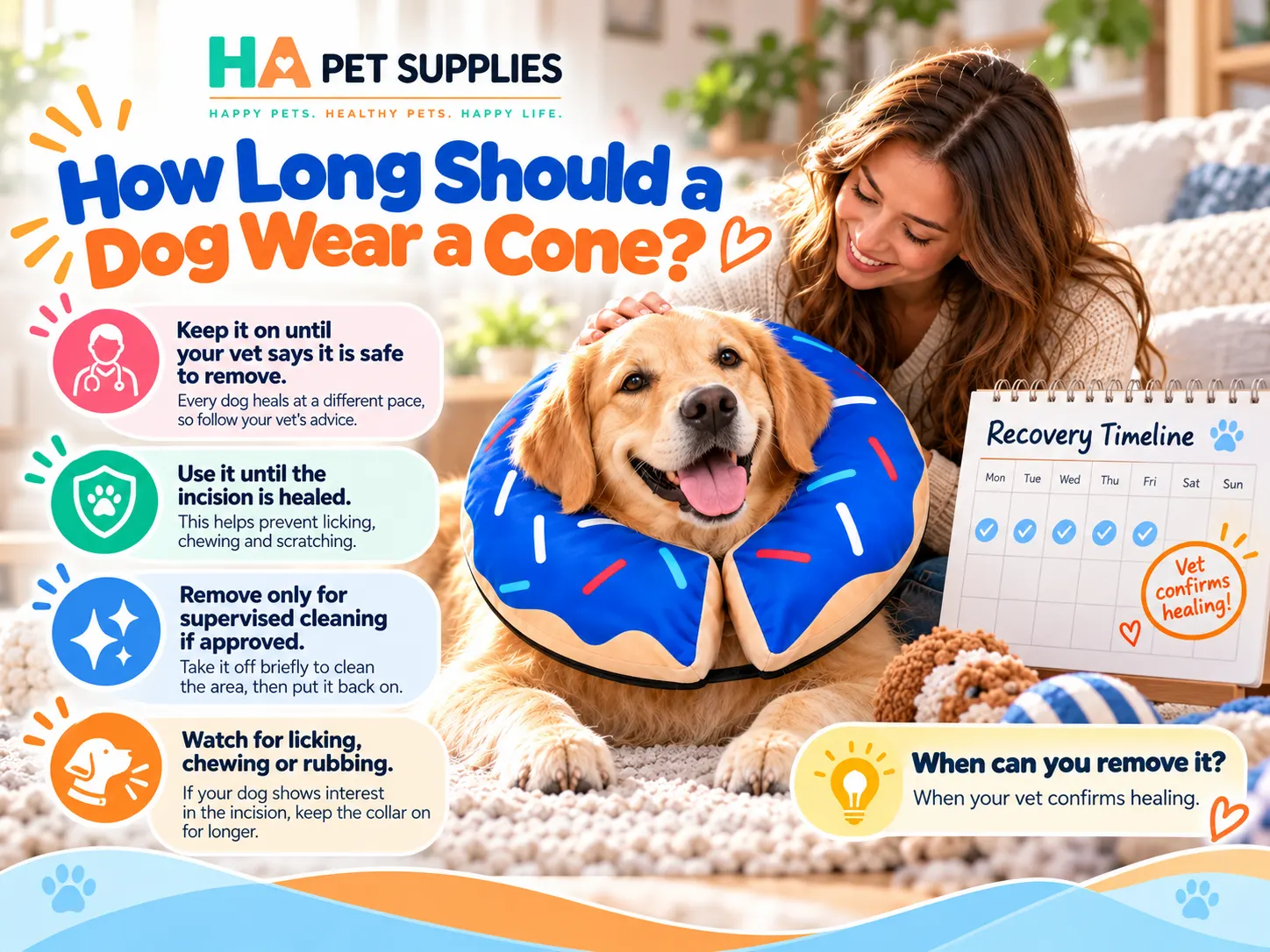
When to remove a dog recovery collar after surgery
3. Dog recovery collar timeline: What to expect from day 1 to day 14
Understanding the stages of recovery helps owners avoid removing a collar simply because their dog looks happier. The following timeline is a general illustration for an uncomplicated routine surgery.
Days 1–2: Protect the fresh incision
During the first 48 hours, your dog may be sleepy, disoriented, less interested in food, or uncomfortable after anesthesia. Your first priority is to provide a quiet, comfortable environment. Keep your dog inside, away from rough play and jumping. Use the protective collar prescribed by the veterinarian and confirm it stays in place when your dog lies down.
Review the VCA surgical discharge instructions for further information about protecting a fresh incision and restricting activity.
Days 3–5: Your dog may seem much better
This stage is particularly challenging because your dog may begin acting more like themselves. They might wag their tail, ask to go outside, or try to run toward their favorite toy. However, the surgical area may remain vulnerable to excessive movement or licking. Continue wearing the prescribed recovery collar.
Days 6–10: Continue protection despite visible improvement
By this stage, many uncomplicated routine incisions look noticeably better. Some dogs start scratching around the area as healing progresses. This makes the protective collar especially important. Check the fit daily, particularly if padding shifts or the collar loosens.
Days 11–14: Ask whether the collar can be removed
For some routine procedures, this period includes a scheduled veterinary follow-up or stitch removal. A veterinarian may assess whether the incision is adequately healed and whether further protection is needed. Even after collar removal is approved, other restrictions may still apply.
4. When can you safely remove a dog recovery collar after surgery?
The safest time to remove a recovery collar is when your veterinarian confirms that the incision no longer requires protection. Before permanently removing the collar, consider the following five questions.
Question 1: Has the veterinarian approved removal?
Your veterinary team’s instructions are the most important factor. If the discharge notes specify a follow-up appointment, attend it even if the wound appears normal.
Question 2: Does the incision appear closed and dry?
A healthy surgical incision generally has closely joined edges with no concerning discharge. Increasing swelling, pus, bleeding, odor, or separation of the edges are warning signs.
Question 3: Are your dog’s stitches still present?
Some stitches or staples must be removed by a veterinary professional. The absence of external stitches does not mean your dog no longer needs incision protection.
Question 4: Is your dog still interested in licking the area?
A dog that immediately turns toward a healing incision when the collar shifts may still need protection. If persistent interest in the wound continues, contact the veterinarian.
Question 5: Does your dog need further activity restrictions?
Collar removal does not automatically mean your dog can return to normal exercise. The VCA Canada’s postoperative guidance explains why wound monitoring, stitch removal, medication, and activity restriction must all be considered during recovery.
Can you remove the cone for five minutes?
Only if your veterinarian has said that temporary removal is acceptable and you can provide uninterrupted, close supervision. Even a short period of chewing can damage stitches. Do not assume that five minutes is automatically safe.
Can your dog sleep without a recovery collar?
Usually, no. If a collar has been prescribed for continuous protection, it should remain on while your dog sleeps. The VCA guide to Elizabethan collars recommends continued use until the wound has healed.
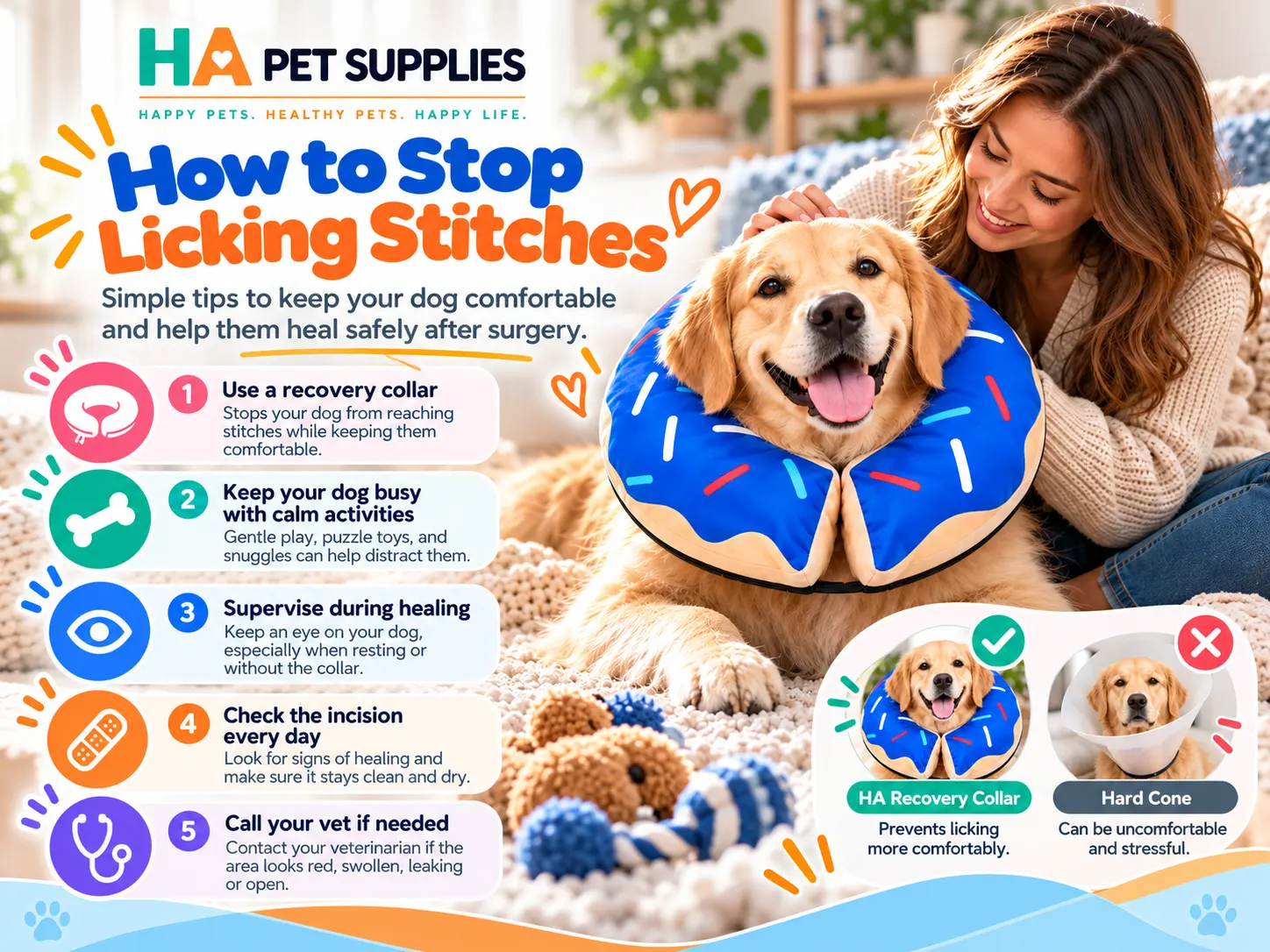
A properly selected recovery collar helps stop a dog from reaching its healing stitches.
5. Why do dogs lick their stitches after surgery?
Licking is an instinctive behavior. Dogs use their mouths to investigate unfamiliar sensations and areas of discomfort. After surgery, the skin may feel tight, irritated, tender, or itchy. The Blue Cross wound-licking guide explains how licking can make wounds more sore and why protective collars are commonly used.
Why licking stitches can be dangerous
- Infection: A dog’s mouth contains microorganisms that may contaminate a surgical incision.
- Mechanical damage: Repeated tongue contact can irritate delicate tissue. Chewing or pulling can dislodge stitches or reopen the wound.
- Moisture: Excessive licking keeps the incision wet, potentially interfering with healing.
- Additional treatment: If the wound becomes infected or opens, the dog may require additional medication, veterinary visits, or another procedure.
⚠️ Emergency guidance: What if your dog’s stitches have opened?
If the incision opens, exposed tissue becomes visible, or bleeding is heavy or persistent, contact an emergency veterinary service immediately. Prevent further licking, keep your dog calm, and avoid applying pressure directly to exposed internal tissue.
For more information about concerning wounds, see PDSA’s veterinary wound guidance.
6. Seven practical ways to stop a dog licking stitches after surgery
Tip 1: Use a properly fitted protective collar
The first and most important step is providing a physical barrier that prevents your dog’s mouth from reaching the incision. Browse the HA Pet Supplies dog supplies collection for recovery-related accessories while remembering that your veterinarian should approve the protective method.
Tip 2: Create a calm recovery space
Choose a quiet room with limited obstacles. Provide a comfortable resting surface, keep water nearby, and remove furniture or objects that interfere with the collar. If other pets are likely to lick the healing incision, separate them when supervision is not possible.
Tip 3: Prevent boredom safely
Offer gentle enrichment that follows the veterinarian’s instructions. For example, you might use a quiet food puzzle, a calm reward-based training exercise, or another low-movement activity. If you need more ideas for making protective equipment comfortable, read 9 ways to help a dog feel comfortable wearing a recovery collar.
Tip 4: Follow the prescribed pain-management plan
A dog that repeatedly tries to reach its incision may be uncomfortable. If your dog is showing signs of pain, increased restlessness, or unusual behavior, speak to the veterinarian. Never administer human painkillers or change medication doses without veterinary advice.
Tip 5: Check the incision regularly
Check the incision according to your veterinary instructions, commonly once or twice daily. Look for changes in redness, swelling, moisture, discharge, odor, and wound closure. Taking a photograph from a similar distance and angle can help you compare changes over time.
Tip 6: Keep the collar clean and secure
Food residue, water, and dirt can accumulate on protective collars. Clean the device according to the manufacturer’s instructions, keeping it properly positioned and preventing your dog from reaching the wound. Check for rubbing or pressure around the neck.
Tip 7: Ask about alternatives when the current collar fails
Some dogs remain distressed despite careful adjustment. Others learn how to bend around a soft collar and reach their stitches. In these situations, do not simply abandon incision protection. Ask the veterinary team whether a different cone, inflatable collar, or recovery suit would be suitable.
7. How to choose the right dog recovery collar after surgery
Choosing a dog recovery collar involves more than finding the softest-looking product. Comfort matters, but protection comes first. A collar that allows your dog to reach the wound is not an effective recovery collar, regardless of how attractive or comfortable it appears.
Traditional plastic cone
A traditional Elizabethan collar surrounds the dog’s head and extends forward, usually beyond the nose. Its primary advantage is the physical barrier it creates between the dog’s mouth and the body. When correctly fitted, it can also reduce access to sensitive areas around the face and ears.
Inflatable donut recovery collar
Inflatable collars sit around the dog’s neck, resembling a padded travel pillow. They often provide a wider field of vision and may be more convenient for resting or eating. However, flexible dogs and dogs with longer muzzles may still reach their paws, tail, or lower body.
Soft fabric recovery cone
Soft cones use flexible fabric or padded material. They may feel less restrictive than rigid plastic cones, but some collapse or bend when a determined dog tries to reach a wound.
Surgical recovery suit
A recovery suit covers selected parts of the dog’s body. It can be suitable for some abdominal incisions when recommended by the veterinarian. However, suits may not protect wounds on the head, paws, or other uncovered areas. The PDSA’s recovery collar fitting and comparison guide explains the advantages and limitations of several protective options.
| Protection type | Main benefit | Important limitation |
|---|---|---|
| Rigid plastic cone | Strong barrier when correctly fitted | Can restrict peripheral vision and movement |
| Inflatable donut collar | Comfortable neck cushioning | May allow access to limbs or rear-body wounds |
| Soft recovery cone | More flexible construction | Some dogs can bend or collapse it |
| Recovery suit | Covers selected body incisions | Does not prevent access to every surgical area |
If you need a detailed buying comparison, continue to the related article, Best Dog Recovery Collar: Inflatable Donut vs Plastic Cone vs Recovery Suit.
How should a recovery collar fit?
For a traditional cone, the front edge generally needs to extend slightly beyond the dog’s muzzle to provide effective protection. The neck opening should be secure without excessive pressure. The VCA veterinary behavior guidance on protective collars emphasizes the importance of correct cone length and preventing dogs from reaching surgical sites.
Compare Dog Recovery Collar Types8. Dog surgical incision healing: Normal signs versus warning signs
One of the most stressful parts of caring for a dog after surgery is deciding whether the incision looks normal. The wound may change appearance during the first few days. Some changes are expected, while others require veterinary attention.
What does a normally healing incision look like?
A normal healing incision usually has skin edges that remain together and gradually become less inflamed. Mild pinkness, slight bruising, and limited swelling may occur during the early recovery period. Over time, the wound should generally become drier, calmer, and more comfortable.
Warning signs that require veterinary attention
Contact your veterinarian if you notice increasing redness, worsening swelling, unusual warmth, a bad smell, yellow or green discharge, missing stitches, or the wound beginning to open. The PDSA postoperative dog care guide provides additional advice about recognizing complications.
Green — Normal
Mild pinkness, small improving bruises, gradual comfort improvement.
Amber — Monitor
Increasing redness or swelling — contact your veterinarian.
Red — Urgent
Thick discharge, missing stitches, heavy bleeding — seek urgent care.
9. How to help your dog eat, drink, and sleep with a recovery collar
A recovery collar should protect the incision without making essential daily activities impossible. Many dogs experience some difficulty adjusting to a cone, particularly during the first few hours.
Help your dog eat comfortably
Place food in a stable, shallow bowl or plate. Make sure the collar does not repeatedly collide with the bowl’s sides. Some dogs benefit from a slightly elevated feeding surface, provided it is suitable for their size and medical condition.
Make drinking easier
Your dog should always have access to fresh water. A shallow or appropriately positioned water bowl may improve access. Do not leave your dog without access to water because the cone makes drinking inconvenient.
Create a comfortable sleeping area
Choose a quiet, low-traffic location with enough room for your dog to turn around without repeatedly striking furniture. A spacious, supportive bed may help your dog settle. If your dog consistently cannot rest, becomes distressed, or struggles to breathe comfortably, contact the veterinarian.
For a more detailed comfort routine, follow the related HA Pet Supplies article on helping dogs sleep, eat, drink, and adjust to recovery collars.
10. Daily dog recovery collar and surgical incision care checklist
A consistent daily routine can make post-surgery care less confusing. Use this interactive checklist alongside your veterinarian’s discharge instructions.
11. Common dog recovery collar mistakes to avoid
- Mistake 1: Removing the collar because your dog looks healthy. A dog may seem energetic before the incision is sufficiently healed. Always follow the veterinary removal instructions.
- Mistake 2: Choosing a collar based only on comfort. Soft collars can feel appealing, but comfort does not guarantee protection.
- Mistake 3: Leaving the collar off overnight. Nighttime licking may go unnoticed and can damage the incision.
- Mistake 4: Allowing other pets to lick the wound. Other dogs may investigate or lick a surgical area. Prevent this behavior through supervision and separation.
- Mistake 5: Applying creams or antiseptics without approval. Some household products can irritate healing tissue or interfere with wound closure.
- Mistake 6: Ignoring rubbing or poor collar fit. A poorly fitted collar may cause discomfort, slip off, or fail to prevent licking.
- Mistake 7: Assuming stitch removal means full recovery. External stitch removal does not mean deeper tissues are fully healed.
- Mistake 8: Allowing too much exercise. Jumping, running, and rough play may strain a healing surgical incision.
- Mistake 9: Waiting too long when complications appear. Increasing discharge, an opening wound, or worsening pain should not be ignored.
12. Frequently asked questions about dog recovery collars after surgery
For many routine procedures, dogs may require a recovery collar for approximately 10–14 days. The exact duration depends on the procedure, incision location, and healing progress. Always follow your veterinarian’s specific instructions. For more detail, see our guide on how long a dog should wear a cone.
Usually, no. If a collar has been prescribed for continuous protection, it should remain on while your dog sleeps. Owners cannot reliably supervise a dog throughout the night.
Calmly stop the behavior and replace or adjust the protective collar. Inspect the surgical area without pulling at the skin. If the incision remains closed and appears unchanged, contact your veterinary team for advice. If stitches are removed or the wound opens, seek veterinary assessment promptly.
Only if your veterinarian has said that temporary removal is acceptable and you can provide uninterrupted, close supervision. Even a short period of chewing can damage stitches. First try adjusting bowl placement or changing the environment.
It depends on the surgical site and your dog’s flexibility. Inflatable collars are often more comfortable but may not prevent access to paws, tail, or lower body. See our comparison: Inflatable Donut vs Plastic Cone vs Recovery Suit.
If your dog can bend around the collar and reach the incision, the device is not providing sufficient protection. Contact your veterinarian about a different size or style. Do not simply abandon incision protection.
Yes, some procedures and healing complications may require longer protection. Persistent swelling, discharge, or gaps between incision edges require veterinary attention. Do not automatically remove the collar after two weeks without approval.
Recovery suits can be suitable for some abdominal incisions when recommended by the veterinarian. However, they may not protect wounds on the head, paws, or other uncovered areas. Always get veterinary approval before substituting.
Licking can be triggered by itching, irritation, anxiety, or habit — not just pain. If your dog continues to focus on the incision, contact your veterinarian. They may adjust the pain management plan or recommend a different protective device.
Contact emergency veterinary care immediately if the incision opens, exposed tissue is visible, bleeding is heavy or persistent, or your dog shows severe lethargy, repeated vomiting, or difficulty breathing. For non-urgent concerns, call your regular vet.
13. Why choosing a suitable dog recovery collar matters
A recovery collar is a temporary tool with an important purpose: giving your dog’s incision the best opportunity to heal without interference. The right product should balance effective wound protection with a fit your dog can tolerate.
When comparing recovery collars, consider your dog’s neck measurement, muzzle length, flexibility, incision location, and general comfort. For owners looking at soft or inflatable designs, the HA Pet Supplies dog recovery collar product page is a useful starting point.
For other pet recovery and care products, readers can visit the HA Pet Supplies online shop. Owners with questions about available products can also contact HA Pet Supplies directly.
Product questions should be distinguished from medical questions. A seller can help with dimensions, materials, and product availability, while your veterinarian should determine whether a collar safely protects a particular incision.
Final thoughts: Protect your dog’s healing journey
Caring for a dog after surgery can be stressful, especially when your dog seems uncomfortable and wants to return to normal activities. A well-fitted dog recovery collar after surgery helps reduce the risk of licking, chewing, and injury to the healing incision.
For many routine procedures, the protective period is approximately one to two weeks, but this is only a general reference. The most appropriate removal date depends on your dog’s surgery, wound condition, and veterinary instructions.
Focus on three priorities: keeping the incision protected, making everyday activities as comfortable as possible, and monitoring for complications. With appropriate care, many dogs adjust to wearing their recovery collar and progress through the healing period without major problems.
For further guidance about choosing the right protective device, visit HA Pet Supplies’ related article comparing inflatable donut vs plastic cone vs recovery suit.
© HA Pet Supplies — Helping you care for your dog’s recovery.