
Description
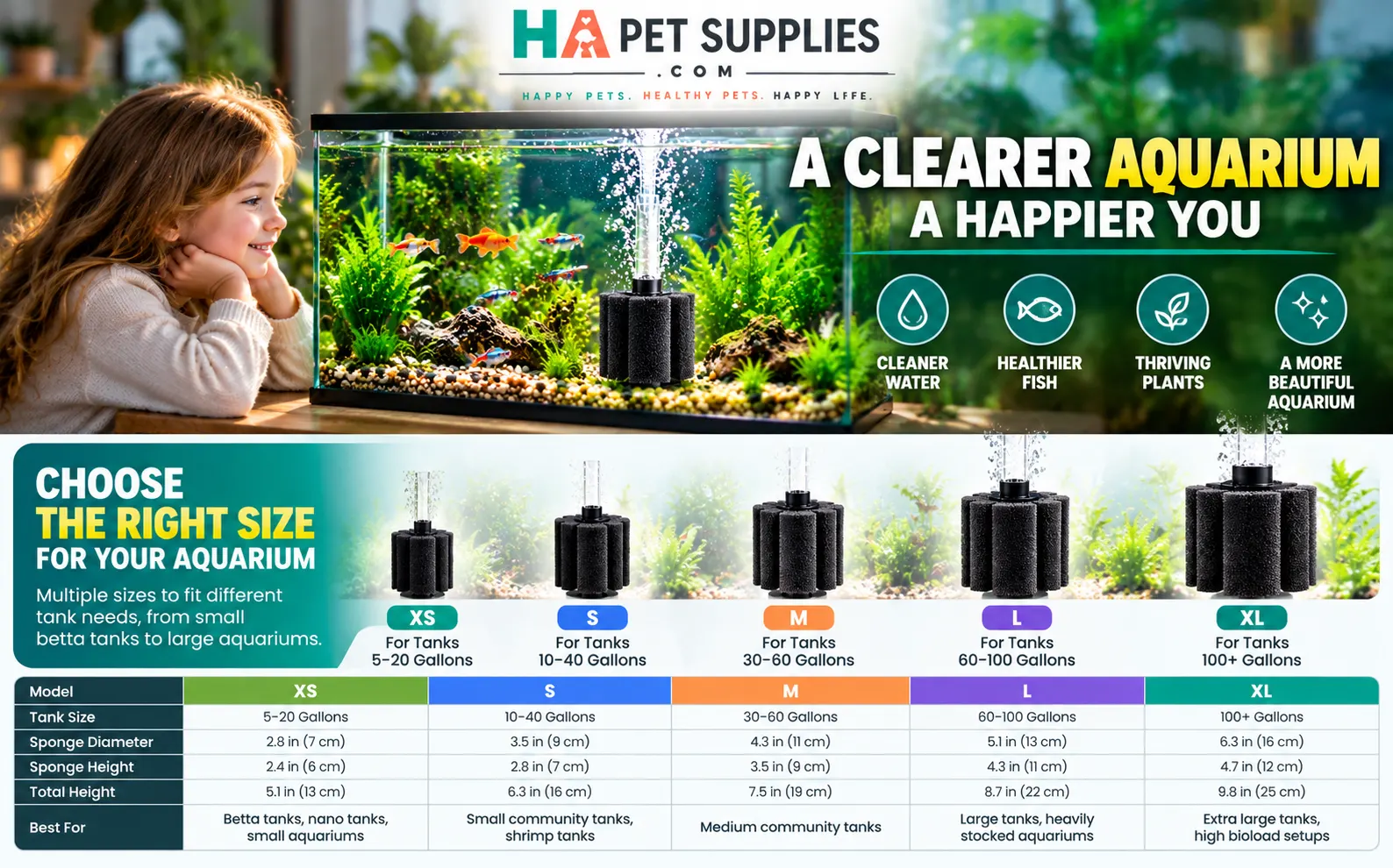
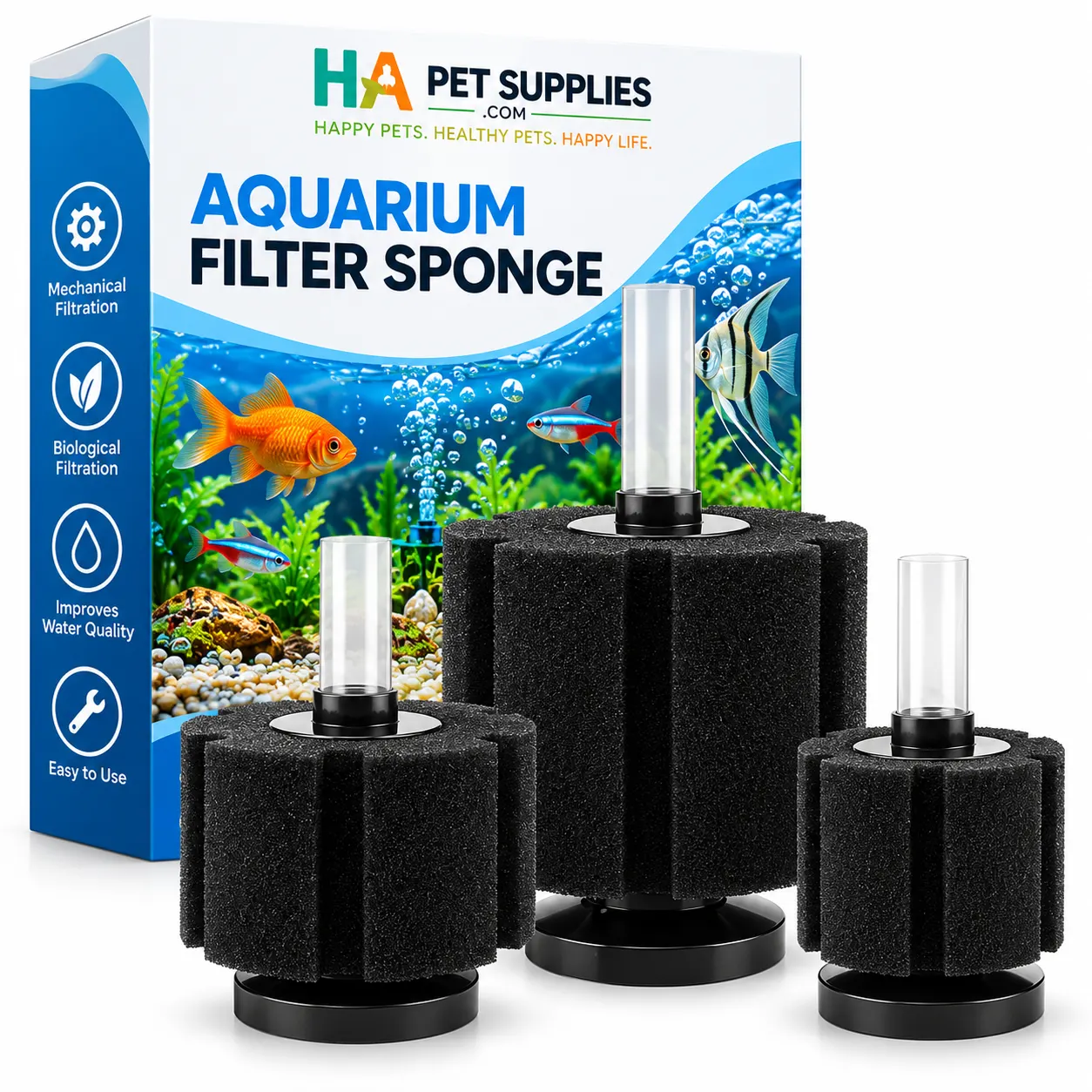
Aquarium Filter Sponge – Reliable Filtration for Healthy Fish Tanks
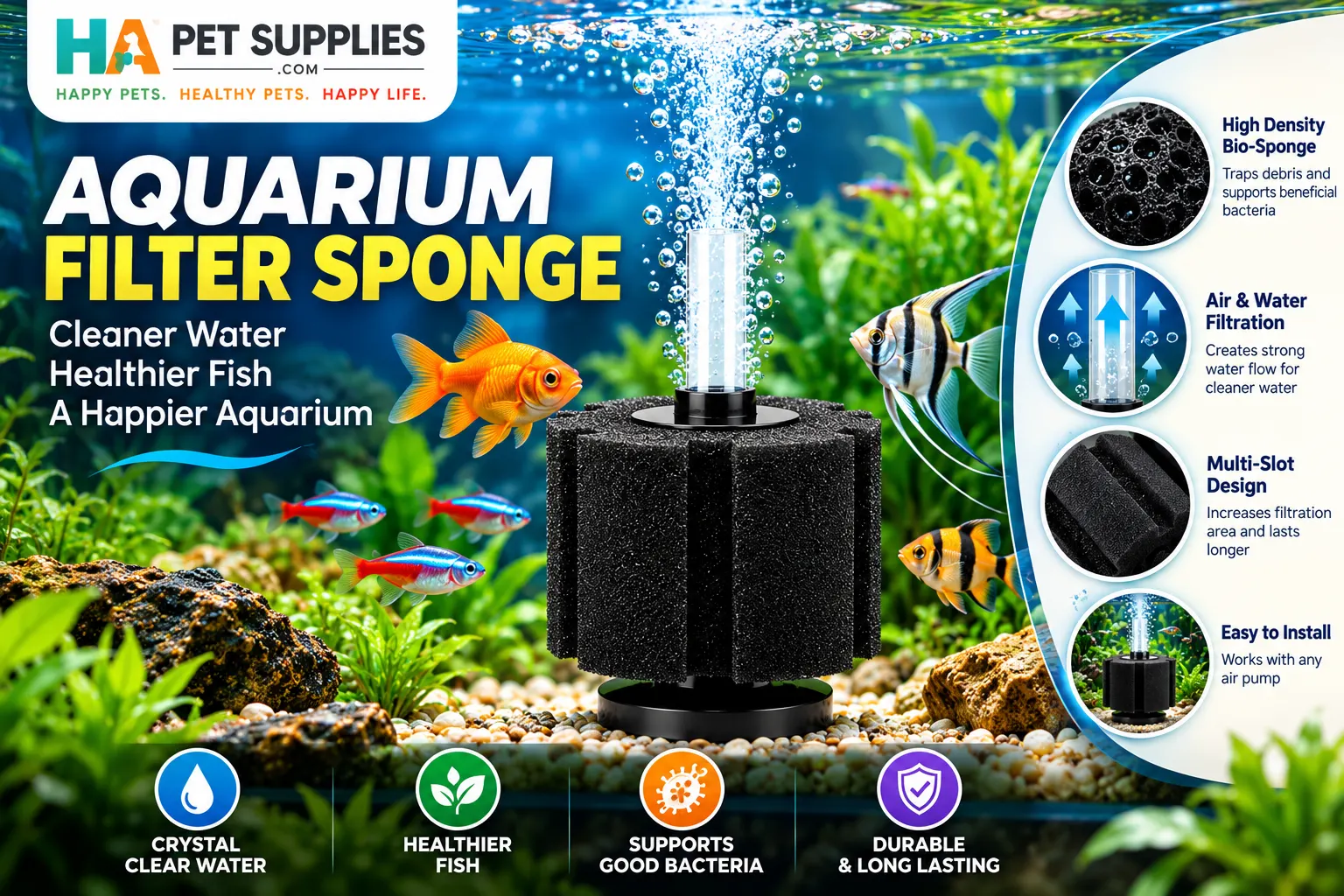
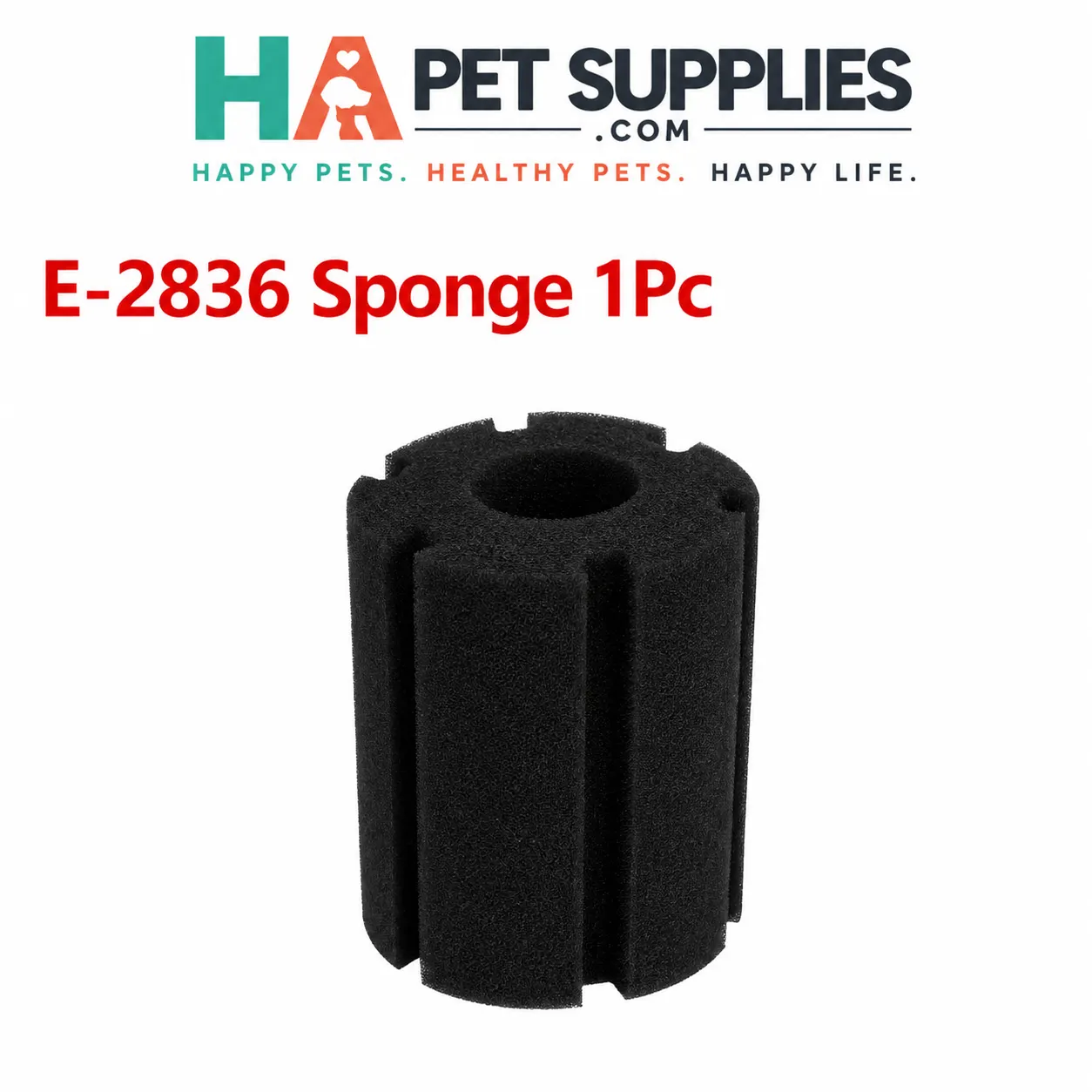
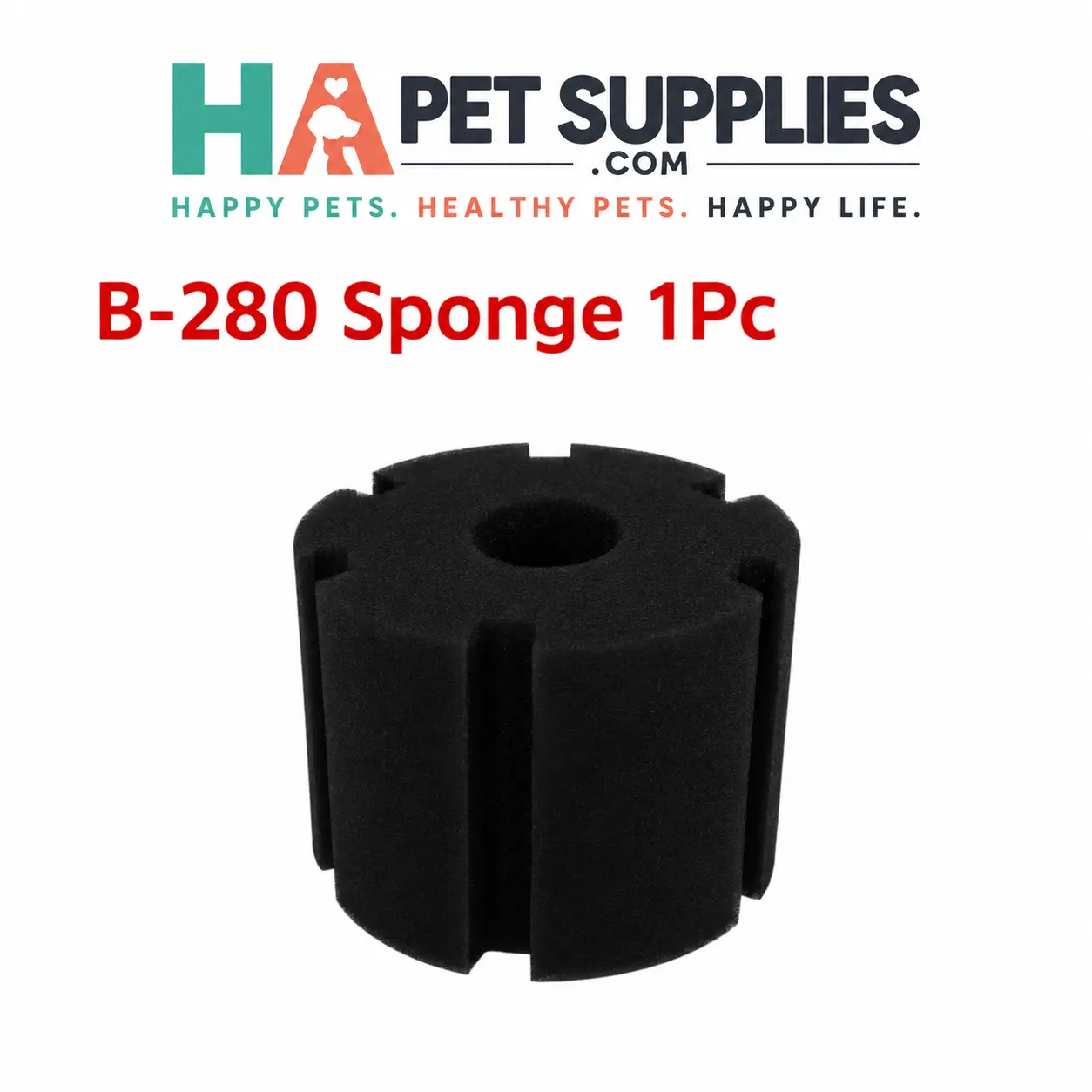
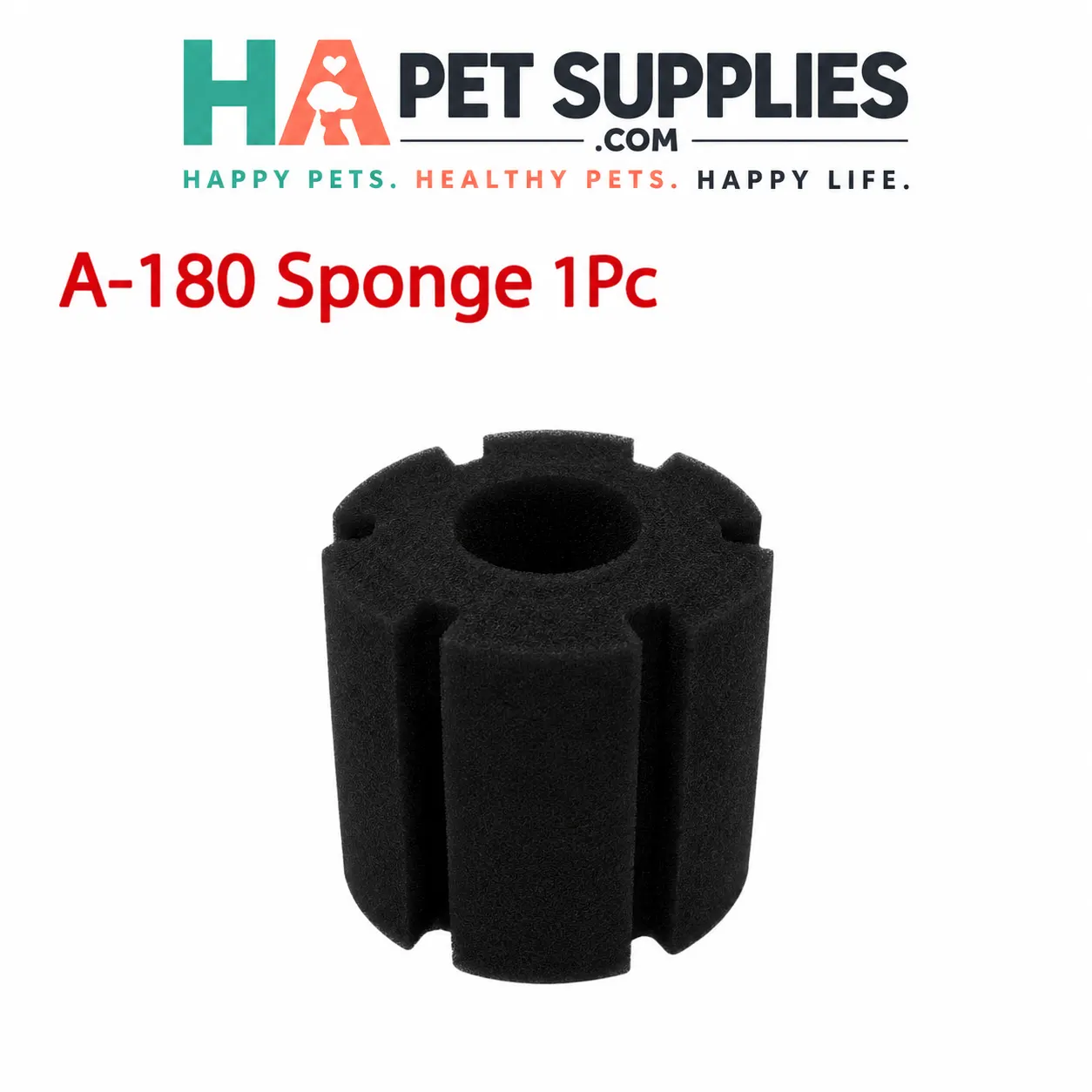
Aquarium filter sponge filtration is a practical solution for fishkeepers who want to support cleaner aquarium water, beneficial bacteria growth, and gentle water circulation. The HA Pet Supplies Aquarium Filter Sponge is designed around the familiar sponge filtration system used in freshwater aquariums, shrimp habitats, betta tanks, and other suitable fishkeeping environments.
A properly installed fish tank sponge filter helps capture suspended debris while providing surface area for beneficial microorganisms. These organisms contribute to the biological filtration process that helps manage ammonia and nitrite in an established aquarium.
Whether you are building your first fish tank or improving an existing aquarium filtration system, choosing the correct sponge filter can make routine water maintenance more manageable.
Aquarium Filter Sponge Product Overview
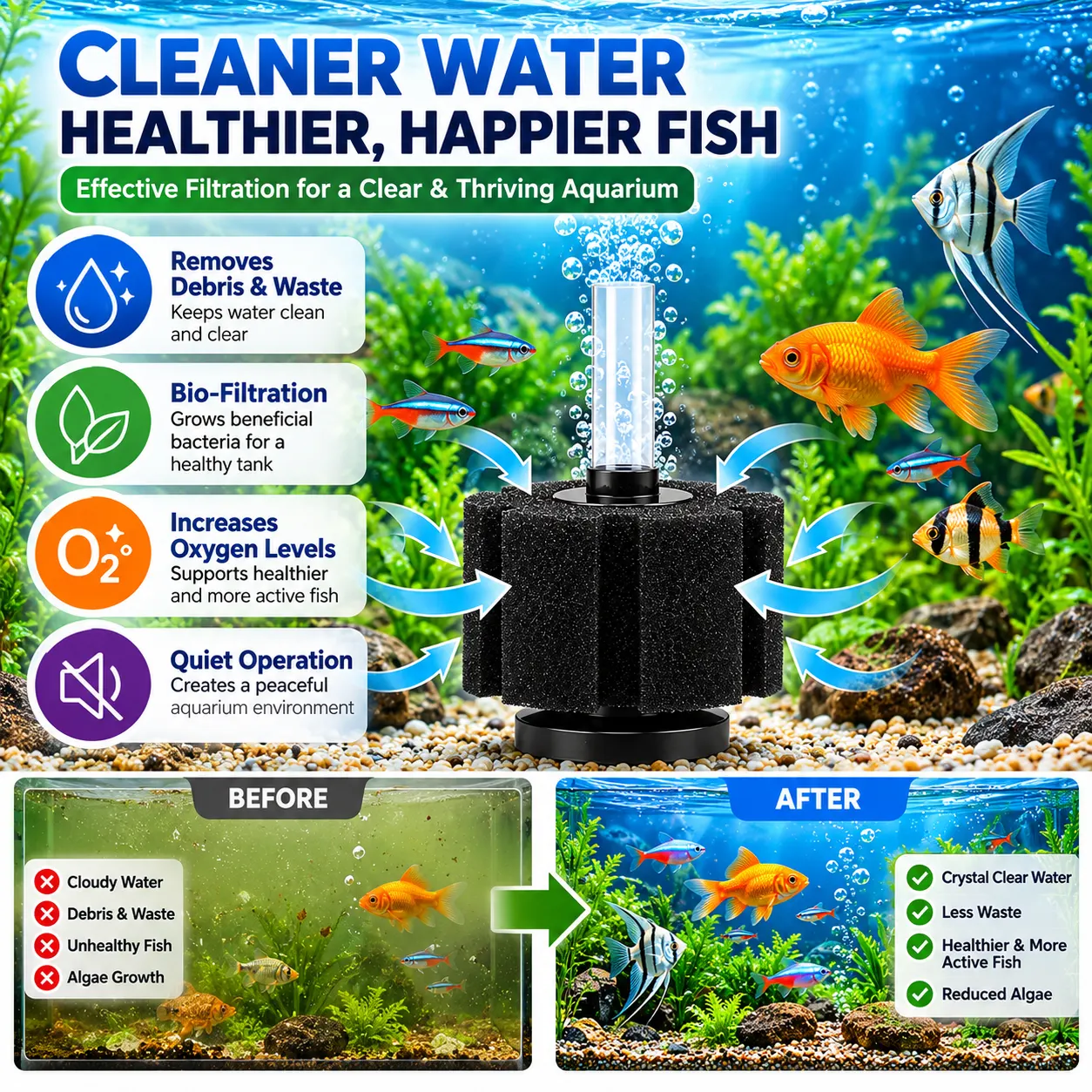
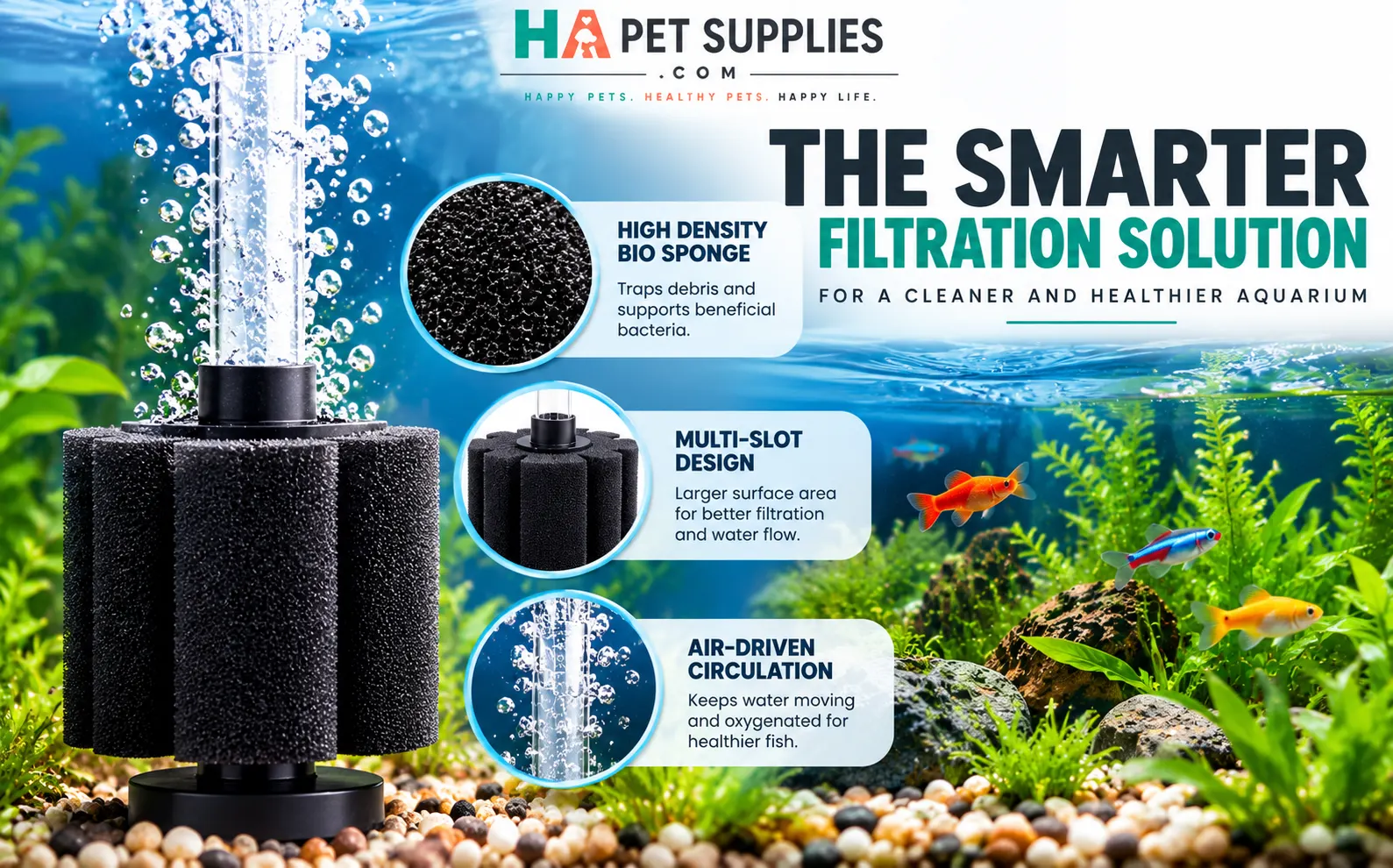
An aquarium filter sponge combines mechanical filtration with biological filtration support. As aquarium water moves through the porous sponge, floating particles become trapped in the filter media. At the same time, the sponge provides space for beneficial bacteria to establish colonies.
These bacteria participate in the aquarium nitrogen cycle by processing ammonia and nitrite. A new sponge must become biologically established before it can provide mature biological filtration.
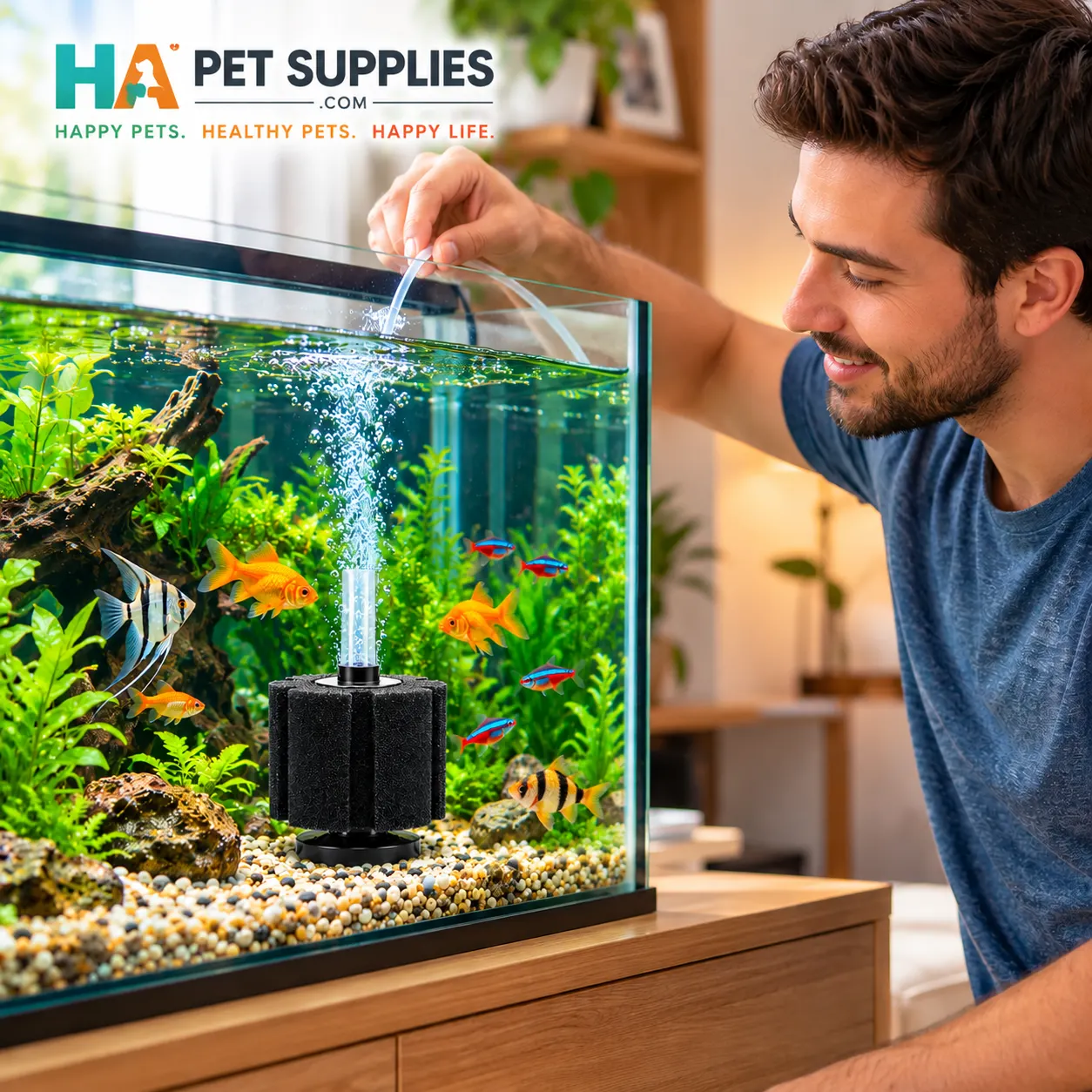
Traditional aquarium sponge filters work with an external air pump. Rising air bubbles create water movement through the filter, making this system particularly useful when gentle circulation is preferred.
The aquarium filter sponge can be incorporated into different filtration arrangements depending on aquarium size, stocking level, and air pump capacity.
For a broader selection of aquarium equipment, explore the HA Pet Supplies fish and aquarium collection.
7 Amazing Benefits of an Aquarium Filter Sponge
1. Mechanical Filtration
The aquarium filter sponge collects suspended waste particles, leftover food fragments, and other debris. Regular cleaning removes collected material and helps restore water movement through the filter.
2. Beneficial Bacteria Support
Porous sponge media provides surface area for nitrifying bacteria. Once established, these microorganisms help process ammonia and nitrite as part of the aquarium nitrogen cycle.
3. Gentle Water Circulation
A correctly sized air-driven sponge filter can provide manageable water movement, making it a practical option for some betta tanks, shrimp aquariums, and breeding setups.
4. Useful for Shrimp and Fry
Traditional sponge filters avoid the exposed high-suction intake found on some motorized filtration systems. Foam pore size and actual airflow must still suit small aquarium inhabitants.
5. Reusable Filter Media
Many sponge filters can be cleaned and reused instead of being discarded after every maintenance session. Replace the foam when it becomes damaged or deteriorates.
6. Straightforward Installation
An air-driven biochemical sponge filter normally requires a compatible air pump, airline tubing, and correct placement inside the aquarium. This makes the operating principle relatively easy to understand.
7. Practical Routine Maintenance
The aquarium filter sponge can usually be cleaned by gently squeezing accumulated debris from the foam in removed aquarium water. This helps preserve the established biological filter community.
Different aquariums need different filtration capacities. Our sponge filter buying guide explains how to evaluate filter sizing for betta fish, shrimp, and goldfish.
How Does an Aquarium Filter Sponge Work?
The aquarium filter sponge relies on three connected filtration processes. Understanding these stages helps fishkeepers choose suitable equipment and maintain reliable water circulation.
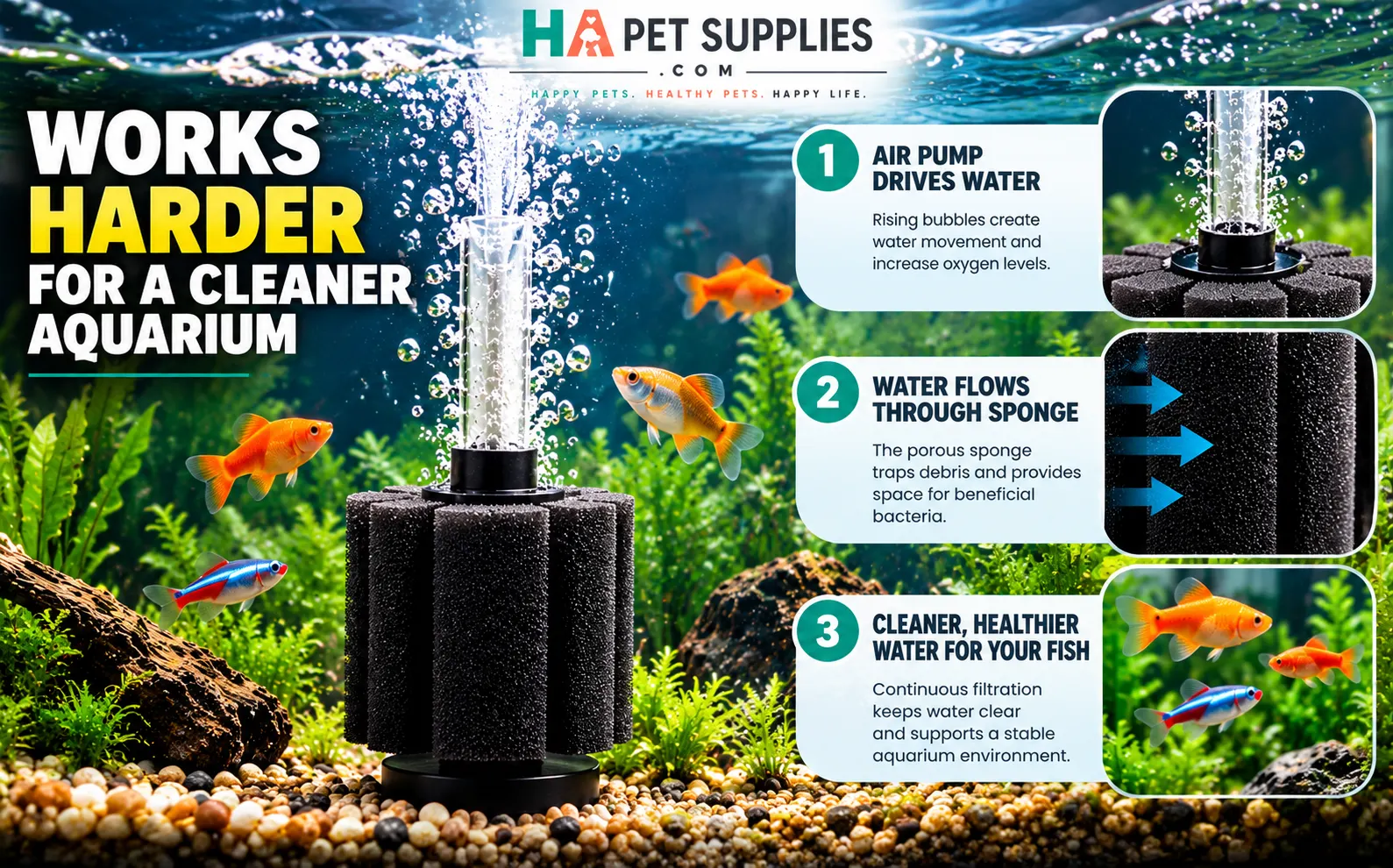
Stage 1 – Air-Driven Water Circulation
An external aquarium air pump sends air into the filter assembly through compatible tubing. Rising bubbles help move water through the sponge. Actual circulation depends on pump capacity, tank depth, and filter design.
Stage 2 – Mechanical Debris Collection
As aquarium water passes through the porous foam, some suspended debris becomes trapped. This can help reduce visible particles, although sponge filtration cannot eliminate every cause of cloudy aquarium water.
Stage 3 – Biological Filtration
Beneficial microorganisms gradually colonize the sponge surface. Once the aquarium is cycled, these bacteria contribute to processing dissolved ammonia and nitrite. Biological filtration depends on stable conditions and adequate oxygen availability.
Understanding the nitrogen cycle is essential because new aquarium filter media does not immediately contain a mature bacterial population. The API aquarium cycling guide provides further information about this process.
Aquarium Filter Sponge vs Other Fish Tank Filters
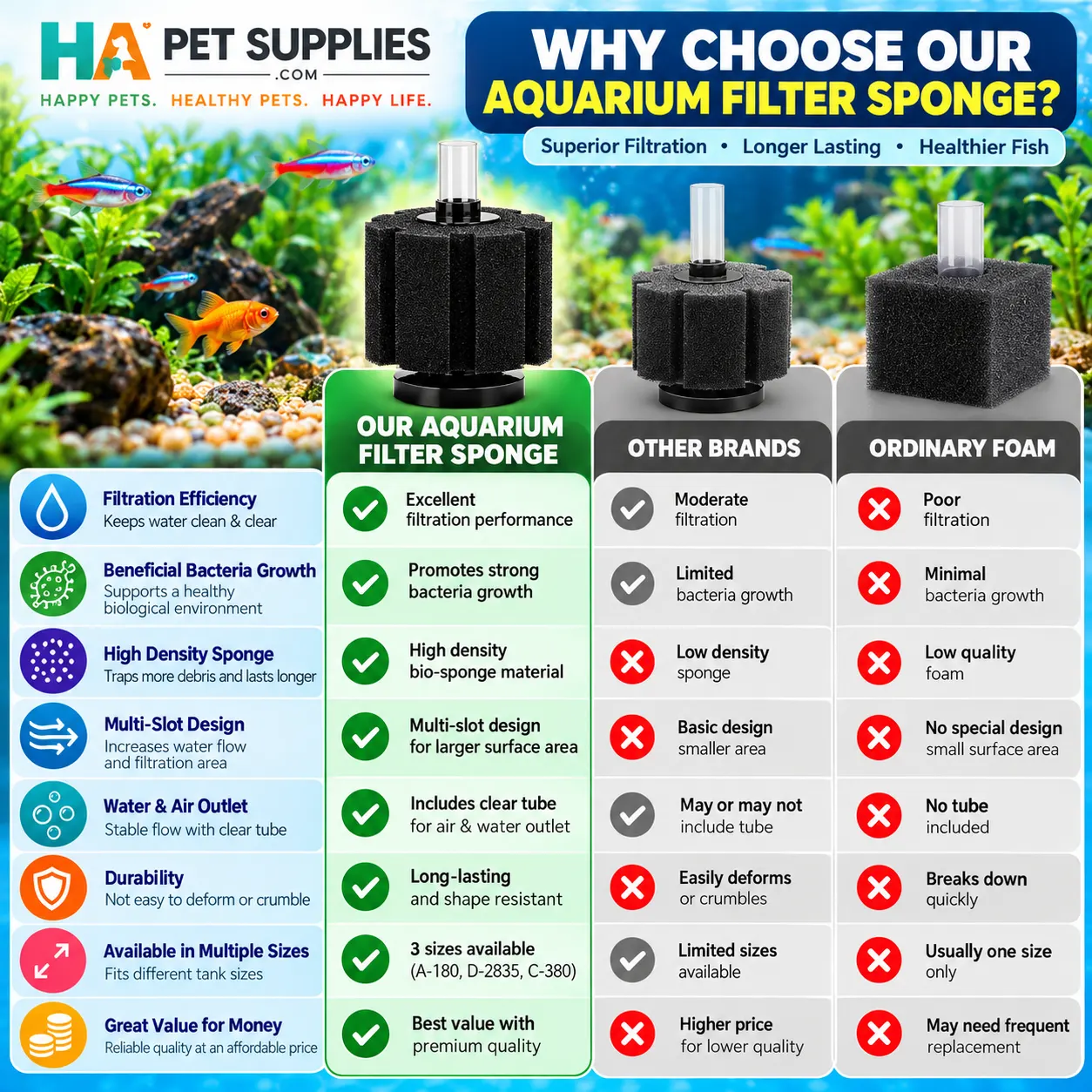
Choosing the right fish tank filtration system depends on aquarium size, livestock, waste production, and maintenance preferences. The comparison below explains typical differences between the HA Pet Supplies sponge filter category and common alternatives. It is not a claim of superior tested performance.
| Feature | HA Pet Supplies Sponge Filter | Generic Sponge Filter | Hang-On-Back Filter | Canister Filter |
|---|---|---|---|---|
| Filtration type | Mechanical and biological | Mechanical and biological | Mechanical and biological, with media options varying | Mechanical and biological, with additional media options |
| Power source | External air pump normally required | External air pump normally required | Electric motor | Electric motor |
| Water movement | Adjustable through suitable airflow equipment | Depends on model and pump | Varies by model | Varies by model |
| Biological media | Porous sponge | Porous sponge | Cartridges or other filter media | Multiple types of filtration media |
| Maintenance | Clean reusable sponge | Clean reusable sponge | Clean housing and filter media | Clean housing, hoses, and filter media |
| Small livestock | Suitable when pore size and flow are appropriate | Depends on foam grade | May require intake protection | May require intake protection |
| Typical application | Gentle air-driven filtration | Basic sponge filtration | Powered aquarium filtration | Higher-capacity media arrangements on suitable models |
Other filtration equipment may combine filter floss, ceramic biological media, and chemical filter media. The Seachem Tidal filter information illustrates how powered filtration systems can accommodate different media types.
Aquarium Filter Sponge Product Specifications
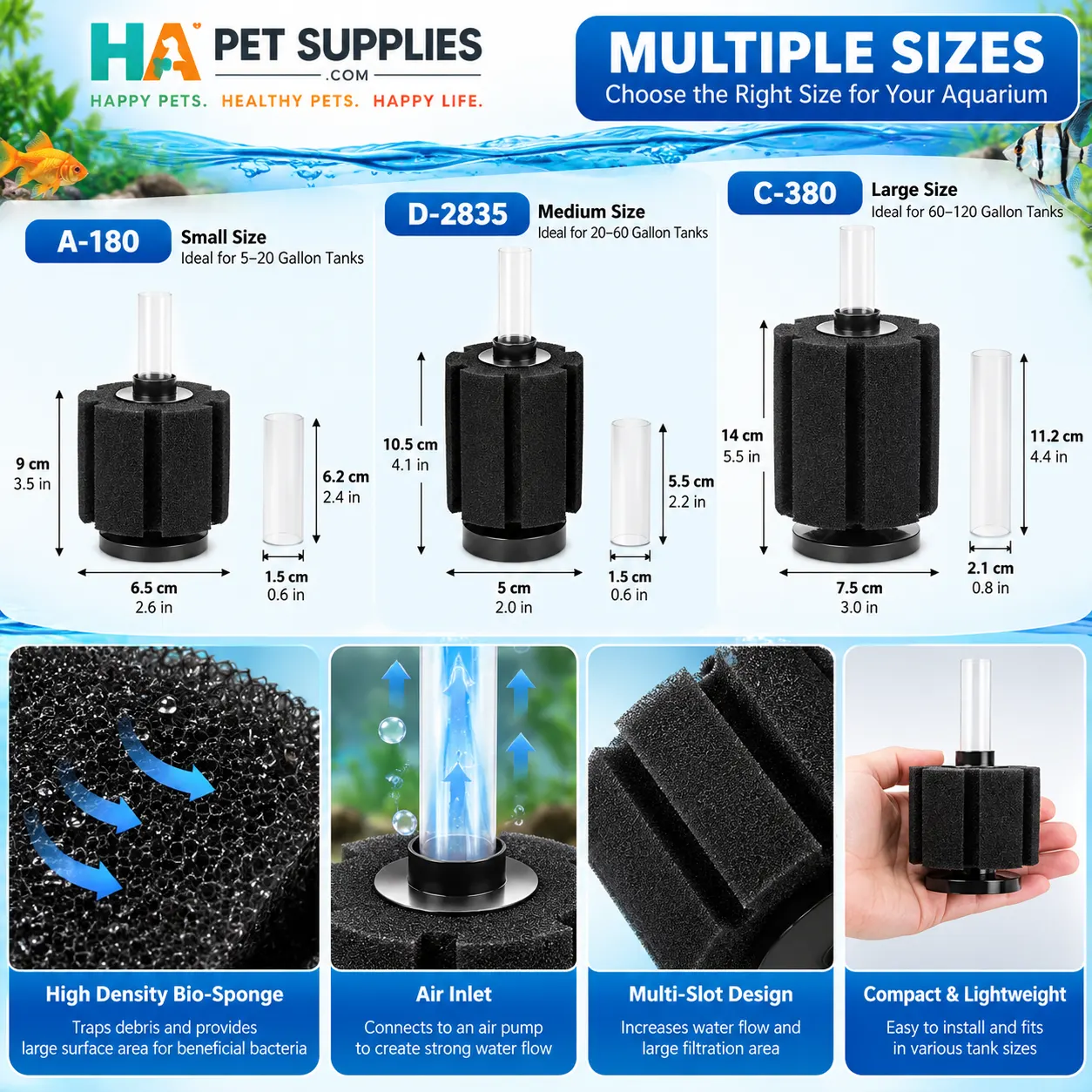
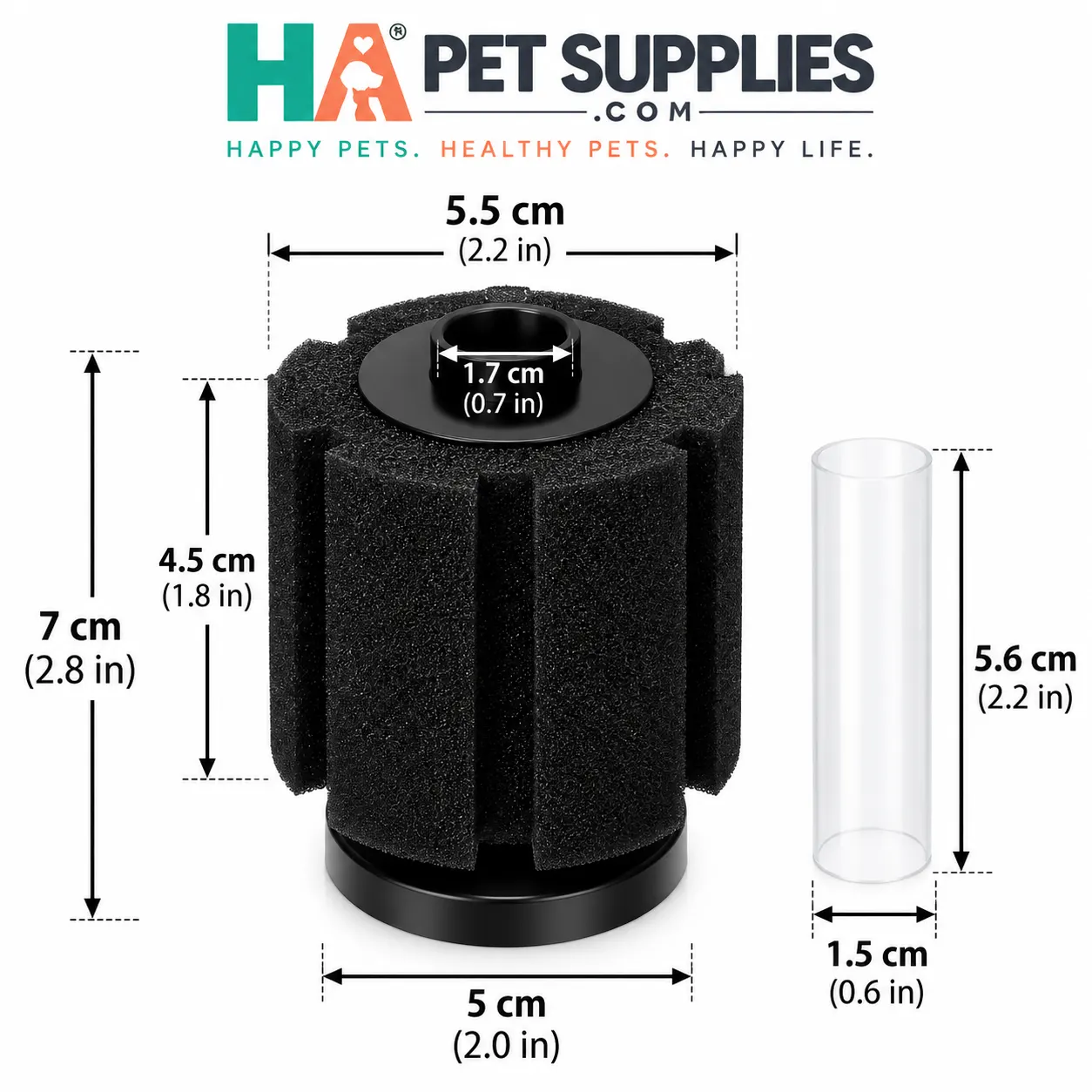
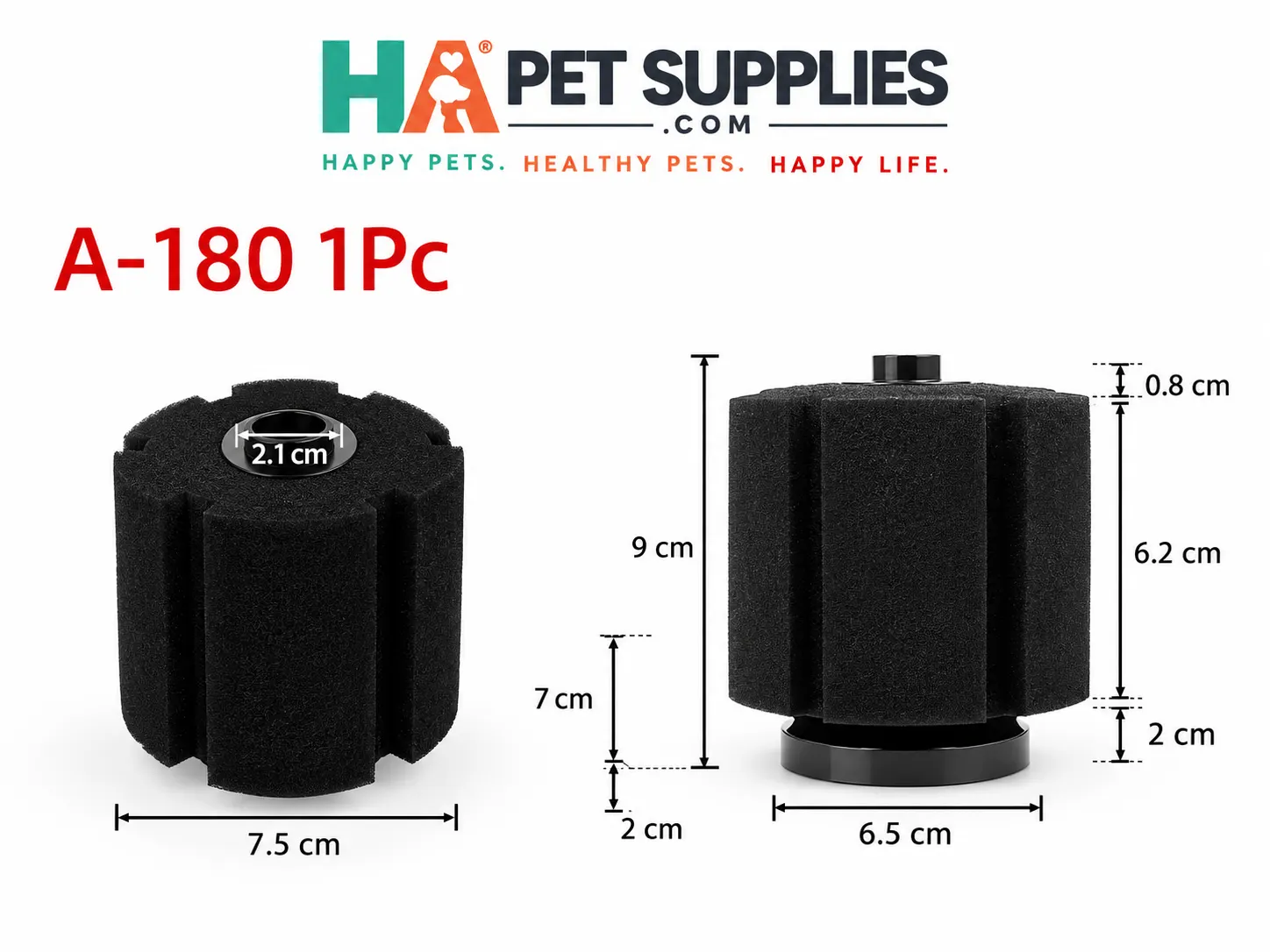
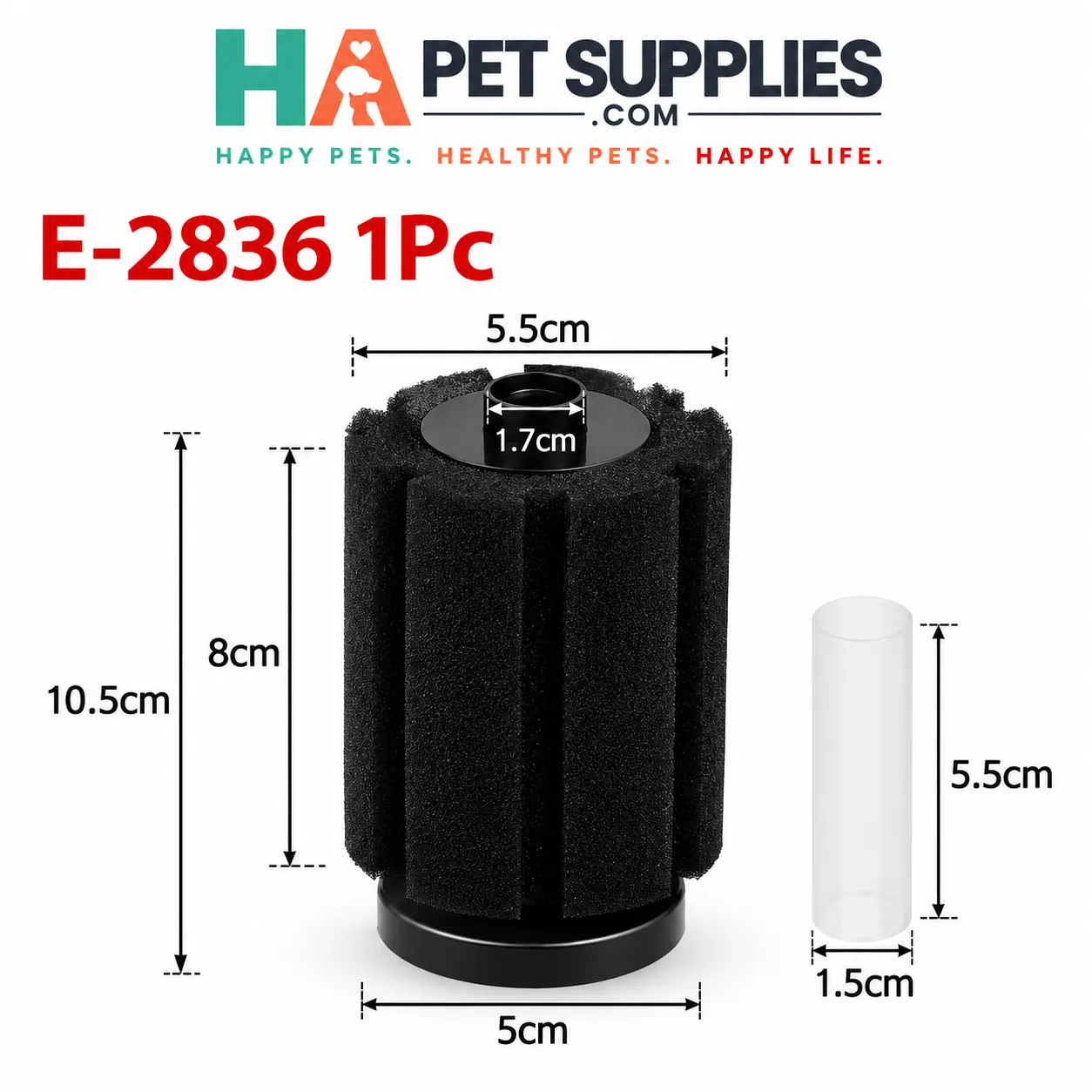
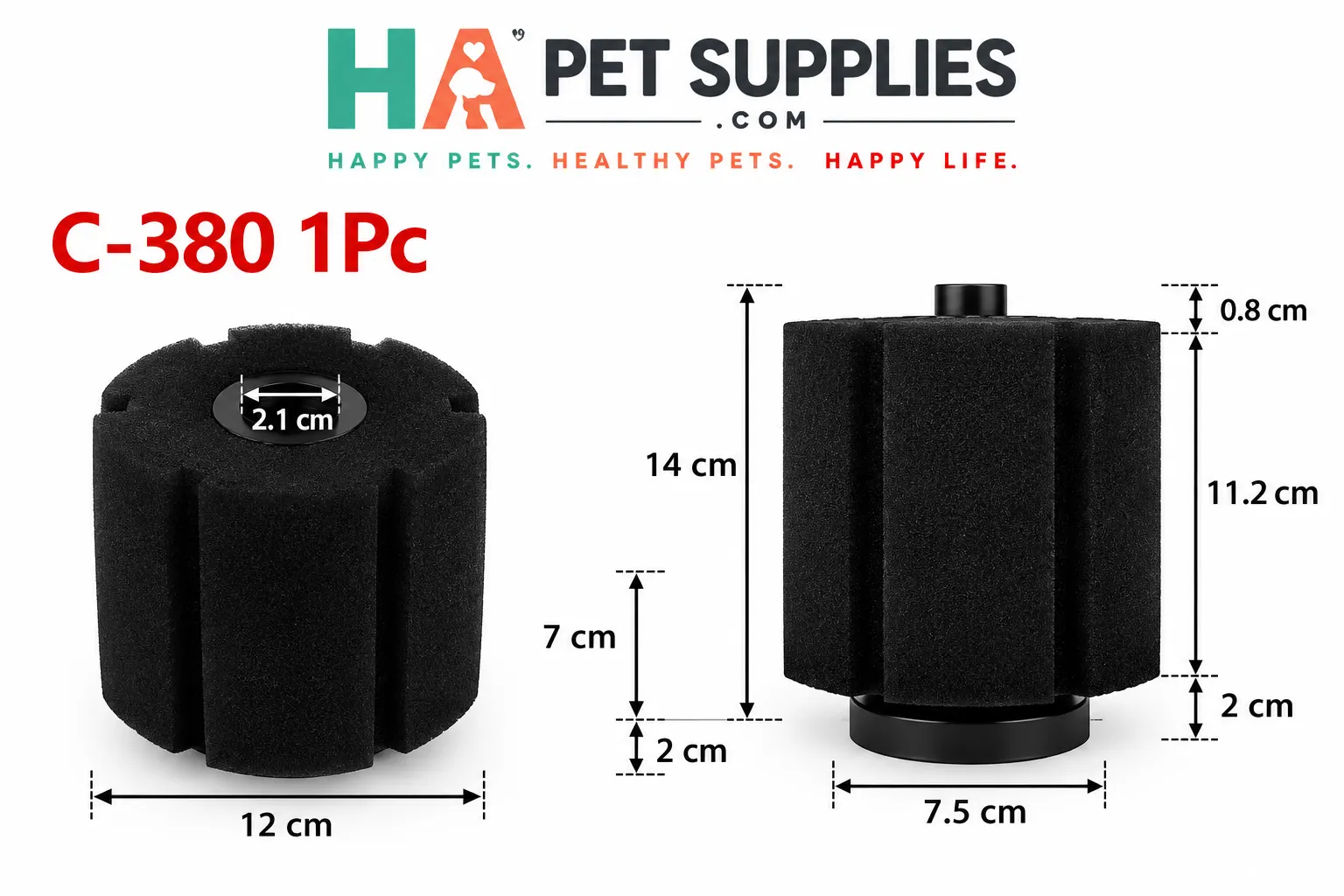
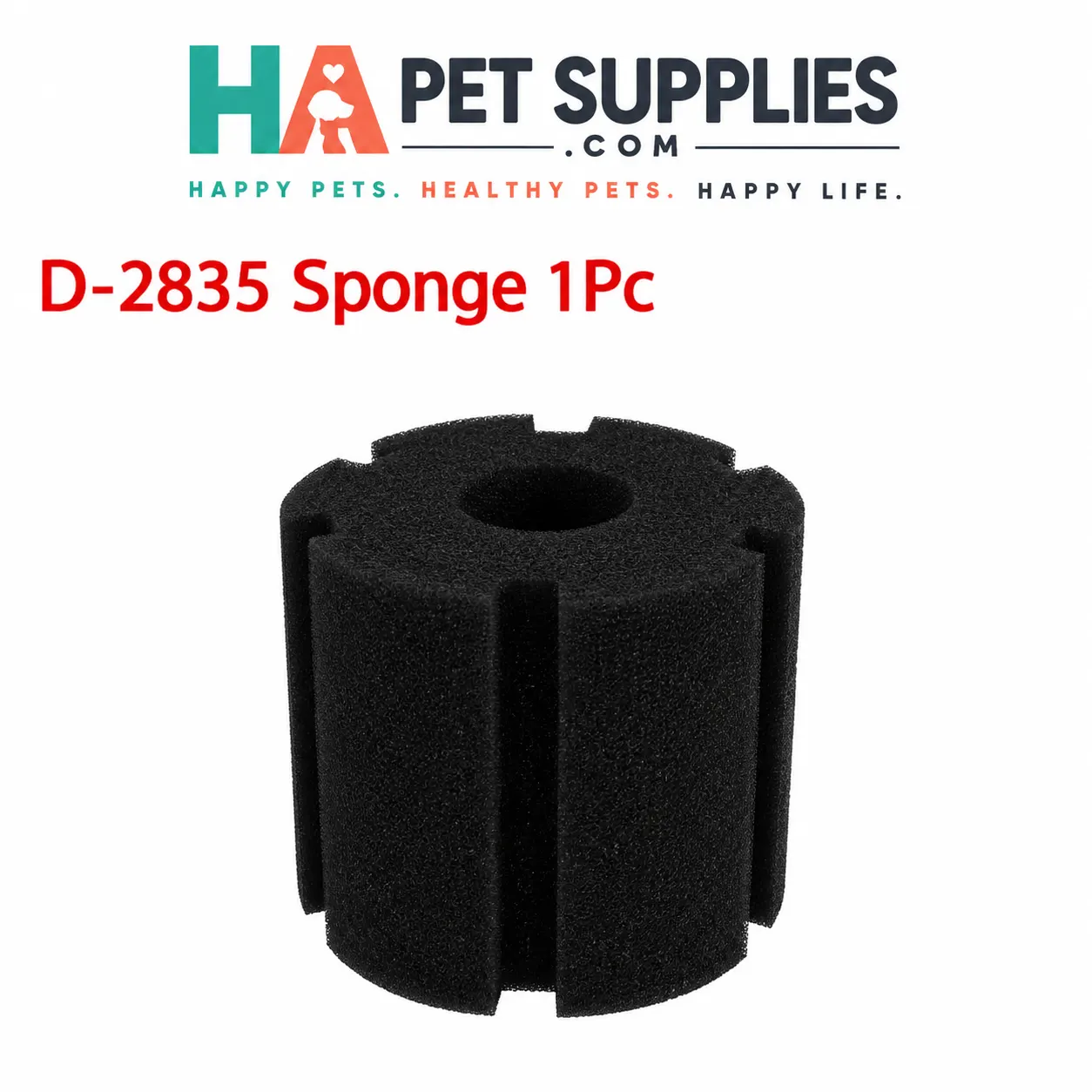
The following specifications describe the aquarium sponge filter product category. Confirm the exact dimensions, supported tank capacity, foam grade, and included accessories for the selected HA Pet Supplies product variation.
| Specification | Details |
|---|---|
| Brand | HA Pet Supplies |
| Product Name | Aquarium Filter Sponge |
| Category | Fish and Aquarium Filtration |
| Filter Type | Air-driven biochemical sponge filtration |
| Filtration Method | Mechanical and biological |
| Filter Material | Porous aquarium filter foam |
| Primary Application | Freshwater aquarium filtration, subject to model suitability |
| Air Pump | Compatible external pump normally required |
| Available Sizes | Confirm actual product variants |
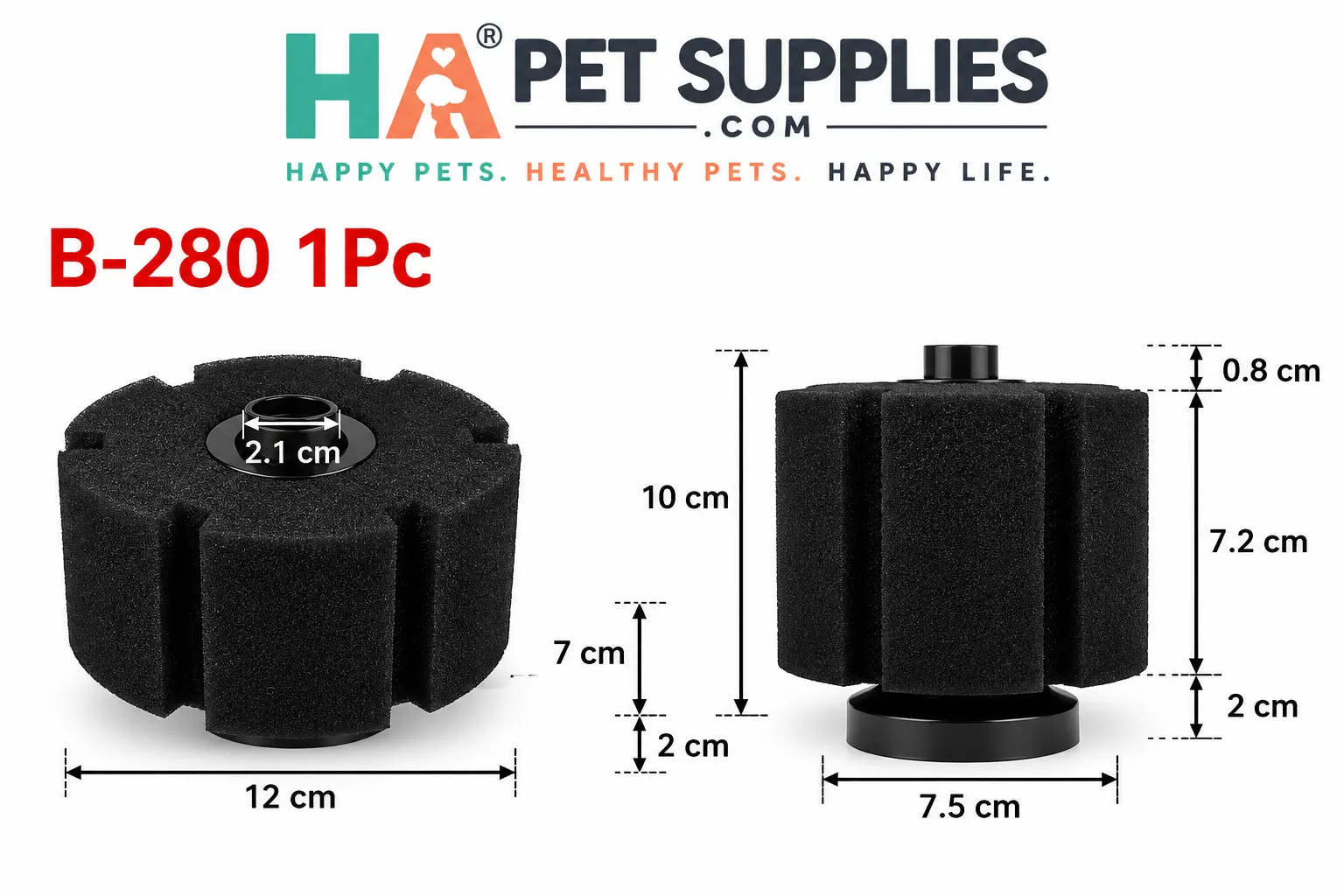
| Dimensions | Model-specific, confirm before ordering |
| Recommended Tank Size | Depends on filter model and aquarium conditions |
| Foam Pore Grade | Confirm product specification |
| Package Contents | Confirm whether pump, tubing, and accessories are included |
| Maintenance | Clean sponge in removed aquarium water or suitable dechlorinated water |
Aquarium Filter Sponge Product Details
Porous Biological Filter Media
The sponge provides a large wetted surface for beneficial microorganisms relative to its size. As the aquarium establishes its nitrogen cycle, the foam becomes an important biological filtration surface.
Mechanical Filtration Support
The porous material captures suspended waste as water moves through the filter. Cleaning the aquarium filter sponge when necessary prevents excessive buildup and supports consistent operation.
Air Pump Compatibility
Traditional sponge filter systems require an appropriately sized external air pump. Air pump output should match the filter and aquarium depth. Always verify whether the pump and airline tubing are supplied separately.
Suitable for Different Aquarium Environments
With suitable foam porosity and air circulation, aquarium sponge filters can be useful in betta aquariums, shrimp tanks, breeding tanks, and freshwater community aquariums. Fish tanks with high waste production may need additional filtration.
How to Choose the Right Aquarium Filter Sponge Size
Select an aquarium filter sponge based on tank volume, fish species, stocking density, waste production, and desired water movement. Never rely on filter dimensions alone when evaluating filtration capacity.
Betta Fish Tanks
Look for gentle water movement with sufficient biological filtration. Adjustable airflow can help prevent excessive current.
Shrimp Tanks
Choose suitable sponge porosity for small shrimp and their offspring. Avoid excessively strong water movement.
Community Aquariums
Match the filtration system to fish population, tank volume, and feeding habits. Supplementary filtration may be useful.
Goldfish Tanks
Goldfish can generate considerable waste. Evaluate whether a sponge filter alone provides enough mechanical and biological filtration.
For aquarium-specific recommendations, review the HA Pet Supplies guide to choosing the appropriate sponge filter for different fish and shrimp habitats.
HA Pet Supplies Aquarium Filter Sponge User Manual
Follow these general installation steps when setting up an air-driven aquarium sponge filter. Product-specific instructions take priority if the selected filter assembly differs.
How to Install an Aquarium Filter Sponge in 9 Steps
- Inspect the components. Check the sponge, base, uplift tube, and air connection for damage. Verify all required accessories are available.
- Select a compatible air pump. Choose a pump suitable for the aquarium depth, filtration requirements, and sponge filter design.
- Prepare the airline tubing. Connect suitable aquarium airline tubing securely to the filter assembly.
- Check backflow protection. Install an appropriate check valve where required, particularly when the air pump is below the aquarium water level.
- Rinse the sponge. Gently rinse new media with suitable dechlorinated water. Never use soap or household detergent.
- Position the filter. Place the sponge filter securely inside the aquarium without obstructing its water intake surfaces.
- Connect the pump. Connect the tubing to the external air pump and keep electrical equipment safely positioned.
- Adjust the airflow. Turn on the pump and confirm that air bubbles rise consistently. Adjust circulation to suit the aquarium inhabitants.
- Monitor the aquarium. Inspect the filter regularly and test water quality, especially while establishing a new biological filtration system.
For additional installation guidance, our beginner tutorial explains the process with practical setup considerations and common mistakes to avoid.
How to Clean an Aquarium Filter Sponge Safely
An aquarium filter sponge gradually accumulates trapped debris. Maintenance helps restore water circulation without unnecessarily disturbing the established biological filter media.
Simple Sponge Filter Cleaning Instructions
- Turn off the air pump. Disconnect equipment safely before removing the sponge filter.
- Collect aquarium water. During a routine water change, place some removed tank water into a clean aquarium-only container.
- Remove the sponge. Carefully lift the filter from the tank while minimizing the release of trapped debris.
- Gently squeeze the foam. Compress the sponge several times in the removed aquarium water to release accumulated waste.
- Inspect the filter. Check the air connections, uplift tube, and sponge condition for blockages or damage.
- Reinstall and restart. Return the sponge filter to the aquarium, reconnect the air pump, and confirm normal circulation.
How Often Should You Clean an Aquarium Sponge Filter?
Cleaning frequency depends on fish population, feeding habits, debris accumulation, and airflow. Inspect the filter during regular aquarium maintenance and clean it when visible clogging or reduced circulation indicates a need.
Avoid washing established biological filter media with detergent or unnecessarily exposing it to untreated chlorinated tap water. Do not replace all mature biological media at the same time unless a specific safety situation requires it.
Aquarium Co-Op explains practical sponge filter cleaning and common maintenance considerations. For more detailed instructions, our HA Pet Supplies article covers how to preserve beneficial bacteria when cleaning.
Why Choose HA Pet Supplies Aquarium Filter Sponge?
HA Pet Supplies provides aquarium products alongside practical information that helps fishkeepers understand equipment selection, installation, and everyday maintenance.
Practical Filtration Options
Explore aquarium sponge filtration products intended for different fishkeeping applications, subject to the specifications of each available model.
Helpful Product Guidance
Access educational resources covering aquarium filter sizing, installation, biological filtration, and sponge cleaning.
Simple Quote Requests
Request information about available variants, compatibility, package contents, and pricing before placing an order.
Additional Aquarium Supplies
Explore fish and aquarium accessories through the HA Pet Supplies store when planning a complete aquarium setup.
Fishkeepers who want further guidance can explore our pet care blog, which includes aquarium filtration tutorials and other educational content.
Aquarium Filter Sponge Frequently Asked Questions
1. What is an aquarium filter sponge?
An aquarium filter sponge is porous filter media used for mechanical filtration and biological filtration support. In an air-driven assembly, aquarium water moves through the sponge while beneficial bacteria grow on its surfaces.
2. Does an aquarium sponge filter need an air pump?
Traditional air-driven sponge filters generally require an external aquarium air pump and compatible airline tubing. Confirm the package contents before ordering.
3. Is a sponge filter suitable for betta fish?
Yes, a suitably sized sponge filter can provide gentle water circulation for a betta aquarium. Adjust airflow to suit the fish and ensure adequate filtration.
4. Can I use a sponge filter for shrimp?
Yes. Sponge filtration is commonly used for freshwater shrimp. Choose appropriate foam porosity, especially when very small shrimp are present.
5. How often should I clean a fish tank sponge filter?
Inspect it during routine aquarium maintenance and clean when debris buildup or reduced water movement indicates that cleaning is necessary. Frequency varies by aquarium.
6. Can an aquarium filter sponge remove ammonia?
An established biological filter supports beneficial bacteria that process ammonia and nitrite. A new sponge does not instantly provide mature biological filtration.
7. Can I use aquarium tap water to clean the sponge?
For established biological media, cleaning with removed aquarium water or suitable dechlorinated water is generally preferred. Avoid detergents and unnecessary chlorine exposure.
8. Will a sponge filter clear cloudy aquarium water?
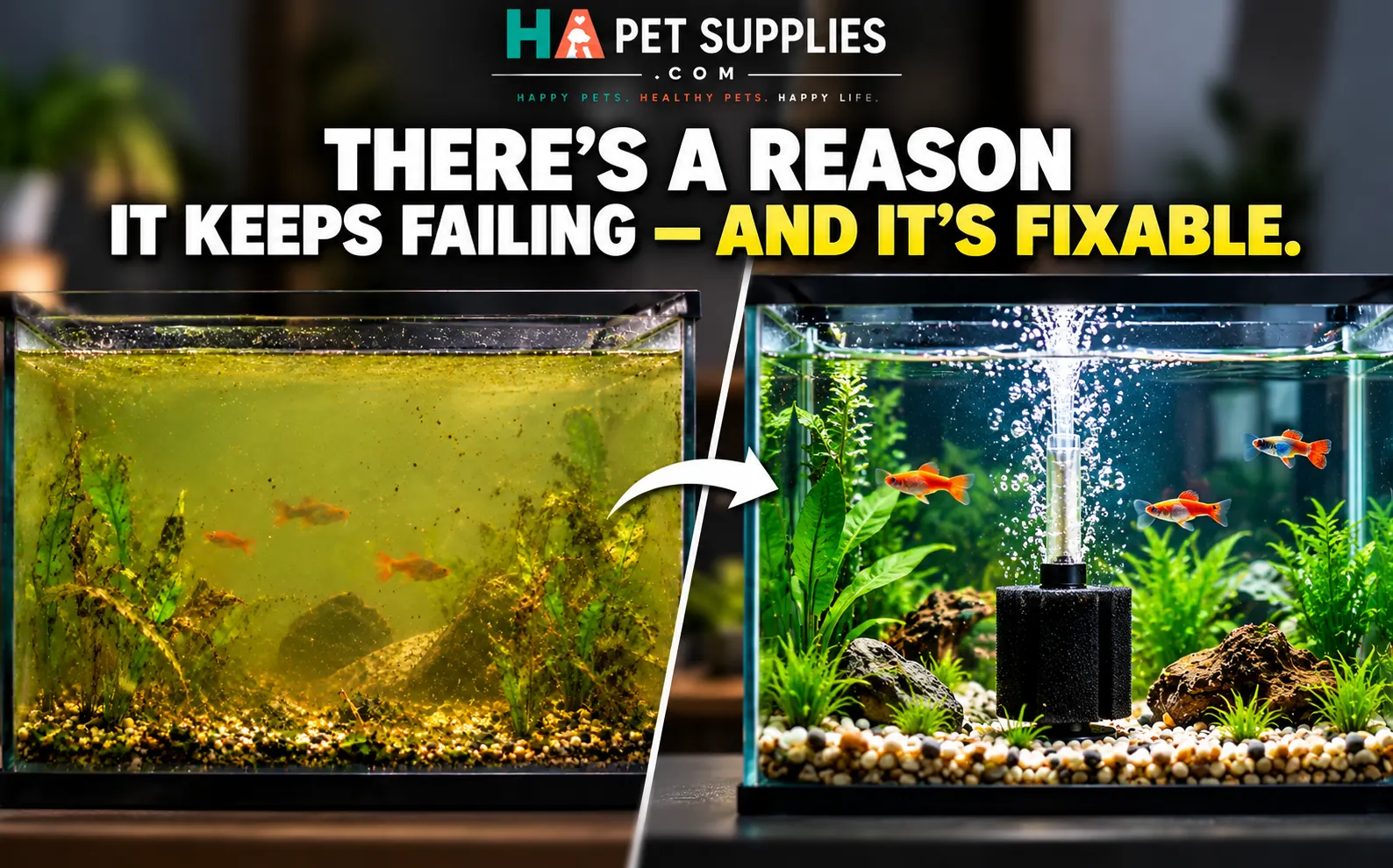
A sponge filter can capture some suspended particles, but cloudy water may have other causes. Test water parameters and investigate bacterial blooms, feeding, substrate disturbance, and aquarium cycling.
9. When should I replace the sponge?
Replace the foam when it becomes torn, deteriorated, permanently deformed, or unsuitable for maintaining appropriate filtration. Do not replace mature media merely because it has become discolored.
10. Where can I buy an aquarium filter sponge online?
Explore aquarium filtration products through HA Pet Supplies and request a quote to confirm available product variants, compatibility, pricing, and ordering details.
Buy Aquarium Filter Sponge Online at HA Pet Supplies
Choose an aquarium filter sponge that matches your fish tank size, stocking requirements, and preferred filtration setup. HA Pet Supplies offers a convenient way to explore aquarium filtration accessories and request information before purchasing.
For model availability, compatibility, or pricing, submit a quote request or contact our team through the website.
Reviews
There are no reviews yet.